Electrical Company in Franklin Hills, NC
Your Electrical System Works or We Fix It
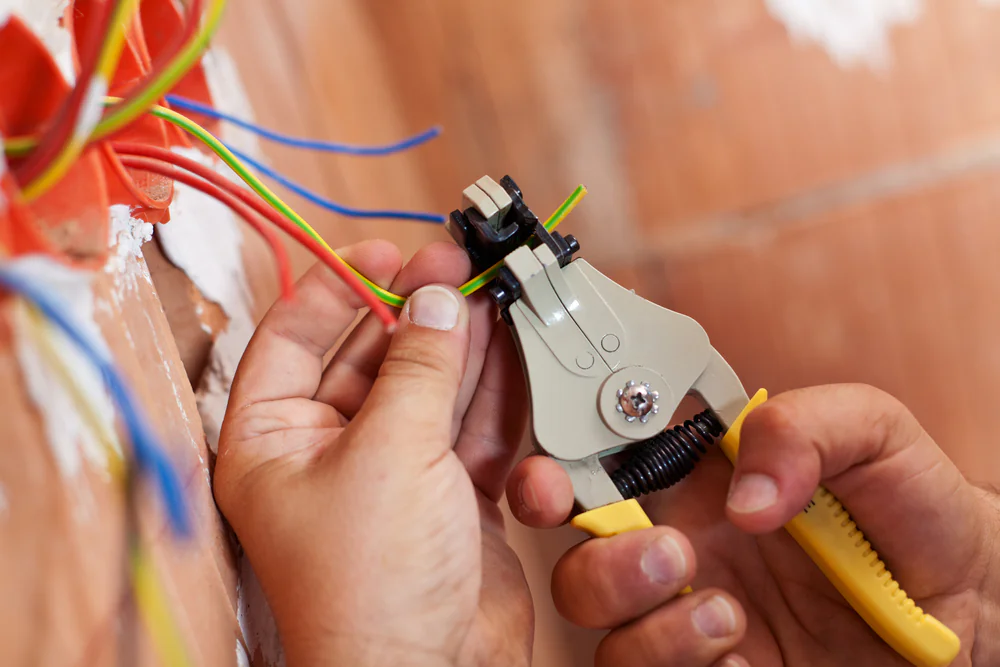

Licensed Electrical Contractor Near You
Your lights stop flickering. Your breakers stop tripping at the worst possible time. Your electrical panel can actually handle the load you’re putting on it without overheating or shutting down.
That’s what happens when a licensed electrical contractor does the work right the first time. You’re not calling someone back in six months because the problem returned. You’re not wondering if the wiring behind your walls is a fire hazard.
You know the cost before work starts—flat rate pricing means no surprises when the job’s done. You get a lifetime warranty on labor, up to 25 years, because the work is done to last. And if something does go wrong, you’re covered.
Most electrical problems don’t announce themselves until they’re urgent. A burning smell near an outlet. A panel that’s warm to the touch. Lights that dim when the AC kicks on. These aren’t minor inconveniences—they’re warnings. Electrical issues cause over 51,000 house fires every year, and most of them start with something small that got ignored.
Electrician Services in Franklin Hills
We’ve been handling residential and commercial electrical work in Franklin Hills and the surrounding area since 2002. We’re locally owned and operated by Andy Helton, a Master Electrician with over 35 years of experience.
We’re not a national franchise. We’re not dispatching different technicians every time you call. You’re working with people who live in the same counties you do—Chatham, Orange, Durham, and Alamance—and who’ve been doing this work long enough to know what actually holds up over time.
Franklin Hills sits in an area where homes range from new construction to properties that have been standing for decades. That means electrical systems vary widely. Older homes often have outdated wiring that wasn’t designed for modern electrical loads. Newer builds sometimes cut corners during construction. Either way, you need someone who can assess what’s actually going on and fix it correctly.

How Our Electrical Repair Process Works
First, you talk to a real person—not an answering machine. We ask what’s going on, when it started, and whether it’s an emergency. If it is, we move fast.
Next, we schedule a time that works for you. Our trucks are fully stocked, so we’re not making multiple trips or telling you we need to order parts for common repairs. When the technician arrives, they assess the problem, explain what’s wrong in plain terms, and give you a flat-rate price before any work begins.
Once you approve the cost, the work starts. We don’t rush through it. We don’t leave a mess. The goal is to leave your property in better shape than we found it, and that includes cleanup.
After the job’s complete, we walk you through what was done and answer any questions. You get a lifetime warranty on the labor—up to 25 years—and manufacturer warranties on materials. If something goes wrong with our work, we come back and make it right. No argument, no runaround.
This applies whether it’s a simple outlet replacement, a full panel upgrade, or a commercial electrical installation. The process stays the same because it works.
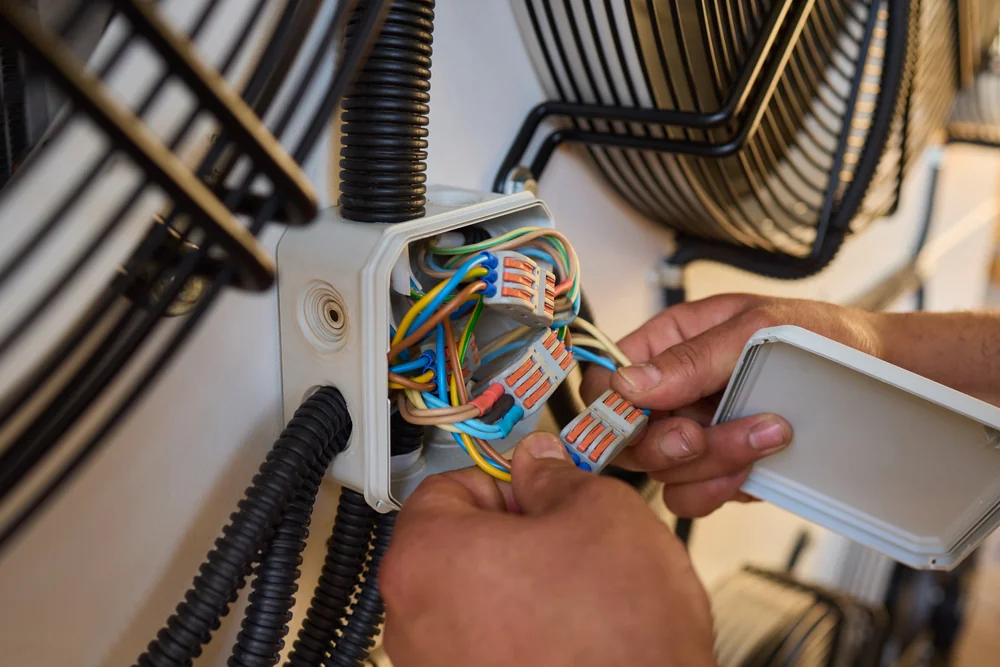
Residential and Commercial Electrical Services
We handle electrical repairs, upgrades, installations, and additions for both residential and commercial properties. That includes troubleshooting problems you’ve been dealing with for months, replacing outdated panels that can’t keep up with your electrical demand, and installing new wiring for remodels or additions.
Generator installation and repair is a big part of what we do, especially in this area. Power outages in North Carolina aren’t rare—over 25% of U.S. households lost power for more than an hour in 2023, with the average outage lasting over seven hours. Hurricane season makes that worse. A standby generator means your refrigerator stays cold, your sump pump keeps running, and your family stays comfortable even when the grid goes down.
Smart home wiring is another service that’s become essential. If you’re adding security systems, automated lighting, or integrated controls, the electrical infrastructure has to support it. We make sure it does.
For commercial properties in Franklin Hills, we work on office buildings, retail spaces, and industrial facilities. Downtime costs you money, so we prioritize efficiency without cutting corners. Code compliance isn’t optional—it’s part of every job we do.
How much does it cost to hire an electrician in Franklin Hills?
It depends entirely on what needs to be done. A simple outlet repair might run a couple hundred dollars. A full panel upgrade could be several thousand. The difference comes down to labor, materials, and how complicated the job is.
We use flat-rate pricing, which means you know the cost before we start. No hourly rates that climb while the work drags on. No surprise charges when the invoice shows up. You approve the price, then we do the work.
If you’re comparing estimates, make sure you’re comparing the same scope of work. Some companies lowball the initial quote and add charges later. Others skip steps that matter—like pulling permits or bringing the work up to code. Cheaper isn’t always better when it comes to electrical work. You’re paying for safety, reliability, and a warranty that actually means something.
Do I really need to upgrade my electrical panel?
If your breakers trip constantly, your panel is warm to the touch, or you’re adding major appliances or an EV charger, then yes—you probably do. Panels aren’t designed to last forever, and older panels weren’t built to handle the electrical load most homes put on them today.
A 100-amp panel might have been fine 30 years ago. But if you’ve added central air, a hot tub, multiple computers, and a bunch of phone chargers, you’re pushing that system beyond what it was designed for. That’s a fire risk.
Panel upgrades also matter if you’re selling your home. Buyers and inspectors flag outdated panels, especially certain brands known for safety issues. Upgrading before you list can prevent delays and give buyers confidence. It’s not just about passing inspection—it’s about making sure your electrical system can handle what you’re asking it to do without failing or catching fire.
What should I do if my power goes out but my neighbors still have electricity?
Check your breaker panel first. If the main breaker tripped, you can try resetting it. Flip it all the way off, then back on. If it trips again immediately, don’t keep resetting it—that’s a sign something’s wrong, and forcing it could make things worse.
If the breakers look fine and you still don’t have power, the problem might be with your meter, your service line, or something inside your electrical system. At that point, call an electrician. Don’t wait days hoping it fixes itself.
Power issues that affect only your home usually mean the problem is on your side of the meter, which makes it your responsibility to fix. The utility company handles issues with the grid and the lines leading to your meter, but everything after that is on you. We can diagnose the problem quickly and get your power restored without the guesswork.
How long does a generator installation take?
For a standby generator, plan on one to three days depending on the size of the unit and how much prep work is needed. We have to install a concrete pad, run a gas line or connect to propane, wire the transfer switch, and test the system to make sure it kicks on when the power drops.
Portable generators are faster—you can set one up in a few hours if you already have the right outlets and transfer equipment. But portable units don’t turn on automatically, and they won’t power your whole house. Standby generators do both.
If you’re in Franklin Hills or anywhere in Chatham County, generator installations have spiked in the last few years. People got tired of losing power during storms and having no backup. The upfront cost is real, but so is the peace of mind. When the next hurricane rolls through and your neighbors are sitting in the dark, your lights stay on and your fridge keeps running.
Can you work on commercial electrical systems or just residential?
We handle both. Commercial electrical work involves different codes, higher voltages, and more complex systems, but the principles are the same—diagnose the problem, fix it right, and make sure it’s safe and up to code.
For commercial properties, downtime is expensive. If your building loses power or a critical system goes down, that’s lost revenue. We prioritize fast response times and efficient work without sacrificing quality. Whether it’s troubleshooting a faulty circuit, upgrading your lighting, or installing new equipment, we treat your business like it matters—because it does.
We’ve worked on office buildings, retail spaces, and industrial facilities throughout Chatham, Orange, Durham, and Alamance counties. The scope varies, but the standard doesn’t. Every job gets the same attention to detail, the same focus on code compliance, and the same warranty backing the work.
What's the difference between a licensed electrician and a handyman?
A licensed electrician has years of training, passed state exams, and is legally qualified to work on electrical systems. A handyman might know how to swap out a light fixture, but they’re not licensed to do electrical work—and in most cases, they’re not insured for it either.
If something goes wrong with unlicensed electrical work, your homeowner’s insurance might not cover the damage. If there’s a fire and the investigation traces it back to faulty wiring installed by someone without a license, you could be on the hook for everything. That’s not a risk worth taking to save a few bucks.
Licensed electrical contractors also pull permits and make sure the work meets local codes. Inspectors check the work to confirm it’s safe. Handymen skip that step. It might look fine on the surface, but if it’s not done right, it’s a hazard waiting to happen. You’re not just paying for the work—you’re paying for the expertise, the accountability, and the protection that comes with hiring someone who’s actually qualified to do the job.
About Us

Electrical Service Providers (ESP) has been in business since 2002. ESP started out performing wiring services to new construction, remodeling projects and residential homes. Our company’s president identified a market for electrical services to be performed in homes and businesses independent of new construction. Read More about Electrical Service Providers>>
All Rights Reserved.Organic Marketing LLC
Business Listings


Product Brands Used
Allied, Broan, Cutler Hammer, General Electric, Ideal, Juno, Kohler, Leviton, Lutron, Siemens, Square D
Contact
- Office Address: 3254 S Anthony Ct.
Burlington, NC 27215 - Mailing Address: PO Box 25
Alamance, NC 27201 - Phone: 336-228-3300
- E-mail: [email protected], [email protected]
Service Areas
Chapel Hill, Burlington, Carrboro, Durham, Gibsonville, Hillsborough, Graham, Pittsboro, Morrisville, Cary
About Us
Electrical Service Providers (ESP) has been in business since 2002. ESP started out performing wiring services to new construction, remodeling projects and residential homes. Our company’s president identified a market for electrical services to be performed in homes and businesses independent of new construction. Read More about Electrical Service Providers>>
All Rights Reserved.Organic Marketing LLC