EV Charger Installation in Alamance County, NC
Charge at Home Without the Guesswork or Risk
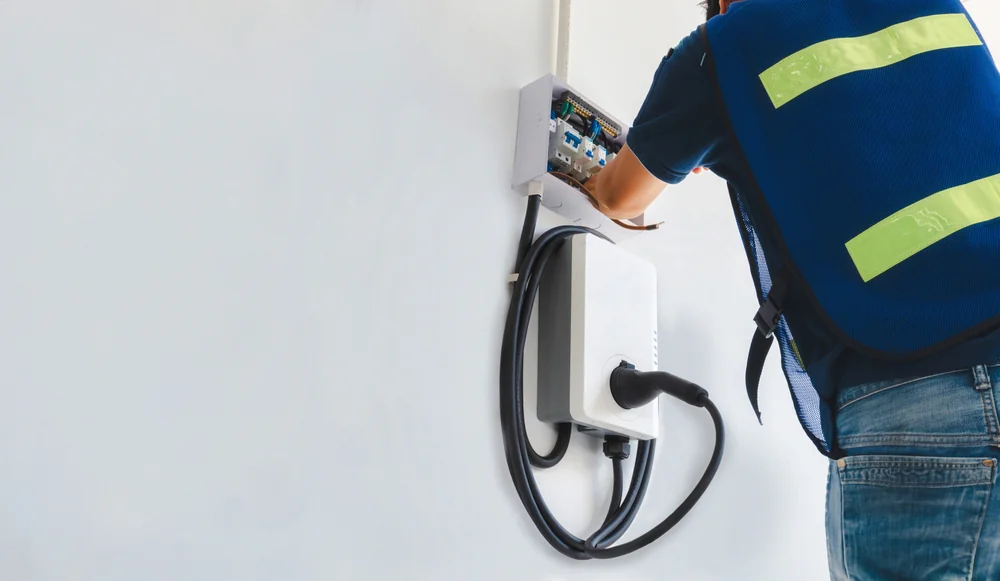
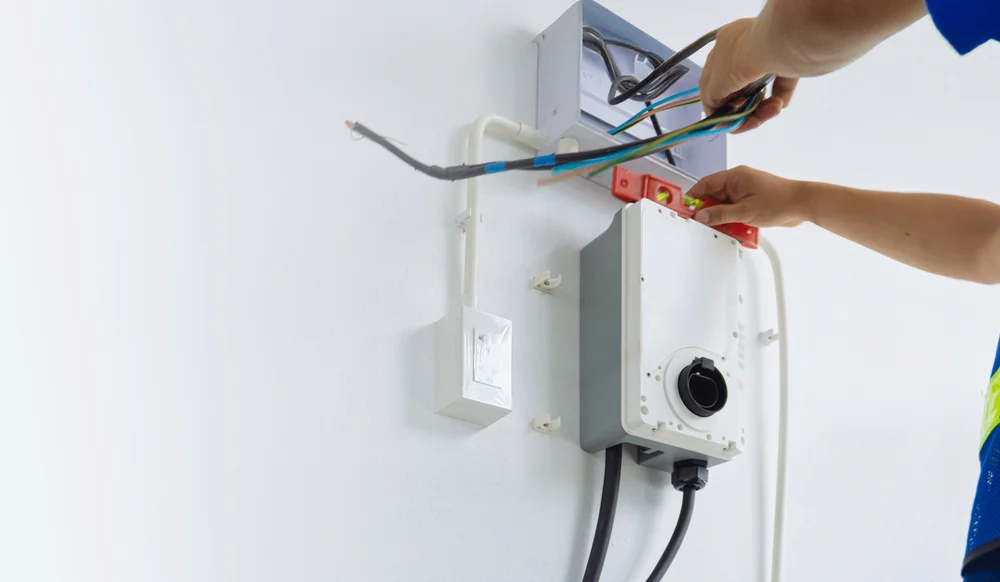
Electric Vehicle Charger Setup in Burlington, NC
You bought an EV to simplify your life. Driving to public charging stations three times a week isn’t part of that plan.
Home charging means you plug in when you get home and you’re ready to go the next morning. No apps that crash. No waiting behind someone who’s shopping inside. No wondering if the station even works.
But only if your electrical system can handle it. Most homes built before 2015 can’t support a Level 2 charger without an upgrade. That’s not a sales pitch—it’s how the math works. A 240-volt charger pulls serious amperage, and if your panel’s already running your HVAC, water heater, and everything else, something’s got to give.
We start every EV charger installation with a load calculation. That tells us whether your current setup works or if you need a panel upgrade, dedicated circuit, or both. Then we pull the permits, do the work to code, and make sure it passes inspection. You’re not guessing. You’re not hoping. You’re charging.
Licensed Electricians Serving Alamance County Since 2002
ESP Electrical Service Providers is locally owned and operated by Andy Helton, a Master Electrician with more than 35 years in the field. We’ve been serving Burlington, Graham, Mebane, and the rest of Alamance County since 2002.
We started doing residential wiring and service calls. Now we’re installing EV chargers for the same families whose panels we upgraded a decade ago. That’s how you build a reputation—you show up, you do it right, and you’re still here when they call again.
North Carolina just passed 100,000 registered EVs, and Alamance County drivers are part of that growth. You’ll see more Teslas and Rivians in the Harris Teeter parking lot than you did two years ago. That means more people are asking the same question you are: can my house handle this?
How EV Charging Station Installation Works
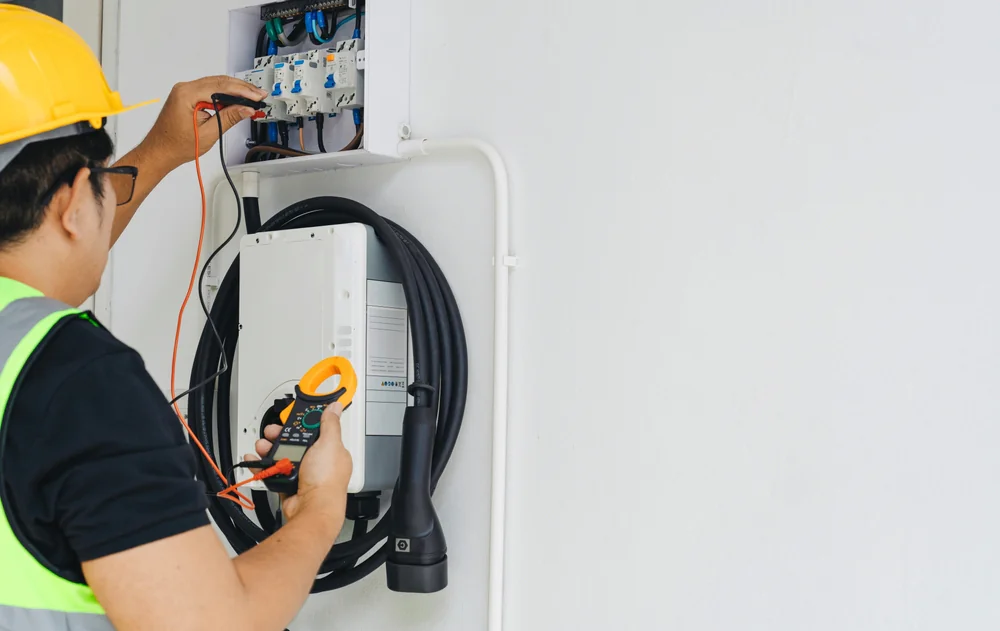
First, we come out and look at your electrical panel. We check the amperage, the available breaker slots, and what’s already running. If you’ve got a 100-amp panel that’s maxed out, we’ll tell you. If you’ve got room, we’ll tell you that too.
Next, we map out where the charger goes. Most people want it in the garage, close to where they park. We measure the distance from the panel, confirm the wire gauge, and figure out if we’re running conduit or going through the attic. Then we pull the permit—Alamance County requires it, and so does your insurance company if something ever goes wrong.
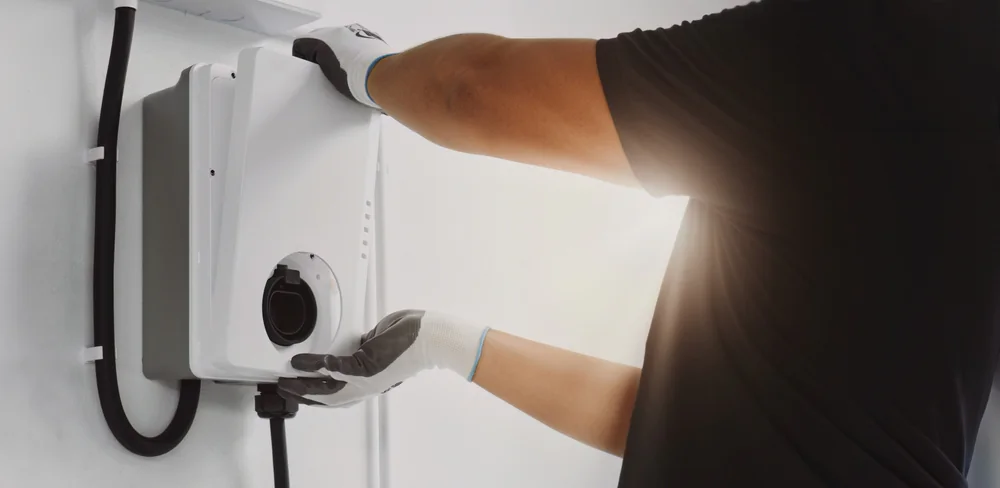
Installation day, we mount the charger, run the wiring, connect it to a new dedicated 240-volt circuit, and test the whole system. Then the county inspector signs off. After that, you’re live.
If you’re eligible for Duke Energy’s rebate program, we’ll help you with the paperwork. That’s up to $1,117 back, and it applies to the electrical work that makes your home charger-ready.
What's Included in EV Charger Installation Service
This isn’t a handyman job. You’re adding a high-voltage appliance to your home, and it has to be done right.
Our installation includes the load calculation, permit filing, circuit installation, charger mounting, and final inspection coordination. If your panel needs an upgrade to support the charger, we handle that too. We also walk you through Duke Energy’s rebate process if you qualify—that credit covers a chunk of the upfront cost.
In Alamance County, more homeowners are future-proofing before they even buy the EV. If you’re planning to go electric in the next year or two, installing the infrastructure now makes sense. It adds value to your home, and you’re not scrambling to find an electrician when the car shows up.
We work with all the major charger brands—ChargePoint, JuiceBox, Grizzl-E, Tesla Wall Connector. If you’ve already bought one, we’ll install it. If you haven’t, we’ll recommend one based on your car and how fast you want to charge. Most people go with a 40-amp or 48-amp Level 2 charger. That’ll fully charge most EVs overnight, even if you’re starting near empty.
How much does it cost to install an EV charger in Alamance County?
Most installations run between $800 and $2,000, depending on your electrical panel and how far we’re running the wire. If your panel has space and you’re mounting the charger in the garage near the breaker box, you’re on the lower end. If we need to upgrade your panel or run 50 feet of conduit, it costs more.
Panel upgrades add another $1,500 to $3,000, but that’s not just for the charger—it’s an investment in your whole electrical system. Older homes in Burlington and Graham often have 100-amp panels that are already running hot. Adding an EV charger without upgrading is a fire risk.
Duke Energy offers a rebate that covers up to $1,117 of the electrical work. We’ll help you apply. That brings your out-of-pocket cost down significantly, and it’s available to residential customers across Alamance County.
Can my electrical panel handle an EV charger, or do I need an upgrade?
It depends on your panel’s capacity and what’s already drawing power. Most EV chargers need a dedicated 240-volt circuit with a 40- to 60-amp breaker. If your panel is 200 amps and you’ve got open slots, you’re probably fine. If it’s 100 amps and you’re running central air, electric heat, and a water heater, you’ll likely need an upgrade.
We do a load calculation before any installation. That’s a code requirement, and it’s how we figure out whether your system can safely support the additional draw. A lot of homes built in the ’80s and ’90s are sitting right at capacity. Adding a charger without checking the math is how you end up with tripped breakers or worse.
If you do need an upgrade, it’s not just about the charger. You’re making your home safer and ready for future electrical demands. That matters when you sell, and it matters for your homeowner’s insurance.
How long does EV charger installation take from start to finish?
If your panel’s ready and we don’t need to upgrade anything, the physical installation takes about four to six hours. That includes mounting the charger, running the circuit, making the connections, and testing everything. But the timeline also depends on permits and inspections.
Alamance County requires a permit for EV charger installations. We pull that for you, and it usually takes a few days to process. After we finish the install, the county inspector has to sign off before you can legally use it. Inspections typically happen within a week, sometimes sooner.
From your first call to a fully operational charger, plan on one to two weeks if there are no panel upgrades. If we’re upgrading your electrical service, add another week. We’ll give you a clear timeline after the initial assessment so you know exactly what to expect.
What's the difference between a Level 1 and Level 2 EV charger?
A Level 1 charger plugs into a standard 120-volt outlet—the same one you use for your phone or laptop. It’s slow. You’re looking at about four miles of range per hour of charging. If you drive 40 miles a day, that’s 10 hours to recharge. It works if you barely drive, but most people find it frustrating.
A Level 2 charger runs on 240 volts, the same as your dryer or oven. It charges 10 to 20 times faster, depending on the amperage. With a 40-amp charger, you’re adding 25 to 30 miles of range per hour. That means a full charge overnight, even if you drained the battery.
Level 2 is the standard for home charging, and it’s what we install most often in Alamance County. It requires a dedicated circuit and a permit, but the speed and convenience make it worth it. You’re not sitting around waiting. You’re plugging in and moving on with your life.
Do I need a permit to install an EV charger in Burlington or Alamance County?
Yes. Any hardwired EV charger installation requires an electrical permit in Alamance County, including Burlington, Graham, Mebane, and surrounding areas. That’s not optional—it’s code. The permit ensures the work meets safety standards, and it protects you if there’s ever an insurance claim or resale inspection.
We handle the permit process. You don’t have to go to the county office or figure out the paperwork. We pull it, schedule the inspection, and make sure everything passes. Skipping the permit might save you a couple hundred bucks up front, but it’ll cost you a lot more if your insurance denies a claim or a home inspector flags it during a sale.
Some homeowners ask about plug-in chargers, thinking they don’t need a permit. Technically true—but you still need a 240-volt outlet installed, and that requires a permit. So you’re not avoiding anything. You’re just limiting your charger options.
Will installing an EV charger increase my home's value in Alamance County?
Yes, especially as EV adoption grows. Homes with EV charging infrastructure are being listed 91% more often than they were two years ago, and buyers are specifically searching for that feature. In a market like Alamance County, where more people are switching to electric vehicles, having a charger already installed is a selling point.
It signals that your home is updated and ready for modern needs. Buyers don’t have to worry about whether the electrical system can handle it or budget for an installation after closing. That removes friction, and it makes your home more attractive compared to similar listings without charging capability.
Even if you’re not selling anytime soon, the infrastructure adds functional value. You’re not dependent on public charging stations, and you’re not paying commercial rates. You’re charging at home, on your schedule, at a lower cost per kilowatt-hour. That’s a real, measurable benefit that pays off every time you plug in.
About Us

Electrical Service Providers (ESP) has been in business since 2002. ESP started out performing wiring services to new construction, remodeling projects and residential homes. Our company’s president identified a market for electrical services to be performed in homes and businesses independent of new construction. Read More about Electrical Service Providers>>
All Rights Reserved.Organic Marketing LLC
Business Listings


Product Brands Used
Allied, Broan, Cutler Hammer, General Electric, Ideal, Juno, Kohler, Leviton, Lutron, Siemens, Square D
Contact
- Office Address: 3254 S Anthony Ct.
Burlington, NC 27215 - Mailing Address: PO Box 25
Alamance, NC 27201 - Phone: 336-228-3300
- E-mail: [email protected], [email protected]
Service Areas
Chapel Hill, Burlington, Carrboro, Durham, Gibsonville, Hillsborough, Graham, Pittsboro, Morrisville, Cary
About Us
Electrical Service Providers (ESP) has been in business since 2002. ESP started out performing wiring services to new construction, remodeling projects and residential homes. Our company’s president identified a market for electrical services to be performed in homes and businesses independent of new construction. Read More about Electrical Service Providers>>
All Rights Reserved.Organic Marketing LLC