EV Charger Installation in Bonlee, NC
Charge at Home Without the Hassle or Safety Risk
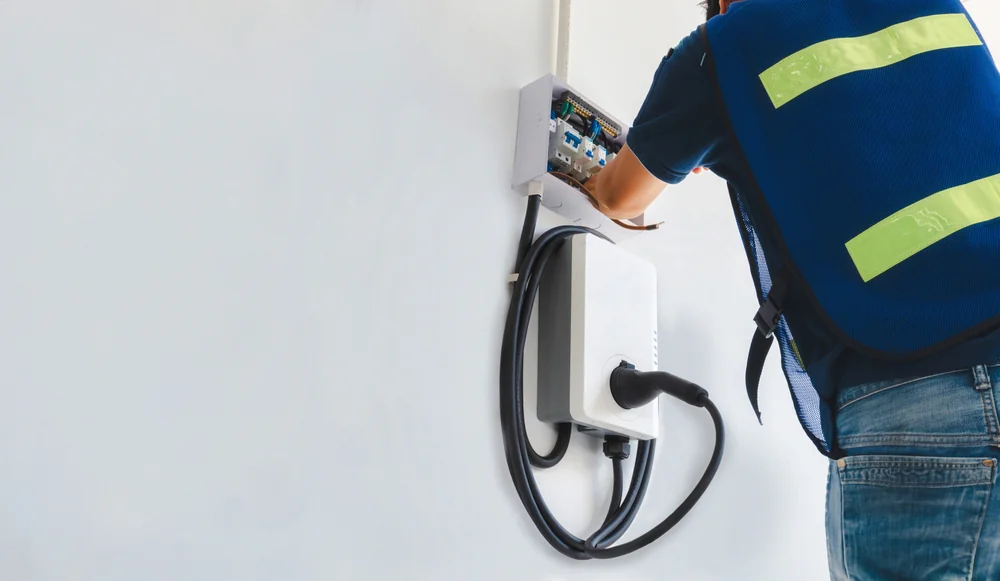
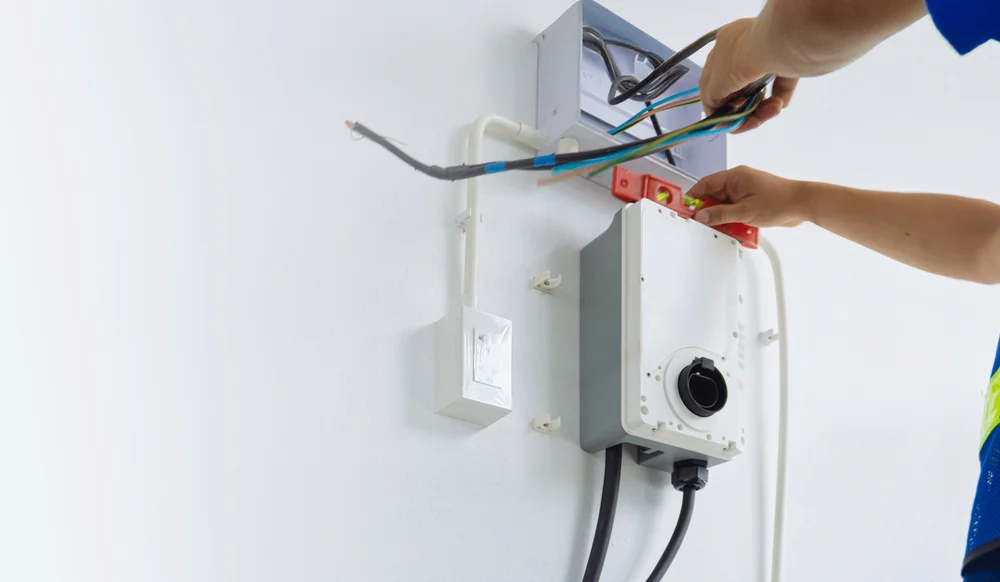
Electric Vehicle Charger Setup Near Bonlee
You’re done driving out of your way to find an open charging station. Done waiting 45 minutes at a crowded spot when you’ve got somewhere to be. Done paying premium rates because you had no other option.
A Level 2 home EV charger changes that. You plug in when you get home, and your car’s ready by morning. No planning around charging stops. No wondering if you’ll make it to the next station.
Your home becomes your fueling station. The charger’s already there when you need it. And with Duke Energy offering up to $1,133 in credits for installation, plus potential federal tax credits up to $1,000, the upfront cost drops significantly. You’re not just saving time—you’re saving money every month by charging at home rates instead of paying commercial station premiums.
Licensed EV Charger Installers in Bonlee
ESP Electrical Service Providers is owned and operated by Andy Helton, a Master Electrician who’s been licensed since 1989. We’ve served Chatham County and surrounding areas for over two decades, which means we know exactly what your home’s electrical system can handle and what it can’t.
Most homes in Bonlee weren’t built expecting a 40-amp load from an EV charger. We assess your current panel, determine if you need an upgrade, and handle the entire installation from permit to inspection. Our trucks are fully stocked, our pricing is flat-rate so there are no surprises, and we don’t leave until the job’s done right.
We’re local. We’re licensed. And we’ve done this enough times to spot problems before they become expensive mistakes.
How EV Charging Station Installation Works
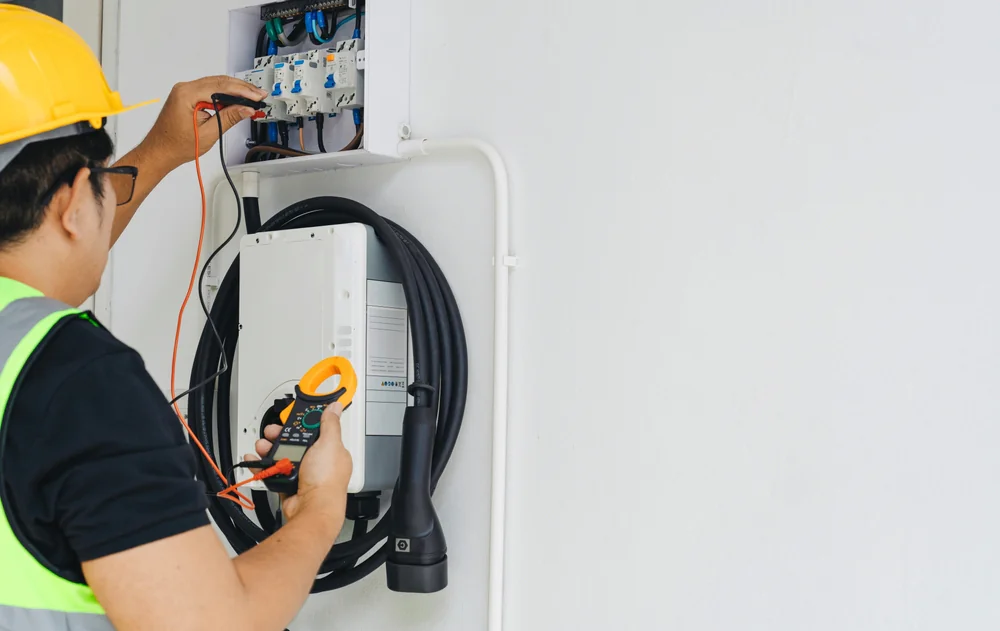
First, we come out and look at your electrical panel and the location where you want your charging station. Most EV chargers need a dedicated 240-volt circuit, and not every panel has the capacity for that. If yours doesn’t, we’ll tell you what upgrade is needed.
Once we know what your system requires, we give you a flat-rate price. No hourly guessing games. Then we handle the permit with the county, schedule the work, and install your charger where it makes the most sense—usually in your garage or carport.
After installation, the county inspector comes out to verify everything meets code. We walk you through how to use your new charger, connect it to your smartphone if it has that feature, and show you how to monitor your charging sessions. Then you’re set. Plug in at night, charge while you sleep, and drive on a full battery every morning.
What's Included in EV Charger Installation
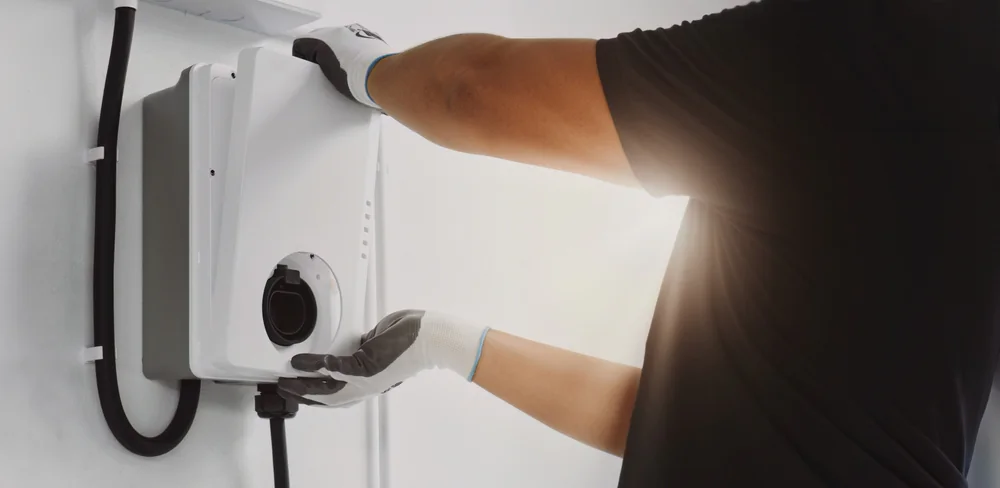
Your installation includes a full electrical assessment to determine if your panel can support the new load. If it can’t, we upgrade your service or add a subpanel. We install the dedicated 240-volt circuit your charger requires, mount the charging unit in the location that works best for your parking setup, and run all necessary conduit and wiring to code.
We also handle the permit application and coordinate the required inspection. In Bonlee and throughout Chatham County, electrical work on this scale requires both. Skipping that step voids your equipment warranty and creates liability if something goes wrong.
If you’re claiming the Duke Energy rebate, we provide the documentation you need. Same goes for federal tax credits. And if your charger has smart features—app control, scheduling, energy monitoring—we’ll walk you through the setup so you’re not fumbling with it later. North Carolina’s pushing hard to get 1.25 million EVs on the road by 2030, and the infrastructure support is there. We make sure you’re positioned to take advantage of it.
How long does it take to install a Level 2 EV charger at my home?
Most installations take between four and eight hours, depending on your electrical panel’s current capacity and how far the charger is from your panel. If your panel has room for a new 40-amp breaker and doesn’t need an upgrade, we’re usually done in half a day.
If your home needs a service upgrade or a subpanel added, that extends the timeline. We’re talking about a full day of work, sometimes two if we’re waiting on the utility company to upgrade your meter. Older homes in Bonlee often need panel upgrades because they weren’t built to handle modern electrical loads.
The permit and inspection add a few days to the overall process, but that’s not active work time. We file the permit, do the installation, and then schedule the county inspector. You’re not waiting around—we coordinate all of it.
Will my electrical panel need an upgrade to support an EV charger?
It depends on your current service and how much capacity your panel has left. A typical Level 2 EV charger pulls 40 amps at 240 volts. If your panel is already maxed out—or close to it—you’ll need either a service upgrade or a subpanel installed.
Homes built before 2000 often have 100-amp or 150-amp service, and once you factor in your HVAC, water heater, dryer, and other large appliances, there’s not much room left. Newer homes with 200-amp service usually have the capacity, but we still assess the entire load to be sure.
An upgrade isn’t a bad thing. It increases your home’s value and gives you headroom for future electrical needs. We’ll tell you upfront if it’s necessary and what it’ll cost. No surprises.
Can I install an EV charger myself to save money?
Technically, yes. Practically, it’s a bad idea. EV chargers require 240-volt wiring, a dedicated circuit, and proper load calculations to ensure your panel can handle it. If you get any of that wrong, you risk electrical fires, damaged equipment, or a failed inspection.
More importantly, most EV charger manufacturers require professional installation to keep the warranty valid. If you install it yourself and something goes wrong, you’re paying for the replacement out of pocket. Same goes for rebates—Duke Energy’s credit program requires proof of professional installation.
Then there’s the permit and inspection. Chatham County requires both for this type of work. If you skip that step and try to sell your home later, it’ll come up during the buyer’s inspection. You’ll either have to bring it up to code or risk killing the sale. Professional installation costs more upfront, but it protects your investment and keeps everything legal.
How much does it cost to install an EV charging station in Bonlee?
Installation costs typically run between $1,200 and $3,000, depending on your electrical system and how much work is required. If your panel has capacity and the charger location is close to your breaker box, you’re on the lower end. If we need to upgrade your service or run a long conduit, costs go up.
The charger itself is separate—that’s usually between $400 and $1,200 depending on the model and features you want. Add those together and you’re looking at $1,600 to $4,200 total for equipment and installation.
But here’s where it gets better. Duke Energy offers up to $1,133 in credits for the electrical work, and you may qualify for a federal tax credit up to $1,000. Those incentives drop your out-of-pocket cost significantly. We help with the paperwork so you actually get the rebates instead of leaving money on the table.
What's the difference between Level 1, Level 2, and Level 3 EV chargers?
Level 1 chargers plug into a standard 120-volt outlet—the same one you use for your phone or laptop. They’re slow, adding about 3 to 5 miles of range per hour. If you drive 30 miles a day, you’re looking at 6 to 10 hours of charging time. That works for some people, but it’s not practical if you drive more or need a faster turnaround.
Level 2 chargers run on 240 volts, the same as your dryer or oven. They add 12 to 60 miles of range per hour depending on your car and the charger’s amperage. Most people can fully charge overnight, even if they’ve drained the battery. This is the standard for home installations and what we install most often.
Level 3 chargers, also called DC fast chargers, are what you see at commercial charging stations. They require industrial power and can charge a car to 80% in 20 to 30 minutes. They’re not practical for homes—your utility service can’t support them, and the equipment costs tens of thousands of dollars. Level 2 is the sweet spot for residential use.
Do I need a permit to install an EV charger in Bonlee, NC?
Yes. Any electrical work that involves adding a new 240-volt circuit requires a permit in Chatham County. That includes EV charger installations. The permit ensures the work meets the National Electrical Code and local safety standards.
After the installation, a county inspector comes out to verify everything was done correctly. If it passes, you get a signed-off permit. If it doesn’t, the work has to be corrected before you can legally use the charger. This isn’t optional—it’s required by law.
We handle the permit application and schedule the inspection as part of our service. You don’t have to deal with the county or figure out what paperwork they need. And when you go to sell your home, you’ll have documentation proving the work was done legally and safely. That matters to buyers and their lenders.
Other Services we provide in Bonlee
About Us

Electrical Service Providers (ESP) has been in business since 2002. ESP started out performing wiring services to new construction, remodeling projects and residential homes. Our company’s president identified a market for electrical services to be performed in homes and businesses independent of new construction. Read More about Electrical Service Providers>>
All Rights Reserved.Organic Marketing LLC
Business Listings


Product Brands Used
Allied, Broan, Cutler Hammer, General Electric, Ideal, Juno, Kohler, Leviton, Lutron, Siemens, Square D
Contact
- Office Address: 3254 S Anthony Ct.
Burlington, NC 27215 - Mailing Address: PO Box 25
Alamance, NC 27201 - Phone: 336-228-3300
- E-mail: [email protected], [email protected]
Service Areas
Chapel Hill, Burlington, Carrboro, Durham, Gibsonville, Hillsborough, Graham, Pittsboro, Morrisville, Cary
About Us
Electrical Service Providers (ESP) has been in business since 2002. ESP started out performing wiring services to new construction, remodeling projects and residential homes. Our company’s president identified a market for electrical services to be performed in homes and businesses independent of new construction. Read More about Electrical Service Providers>>
All Rights Reserved.Organic Marketing LLC