EV Charger Installation in Brickhaven, NC
Charge at Home Without the Guesswork
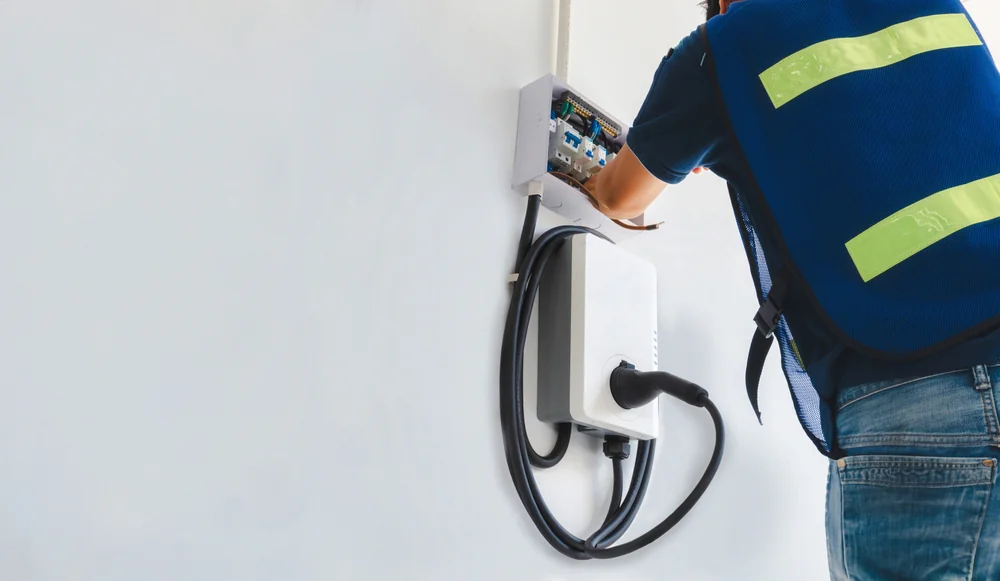
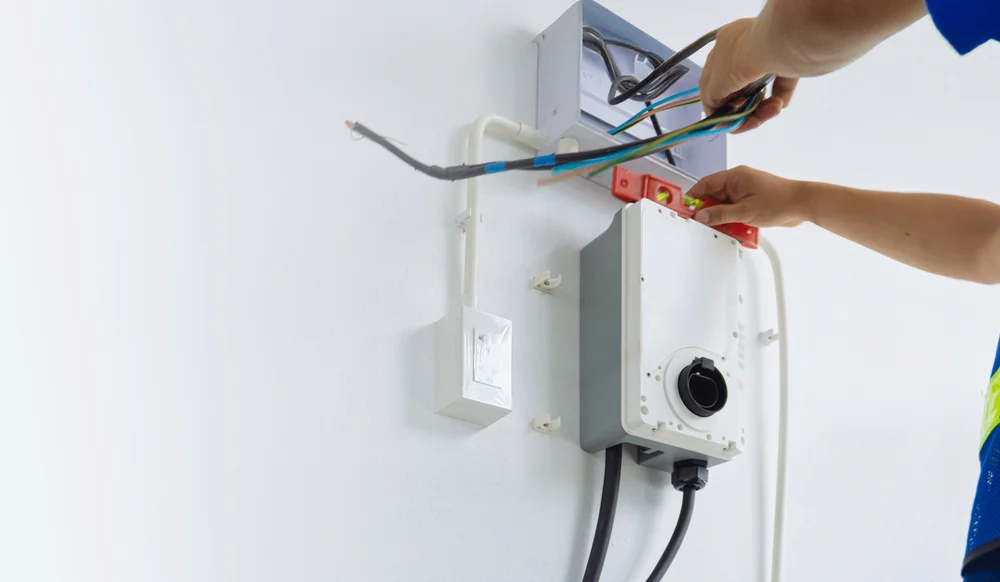
Home EV Charging Station Setup
You bought an EV to simplify your life, not to hunt for available charging stations or wait in line at the grocery store parking lot. Home charging means you plug in when you get home and start every day with a full battery—no apps to check, no detours to plan around.
The cost difference adds up fast. Public charging stations can run you two to three times what you’d pay charging at home overnight. With a Level 2 charger installed in your garage or carport, you’re looking at a full charge in four to six hours, not the 20-plus hours a standard outlet would take.
And if your electrical panel can’t handle the load, that’s not a dealbreaker. It just means you need an electrician who knows how to size the upgrade correctly the first time. That’s where the real value shows up—getting it done right so you’re not troubleshooting breaker trips or calling someone back out to fix what should’ve been handled upfront.
Licensed Electricians Serving Brickhaven, NC
ESP Electrical Service Providers has been handling residential and commercial electrical work across Alamance County, Chatham County, and Orange County for over 20 years. Our team is led by a master electrician with 35 years of experience, and our senior field technician has held a North Carolina electrical contractor license since 1989.
We’re not new to EV charger installation, and we’re not figuring it out as we go. You’ll get flat-rate pricing before any work starts, a fully stocked truck that shows up on time, and a crew that pulls permits and handles inspections without you having to chase anything down. Brickhaven and the surrounding communities have seen a surge in EV adoption—North Carolina just passed 100,000 registered electric vehicles in 2024—and the infrastructure has to keep up. We’re here to make sure yours does.
Our EV Charger Installation Process
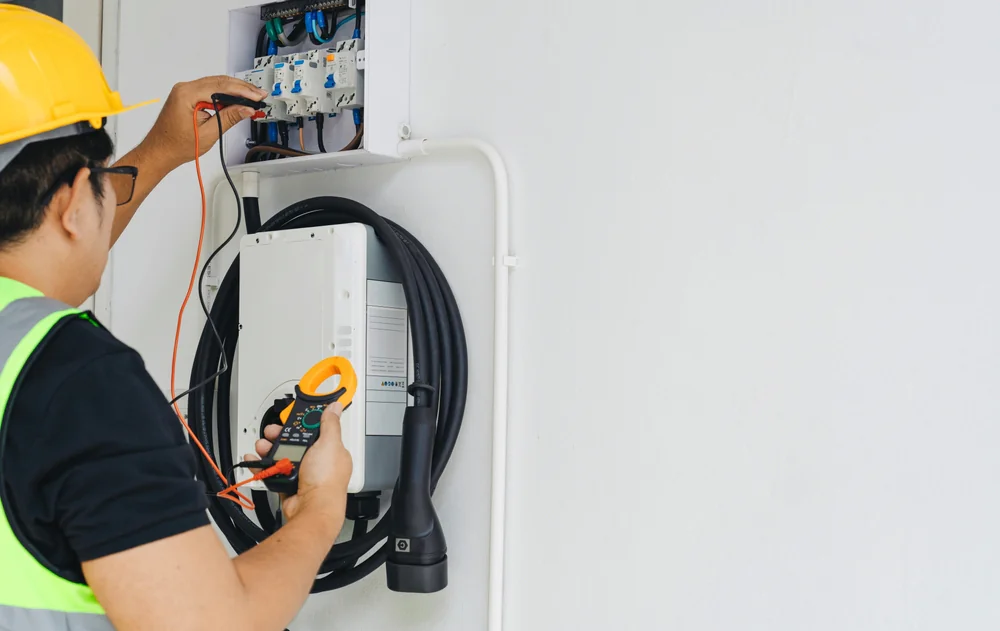
First, we’ll assess your current electrical system. That means looking at your panel capacity, the distance from the panel to where you want the charger installed, and whether your home needs any upgrades to handle the load. Most Level 2 chargers pull 40 to 50 amps, and if your panel is already maxed out or outdated, we’ll walk you through what an upgrade involves and what it costs before moving forward.
Once we know what’s needed, we pull the permits. Alamance County and surrounding areas require electrical permits for this type of work, and inspections have to pass before the system goes live. We handle that entire process so you’re not stuck navigating county offices or waiting on callbacks.
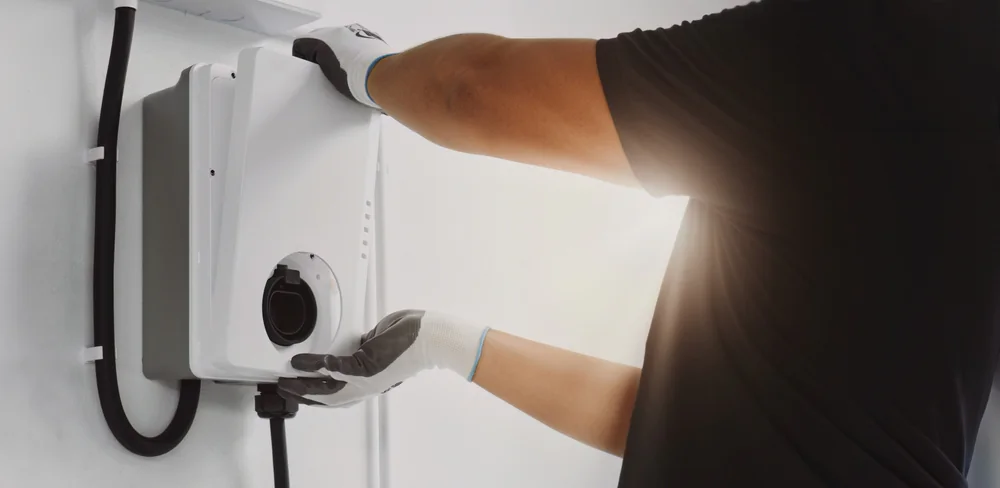
Installation day is straightforward. We mount the charging unit, run the wiring, make the connections, and test everything to make sure it’s working safely and efficiently. If you’re eligible for Duke Energy’s rebate program—which covers up to $1,117 for electrical upgrades related to EV charging—we’ll make sure the work is documented correctly so you can file for reimbursement. The federal tax credit is still available through June 2026, and that’s worth up to $1,000 for residential installs. We’ll provide the paperwork you need for that, too.
What's Included in EV Charger Setup
This isn’t just about mounting a charger on the wall. You’re getting a full electrical evaluation, load calculations to make sure your system can handle the demand, and any necessary panel upgrades to support safe operation. We install the dedicated 240-volt circuit, mount your Level 2 charging station, and connect everything according to the National Electrical Code and local requirements in Brickhaven, NC.
If you drive a Tesla, we can install a Tesla Wall Connector or a universal J1772 charger that works with the adapter. If you’ve got another make—Rivian, Ford Lightning, Chevy Bolt, whatever—we’ll match the charger to your vehicle and your daily driving habits. Some customers want smart chargers with app control and energy monitoring. Others just want something reliable that works every time. We’ll walk through the options based on what actually makes sense for your situation.
North Carolina’s push toward 1.25 million EVs on the road by 2030 means more homes in Alamance County and Chatham County are going to need charging infrastructure. New construction is already required to be EV-ready in many cases. If you’re adding a charger to an existing home, you’re not just making your life easier—you’re increasing your property value. Homes listed with EV charging stations saw a 91.6% increase in listings from 2024 to 2025. Buyers are looking for this, and you’re ahead of the curve.
How much does it cost to install an EV charger in Brickhaven, NC?
The cost depends on your current electrical setup and how far the charger is from your panel. If your panel has capacity and the wiring run is short, you’re looking at a lower cost. If you need a panel upgrade or a long conduit run, that adds to the total.
We use flat-rate pricing, so you’ll know the cost before we start. No surprises, no hourly billing that drags on. Most residential Level 2 charger installations in the Brickhaven area fall within a predictable range once we assess your system.
And don’t forget the rebates. Duke Energy is offering up to $1,117 to cover electrical upgrades for home EV charging, and the federal tax credit adds another $1,000. Those programs won’t last forever—the federal credit ends in June 2026—so if you’re planning to install a charger, now’s the time to capture that money.
Do I need to upgrade my electrical panel to install an EV charger?
Not always, but it’s common. Most Level 2 chargers need a dedicated 40- or 50-amp circuit, and if your panel is already running close to capacity, there’s no safe way to add that load without an upgrade.
Older homes in Alamance County and Chatham County often have 100-amp or 150-amp panels, and those can max out quickly once you factor in HVAC, water heaters, and other large appliances. A panel upgrade to 200 amps gives you the headroom you need—not just for the EV charger, but for anything else you might add down the road.
We’ll do a load calculation during the site assessment and let you know whether an upgrade is necessary. If it is, we’ll explain what’s involved, how long it takes, and what it costs. The Duke Energy rebate can offset a significant portion of that expense, which makes the upgrade more affordable than most people expect.
How long does EV charger installation take in Brickhaven?
If your panel has capacity and the install is straightforward, we can usually complete the work in one day. That includes mounting the charger, running the circuit, making the connections, and testing everything.
If you need a panel upgrade, that adds time. Panel upgrades typically take a day on their own, and then we schedule the charger installation once the new panel passes inspection. Permit approval and inspection scheduling can add a few days to the timeline, depending on how busy the county is.
We’ll give you a realistic timeline upfront based on what your specific job requires. We’re not going to rush through an install just to check a box. You’re getting work that’s done right, inspected, and safe to use the day we leave.
Can you install a charger if I don't have a garage?
Yes. You don’t need a garage to install an EV charger. We can mount a weather-rated outdoor charger on an exterior wall, a carport post, or a dedicated pedestal near your driveway.
Outdoor installations require equipment that’s rated for the elements—NEMA 3R or higher enclosures that can handle rain, heat, and humidity. We’ll also make sure the conduit and wiring are protected and that everything meets code for exterior installations in North Carolina.
The main consideration is the distance from your electrical panel to the charging location. Longer runs mean more material and labor, which affects cost. But if your driveway or carport is on the same side of the house as your panel, it’s usually a straightforward install. We’ll assess your property during the site visit and give you a clear picture of what’s feasible.
What's the difference between Level 1 and Level 2 EV charging?
Level 1 charging uses a standard 120-volt outlet—the same outlet you’d plug a lamp into. It’s slow. You’re looking at about four to five miles of range per hour of charging, which means a full charge can take 20 hours or more depending on your battery size.
Level 2 charging uses a 240-volt circuit, the same voltage that powers your electric dryer or oven. It’s significantly faster—most Level 2 chargers deliver 25 to 30 miles of range per hour. That means you can fully charge an EV with a 60 kWh battery in four to six hours, which works for most people’s daily driving habits.
If you’re serious about owning an EV and you want the convenience of charging at home without waiting all night and into the next day, Level 2 is the standard. It requires professional installation, a dedicated circuit, and sometimes a panel upgrade, but the speed and reliability make it worth the upfront investment.
Will installing an EV charger increase my home's value in Brickhaven?
It can, especially as EV adoption continues to grow in North Carolina. Homes with EV charging infrastructure are being listed 91.6% more often in 2025 compared to 2024, and buyers are actively searching for properties that already have this feature installed.
You’re not just adding a convenience for yourself—you’re making your home more attractive to a growing segment of buyers who either own an EV now or plan to buy one soon. North Carolina is on track to hit 1.25 million EVs by 2030, and Brickhaven is part of a region where EV adoption is accelerating faster than the state average.
Even if you’re not planning to sell anytime soon, the infrastructure you install today positions your property better for the future. And with the Duke Energy rebate and federal tax credit still available, you’re getting financial support to make an upgrade that pays off both in daily use and long-term property value.
Other Services we provide in Brickhaven
About Us

Electrical Service Providers (ESP) has been in business since 2002. ESP started out performing wiring services to new construction, remodeling projects and residential homes. Our company’s president identified a market for electrical services to be performed in homes and businesses independent of new construction. Read More about Electrical Service Providers>>
All Rights Reserved.Organic Marketing LLC
Business Listings


Product Brands Used
Allied, Broan, Cutler Hammer, General Electric, Ideal, Juno, Kohler, Leviton, Lutron, Siemens, Square D
Contact
- Office Address: 3254 S Anthony Ct.
Burlington, NC 27215 - Mailing Address: PO Box 25
Alamance, NC 27201 - Phone: 336-228-3300
- E-mail: [email protected], [email protected]
Service Areas
Chapel Hill, Burlington, Carrboro, Durham, Gibsonville, Hillsborough, Graham, Pittsboro, Morrisville, Cary
About Us
Electrical Service Providers (ESP) has been in business since 2002. ESP started out performing wiring services to new construction, remodeling projects and residential homes. Our company’s president identified a market for electrical services to be performed in homes and businesses independent of new construction. Read More about Electrical Service Providers>>
All Rights Reserved.Organic Marketing LLC