EV Charger Installation in Browns Summit, NC
Charge at Home Without the Guesswork or Risk
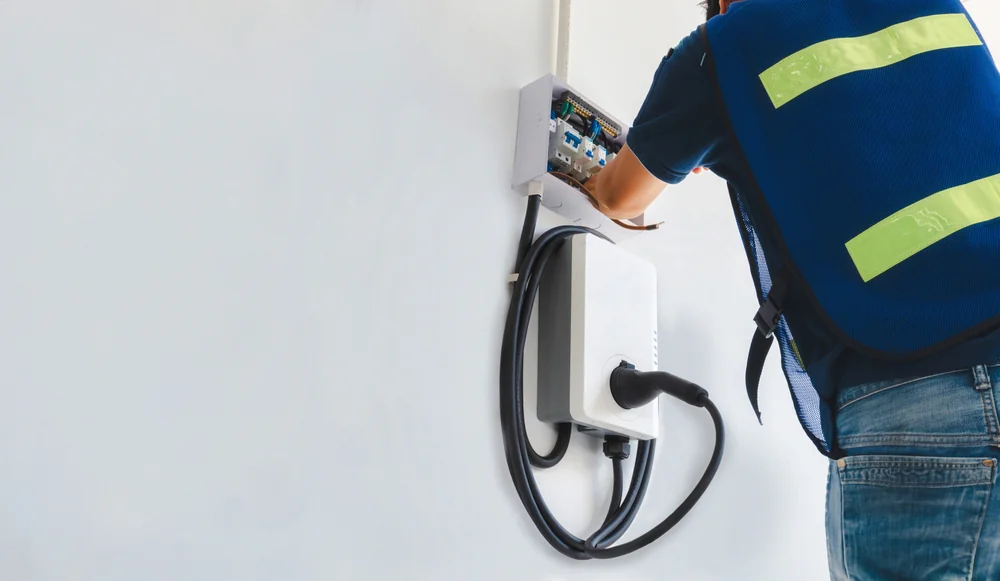
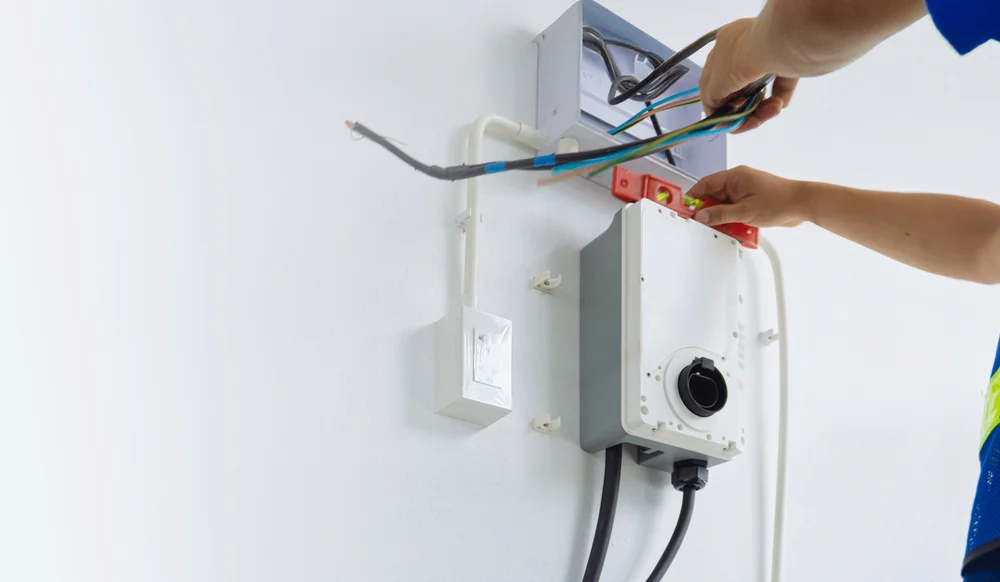
Electric Vehicle Charging Station Setup
You bought an electric vehicle to simplify your life. The last thing you need is another errand on your calendar or another app telling you the closest charging station is occupied.
A home EV charger means you plug in when you get home and you’re done. No waiting. No wondering if you’ll have enough charge to make it to work. Most Level 2 chargers add 25 to 40 miles of range per hour, which means a full charge overnight for the majority of EVs—usually between three and eight hours depending on your battery size.
And if you’re a Duke Energy customer in the Browns Summit area, you can apply for a rebate that covers up to $1,133 of your installation cost. That’s not a small credit. It’s enough to offset a significant portion of the work, especially if your electrical panel is already set up to handle the load. Even if it’s not, knowing what you’re working with upfront makes the decision a lot easier.
Licensed EV Charger Electrician Near You
ESP Electrical Service Providers is owned and operated by Andy Helton, a Master Electrician with over 35 years of experience. We’ve been serving Browns Summit, Greensboro, Burlington, and the surrounding Piedmont Triad since 2002—back when most people didn’t know what a Tesla was.
We’re not a franchise. You’re not talking to a call center. When you reach out, you’re speaking directly to someone who knows your area, understands the local permitting process, and has probably worked on a home just like yours. Browns Summit sits in a mix of older country homes and newer builds, which means electrical systems vary widely. Some panels are ready to go. Others need an upgrade before we can safely install a 240-volt charging station.
We give you flat-rate pricing before we start. You know the cost upfront. Our trucks are stocked, our electricians show up in uniform, and we clean up before we leave. That’s how we’ve stayed in business for over two decades.
How EV Charger Installation Works
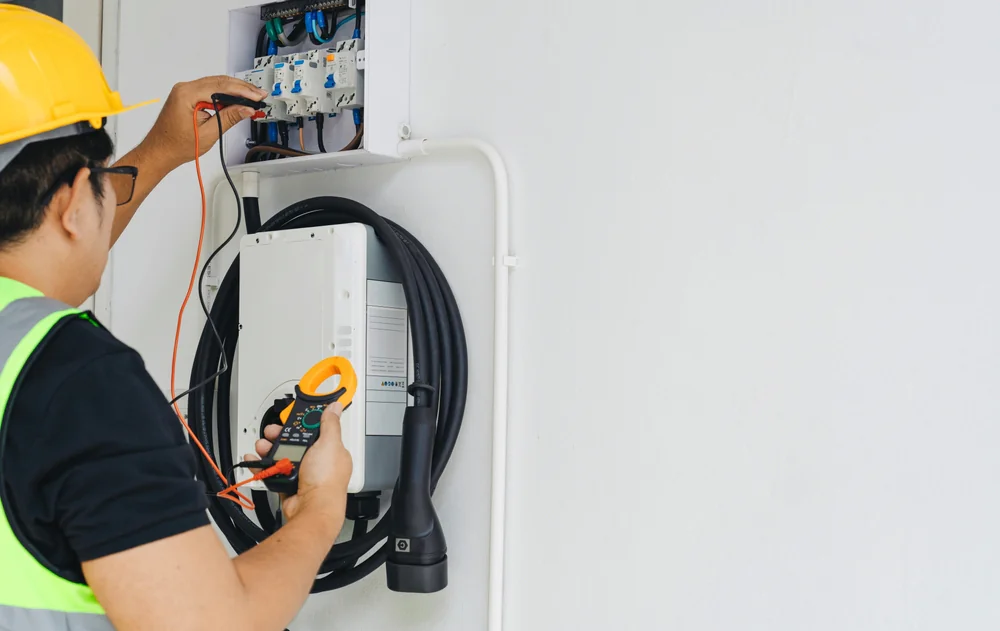
First, we assess your electrical panel. Most EV chargers require a dedicated 240-volt circuit, similar to what powers your dryer or oven. If your panel has space and capacity, the installation is straightforward. If you’re running a 100-amp service and it’s already near capacity, we’ll talk through your options—whether that’s a panel upgrade, a subpanel, or load management.
Next, we handle the permits. EV charger installations require local permits in most areas, and inspections are part of the process. We take care of that. You don’t have to call the county or figure out what forms to file.
Then we install the charger where it makes sense—usually in your garage or on an exterior wall near where you park. We mount the unit, run the wiring, connect it to your panel, and test everything to make sure it’s working correctly. If you’re installing a smart charger with app connectivity, we’ll walk you through the setup so you can monitor charging from your phone.
After installation, the work gets inspected and signed off. You’ll have documentation showing the job was done to code, which matters for insurance, resale value, and your own peace of mind.
What's Included in EV Charger Setup
Every installation includes a full electrical assessment. We check your panel’s capacity, available breaker slots, and the condition of your existing wiring. If you need an upgrade, we’ll tell you why and what it costs before moving forward.
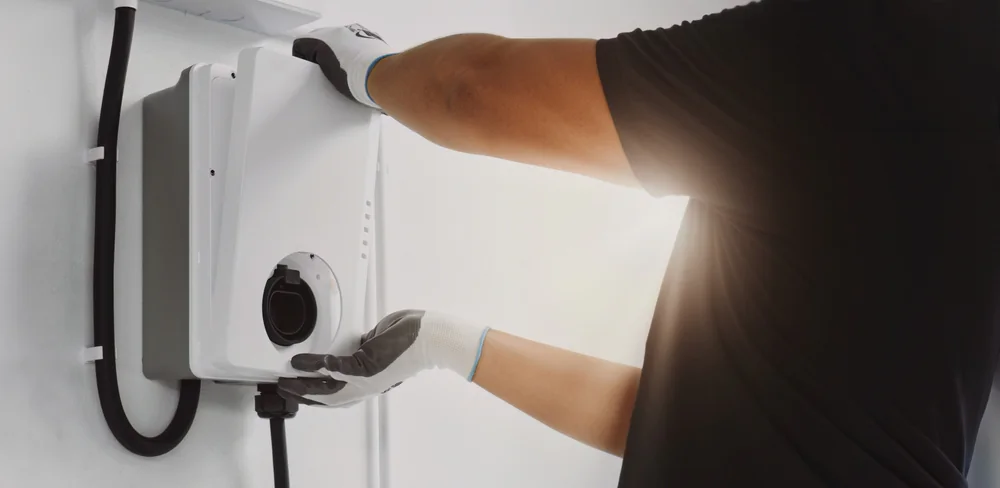
We install the charger itself, whether you’ve already purchased one or need a recommendation. Most of our customers in Browns Summit go with Level 2 chargers because they’re faster than a standard outlet and compatible with every EV brand—Tesla, Ford, Chevy, Nissan, Rivian, you name it. We mount it securely, run conduit if needed, and make sure the setup looks clean.
North Carolina is aiming to put 1.25 million EVs on the road by 2030, and infrastructure is expanding fast. Browns Summit is part of that growth. More people are buying electric vehicles, and more homebuyers are specifically looking for properties with charging capability already in place. Installing a charger now increases your home’s appeal if you ever sell, and it future-proofs your electrical system for other upgrades down the line—like solar panels or a second EV.
We also help you apply for available rebates and tax credits. The federal 30C tax credit covers 30% of installation costs up to $1,000, and Duke Energy’s rebate can add another $1,133. Those aren’t automatic—you have to submit documentation. We make sure you have what you need.
How much does it cost to install an EV charger in Browns Summit?
Most installations run between $800 and $3,000 depending on your electrical setup and how far the charger is from your panel. If your home already has a 200-amp service and available breaker space, you’re on the lower end. If we need to upgrade your panel or run a long conduit to reach your parking area, costs go up.
The charger itself is separate. You can buy one yourself or we can source it. Level 2 chargers typically range from $400 to $1,200 depending on features like smart connectivity or higher amperage.
Duke Energy customers can apply for a $1,133 rebate, and the federal tax credit covers 30% of labor and materials up to $1,000. Between those two, you’re looking at significant savings. We provide all the documentation you need to file for both.
Do I need to upgrade my electrical panel for an EV charger?
It depends on your current setup. Most EV chargers pull between 30 and 50 amps, which requires a dedicated 240-volt circuit. If your panel is already maxed out or you’re running on an older 100-amp service, an upgrade is likely.
Homes built in the last 20 years usually have 200-amp panels with room to spare. Older homes in Browns Summit—especially those built before the 1990s—often need work. We check your panel during the assessment and give you a clear answer before quoting anything.
Upgrading your panel isn’t just about the charger. It prepares your home for future electrical demands like additional appliances, solar systems, or a second EV. It’s often worth doing it right the first time instead of piecing together temporary solutions.
How long does EV charger installation take?
If your electrical system is ready, most installations take four to eight hours. That includes mounting the charger, running the wiring, connecting everything to your panel, and testing the system.
If you need a panel upgrade or a subpanel, add another day or two depending on the scope of work. Permitting and inspections add time to the overall timeline, but the actual work itself is usually completed in one or two visits.
We schedule around your availability. You don’t need to be home the entire time, but we do need access to your garage or wherever the charger is going, plus your electrical panel.
Will an EV charger work with any electric vehicle?
Yes. Level 2 chargers use a standard J1772 connector that works with every electric vehicle sold in the U.S.—Ford, Chevy, Nissan, Hyundai, Rivian, and others. Tesla vehicles need an adapter, but Tesla includes one with every car and they cost about $50 if you need a replacement.
The charger doesn’t care what brand your car is. It delivers power through a standardized plug. Your vehicle’s onboard system controls how fast it charges based on its battery capacity and charging limits.
If you’re planning to own multiple EVs or you might sell your home to someone with a different brand, a Level 2 charger covers everyone. It’s the most versatile option and the one we install most often in Browns Summit.
Can I install an EV charger myself?
Legally, no—not in North Carolina. EV charger installation requires a licensed electrician and a permit. The work involves high-voltage wiring, and improper installation can cause electrical fires, damage to your vehicle’s charging system, or injury.
Even if you’re comfortable with basic electrical work, this isn’t a DIY project. Inspectors check for code compliance, proper grounding, correct wire gauge, and safe installation practices. If something’s wrong, you’ll have to redo it anyway—and you’ll still need a licensed electrician to sign off.
We’ve seen homeowners try to cut costs by doing it themselves, only to call us later when the charger won’t work or the inspection fails. It’s not worth the risk or the hassle. Hire someone who knows what they’re doing and get it done right the first time.
What rebates or tax credits are available for EV charger installation?
Duke Energy offers a $1,133 rebate for residential Level 2 charger installations. You apply after the work is done, and the credit goes toward your installation costs. Not every utility offers this, but Duke does—and most of Browns Summit falls within their service area.
The federal government also provides a 30% tax credit on installation costs under the 30C Alternative Fuel Infrastructure Tax Credit. That covers labor and materials up to $1,000, and it’s available through June 2026. You claim it when you file your taxes.
Between the two programs, you can offset a significant portion of your total cost. We provide itemized invoices and all necessary documentation so you have everything you need to apply. Some customers end up paying less than half of what they expected after rebates and credits come through.
Other Services we provide in Browns Summit
About Us

Electrical Service Providers (ESP) has been in business since 2002. ESP started out performing wiring services to new construction, remodeling projects and residential homes. Our company’s president identified a market for electrical services to be performed in homes and businesses independent of new construction. Read More about Electrical Service Providers>>
All Rights Reserved.Organic Marketing LLC
Business Listings


Product Brands Used
Allied, Broan, Cutler Hammer, General Electric, Ideal, Juno, Kohler, Leviton, Lutron, Siemens, Square D
Contact
- Office Address: 3254 S Anthony Ct.
Burlington, NC 27215 - Mailing Address: PO Box 25
Alamance, NC 27201 - Phone: 336-228-3300
- E-mail: [email protected], [email protected]
Service Areas
Chapel Hill, Burlington, Carrboro, Durham, Gibsonville, Hillsborough, Graham, Pittsboro, Morrisville, Cary
About Us
Electrical Service Providers (ESP) has been in business since 2002. ESP started out performing wiring services to new construction, remodeling projects and residential homes. Our company’s president identified a market for electrical services to be performed in homes and businesses independent of new construction. Read More about Electrical Service Providers>>
All Rights Reserved.Organic Marketing LLC