EV Charger Installation in Burlington, NC
Charge at Home, Skip the Station Hunt
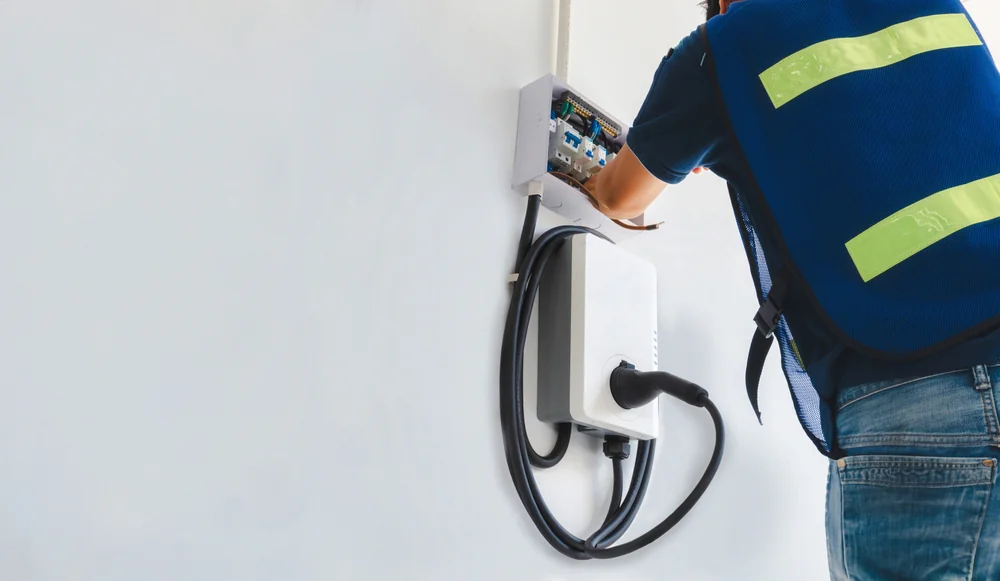
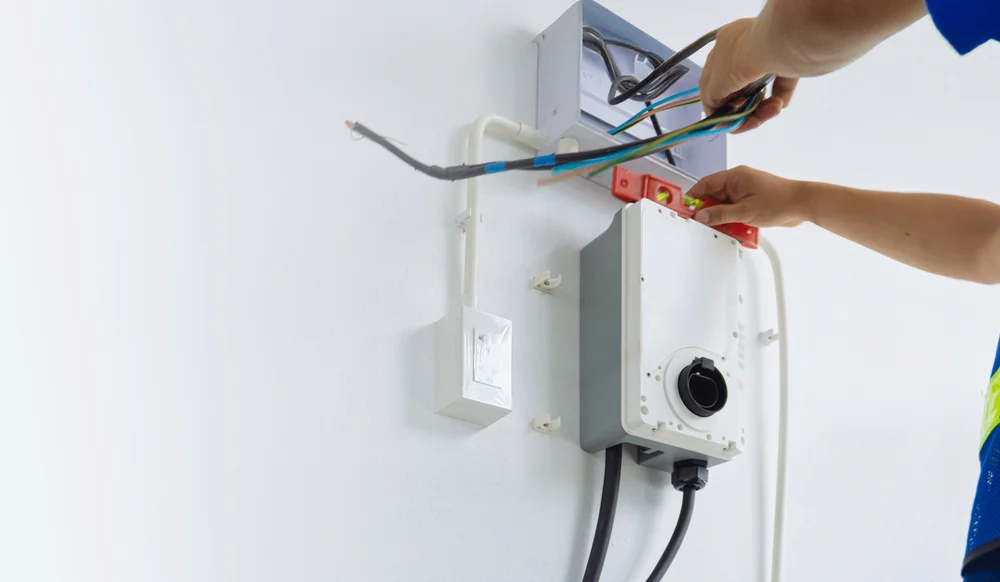
Electric Vehicle Charging Station Setup
You bought an EV to save money and skip gas stations. But now you’re circling Burlington looking for an open charging spot, or you’re stuck using a standard outlet that adds maybe 4 miles of range per hour. That’s not why you went electric.
A Level 2 home charging station changes that. You plug in when you get home, and by morning your car’s ready. No apps to check. No wondering if someone’s using the charger you drove to. Just a full battery sitting in your driveway.
Most Level 2 chargers add 12 to 60 miles of range per hour depending on your setup. That means a full charge overnight for daily driving, and you’re spending significantly less than you would at a public station or pumping gas. You’re also adding value to your home—buyers in Burlington are actively looking for properties with EV charging already installed.
Burlington Electricians for EV Chargers
We started doing electrical work in new construction and residential projects over 20 years ago. We’ve seen Burlington grow, watched EV adoption take off across Alamance County, and adapted our services to match what homeowners actually need now.
Installing an EV charger isn’t the same as swapping out a light fixture. It requires a licensed electrician who understands panel capacity, circuit loads, and local code requirements. We’ve done this work in Graham, Mebane, Elon, and throughout the area. We know what Duke Energy requires, and we know how to get your installation done safely the first time.
You’re not getting a sales pitch from us. You’re getting a straight answer about whether your electrical system can handle the charger you want, what it’ll take to install it, and how long it’ll take.
How EV Charger Installation Works
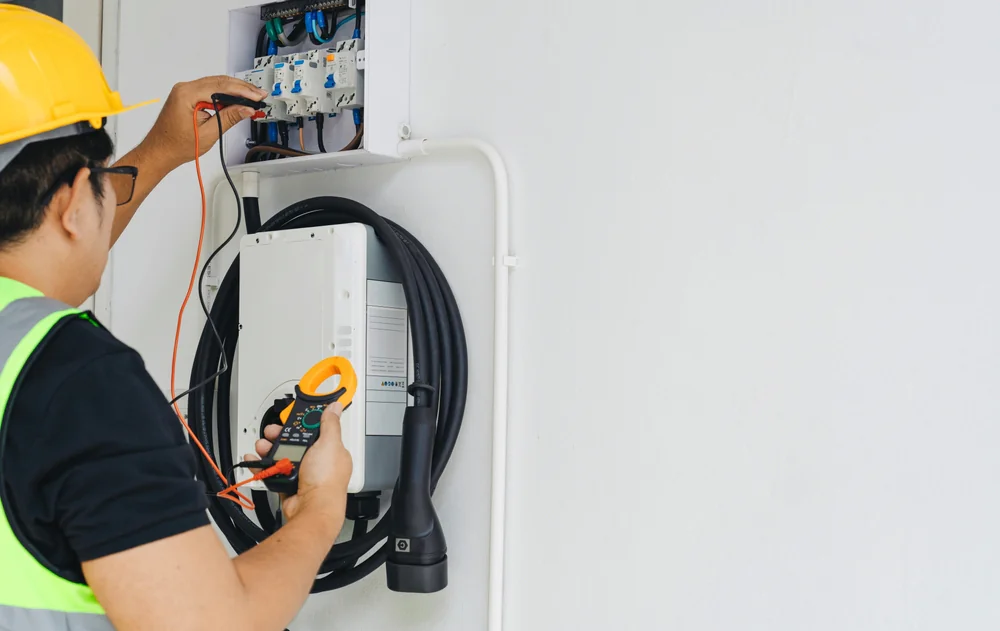
First, we look at your electrical panel. Most homes in Burlington can handle a Level 2 charger, but some older panels need an upgrade first. We’ll tell you exactly what your system can support and what changes, if any, are necessary. No surprises.
Next, we determine the best location for your charger. That’s usually in your garage or near where you park. We’ll run the wiring, install the charging unit, and make sure everything meets North Carolina electrical code. If your panel needs an upgrade, we handle that too.
Once it’s installed, we test the system to make sure it’s charging at the right speed and operating safely. Then we walk you through how to use it. The whole process typically takes a few hours for a straightforward install, or up to a day if panel work is involved.
You’ll also want to know about Duke Energy’s EV Charger Installation Support Program. It offers up to $1,117 in credits per household for electrical upgrades related to EV charging. We can help you understand if you qualify and what expenses are covered.
What's Included in Your Installation
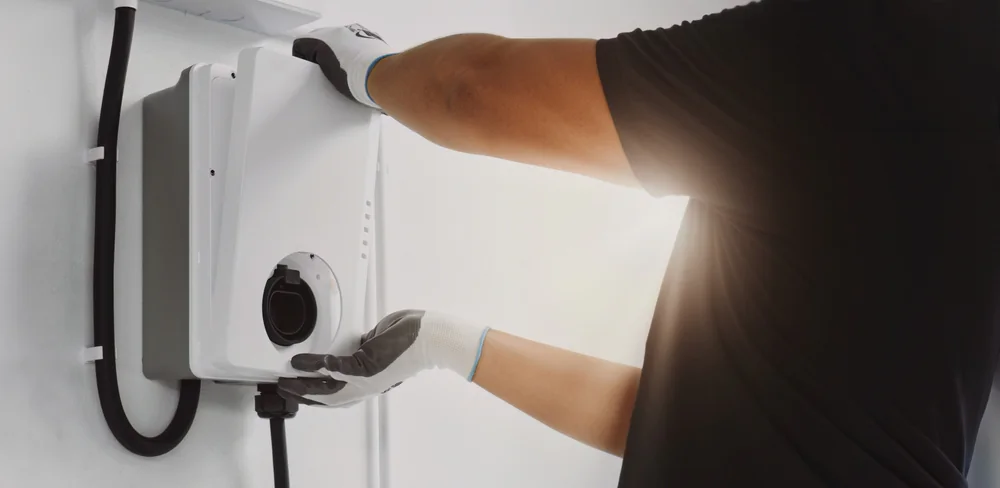
Your installation includes a full electrical assessment, proper circuit installation, charger mounting, and code-compliant wiring. We’re installing a system that’ll work with your current EV and any future electric vehicle you buy. Most Level 2 chargers are universal, so you’re not locked into one car brand.
Burlington’s EV market is growing fast. North Carolina added 50,000 EVs in just 23 months, and nearly 20% of all EVs on the road were purchased in 2024. That means more competition for the 126 public charging stations around Burlington. Installing a home charger now puts you ahead of that curve.
We also install chargers for commercial properties. If you run a business in Alamance County and want to offer charging for employees or customers, the setup process is similar but scaled for higher usage. We’ll assess your electrical capacity, recommend the right equipment, and handle the installation.
Smart chargers are another option. These connect to your phone so you can monitor charging status, schedule charging during off-peak hours to save on electricity costs, and get alerts when your car’s fully charged. If that matters to you, we’ll walk through which models offer those features.
How much does it cost to install an EV charger at home in Burlington?
Installation costs vary depending on your electrical panel’s current capacity and how far the charger is from your panel. If your panel can handle the load and the charger’s going in your garage near the panel, you’re looking at a simpler install. If we need to upgrade your panel or run wiring a longer distance, that adds to the cost.
Most residential Level 2 charger installations in Burlington range from around $500 to $2,000, including labor and materials. The charger itself is separate—you can buy that on your own or we can source it. Keep in mind Duke Energy’s rebate program covers up to $1,117 for qualifying electrical work, which can offset a significant portion of your installation cost.
We’ll give you a clear estimate after assessing your home’s electrical setup. No hidden fees, no upselling you on things you don’t need.
Can my electrical panel handle a Level 2 EV charger?
Most modern panels can, but older homes in Burlington sometimes need an upgrade. A Level 2 charger typically requires a 240-volt circuit, similar to what powers your dryer or oven. If your panel has available space and capacity, installation is straightforward.
If your panel is already maxed out or it’s an older model, we may need to upgrade it to safely support the charger. That’s not a bad thing—it also means your home’s electrical system is updated to handle other high-draw appliances and future needs. We’ll inspect your panel during the initial assessment and let you know exactly what’s required.
Some homeowners worry about this step, but panel upgrades are routine work for us. We’ve done them throughout Alamance County, and they’re often covered under Duke Energy’s rebate program if they’re related to EV charging installation.
How long does it take to charge an electric vehicle at home?
With a Level 2 charger, you’re looking at 12 to 60 miles of range added per hour, depending on your charger’s wattage and your vehicle’s onboard charging capacity. For most daily drivers in Burlington, that means a full charge overnight. If you’re coming home with a half-empty battery, you’ll be topped off in a few hours.
Compare that to a standard 120-volt outlet, which only adds 3 to 5 miles per hour. That’s fine if you barely drive, but it’s not practical for most people. Level 2 charging is the standard for home installations because it actually keeps up with real-world driving.
If you drive more than average or you have a larger EV with a bigger battery, charging might take longer, but you’re still waking up to a full battery if you plug in at night. The key is that you’re charging while you’re sleeping or working, so the time doesn’t matter—you’re not sitting around waiting for it.
Do I need a permit to install an EV charger in Burlington?
Yes, EV charger installations in Burlington require an electrical permit because you’re adding a new 240-volt circuit to your home. This isn’t a hassle—it’s a safety measure that ensures the work meets North Carolina electrical code. We pull the permit as part of the installation process, so you don’t have to deal with it.
After installation, a city inspector will verify that everything was done correctly. This protects you as the homeowner and ensures your charger is safe to use long-term. It also matters if you ever sell your home—buyers want to see that electrical work was permitted and inspected.
Some homeowners try to skip this step or hire someone who cuts corners. That’s a risk you don’t want to take. If there’s ever an electrical issue or a fire related to unpermitted work, your insurance might not cover it. We do it right from the start.
Will installing an EV charger increase my electric bill significantly?
Your bill will go up because you’re charging a vehicle, but it’s still cheaper than buying gas. The average cost to fully charge an EV at home in North Carolina is significantly less than filling a gas tank for the same range. Exactly how much your bill increases depends on how much you drive and your electricity rate.
If you’re driving 30 to 40 miles a day, you might see an extra $30 to $50 per month on your electric bill. If you drive less, it’s less. If you drive more, it’s more. But compare that to what you were spending on gas, and most EV owners in Burlington come out ahead.
You can also lower costs by charging during off-peak hours if Duke Energy offers time-of-use rates in your area. Some smart chargers let you schedule charging for late at night when electricity is cheaper. That’s another reason why home charging beats public stations—you control when and how you charge.
What's the difference between Level 1 and Level 2 EV chargers?
Level 1 chargers plug into a standard 120-volt outlet—the same outlet you use for your phone or laptop. They’re slow, adding only 3 to 5 miles of range per hour. That works if you drive very little or you’re just topping off, but it’s not practical for most people who actually use their EV daily.
Level 2 chargers require a 240-volt circuit, the same kind that powers your dryer. They charge much faster—12 to 60 miles of range per hour depending on the setup. This is what most EV owners install at home because it keeps up with real driving. You can leave for work in the morning with a full battery instead of waiting all day for a trickle charge.
Level 2 is also future-proof. If you upgrade to a different EV down the road, your charger will still work. Most electric vehicles on the market use the same charging standard, so you’re not locked into one brand. Installing Level 2 now means you’re set for whatever you drive next.
Other Services we provide in Burlington
About Us

Electrical Service Providers (ESP) has been in business since 2002. ESP started out performing wiring services to new construction, remodeling projects and residential homes. Our company’s president identified a market for electrical services to be performed in homes and businesses independent of new construction. Read More about Electrical Service Providers>>
All Rights Reserved.Organic Marketing LLC
Business Listings


Product Brands Used
Allied, Broan, Cutler Hammer, General Electric, Ideal, Juno, Kohler, Leviton, Lutron, Siemens, Square D
Contact
- Office Address: 3254 S Anthony Ct.
Burlington, NC 27215 - Mailing Address: PO Box 25
Alamance, NC 27201 - Phone: 336-228-3300
- E-mail: [email protected], [email protected]
Service Areas
Chapel Hill, Burlington, Carrboro, Durham, Gibsonville, Hillsborough, Graham, Pittsboro, Morrisville, Cary
About Us
Electrical Service Providers (ESP) has been in business since 2002. ESP started out performing wiring services to new construction, remodeling projects and residential homes. Our company’s president identified a market for electrical services to be performed in homes and businesses independent of new construction. Read More about Electrical Service Providers>>
All Rights Reserved.Organic Marketing LLC