EV Charger Installation in Bynum, NC
Charge at Home Without the Guesswork
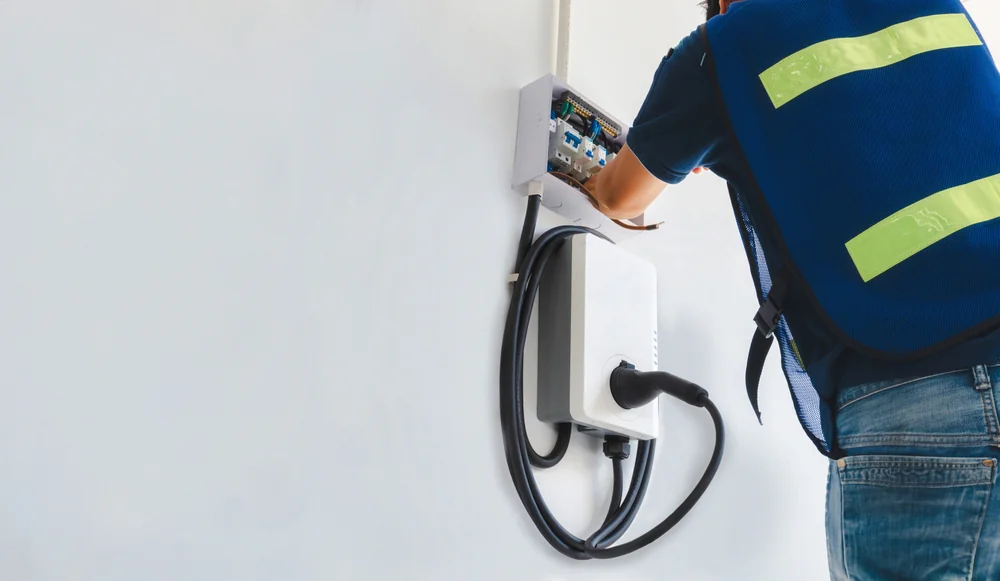
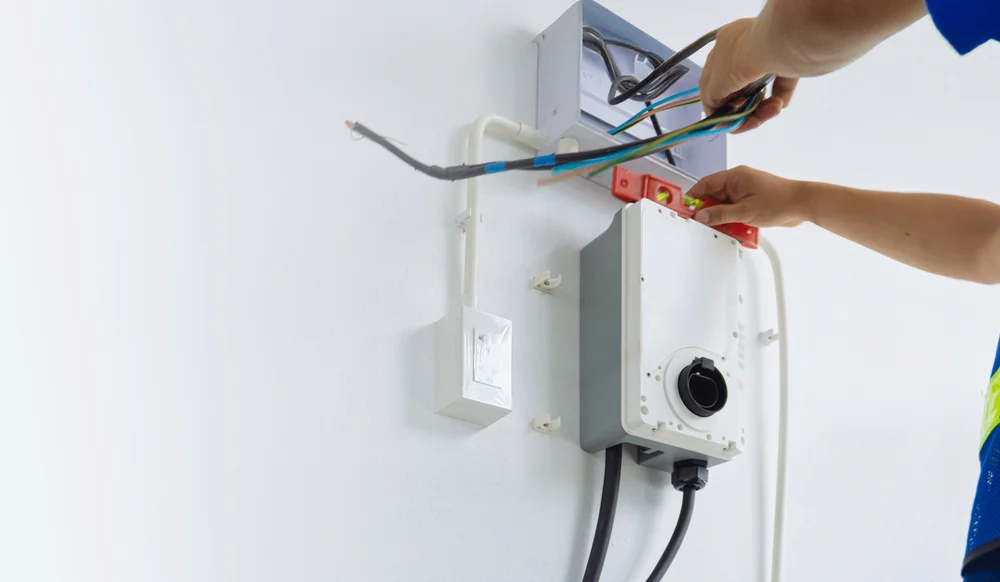
Home EV Charging Solutions Bynum
You bought an EV to make life simpler, not to plan your week around public charging stations. A Level 2 home charger gives you 25 to 40 miles of range per hour, which means a full charge overnight while you sleep.
No more sitting in parking lots. No more wondering if the station will be available or working when you get there.
Your time matters. Home charging means you leave every morning with a full battery, just like your phone. And if your electrical panel needs an upgrade to handle it, we’ll tell you upfront what that looks like and help you access Duke Energy’s rebate program that covers up to $1,117 of the installation costs. Most Bynum homeowners with 200-amp service can add a Level 2 charger without major electrical work, but we assess every home individually because your setup is unique.
Licensed Electricians Serving Bynum
ESP Electrical Service Providers has served Alamance County and surrounding areas for over two decades. Our owner, Andy Helton, is a Master Electrician with 35+ years of hands-on experience, and he’s been a licensed electrical contractor since 1989.
We’re not a national franchise. We’re local, and we answer our own phones. When you call, you talk to someone who knows Bynum, understands the permitting process in Alamance County, and has probably worked on homes just like yours.
Every job gets flat-rate pricing, uniformed technicians, and fully stocked trucks. We don’t leave until the work is done right and you’re satisfied. If you want straight answers about what your home needs, you can call Andy directly.
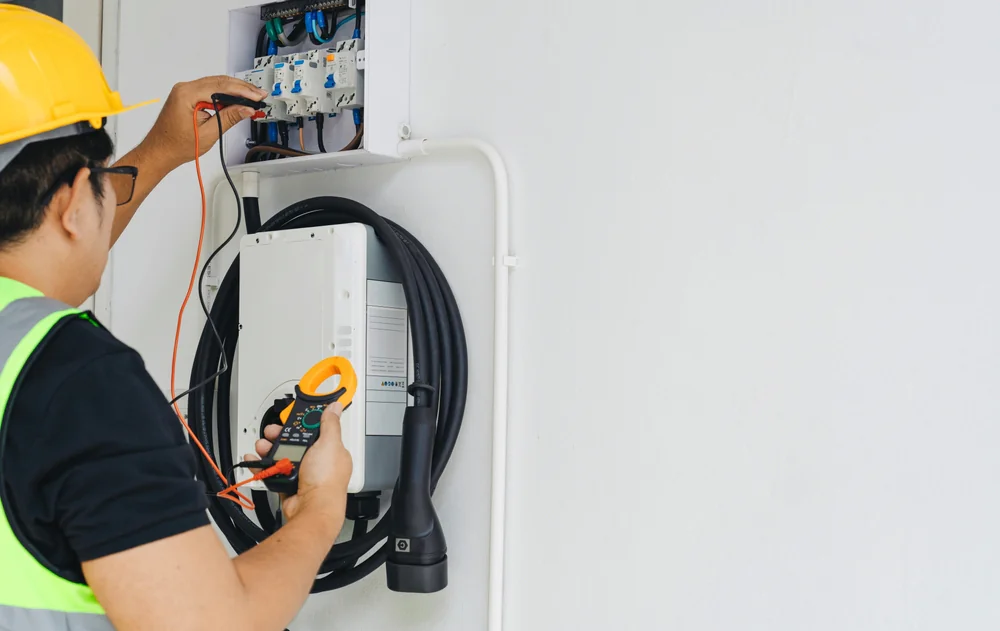
EV Charger Installation Process Bynum
First, we come out and assess your electrical panel. Most modern homes in Bynum have 200-amp service, which typically handles a Level 2 EV charger without issue. If your panel is older or already running close to capacity, we’ll explain what upgrades are needed and give you a flat-rate price before any work starts.
Next, we handle the permit paperwork with Alamance County. EV charger installations require permits to ensure everything meets local and national electrical codes. We take care of that so you don’t have to navigate the process yourself.
Then we install the charger. That includes running the proper wiring, installing a 240-volt outlet or hardwiring the unit depending on your charger model, and making sure everything is grounded and safe. We test it before we leave.
Finally, we help you apply for Duke Energy’s EV Charger Installation Support Program. This one-time credit can cover most or all of the electrical work costs, including panel upgrades and new circuits. We’ll walk you through what documentation you need.
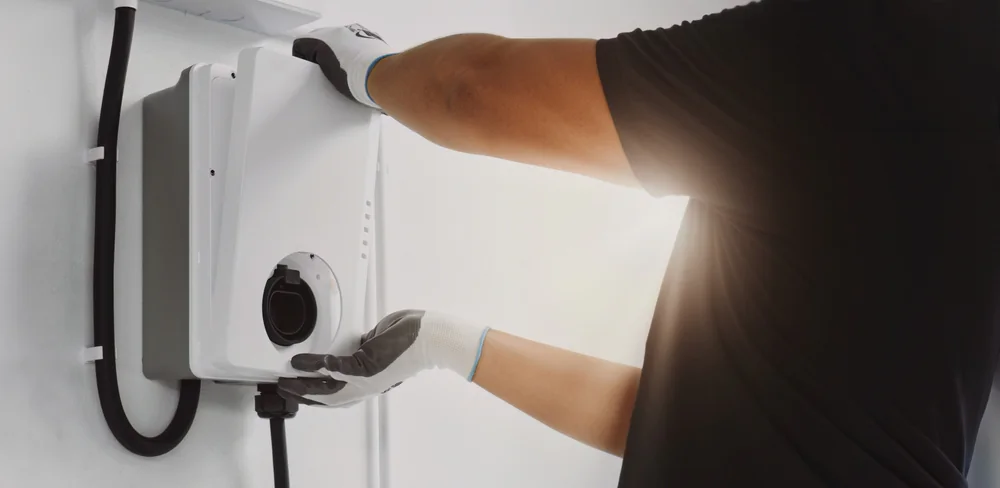
What's Included in EV Charger Setup
Every EV charger installation includes a full electrical assessment of your home’s current capacity. We check your panel, calculate the load, and determine whether you need any upgrades before installation. You’ll know exactly what’s required and what it costs before we start.
We handle all permit applications and inspections required by Alamance County. Installation work must meet NEC (National Electrical Code) standards, and inspectors verify that. We manage that process so you don’t have to schedule or coordinate anything.
You also get help accessing Duke Energy’s rebate program. North Carolina EV owners can receive up to $1,117 to offset installation costs, but the application requires specific documentation. We provide what you need and explain how to submit it.
In Bynum and the surrounding Burlington area, EV adoption is growing fast. North Carolina hit over 100,000 EV registrations in 2024, and nearly 20% of those were purchased last year alone. That means more homeowners are asking the same questions you are about home charging, panel capacity, and installation costs. We’ve done this enough times to give you clear answers based on real experience, not guesswork.
How much does it cost to install an EV charger at home in Bynum?
Installation costs vary based on your home’s current electrical setup. If you already have a 200-amp panel with available capacity and the charger location is close to your panel, you’re looking at a simpler installation. If your panel needs an upgrade or we need to run wiring a long distance, costs go up.
That’s why we start with an assessment. We give you a flat-rate price after we see your specific situation. No surprises, no hourly billing that creeps up as the job goes on.
Duke Energy’s rebate program can cover up to $1,117 of your installation costs, which often covers a significant portion or all of the electrical work. We help you access that credit so you’re not paying out of pocket for everything. The charger itself is separate—you can purchase that on your own or we can recommend options—but our installation work is what gets it safely connected to your home’s electrical system.
Do I need to upgrade my electrical panel for a Level 2 charger?
It depends on your current panel and how much capacity you have available. Most homes built in the last 20 years have 200-amp service, which usually handles a Level 2 EV charger without needing a full panel replacement.
But if your panel is older, already running close to its limit, or doesn’t have space for an additional circuit breaker, an upgrade may be necessary. We assess that during the initial visit and tell you exactly what your home needs.
Panel upgrades aren’t always required, but when they are, they’re worth doing right. An upgraded panel doesn’t just support your EV charger—it also gives you capacity for future electrical needs and increases safety. And again, Duke Energy’s rebate can cover a large portion of that upgrade cost, so it’s not as expensive as you might think. We walk you through the numbers so you can make an informed decision.
How long does EV charger installation take in Bynum?
Most installations take four to eight hours depending on the complexity. If your panel has available capacity and the charger is going in your garage near the panel, we’re usually done in half a day.
If we need to upgrade your panel, run wiring through walls, or install the charger farther from your electrical panel, it takes longer. We’ll give you a timeline after the assessment so you know what to expect.
Permitting can add a few days to the overall timeline, but that’s just waiting for county approval and inspection scheduling—not active work time. We handle all of that coordination. Once the permit is approved and we’re back onsite to finish, the actual installation work moves quickly. You’re not waiting weeks to start charging at home.
Will a home EV charger work with any electric vehicle?
Yes. Level 2 chargers use a standard J1772 connector that works with every electric vehicle sold in the U.S. except for older Tesla models—and even those can use an adapter that Tesla provides.
That means the charger you install today will work with your current EV and any future EV you buy. You’re not locked into one brand or model. It’s a long-term investment that doesn’t need to be replaced when you upgrade your car.
Some charger models offer additional features like WiFi connectivity, scheduling, or faster amperage output. We can walk you through those options based on how you plan to use it, but the core functionality—charging your EV safely and efficiently—is the same across quality Level 2 units. We install what works best for your home and your vehicle.
Do I need a permit to install an EV charger in Alamance County?
Yes. Any electrical work that involves adding a new 240-volt circuit requires a permit in Alamance County. That’s not red tape—it’s a safety requirement to ensure the installation meets electrical code and won’t cause problems down the road.
We handle the permit application and coordinate the inspection. You don’t need to visit the county office or figure out what forms to fill out. We’ve done this enough times to know exactly what’s required.
The inspection is straightforward. An inspector verifies that the wiring, breaker, and charger installation meet code. If everything is installed correctly—which it will be—you pass and you’re done. Skipping the permit might seem like a shortcut, but it can cause issues with your homeowner’s insurance, future home sales, or warranty claims if something goes wrong. We do it right the first time.
How much does it cost to charge an EV at home compared to public stations?
Home charging is significantly cheaper. In North Carolina, residential electricity averages around 11 to 13 cents per kilowatt-hour depending on your rate plan. Public fast-charging stations often charge 30 to 60 cents per kWh or more, especially for DC fast chargers.
That means charging at home can cost a third or less of what you’d pay at a public station. For most EV owners, a full charge at home costs between $5 and $12 depending on battery size and your electricity rate. The same charge at a public station could easily run $20 to $40.
Duke Energy also offers time-of-use rate plans that make overnight charging even cheaper. If you charge during off-peak hours, you pay less per kilowatt-hour. Over a year, that adds up to hundreds of dollars in savings compared to relying on public charging. Home charging isn’t just more convenient—it’s also the most cost-effective way to keep your EV running.
Other Services we provide in Bynum
About Us

Electrical Service Providers (ESP) has been in business since 2002. ESP started out performing wiring services to new construction, remodeling projects and residential homes. Our company’s president identified a market for electrical services to be performed in homes and businesses independent of new construction. Read More about Electrical Service Providers>>
All Rights Reserved.Organic Marketing LLC
Business Listings


Product Brands Used
Allied, Broan, Cutler Hammer, General Electric, Ideal, Juno, Kohler, Leviton, Lutron, Siemens, Square D
Contact
- Office Address: 3254 S Anthony Ct.
Burlington, NC 27215 - Mailing Address: PO Box 25
Alamance, NC 27201 - Phone: 336-228-3300
- E-mail: [email protected], [email protected]
Service Areas
Chapel Hill, Burlington, Carrboro, Durham, Gibsonville, Hillsborough, Graham, Pittsboro, Morrisville, Cary
About Us
Electrical Service Providers (ESP) has been in business since 2002. ESP started out performing wiring services to new construction, remodeling projects and residential homes. Our company’s president identified a market for electrical services to be performed in homes and businesses independent of new construction. Read More about Electrical Service Providers>>
All Rights Reserved.Organic Marketing LLC