EV Charger Installation in Carbonton, NC
Charge at Home Without the Fire Risk
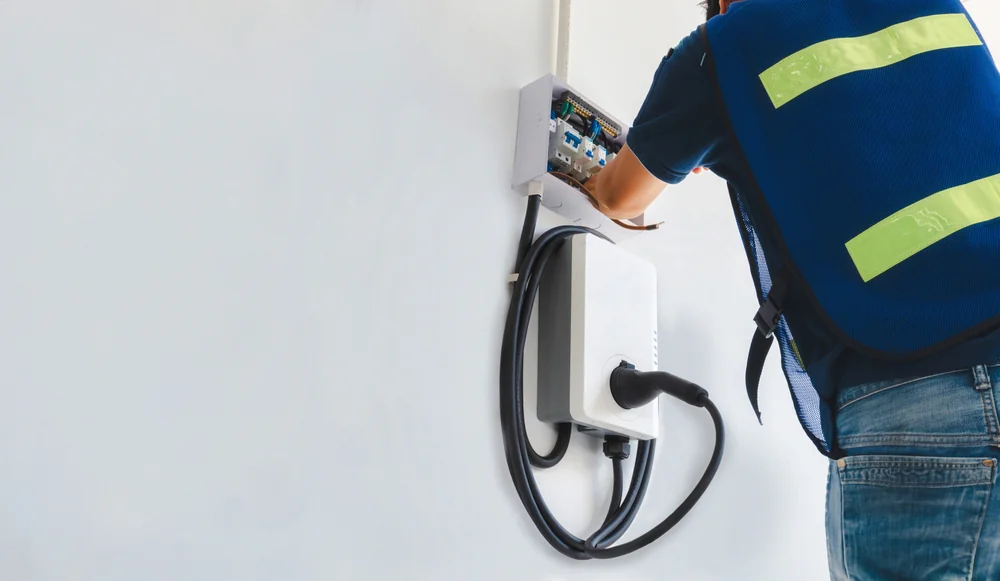
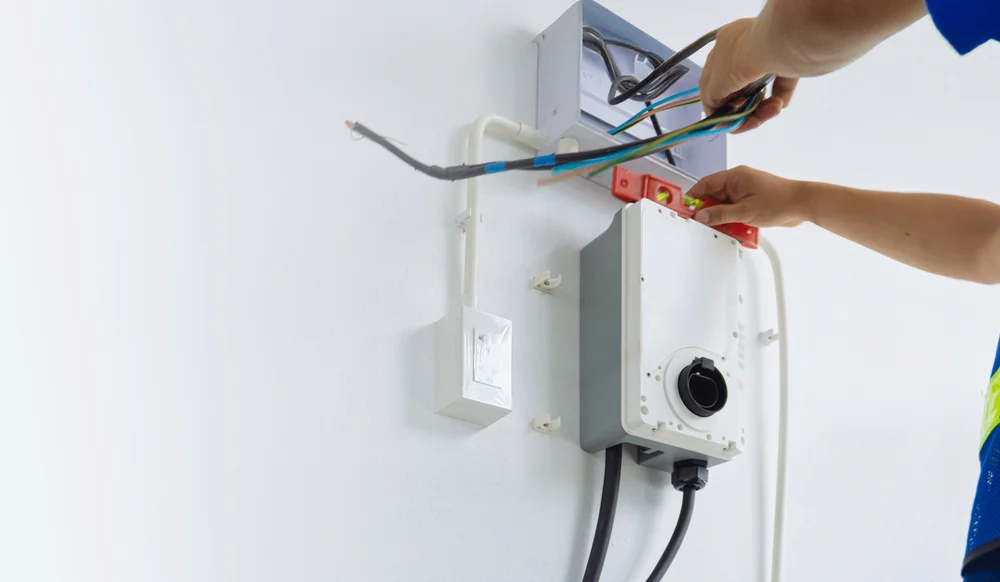
Electric Vehicle Charger Setup Carbonton
You plug in when you get home. Your car charges overnight while you sleep. You wake up with 200+ miles of range, ready to go.
No more planning trips around public charging stations that are broken, occupied, or located in inconvenient parking lots. No more sitting in your car for 45 minutes at a grocery store charger hoping nobody unplugs you.
Home charging means you start every day with a full battery. Your driveway becomes your personal gas station. The car is always ready when you are.
Most Carbonton homes need a 240-volt circuit installed to handle Level 2 charging speeds. That’s the same voltage your dryer uses, and it charges your EV in 4-8 hours instead of the 24+ hours a regular outlet would take. We size the circuit correctly, pull the permits, install weatherproof equipment rated for North Carolina summers, and make sure your electrical panel can handle the load without tripping breakers or overheating wires.
Licensed Electricians Serving Chatham County
ESP Electrical Service Providers is locally owned and operated by Andy Helton, a Master Electrician with over 35 years of experience. We’ve been serving Carbonton, Pittsboro, Siler City, and the surrounding Chatham County area for more than two decades.
We’re not a franchise. We’re not a national chain with rotating technicians. You’re working with the same crew that’s been doing residential electrical work in this area since before EVs were common.
Our trucks are fully stocked. We show up in uniform, on time, with flat-rate pricing so you know the cost before we start. We pull permits, coordinate inspections, and clean up when we’re done. The job isn’t finished until you’re satisfied with the work.
How EV Charging Station Installation Works
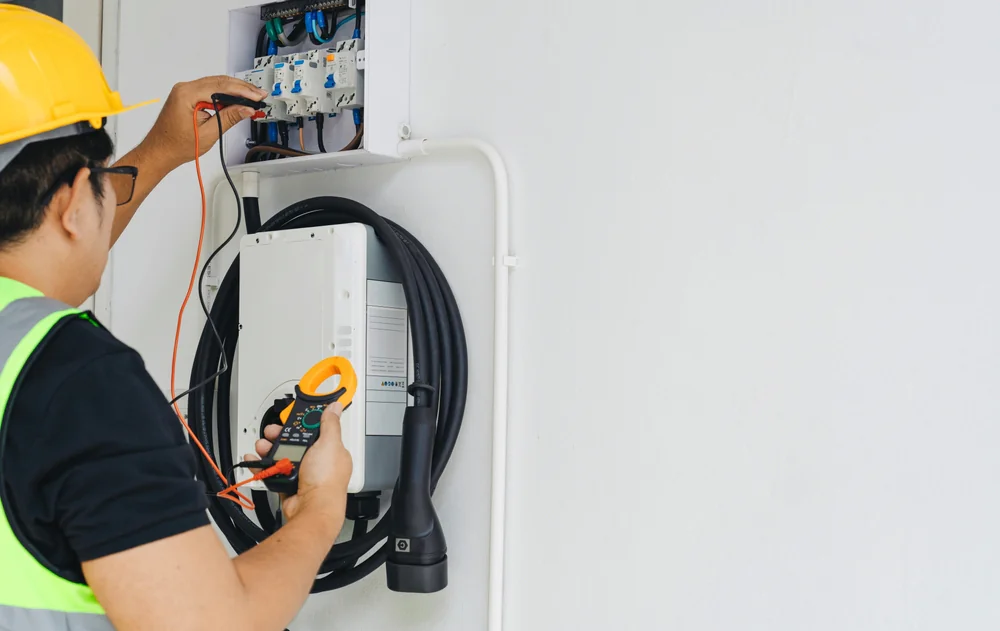
First, we assess your electrical panel and the location where you want the charger installed. Most garages and carports work fine, but we need to verify your panel has enough capacity. If it doesn’t, we’ll discuss whether you need an upgrade or if we can rebalance your existing circuits.
Next, we pull the permit. Chatham County requires permits and inspections for EV charger installations. We handle the paperwork, schedule the inspection, and make sure everything meets code before the inspector shows up.
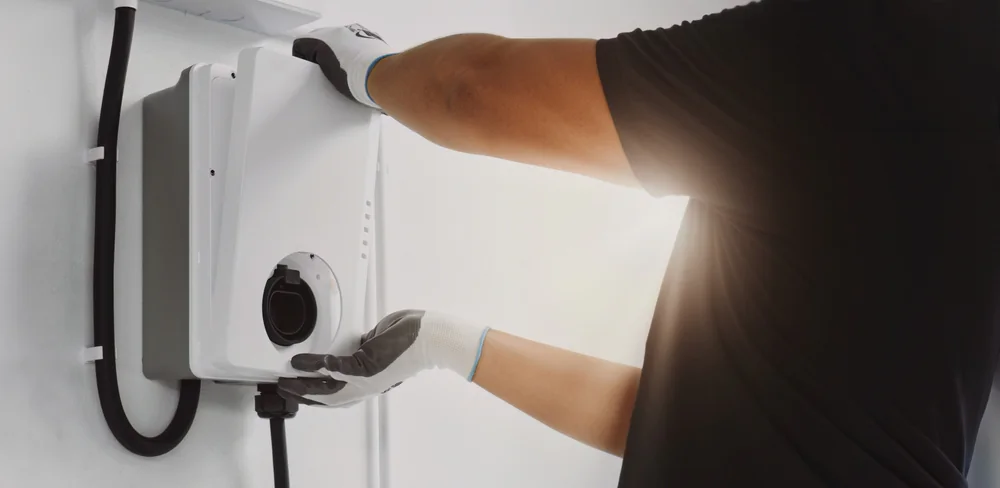
Then we install the circuit. We run 240-volt wiring from your panel to the charging location, install a dedicated breaker, mount the charger, and test the system. If you’re hardwiring the unit, we connect it directly. If you’re using a plug-in model, we install a NEMA 14-50 outlet.
Finally, we walk you through how to use it. We show you how to plug in, how to check the status lights, and how to troubleshoot basic issues. Then we clean up, pass inspection, and you’re charging at home.
What's Included in Your EV Charger Setup
Your installation includes a full electrical assessment to determine if your panel can handle the additional load. North Carolina added over 20,000 new EVs in 2024 alone, and many homes in Carbonton weren’t built with that kind of electrical demand in mind. We check your panel capacity before we start so there are no surprises.
We install a dedicated 240-volt circuit sized for your specific charger model. Tesla Wall Connectors, ChargePoint Home Flex, JuiceBox, Grizzl-E—we’ve installed them all. Each one has different amperage requirements, and we match the circuit to the equipment.
We also handle Duke Energy rebate applications. Duke Energy Progress offers up to $1,117 toward installation costs for residential customers in this area. We provide the documentation you need to submit your rebate claim, including itemized invoices and proof of inspection.
Weatherproofing matters here. Chatham County gets heavy summer storms, high humidity, and temperature swings that stress electrical equipment. We use outdoor-rated conduit, weatherproof enclosures, and proper grounding to protect your investment. Surge protection is included to guard against lightning damage, which is common during storm season.
How much does it cost to install an EV charger at home in Carbonton?
Most residential Level 2 EV charger installations in Carbonton run between $800 and $2,500, depending on how far we need to run the wiring and whether your electrical panel needs an upgrade. If your panel is in the garage and the charger mounts nearby, you’re looking at the lower end. If we’re running 60 feet of conduit from a panel on the opposite side of the house, costs go up.
Panel upgrades add $1,500 to $3,000 if your existing service can’t handle the load. Many older homes in Chatham County have 100-amp panels, and adding a 40-amp or 50-amp EV charger circuit sometimes pushes you over capacity. We’ll know after the assessment.
Duke Energy Progress customers can apply for a rebate of up to $1,117, which covers a significant portion of installation costs. There’s also a federal tax credit worth up to $1,000 for residential EV charger installations. Between the two, you’re offsetting a large chunk of the upfront expense.
Do I need a permit to install an electric vehicle charging station?
Yes. Chatham County requires a permit and inspection for EV charger installations. It’s not optional, and skipping it can cause problems if you ever sell your home or file an insurance claim after an electrical fire.
The permit process takes about a week. We submit the application, the county reviews it, and then we schedule the rough-in and final inspections. Most installations pass on the first try if the work is done correctly.
We handle all the permitting and coordinate the inspections. You don’t need to call the county, wait on hold, or figure out what paperwork they need. We’ve done this enough times to know exactly what the inspectors are looking for, and we make sure the installation meets code before they show up.
Can I just plug my EV into a regular outlet?
You can, but it’s slow and potentially dangerous if you do it every day. A standard 120-volt outlet delivers about 3-5 miles of range per hour of charging. If you drive 40 miles a day, you’re looking at 8-12 hours to recharge, and that assumes you’re not using the outlet for anything else.
The bigger issue is heat. Regular outlets aren’t designed for continuous high-load use. Charging an EV pulls close to the maximum rated capacity for hours at a time, and that generates heat in the wiring. Over time, connections loosen, insulation degrades, and you’re looking at a fire hazard.
Level 2 chargers use a 240-volt circuit and deliver 20-30 miles of range per hour. That’s 6-8 times faster than a regular outlet, and the circuit is sized specifically for the load. It’s safer, faster, and doesn’t stress your home’s electrical system.
Will installing an EV charger increase my home's value?
It can, especially as EV adoption grows in North Carolina. The state added nearly 240,000 electric and plug-in hybrid vehicles between 2020 and 2024, and Governor Cooper’s executive order targets 1.25 million EVs on the road by 2030. That means more homebuyers are looking for properties with charging infrastructure already in place.
A properly installed Level 2 charger signals that your home is ready for the future. Buyers don’t have to worry about the cost, permitting, or hassle of installing one themselves. That’s a selling point, particularly in areas like Chatham County where EV ownership is climbing.
The exact value increase depends on your local market, but real estate agents report that homes with EV chargers tend to attract more interest from buyers who already own or plan to buy an electric vehicle. It’s similar to having a garage or covered parking—it’s not mandatory, but it makes your home more appealing to a specific segment of buyers.
How long does EV charger installation take?
Most installations take 4-6 hours of actual work, but the full process from assessment to final inspection usually spans 1-2 weeks. The work itself is straightforward—we run the circuit, mount the charger, and test the system in a single visit.
The timeline stretches out because of permitting and inspections. Chatham County requires a permit before we start, and inspections have to be scheduled after the work is done. We can’t control how quickly the county processes permits or how soon an inspector is available, but we stay on top of it so you’re not waiting longer than necessary.
If your panel needs an upgrade, add another few days for that work. Panel upgrades require their own permit and inspection, and we typically handle that before installing the charger circuit. The goal is to get everything done in two weeks or less, assuming no delays with the county.
What's the difference between Level 1, Level 2, and DC fast charging?
Level 1 charging uses a standard 120-volt outlet and adds about 3-5 miles of range per hour. It’s the slowest option and really only works if you drive less than 40 miles a day and can leave the car plugged in overnight. Most EV owners outgrow Level 1 charging quickly.
Level 2 charging uses a 240-volt circuit and delivers 20-30 miles of range per hour, depending on your charger and vehicle. This is what most people install at home. It’s fast enough to fully charge your car overnight and doesn’t require expensive equipment. Level 2 is the sweet spot for residential charging.
DC fast charging is what you see at public charging stations along highways. It can add 100-200 miles of range in 20-30 minutes, but it requires commercial-grade equipment and electrical infrastructure that costs tens of thousands of dollars. It’s not practical for home use. When people talk about home EV charger installation, they’re almost always talking about Level 2.
Other Services we provide in Carbonton
About Us

Electrical Service Providers (ESP) has been in business since 2002. ESP started out performing wiring services to new construction, remodeling projects and residential homes. Our company’s president identified a market for electrical services to be performed in homes and businesses independent of new construction. Read More about Electrical Service Providers>>
All Rights Reserved.Organic Marketing LLC
Business Listings


Product Brands Used
Allied, Broan, Cutler Hammer, General Electric, Ideal, Juno, Kohler, Leviton, Lutron, Siemens, Square D
Contact
- Office Address: 3254 S Anthony Ct.
Burlington, NC 27215 - Mailing Address: PO Box 25
Alamance, NC 27201 - Phone: 336-228-3300
- E-mail: [email protected], [email protected]
Service Areas
Chapel Hill, Burlington, Carrboro, Durham, Gibsonville, Hillsborough, Graham, Pittsboro, Morrisville, Cary
About Us
Electrical Service Providers (ESP) has been in business since 2002. ESP started out performing wiring services to new construction, remodeling projects and residential homes. Our company’s president identified a market for electrical services to be performed in homes and businesses independent of new construction. Read More about Electrical Service Providers>>
All Rights Reserved.Organic Marketing LLC