EV Charger Installation in Carolina Meadows, NC
Charge at Home Without the Installation Headache
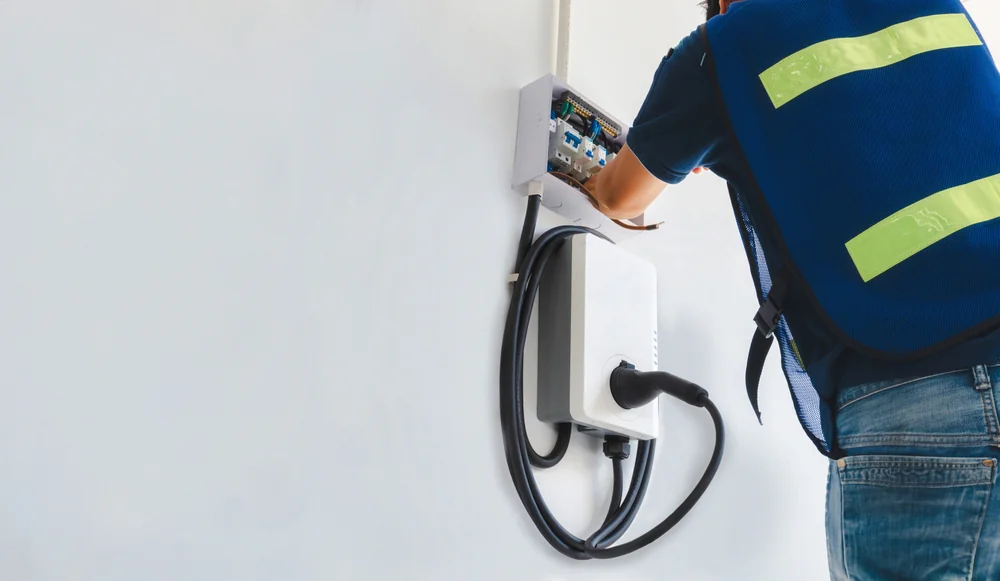
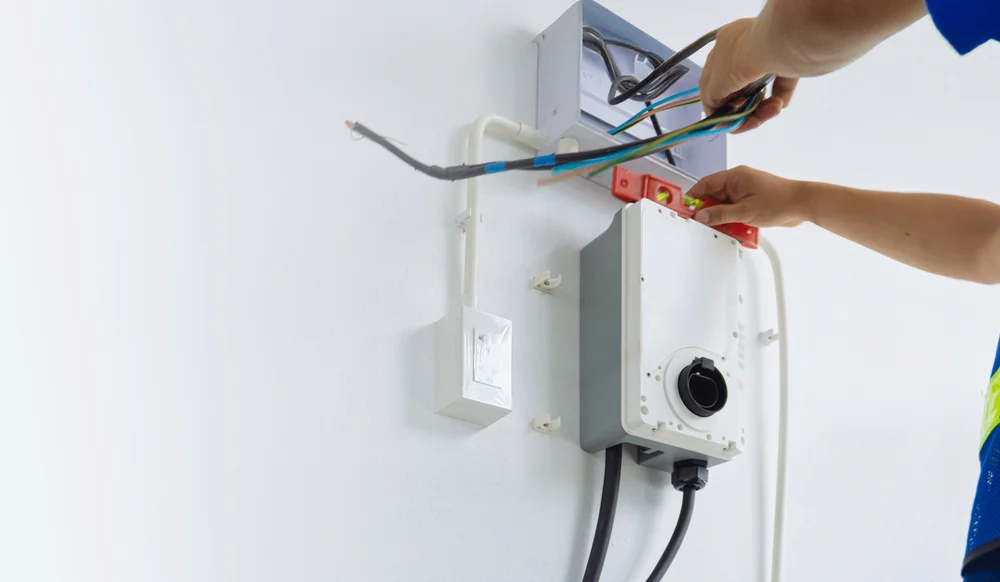
Electric Vehicle Chargers for Carolina Meadows Homes
No more planning your week around charging station availability. No more sitting in parking lots waiting for an open spot. You plug in when you get home, and your car is ready the next morning.
That’s what home EV charger installation actually gives you—convenience that becomes invisible. Your routine doesn’t change. Your car just works.
And if you’re thinking about resale value, homes with EV charging infrastructure are increasingly what buyers expect, not just prefer. The market’s moving fast. Duke Energy’s already registered five times more EVs than they projected for 2025, and Carolina Meadows residents are part of that shift. Installing now means you’re ahead of the curve, not scrambling to catch up when you need to sell.
Licensed EV Charger Installers Serving Carolina Meadows
ESP Electrical Service Providers is locally owned and operated by Andy Helton, a Master Electrician with over 35 years of experience. We’ve been serving Carolina Meadows, Chapel Hill, and the surrounding Orange County area for more than two decades.
We’re not a national franchise. We’re the team that shows up in marked trucks, handles your permits directly with local inspectors, and knows exactly what Carolina Meadows homes need for safe EV charger setup. Our electricians are licensed, our work is guaranteed, and we’ve been Tesla Certified installation partners since EV charging became a real need in this area.
You’re not getting a sales pitch. You’re getting straight answers from people who’ve done this work hundreds of times and know what actually matters.
How EV Charger Setup Works in Carolina Meadows
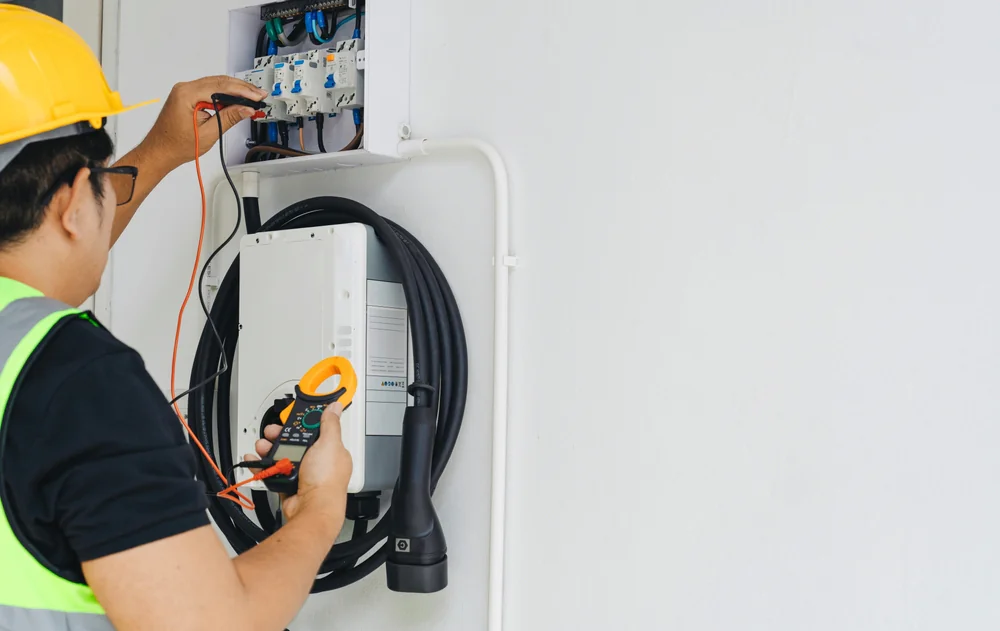
First, we assess your electrical panel and garage setup. Most homes need a dedicated 240-volt circuit for Level 2 charging, which is what charges your car overnight. If your panel has capacity, installation is straightforward. If not, we’ll walk you through what an upgrade involves and what it costs before any work starts.
Next, we handle the permit application with local building officials. This isn’t optional—unpermitted electrical work can cause insurance and resale issues down the road. We pull the permit, schedule the inspection, and make sure everything passes the first time.
Then we install the charger where you want it, run the wiring to code, and test the system with your vehicle. We also help you apply for Duke Energy’s Charger Prep Credit, which can cover up to $1,133 of the installation cost if you complete the work within 120 days of registering your EV.
After the final inspection, you’re done. The charger works with any EV brand, and you can monitor charging through your phone if your unit has smart features.
What's Included in EV Charging Station Installation
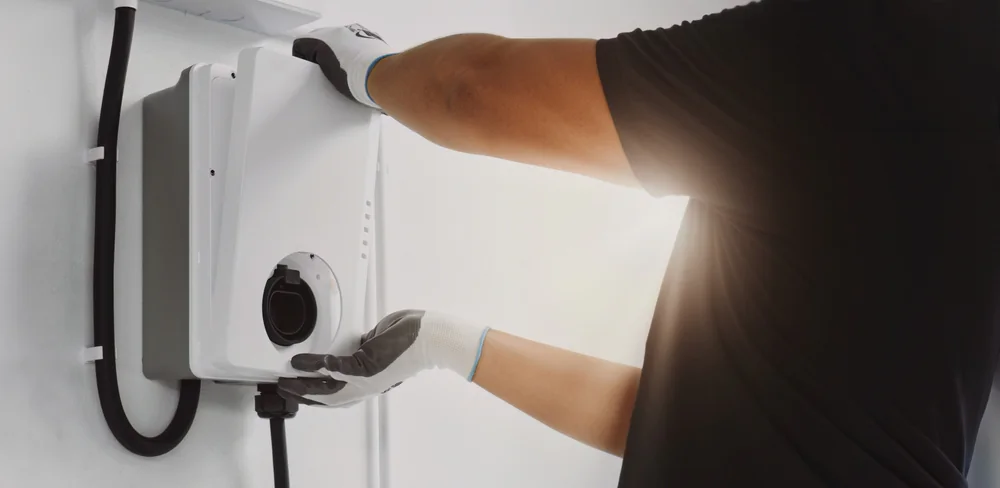
Every EV charger installation we do includes a full electrical assessment, permit handling, code-compliant wiring, breaker installation, and final inspection coordination. We don’t leave until the system is tested and working with your vehicle.
If your home needs a panel upgrade to support the charger, we’ll handle that too. Many older homes in Carolina Meadows weren’t built with EV charging loads in mind, and trying to add a 40- or 50-amp circuit without adequate panel capacity is a safety risk. We size everything correctly the first time.
We also walk you through Duke Energy’s rebate process and help you understand whether you qualify for the federal tax credit, which is worth up to $1,000 for home EV charger installation. North Carolina is pushing hard to get 1.25 million EVs on the road by 2030, and the rebate programs reflect that priority. You might as well take advantage of the money that’s available now.
And if something goes wrong with your charger down the road—whether it’s a software glitch, a tripped breaker, or physical damage—we handle EV charger repair for all major brands.
How much does EV charger installation cost in Carolina Meadows, NC?
Most Level 2 home EV charger installations in Carolina Meadows run between $1,200 and $3,000, depending on how far your electrical panel is from your garage and whether your panel has available capacity. If you need a panel upgrade, that adds to the cost—but it’s also a necessary safety improvement, not just an EV expense.
Duke Energy offers a Charger Prep Credit of up to $1,133 per household, and the federal government offers a tax credit worth up to $1,000 for qualified installations. Between those two programs, you can offset a significant portion of the upfront cost.
We give you a flat-rate price before we start any work. No surprises, no hourly billing, no change orders unless you change the scope. You’ll know exactly what it costs before we touch a wire.
Do I need a permit to install an EV charger at my home?
Yes. Any work that involves adding a new circuit or modifying your electrical panel requires a permit in North Carolina. That includes EV charger installation.
Some homeowners try to skip this step to save money or time, but it’s a mistake. Unpermitted electrical work can void your homeowner’s insurance, create liability if there’s ever a fire, and cause serious problems when you try to sell your home. Buyers’ inspectors will ask about permits, and if the work wasn’t done legally, it becomes a negotiation point—or a deal-breaker.
We pull the permit, coordinate the inspection, and make sure everything is documented properly. It’s part of the service, not an upsell. You don’t have to deal with the county or chase down inspectors. We handle it.
Will my electrical panel support an EV charger, or do I need an upgrade?
It depends on your current panel size and how much capacity is already being used. Most Level 2 EV chargers need a 40- or 50-amp dedicated circuit, which is a significant load. If your home has a 200-amp panel with room for additional breakers, installation is usually straightforward.
But many older homes in Carolina Meadows have 100- or 150-amp panels that are already near capacity. Adding an EV charger to a maxed-out panel isn’t safe and won’t pass inspection. In those cases, upgrading to a 200-amp panel is the right move—not just for the charger, but for the overall safety and capacity of your home’s electrical system.
We assess your panel during the initial visit and tell you exactly what’s needed. If an upgrade is required, we explain why, what it involves, and what it costs. No pressure, no runaround. Just clear information so you can make the right call.
How long does it take to install an EV charging station?
If your panel has capacity and the charger location is close to your electrical panel, most installations take four to six hours. That includes mounting the charger, running the wiring, installing the breaker, and testing the system.
If you need a panel upgrade, add another day for that work. Panel upgrades require coordination with Duke Energy for a temporary disconnect, and inspections have to happen in sequence—panel first, then charger.
Permitting timelines vary depending on how busy the local building department is, but we stay on top of that process so you’re not waiting weeks for approvals. Once the permit is issued and the inspection is scheduled, the actual installation work moves quickly.
Can I use the same charger if I switch to a different EV brand?
Yes. All modern electric vehicles sold in the U.S. use the same J1772 charging standard for Level 2 home charging, with the exception of Tesla vehicles—which come with an adapter that lets them use J1772 chargers.
That means the charger we install today will work with your next EV, even if you switch from a Nissan to a Chevy to a Ford. The connector is universal. You’re not locked into one brand or one vehicle.
If you currently drive a Tesla and want a Tesla Wall Connector specifically, we install those too. We’re Tesla Certified installers, so we know those systems inside and out. But for most people, a universal Level 2 charger gives you the most flexibility without sacrificing charging speed or features.
What happens if my EV charger stops working or needs repair?
We handle EV charger repair for all major brands, whether we installed the unit or someone else did. Most charger issues fall into a few categories: tripped breakers, faulty wiring, software glitches, or physical damage to the unit itself.
If the problem is electrical—a tripped breaker, a loose connection, or a wiring issue—we diagnose and fix it the same day in most cases. If the charger itself is defective, we work with the manufacturer to get it replaced under warranty if applicable, or we help you source a replacement unit and install it.
Chargers are generally reliable, but they’re also outdoor-rated electrical equipment that gets used daily. Things happen. When they do, we respond quickly and fix it right. Call us, and we’ll get your charging station back online.
About Us

Electrical Service Providers (ESP) has been in business since 2002. ESP started out performing wiring services to new construction, remodeling projects and residential homes. Our company’s president identified a market for electrical services to be performed in homes and businesses independent of new construction. Read More about Electrical Service Providers>>
All Rights Reserved.Organic Marketing LLC
Business Listings


Product Brands Used
Allied, Broan, Cutler Hammer, General Electric, Ideal, Juno, Kohler, Leviton, Lutron, Siemens, Square D
Contact
- Office Address: 3254 S Anthony Ct.
Burlington, NC 27215 - Mailing Address: PO Box 25
Alamance, NC 27201 - Phone: 336-228-3300
- E-mail: [email protected], [email protected]
Service Areas
Chapel Hill, Burlington, Carrboro, Durham, Gibsonville, Hillsborough, Graham, Pittsboro, Morrisville, Cary
About Us
Electrical Service Providers (ESP) has been in business since 2002. ESP started out performing wiring services to new construction, remodeling projects and residential homes. Our company’s president identified a market for electrical services to be performed in homes and businesses independent of new construction. Read More about Electrical Service Providers>>
All Rights Reserved.Organic Marketing LLC