EV Charger Installation in Chapel Hill, NC
Charge at Home Without the Wait or Worry
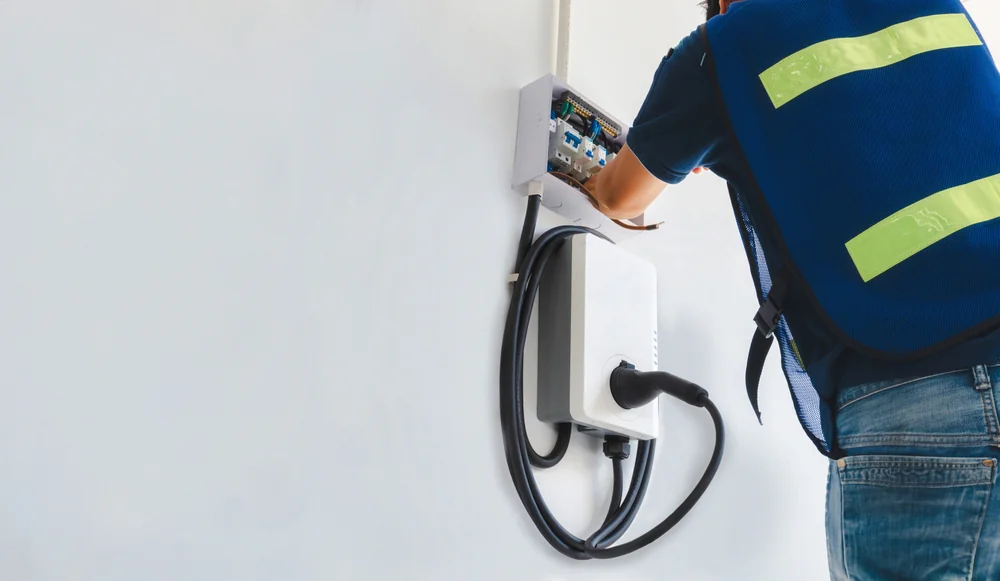
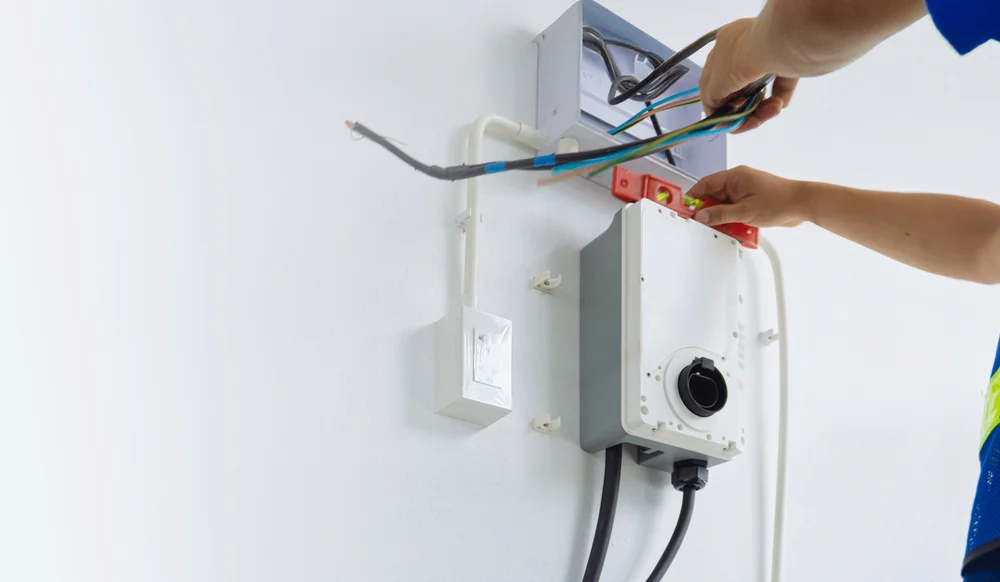
Electric Vehicle Charging Station Setup Chapel Hill
You bought an EV to simplify your life, not spend time hunting down public charging stations or waiting 40 minutes at a supercharger on your way to work. A Level 2 home charging station gives you a full charge overnight—typically 25-30 miles of range per hour compared to the 3-5 miles you get from a standard wall outlet.
Your electrical panel might need an upgrade to handle the load. Most EV chargers require a dedicated 240-volt circuit with 40-60 amp capacity. If your home was built before 2000, there’s a good chance your panel doesn’t have the space or capacity for that kind of draw.
That’s where the real work happens. The charger itself is straightforward. But running new wiring, upgrading your panel, pulling permits, and passing inspection—that’s what separates a safe installation from a fire hazard. You’re not just mounting a box on your garage wall. You’re adding a major appliance to your home’s electrical system.
Licensed EV Charger Electricians Chapel Hill
We’ve been handling residential and commercial electrical work in Chapel Hill, Durham, Orange, and Chatham counties for over 20 years. Andy Helton, a Master Electrician, owns and operates the company locally—meaning when you call, you’re talking to someone who knows the building codes in Chapel Hill and has worked with the local inspectors.
Chapel Hill has a higher-than-average EV adoption rate thanks to the educated, environmentally conscious population in the Research Triangle. We’ve installed chargers for Tesla owners, Rivian drivers, and everyone in between. The process is the same regardless of your vehicle: assess your electrical capacity, upgrade what’s needed, install the charger, and make sure it passes inspection.
We don’t subcontract the work. Our electricians show up in uniform, in stocked trucks, and they clean up before they leave. We’ve been doing this long enough to know what goes wrong when shortcuts are taken—and we don’t take them.
EV Charger Installation Process Chapel Hill
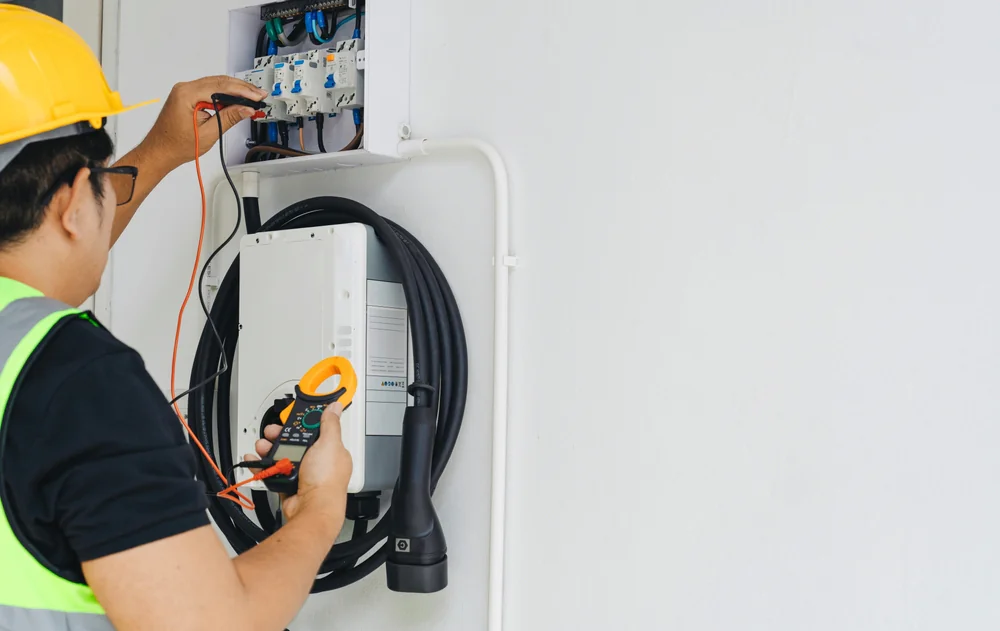
First, we come out and assess your electrical panel and garage setup. We’ll look at your current panel capacity, the distance from the panel to where you want the charger, and whether your service can handle the additional load. Most homes need at least a 200-amp service to safely add an EV charger without issues.
If your panel needs an upgrade, we handle that first. We’ll also run the appropriate gauge wiring from the panel to the charger location and install a dedicated circuit breaker. All of this gets permitted through the local building department—we pull the permits, schedule the inspection, and make sure everything is up to code before we call it done.
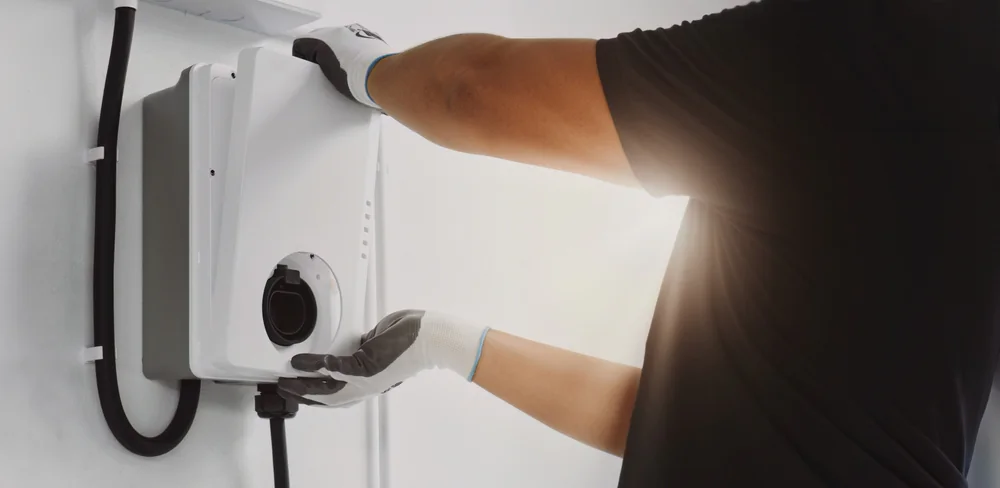
Once the electrical work is complete, we mount and connect your EV charging station. We test it to make sure it’s communicating with your vehicle properly and delivering the right voltage. Then we walk you through how to use it, what the indicator lights mean, and what to do if you ever have an issue. The whole process typically takes one to two days depending on the scope of electrical work required.
What's Included in EV Charger Setup
Every EV charger installation includes a full electrical assessment of your home. We don’t just install the charger and hope your panel can handle it. We calculate the load, check your existing circuits, and determine whether you need a service upgrade before we start any work.
Chapel Hill requires permits for EV charger installations, and inspections are mandatory. We handle all of that. We pull the permit, coordinate with the inspector, and make sure the work passes the first time. If your panel needs upgrading to 200-amp service or higher, that’s part of the job—not an unexpected add-on we spring on you halfway through.
We install all major EV charger brands: Tesla Wall Connectors, ChargePoint, JuiceBox, Grizzl-E, and others. If you already bought a charger, we’ll install it. If you haven’t purchased one yet, we’ll recommend options based on your vehicle and budget. Most of our residential customers go with a 40-amp or 50-amp Level 2 charger, which delivers about 25-37 miles of range per hour.
You’ll also get transparent flat-rate pricing before we begin. No surprises, no hourly rates that spiral out of control. We tell you the cost upfront, and that’s what you pay.
How long does it take to install an EV charger at my home?
Most installations take one to two days depending on your electrical panel situation. If your panel has available capacity and space for a new breaker, and the charger location is close to the panel, we can usually complete the job in one day. That includes running the wiring, installing the dedicated circuit, mounting the charger, and testing it.
If your panel needs an upgrade to handle the additional load, that adds time. Upgrading from a 100-amp or 150-amp service to a 200-amp service typically adds another day to the project. We also need to schedule an inspection with the local building department, which can add a day or two depending on their availability.
We’ll give you a clear timeline during the initial assessment. We don’t start the work until you know exactly how long it will take and what it will cost.
Will my electrical panel need to be upgraded for an EV charger?
It depends on your current panel capacity and how much load you’re already using. Most EV chargers require a dedicated 240-volt circuit with a 40 to 60-amp breaker. If you have a 200-amp service with available slots in your panel, you’re usually fine. If your home has a 100-amp or 150-amp service, there’s a good chance you’ll need an upgrade.
Older homes in Chapel Hill—especially those built before the 1990s—often have undersized panels that weren’t designed for modern electrical loads. Adding an EV charger, especially if you’re also running central air, a heat pump, and other high-draw appliances, can overload the system.
We’ll assess your panel during the initial visit and let you know whether an upgrade is necessary. If it is, we’ll handle the entire process: upgrading the panel, coordinating with Duke Energy if needed, pulling permits, and passing inspection. It’s a bigger job, but it’s the right way to do it.
Can I install an EV charger myself to save money?
Technically, you can install the charger unit itself—it’s just a matter of mounting it and connecting a few wires. But you can’t legally do the electrical work that makes it functional. Running a new 240-volt circuit, installing a breaker, and connecting it to your panel requires a licensed electrician in North Carolina. It also requires a permit and inspection.
If you install it yourself without a permit, you’re violating local building codes. That can cause problems when you sell your home, and it can void your homeowner’s insurance if something goes wrong. Insurance companies don’t cover electrical fires caused by unpermitted work.
There’s also the safety issue. A 240-volt circuit carries enough power to kill you if you make a mistake. And if the circuit isn’t properly sized or protected, it can overheat and start a fire inside your walls. The money you save doing it yourself isn’t worth the risk or the liability. We see DIY electrical jobs go wrong all the time, and fixing them costs more than doing it right the first time.
What's the difference between a Level 1 and Level 2 charger?
A Level 1 charger plugs into a standard 120-volt outlet—the same outlet you use for lamps and phone chargers. It’s the slowest way to charge an EV, delivering about 3-5 miles of range per hour. If you drive 40 miles a day, you’re looking at 8-12 hours to replenish that range. It works if you barely drive and can leave your car plugged in overnight, but it’s not practical for most people.
A Level 2 charger runs on 240 volts—the same voltage as your dryer or oven. It delivers 25-37 miles of range per hour depending on the amperage. That means you can fully charge most EVs in 4-8 hours, which fits comfortably into an overnight window. It’s what most EV owners install at home because it actually keeps up with daily driving.
Level 2 chargers require professional installation because they need a dedicated circuit and a higher-capacity breaker. But the speed difference is significant enough that almost everyone who installs one wishes they’d done it sooner. You stop thinking about charging because it just happens while you sleep.
Do you install chargers for all EV brands or just Tesla?
We install chargers for all electric vehicle brands. Tesla, Rivian, Ford, Chevy, Nissan, Hyundai, BMW—it doesn’t matter. The electrical work is the same regardless of what you drive. Most EVs use the J1772 connector standard, and most home chargers come with that plug. Tesla vehicles need an adapter, but Tesla includes one with every car.
If you have a Tesla and want the Tesla Wall Connector, we install those too. Some Tesla owners prefer it because it integrates with the Tesla app and has a sleeker design. But functionally, any quality Level 2 charger will work just as well. We’ve installed ChargePoint, JuiceBox, Grizzl-E, Emporia, and others. They all do the same job.
If you haven’t bought a charger yet, we can recommend options based on your vehicle, your budget, and whether you want smart features like scheduling or energy monitoring. If you already purchased one, we’ll install whatever you bought. The important part is the electrical work behind it—that’s where the safety and reliability come from.
How much does it cost to install an EV charger in Chapel Hill?
The cost depends on your electrical panel situation and how far the charger is from the panel. If your panel has capacity and available breaker slots, and the charger location is within 25 feet of the panel, you’re typically looking at $800 to $1,500 for the installation labor. That includes running the wiring, installing the breaker, mounting the charger, pulling the permit, and passing inspection.
If your panel needs an upgrade to 200-amp service, that adds $2,000 to $4,000 depending on the complexity of the job and whether the utility company needs to upgrade the service drop. If the charger location is far from the panel—say, a detached garage—that increases the cost because we need to run more wire and potentially install a subpanel.
We give you flat-rate pricing after the initial assessment. You’ll know the exact cost before we start any work. No hourly rates, no surprise charges. The price we quote is the price you pay. Most of our customers appreciate knowing the number upfront instead of watching a meter run while we work.
Other Services we provide in Chapel Hill
About Us

Electrical Service Providers (ESP) has been in business since 2002. ESP started out performing wiring services to new construction, remodeling projects and residential homes. Our company’s president identified a market for electrical services to be performed in homes and businesses independent of new construction. Read More about Electrical Service Providers>>
All Rights Reserved.Organic Marketing LLC
Business Listings


Product Brands Used
Allied, Broan, Cutler Hammer, General Electric, Ideal, Juno, Kohler, Leviton, Lutron, Siemens, Square D
Contact
- Office Address: 3254 S Anthony Ct.
Burlington, NC 27215 - Mailing Address: PO Box 25
Alamance, NC 27201 - Phone: 336-228-3300
- E-mail: [email protected], [email protected]
Service Areas
Chapel Hill, Burlington, Carrboro, Durham, Gibsonville, Hillsborough, Graham, Pittsboro, Morrisville, Cary
About Us
Electrical Service Providers (ESP) has been in business since 2002. ESP started out performing wiring services to new construction, remodeling projects and residential homes. Our company’s president identified a market for electrical services to be performed in homes and businesses independent of new construction. Read More about Electrical Service Providers>>
All Rights Reserved.Organic Marketing LLC