EV Charger Installation in Climax, NC
Charge at Home Without the Electrical Headaches
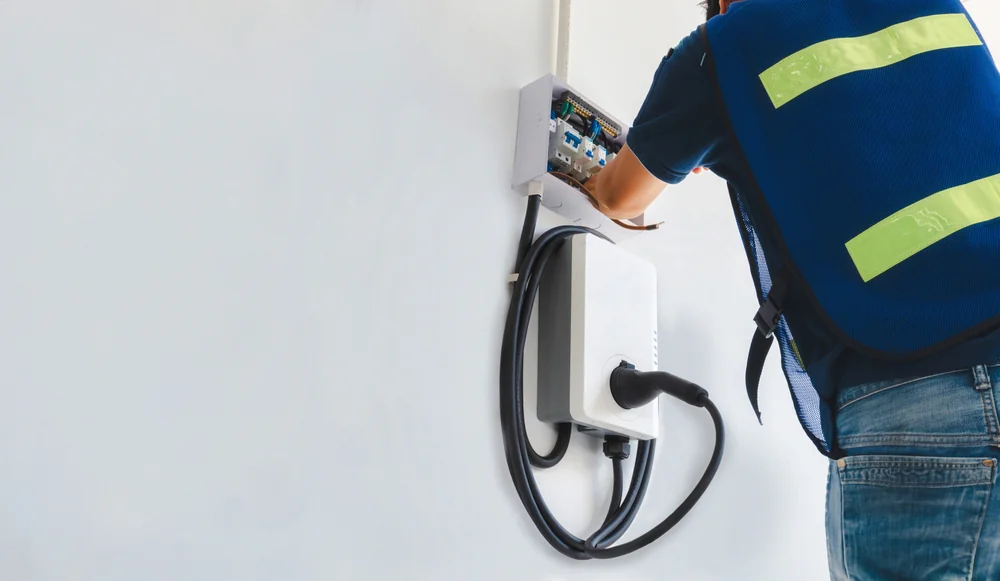
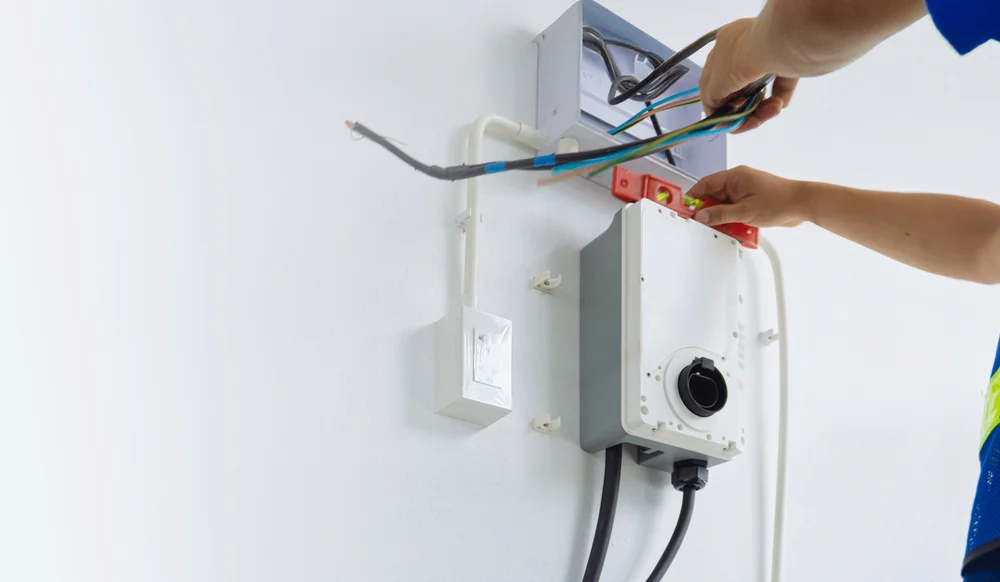
Electric Vehicle Charging Station Setup
You’re done driving to public charging stations and waiting around. A home EV charger means your car charges overnight while you sleep, and you start every day with a full battery.
The right setup saves you time and money. Level 2 chargers add about 25 miles of range per hour, so even a short overnight charge gets you through your day. Compare that to the cost and hassle of public charging, and the math makes sense fast.
Your home also becomes more valuable. As more people in Climax switch to electric vehicles, homes with charging infrastructure already installed become more attractive to buyers. You’re not just solving today’s problem—you’re making a smart investment in your property.
Licensed Electricians Serving Climax, NC
We’ve been handling electrical work in Climax and the surrounding Alamance County area for over 20 years. Our team includes licensed electricians with more than 40 years of combined experience, led by Andy Helton, a Master Electrician with 35+ years in the field.
We’re local, which means we know the homes in this area. We know which electrical panels can handle an EV charger and which ones need upgrades first. We also know the local permitting process and inspection requirements, so your installation gets done right the first time.
When you call, you talk to us—not an answering machine. We show up in marked trucks, we clean up when we’re done, and we use flat-rate pricing so you know the cost before we start.
How EV Charger Installation Works
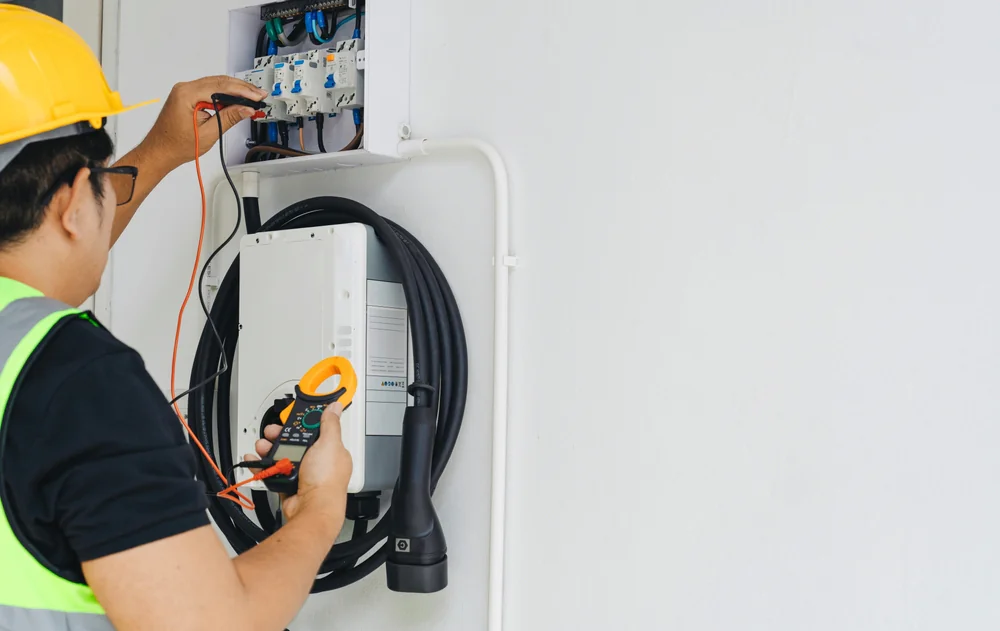
First, we assess your electrical panel. Most homes in Climax have either 100-amp or 200-amp service. If you’ve got a 200-amp panel and it’s not maxed out, you’re probably good to go. If your panel is older or already running close to capacity with your HVAC, water heater, and other appliances, we’ll talk through an upgrade.
Next, we handle the permits. EV charger installation requires local permits and inspections to meet North Carolina electrical codes. We pull the permits, do the work to code, and coordinate the inspection so you don’t have to chase down paperwork.
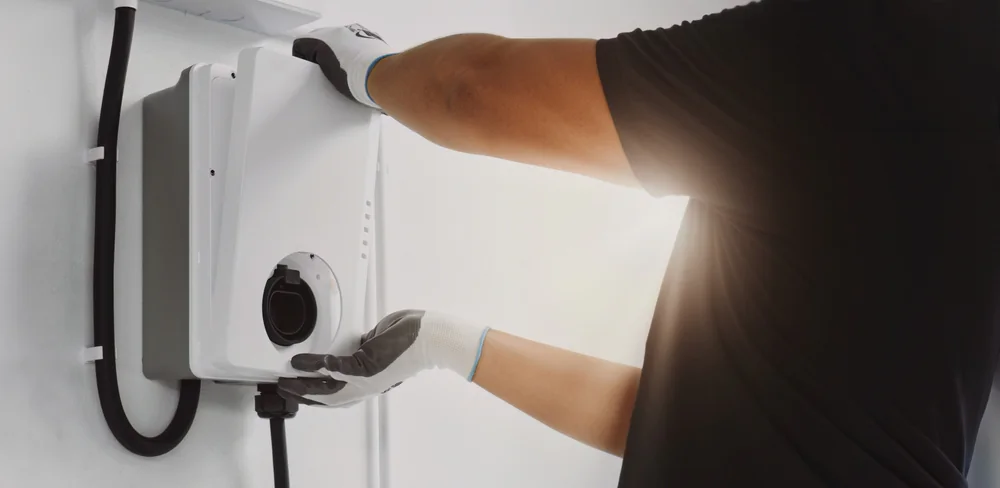
Then we install the charger. We run the wiring from your panel to wherever you park—garage, carport, or driveway. We mount the charging unit, make the connections, test everything, and walk you through how it works. Most installations take a day, and you’re charging that night.
What's Included in EV Charger Setup
If your electrical panel needs an upgrade to support an EV charger, we do that first. Panel upgrades typically run between $1,000 and $5,000 depending on your home’s current setup and the amperage you need. About 20% of homes need some kind of upgrade before adding a charger, but most modern homes with 200-amp panels are ready to go.
We also help you access Duke Energy’s EV Charger Installation Support Program. This program offers up to $1,117 per household to cover outlet installation, wiring enhancements, and panel upgrades. That rebate can offset a significant portion of your installation cost, and we’ll walk you through the application process.
North Carolina is serious about electric vehicles. The state hit over 100,000 EV registrations in 2024 and aims for 1.25 million by 2030. Climax is part of that shift, and the infrastructure is catching up. Getting your home set up now means you’re ahead of the curve, and you’re not scrambling later when demand for electricians spikes.
Do I Need to Upgrade My Electrical Panel for an EV Charger?
It depends on your current panel and how much capacity you have left. Most Level 2 EV chargers need a dedicated 240-volt circuit with a 40- or 50-amp breaker. If your home has a 200-amp panel and you’re not already using most of that capacity, you probably won’t need an upgrade.
Older homes with 100-amp panels or homes where the existing panel is already loaded with high-draw appliances like central air, electric heat, or a large water heater might need an upgrade. We check your panel during the initial assessment and give you a straight answer about what’s required.
If you do need an upgrade, it’s not just about the EV charger. A panel upgrade gives you more capacity for future electrical needs and makes your home safer overall. It’s an investment that pays off beyond just charging your car.
How Much Does EV Charger Installation Cost in Climax?
Installation costs vary based on your home’s setup and how far we need to run wiring. A straightforward installation with an existing 240-volt circuit nearby might cost $500 to $1,500. If we need to run new wiring from your panel to your garage or driveway, costs go up from there.
Panel upgrades add $1,000 to $5,000 depending on the amperage and complexity. But here’s the good news: Duke Energy’s rebate program covers up to $1,117 of your installation costs, which can take a big bite out of the total expense.
We use flat-rate pricing, so you’ll know the exact cost before we start any work. No surprises, no hidden fees. We assess your situation, explain what’s needed, and give you a clear number.
How Long Does It Take to Install an EV Charger?
Most installations take one day if your electrical panel is ready and we’re just running wiring and mounting the charger. If you need a panel upgrade, that adds time—usually another day or two depending on the scope of the upgrade and inspection scheduling.
Permitting and inspections can add a few days to the timeline, but we handle that process for you. We pull the permits, schedule the inspections, and make sure everything is done to code so you don’t have to worry about it.
From the day you call to the day you’re charging your car, the whole process typically takes one to two weeks. If there are delays with permits or inspections, we keep you updated every step of the way.
Can I Install Any Type of EV Charger at Home?
You can install any Level 2 charger that’s compatible with your vehicle. Most electric vehicles sold in the U.S. use the same J1772 connector standard, so any Level 2 charger works with most EVs. Tesla vehicles need an adapter, but those are easy to get.
Level 2 chargers are the standard for home use. They run on 240 volts (the same as your dryer) and charge much faster than a regular 120-volt outlet. A Level 1 charger (just a regular outlet) adds only 3-5 miles of range per hour, which isn’t practical for most people.
We don’t sell chargers, but we can recommend reliable brands and install whatever unit you choose. Some homeowners buy their charger online, others go through their car dealership. Either way, we handle the electrical work and make sure it’s installed safely.
What Permits Are Required for EV Charger Installation in Climax?
Any EV charger installation in Climax requires an electrical permit from the local building department. The permit ensures the work meets North Carolina electrical codes and is inspected for safety. This isn’t optional—it’s required by law, and skipping it can cause problems if you ever sell your home or file an insurance claim.
We pull the permits as part of our service. We know what the local inspectors look for, and we make sure the installation passes inspection the first time. That includes proper wire sizing, correct breaker ratings, GFCI protection where required, and secure mounting of the charging unit.
After the installation, an inspector comes out to verify everything is up to code. Once it passes, you’re all set. The whole permitting and inspection process usually adds a few days to the timeline, but it’s necessary and we handle it from start to finish.
Will an EV Charger Increase My Electric Bill?
Yes, charging an electric vehicle will increase your electric bill, but it’s usually cheaper than buying gas. The exact cost depends on your electricity rate, how much you drive, and your vehicle’s efficiency. In North Carolina, the average residential electricity rate is around 12 cents per kilowatt-hour.
Most EVs use about 30 kWh to travel 100 miles. At 12 cents per kWh, that’s $3.60 for 100 miles of driving. Compare that to a gas car getting 30 miles per gallon at $3.50 per gallon—that’s $11.67 for the same distance. You’re saving money every time you charge instead of filling up.
Duke Energy also offers time-of-use rates for EV owners, which means cheaper electricity if you charge overnight during off-peak hours. Many people set their car to charge automatically after midnight when rates are lowest. Over time, the savings add up, especially if you drive a lot.
Other Services we provide in Climax
About Us

Electrical Service Providers (ESP) has been in business since 2002. ESP started out performing wiring services to new construction, remodeling projects and residential homes. Our company’s president identified a market for electrical services to be performed in homes and businesses independent of new construction. Read More about Electrical Service Providers>>
All Rights Reserved.Organic Marketing LLC
Business Listings


Product Brands Used
Allied, Broan, Cutler Hammer, General Electric, Ideal, Juno, Kohler, Leviton, Lutron, Siemens, Square D
Contact
- Office Address: 3254 S Anthony Ct.
Burlington, NC 27215 - Mailing Address: PO Box 25
Alamance, NC 27201 - Phone: 336-228-3300
- E-mail: [email protected], [email protected]
Service Areas
Chapel Hill, Burlington, Carrboro, Durham, Gibsonville, Hillsborough, Graham, Pittsboro, Morrisville, Cary
About Us
Electrical Service Providers (ESP) has been in business since 2002. ESP started out performing wiring services to new construction, remodeling projects and residential homes. Our company’s president identified a market for electrical services to be performed in homes and businesses independent of new construction. Read More about Electrical Service Providers>>
All Rights Reserved.Organic Marketing LLC