EV Charger Installation in Colony Woods, NC
Charge at Home in Hours, Not Days
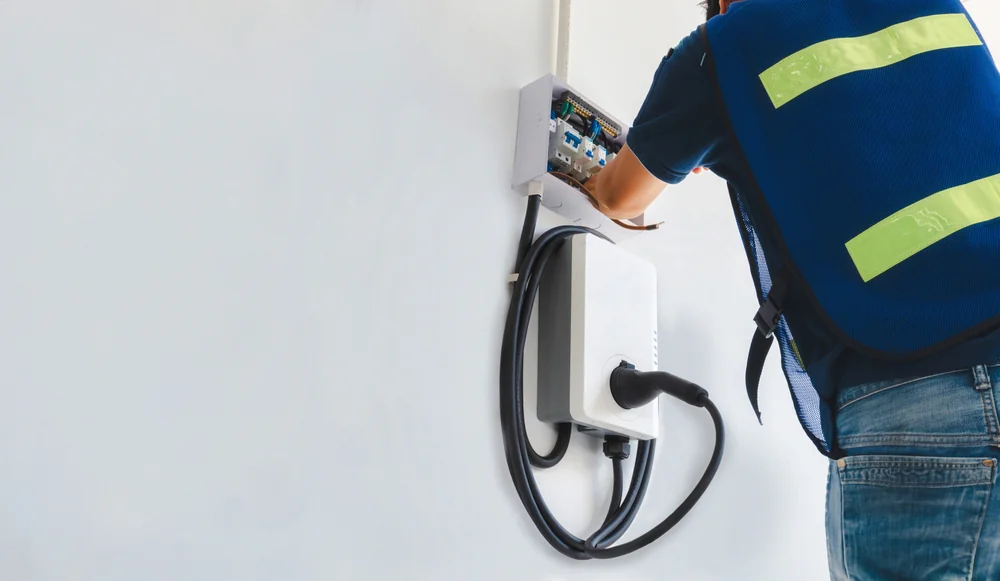
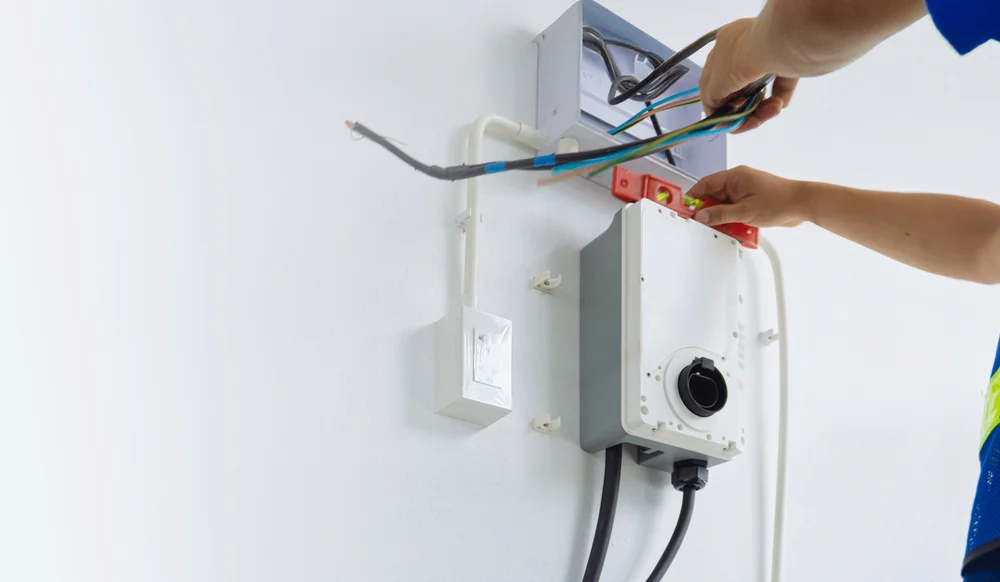
Electric Vehicle Charging Station Setup
You didn’t buy an EV to spend your evenings hunting for open charging stations or waiting 16 hours for a trickle charge from a standard outlet. You bought it for convenience, cost savings, and to stop making trips to the gas station.
A Level 2 home charging station changes everything. Full charge in 3-8 hours depending on your vehicle. No more range anxiety before work trips. No more paying premium rates at public chargers that may or may not be working when you need them.
Your car charges while you sleep. You unplug in the morning and go. That’s it. And if you’re on Duke Energy’s time-of-use program, you’re paying as little as $0.04 per kilowatt-hour during off-peak times. Compare that to the $0.30-$0.50 you’re spending at public stations, and the math makes itself.
Licensed EV Charger Electricians Near You
We’ve been handling residential and commercial electrical projects across Colony Woods and the greater Raleigh area since 2002. Our senior technician has held his electrical contractor license since 1989.
We’re not new to this. Master Electrician Andy Helton owns and runs the company, and you’ll talk directly to him when you call. No answering services, no runaround.
Colony Woods homes were largely built in the late 70s and early 80s. Many still have 60-100 amp panels that weren’t designed for the electrical load an EV charger adds. We assess your current system, explain what’s needed, and give you flat-rate pricing before any work starts. If your panel needs an upgrade, we handle the permit, the inspection, and the installation.
Our EV Charger Installation Process
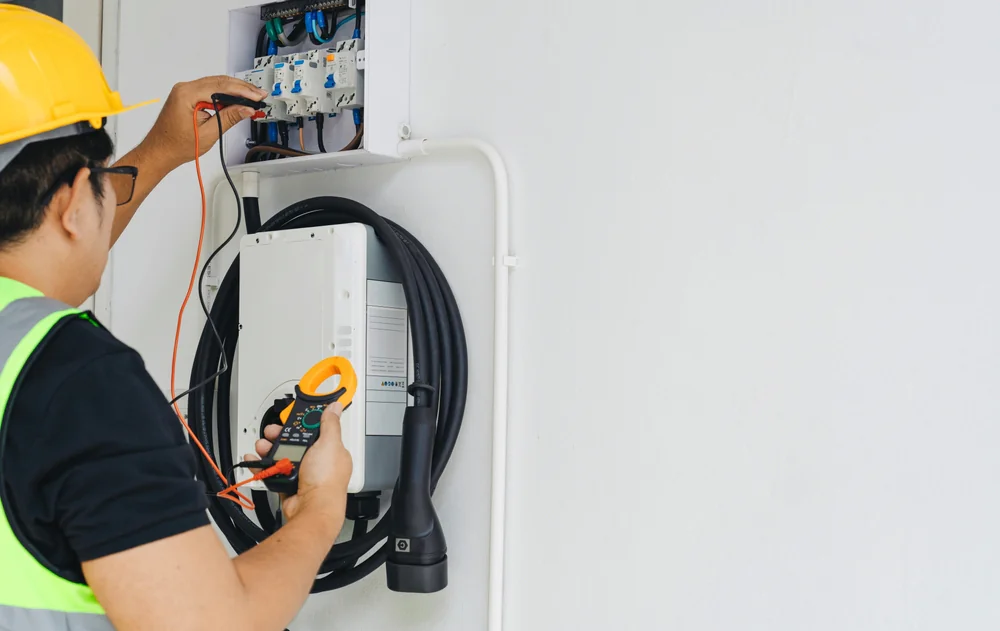
First, we schedule a site assessment at your home. We look at your electrical panel, measure the distance from the panel to where you want the charger installed, and check whether your current system can handle the load. Most Level 2 chargers pull 30-50 amps, and if your panel is maxed out or outdated, we’ll tell you upfront.
Next, we give you a flat-rate quote. No surprises, no hourly billing that spirals. You’ll know exactly what the job costs before we start. If you qualify for Duke Energy’s rebate program—up to $1,117 for installation and electrical upgrades—we’ll walk you through that process too.
Once you approve, we pull the necessary permits and schedule the installation. We run a dedicated 240V circuit from your panel to the charger location, mount the charging unit, and make sure everything is up to code. After installation, the county inspector signs off, and you’re live. The whole process typically takes a few days to a couple of weeks depending on permitting and your schedule.
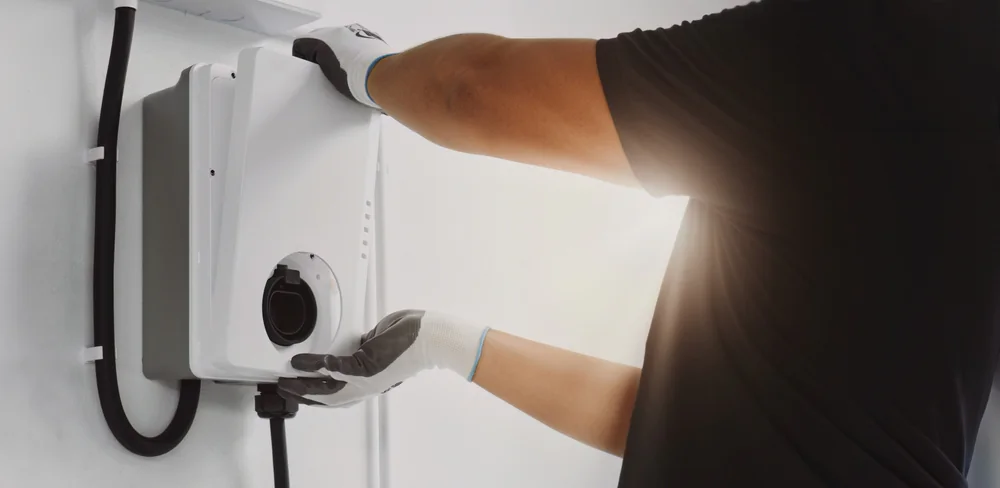
What's Included in Your EV Charger Setup
If your home’s electrical panel can’t support the additional load, we upgrade it. That’s not an upsell—it’s a safety requirement. Older homes in Colony Woods often have 100-amp panels or less, and adding a 40-50 amp EV charger without upgrading creates a fire hazard. We size the panel correctly, replace outdated breakers, and bring everything up to current code.
We handle all permitting and inspections. Wake County requires permits for 240V circuit installations, and we manage that process from start to finish. You don’t have to deal with the paperwork or schedule the inspector.
We install all major EV charger brands and can recommend models based on your vehicle and budget. Many homeowners in Colony Woods are choosing smart chargers with WiFi connectivity, scheduling features, and smartphone apps that let you monitor charging status and energy usage. If you want a basic hardwired unit, we install those too.
North Carolina added 50,000 EVs in just 23 months, and nearly 20% of all EVs in the state were registered in 2024 alone. The infrastructure is catching up, but home charging is still the most reliable and cost-effective option. You’re not dependent on public station availability, network outages, or equipment malfunctions.
How long does it take to charge an EV with a Level 2 home charger?
Most EVs fully charge in 3-8 hours with a Level 2 charger, depending on your battery size and the charger’s amperage. A Tesla Model 3 with a 40-amp charger will go from empty to full in about 8 hours. A Chevy Bolt on the same setup takes roughly 7 hours.
Compare that to a standard 120V outlet, which can take 16-24 hours for a full charge. That’s the difference between plugging in after work and being ready the next morning versus waiting almost two full days.
Most people don’t drain their battery completely every day, so in practice, you’re topping off 20-40% of your battery overnight. That usually takes 2-4 hours. You plug in when you get home, and your car is ready before you wake up.
Will my electrical panel need an upgrade for EV charger installation?
It depends on your current panel’s capacity and how much of that capacity you’re already using. If you have a 100-amp panel and you’re running central air, a water heater, a dryer, and other major appliances, adding a 40-50 amp EV charger will likely overload the system.
Homes in Colony Woods built in the 70s and 80s often have 60-100 amp panels. That was fine for the time, but modern electrical demands are higher. We assess your panel during the site visit and calculate your total load to determine if an upgrade is necessary.
If you do need an upgrade, we typically install a 200-amp panel. That gives you plenty of headroom for the EV charger and any future electrical additions. The upgrade also qualifies for Duke Energy’s rebate program, which covers up to $1,117 of the installation and upgrade costs. Panel upgrades aren’t cheap, but the rebate helps, and you’re making your home safer and more valuable in the process.
Can I install an EV charger myself to save money?
Technically, yes, but it’s not legal in North Carolina unless you’re a licensed electrician. Installing a 240V circuit requires a permit, and the county won’t issue a permit to an unlicensed homeowner for this type of work. Even if you did the work yourself, it wouldn’t pass inspection, and your homeowner’s insurance could deny claims if an electrical fire occurs due to unpermitted work.
Beyond the legal issues, EV charger installation involves working inside your main electrical panel, running new circuits, and ensuring proper grounding and load calculations. If you make a mistake, you risk electrical fires, damage to your vehicle’s charging system, or personal injury.
The cost difference isn’t worth the risk. A professional installation runs $800-$1,500 for labor, depending on the complexity and distance from the panel. You’re paying for safety, code compliance, and the peace of mind that the job is done right. Plus, if you’re claiming the Duke Energy rebate, you’ll need proof of professional installation anyway.
What's the difference between a hardwired and plug-in EV charger?
A hardwired charger connects directly to your electrical system with no plug. It’s permanently mounted and wired into a dedicated circuit. A plug-in charger uses a NEMA 14-50 outlet, the same type used for electric dryers and RVs, so you can unplug it if needed.
Hardwired units are slightly more efficient and look cleaner because there’s no outlet or plug visible. They’re also more secure—no one can unplug your charger and walk off with it. The downside is they’re permanent. If you move, you’ll need an electrician to disconnect it, and you may not be able to take it with you.
Plug-in chargers offer flexibility. You can unplug them and take them to another property, or even bring them on road trips if you need a portable charging option. They’re easier to replace or upgrade without calling an electrician. The tradeoff is a slightly less polished look and the need for an outlet installation, which costs about the same as hardwiring anyway.
Most homeowners in Colony Woods choose hardwired installations because they’re planning to stay in their homes long-term, and the cleaner installation appeals to them. We can install either type depending on your preference.
How much does it cost to charge an EV at home versus a public station?
Home charging costs a fraction of what you’ll pay at public stations. Duke Energy’s standard residential rate is around $0.11 per kilowatt-hour. If you’re on their time-of-use plan and charge overnight, that drops to $0.04 per kWh during off-peak hours.
A Tesla Model 3 with a 57 kWh battery costs about $6.27 to fully charge on the standard rate, or $2.28 on the off-peak rate. Public fast chargers typically charge $0.30-$0.50 per kWh, meaning the same full charge costs $17-$28. Over a year, that difference adds up to hundreds or even thousands of dollars depending on how much you drive.
There’s also the convenience factor. Public chargers aren’t always available, and even when they are, you’re paying for the time spent waiting. Home charging happens while you sleep or work. You’re not sitting in a parking lot for 30-60 minutes waiting for your car to charge.
The upfront cost of installing a home charger—typically $1,500-$3,000 including equipment and installation—pays for itself in 1-2 years just from the savings on charging costs. After that, you’re saving money every time you charge.
Do I qualify for the Duke Energy rebate for EV charger installation?
If you’re a Duke Energy customer in North Carolina and you install a Level 2 EV charger at your home, you likely qualify for their $1,117 rebate. The rebate covers the cost of the charger installation and any necessary electrical upgrades, like a panel upgrade or new circuit installation.
To qualify, the charger must be installed by a licensed electrician—DIY installations don’t count. You’ll need to submit proof of purchase for the charger, an invoice from the electrician showing the installation cost, and photos of the completed installation. Duke Energy processes rebates within 6-8 weeks after submission.
There are a few other requirements. The charger must be networked or have smart features that allow for load management, and you may need to enroll in Duke Energy’s time-of-use rate plan to maximize your savings. We walk you through the entire rebate process during your installation and provide all the documentation you need to submit your claim.
The rebate significantly reduces the upfront cost of installation, and combined with the long-term savings on charging costs, it makes home EV charging one of the best investments you can make as an EV owner in Colony Woods.
Other Services we provide in Colony Woods
About Us

Electrical Service Providers (ESP) has been in business since 2002. ESP started out performing wiring services to new construction, remodeling projects and residential homes. Our company’s president identified a market for electrical services to be performed in homes and businesses independent of new construction. Read More about Electrical Service Providers>>
All Rights Reserved.Organic Marketing LLC
Business Listings


Product Brands Used
Allied, Broan, Cutler Hammer, General Electric, Ideal, Juno, Kohler, Leviton, Lutron, Siemens, Square D
Contact
- Office Address: 3254 S Anthony Ct.
Burlington, NC 27215 - Mailing Address: PO Box 25
Alamance, NC 27201 - Phone: 336-228-3300
- E-mail: [email protected], [email protected]
Service Areas
Chapel Hill, Burlington, Carrboro, Durham, Gibsonville, Hillsborough, Graham, Pittsboro, Morrisville, Cary
About Us
Electrical Service Providers (ESP) has been in business since 2002. ESP started out performing wiring services to new construction, remodeling projects and residential homes. Our company’s president identified a market for electrical services to be performed in homes and businesses independent of new construction. Read More about Electrical Service Providers>>
All Rights Reserved.Organic Marketing LLC