EV Charger Installation in Crutchfield Crossroads, NC
Charge at Home Without the Guesswork
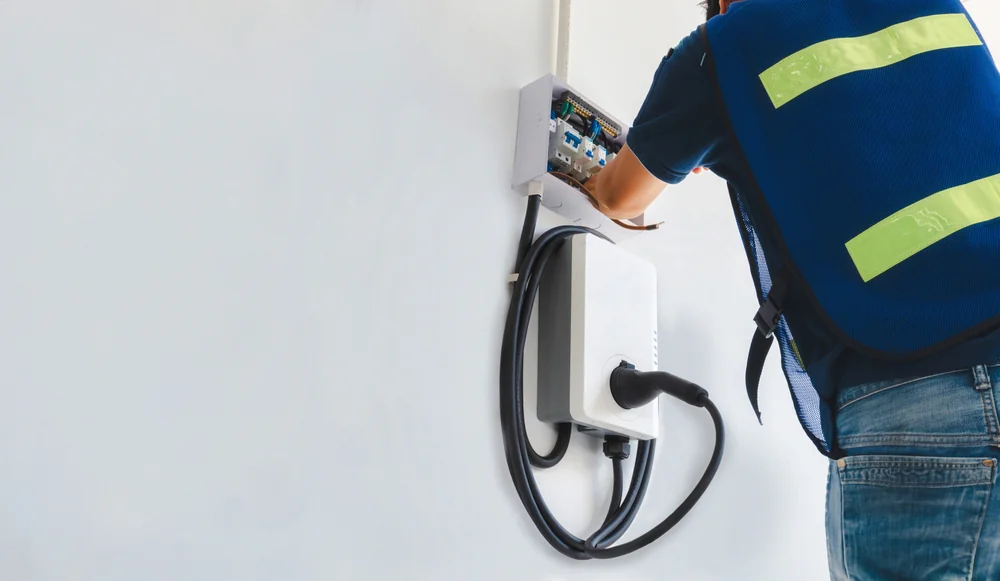
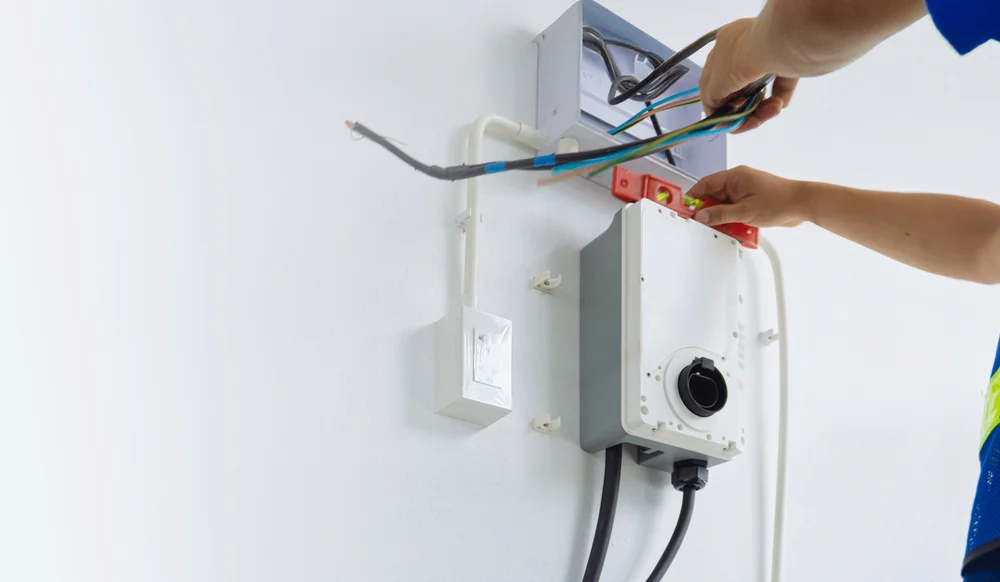
Electric Vehicle Charger Setup Near You
Public charging stations are unreliable. You’ve probably already experienced it: broken chargers, long waits, or stations that just don’t work when you need them. Nearly half of all charging sessions at major networks fail or have problems.
Home charging changes that. You plug in when you get home, and your car is ready the next morning. No apps to troubleshoot, no wondering if the station will work, no detours on your way to work.
A Level 2 charger adds up to 70 miles of range per hour. That’s a full charge overnight for most daily driving. And when you factor in Duke Energy’s rebate of up to $1,117 for electrical upgrades, the upfront cost becomes a lot more manageable. You’re not just buying convenience. You’re buying reliability that public stations can’t match.
Licensed Electricians Serving Crutchfield Crossroads
We’ve been handling electrical work across Chatham, Orange, Durham, and Alamance counties for over 20 years. Our lead electrician has been licensed since 1989. That’s more than three decades of knowing how electrical systems actually work in homes like yours.
Most homes in Crutchfield Crossroads were built between 1970 and 1999. That means older panels, different wiring standards, and systems that weren’t designed for the load an EV charger adds. We assess that before we install anything.
We’re locally owned, fully licensed by the NC State Board of Examiners of Electrical Contractors, and we carry full insurance. When we show up, you’re talking directly to the person doing the work. No call centers, no runaround.
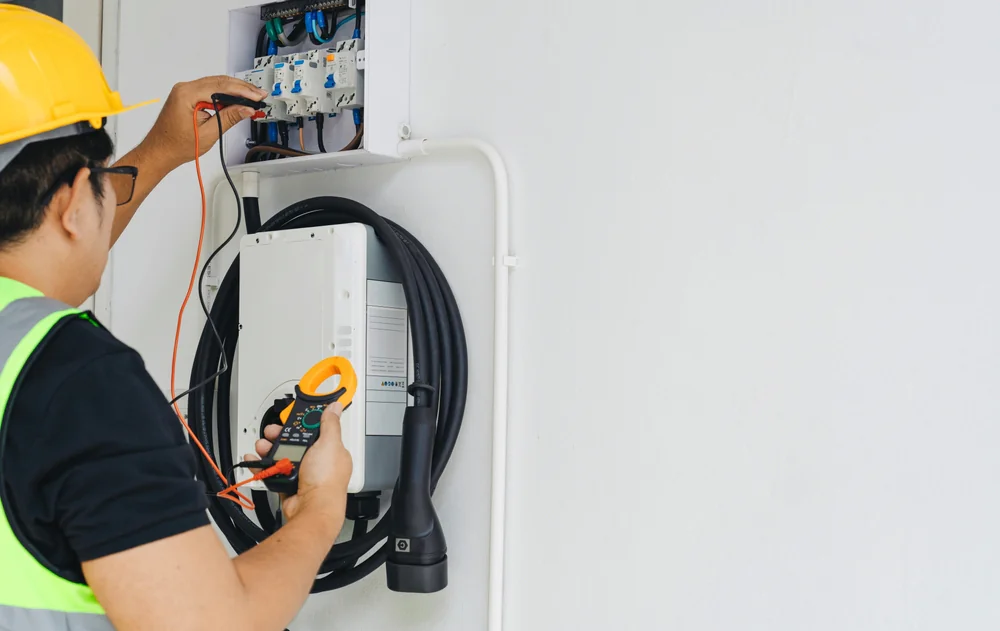
How EV Charging Station Installation Works
First, we assess your electrical panel. Every home has a different load capacity, and adding an EV charger can push older systems past safe limits. We calculate what your panel can handle and whether you need an upgrade or a dedicated circuit.
Next, we plan the installation location. Most people want the charger in their garage or near their driveway. We’ll run the wiring, install the charging unit, and make sure everything is mounted securely and up to code.
Then we handle the permits. North Carolina requires permits for this kind of electrical work, and inspections confirm everything is installed safely. If there’s ever a problem and the work wasn’t permitted, your insurance might not cover it. We take care of that process so you don’t have to.
Finally, we test the system and walk you through how it works. You’ll know how to plug in, monitor charging if your unit has smart features, and what to expect from your setup. We don’t leave until it’s working and you’re comfortable with it.
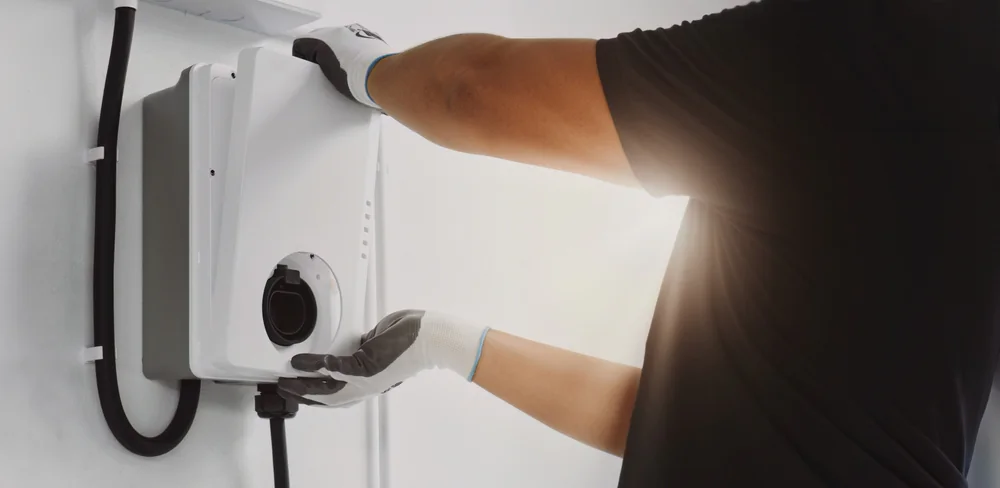
What's Included in Your EV Charger Installation
Your installation includes a full electrical system evaluation. We’re checking your panel’s capacity, the condition of your wiring, and whether your home can support a 240-volt Level 2 charger without upgrades. If upgrades are needed, we’ll tell you exactly what and why.
We handle all permits and coordinate inspections. In North Carolina, this isn’t optional. Unpermitted electrical work can void your insurance and create serious safety risks. We pull the permits, schedule the inspections, and make sure everything passes.
You also get help navigating Duke Energy’s rebate program. They’re offering up to $1,117 per household to cover the cost of electrical upgrades for EV charging. That includes panel upgrades, new wiring, and outlet installation. We’ll walk you through what qualifies and how to apply.
North Carolina has a goal of 1.25 million electric vehicles on the road by 2030. Charging infrastructure is expanding fast, but home charging is still the most reliable option. With more EVs coming to Chatham County and surrounding areas, having your own charging station adds value to your property and eliminates dependence on public networks that are already overcrowded.
How much does it cost to install an EV charger at home?
Most homeowners spend between $1,200 and $4,000 for a complete Level 2 EV charger installation. That includes the charging unit itself, labor, and any electrical work needed to support it.
The wide range comes down to your home’s current electrical system. If your panel has enough capacity and you already have a 240-volt circuit near where you want the charger, you’re on the lower end. If you need a panel upgrade, new wiring run from the panel to your garage, or a dedicated circuit installed, costs go up.
Duke Energy offers a rebate of up to $1,117 to cover expenses like panel upgrades, wiring improvements, and outlet installation. That rebate can significantly reduce your out-of-pocket cost. We’ll assess your system during the initial visit and give you a flat-rate price before any work starts, so there are no surprises.
Do I need to upgrade my electrical panel to install an EV charger?
It depends on your current panel and how much electrical load your home is already using. A Level 2 EV charger typically requires a 40- to 50-amp dedicated circuit. If your panel is near capacity or outdated, an upgrade may be necessary.
Most homes in Crutchfield Crossroads were built between 1970 and 1999, and many still have 100- or 150-amp panels. Modern homes with multiple large appliances, HVAC systems, and now an EV charger often need 200-amp service to operate safely. We calculate your home’s total load during the assessment to determine if an upgrade is required.
Panel upgrades aren’t just about adding capacity for the charger. They also improve safety and future-proof your home for other electrical needs. And because Duke Energy’s rebate covers panel upgrades as part of EV charging preparation, the cost is often less prohibitive than homeowners expect.
How long does EV charger installation take?
Most installations take four to eight hours, depending on the complexity of the job. If your electrical panel is in good shape and the charger location is close to the panel, we’re usually done in a single day.
If a panel upgrade is needed, or if we’re running new wiring a long distance from the panel to your garage or driveway, the job may take longer or require a second visit. Permit approval and inspection scheduling can also add a few days to the overall timeline, but the actual installation work is still completed in one day.
We’ll give you a clear timeline during the assessment. Our trucks are fully stocked, so we’re not making multiple trips for parts. Once we start, we work efficiently and clean up before we leave. You’ll have a working charger the same day we install it.
Can I install an EV charger myself to save money?
Technically, you could, but it’s not legal in North Carolina without a licensed electrician, and it’s not safe if you don’t know what you’re doing. EV charger installation involves working with 240-volt circuits, which carry serious risk of shock, fire, or damage to your home’s electrical system.
More importantly, unpermitted electrical work can void your homeowner’s insurance. If a fire or malfunction occurs and the insurance company finds out the work wasn’t permitted and inspected, they can deny your claim. Permits exist to verify that installations meet code and are safe.
DIY installation also disqualifies you from Duke Energy’s rebate program, which requires professional installation and documentation. When you factor in the rebate, the cost of hiring a licensed electrician is often offset. You’re paying for safety, code compliance, and peace of mind that the system won’t cause problems down the road.
What's the difference between a Level 1 and Level 2 charger?
A Level 1 charger plugs into a standard 120-volt outlet and adds about 3 to 5 miles of range per hour. It’s slow, but it works if you drive fewer than 40 miles a day and can leave your car plugged in overnight. Most EVs come with a Level 1 charging cable.
A Level 2 charger requires a 240-volt circuit, the same kind that powers your dryer or oven. It adds 20 to 70 miles of range per hour, depending on your vehicle and the charger’s amperage. That’s a full charge overnight for most drivers, even if you’re coming home with a nearly empty battery.
Level 2 is the standard for home EV charging. It’s faster, more practical for daily use, and necessary if you drive more than 40 miles a day or own a vehicle with a larger battery. If you’re serious about relying on home charging instead of public stations, Level 2 is what you need.
Will installing an EV charger increase my home's value?
Yes, especially as EV adoption increases. North Carolina is aiming for 1.25 million electric vehicles on the road by 2030, and buyers are starting to look for homes that already have charging infrastructure in place.
A professionally installed Level 2 charger signals that your home is ready for the future. It’s a selling point for buyers who already own an EV or are planning to buy one. In markets where EV ownership is growing, homes with chargers can command higher prices and sell faster than comparable homes without them.
The charger itself is also a permanent improvement. It’s not something a buyer has to add after moving in, which saves them time, money, and hassle. And because it’s a permitted, code-compliant installation, it adds to the home’s documented electrical upgrades, which can be attractive to buyers and appraisers alike.
About Us

Electrical Service Providers (ESP) has been in business since 2002. ESP started out performing wiring services to new construction, remodeling projects and residential homes. Our company’s president identified a market for electrical services to be performed in homes and businesses independent of new construction. Read More about Electrical Service Providers>>
All Rights Reserved.Organic Marketing LLC
Business Listings


Product Brands Used
Allied, Broan, Cutler Hammer, General Electric, Ideal, Juno, Kohler, Leviton, Lutron, Siemens, Square D
Contact
- Office Address: 3254 S Anthony Ct.
Burlington, NC 27215 - Mailing Address: PO Box 25
Alamance, NC 27201 - Phone: 336-228-3300
- E-mail: [email protected], [email protected]
Service Areas
Chapel Hill, Burlington, Carrboro, Durham, Gibsonville, Hillsborough, Graham, Pittsboro, Morrisville, Cary
About Us
Electrical Service Providers (ESP) has been in business since 2002. ESP started out performing wiring services to new construction, remodeling projects and residential homes. Our company’s president identified a market for electrical services to be performed in homes and businesses independent of new construction. Read More about Electrical Service Providers>>
All Rights Reserved.Organic Marketing LLC