EV Charger Installation in Dogwood Acres, NC
Charge at Home Without the Headache
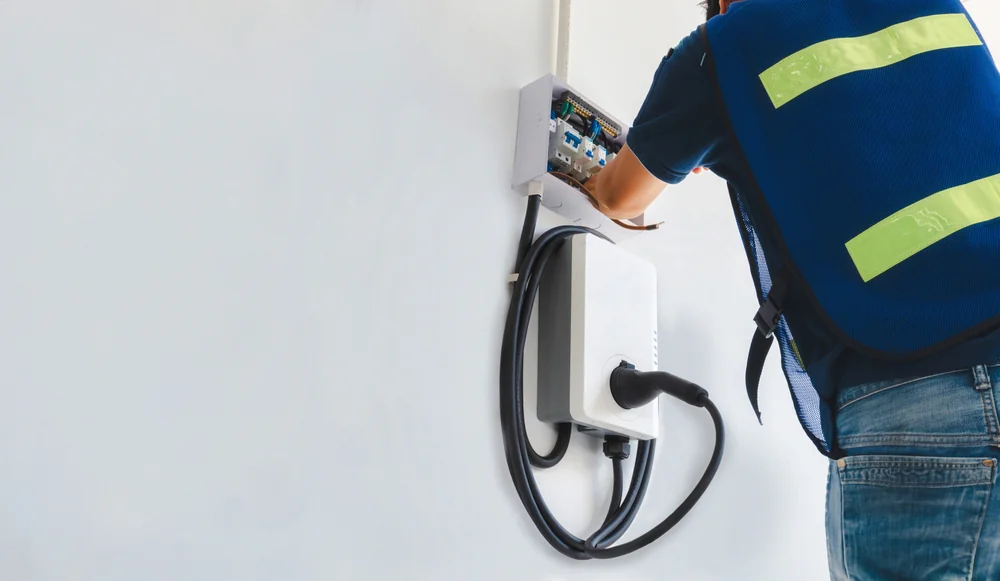
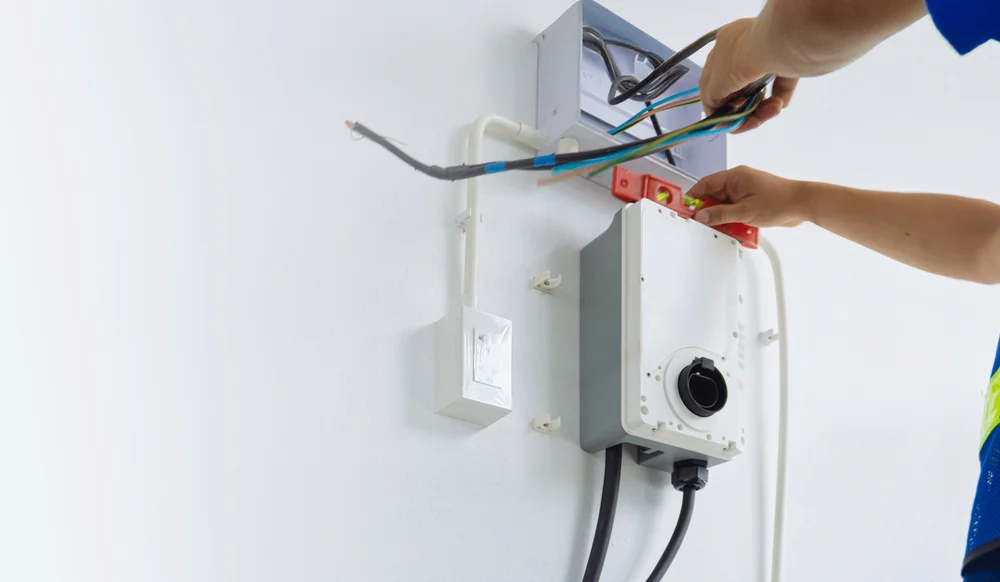
Electric Vehicle Charger Setup in Dogwood Acres
Your standard outlet takes 16 hours to fully charge your EV. That’s not realistic when you need your car ready for work, errands, or a weekend trip.
A Level 2 home charging station changes that. You’ll add 25 to 50 miles of range per hour, which means a full charge overnight while you sleep. No more planning your week around public charger availability or sitting in parking lots waiting for enough juice to get home.
You’ll also save money. Home charging during off-peak hours costs about $3 to $5 per 100 miles. Compare that to $10 to $15 at DC fast chargers or what you’d spend on gas. Over a year, that difference adds up fast.
And if you’re worried about your home’s electrical system handling it, that’s exactly why you need someone who knows what they’re doing. Most homes in Dogwood Acres, NC weren’t built expecting a 240-volt charger in the garage. We assess your panel, run the right wiring, pull permits, and make sure everything meets code so you’re not dealing with tripped breakers or worse.
Licensed Electricians Serving Dogwood Acres, NC
ESP Electrical Service Providers has been handling electrical work in Chatham, Orange, Durham, and Alamance counties for over 20 years. Our Operations Manager has been a licensed electrical contractor since 1989, which means we’ve seen every type of home electrical system you can imagine.
We’re not a national franchise. We’re local, and we respond immediately—not when it fits into some corporate schedule. When you call, you talk to a real person who understands the specific challenges of older homes in this area, from outdated panels to garages that are too far from the main electrical service.
Every truck we send is fully stocked. Every technician is uniformed, insured, and trained to clean up after the job. And if something’s not right, we’ll make it right. That’s not a slogan—it’s how we’ve stayed in business this long in a community where word travels fast.
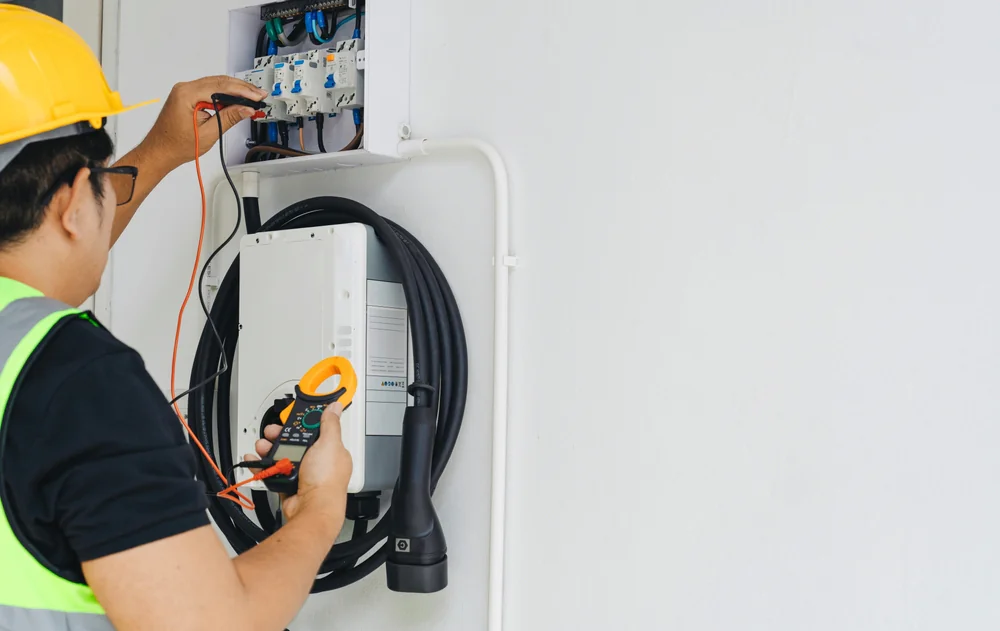
How EV Charging Station Installation Works
First, we come out and assess your electrical panel and garage setup. Most EV charger installations require a dedicated 240-volt circuit, and not every panel has the capacity for that without an upgrade. We’ll tell you exactly what your home needs before we start any work.
If your panel can handle it, great. If not, we’ll upgrade it so it can. Either way, you’ll know the cost upfront with our flat-rate pricing. No surprises halfway through the job.
Next, we pull the permits. Most areas around Dogwood Acres, NC require them for this type of work, and doing it without one can cause problems down the road—especially if you ever sell your home. We handle that paperwork so you don’t have to figure out what the county wants.
Then we install the charger. That means running the right gauge wire from your panel to wherever you’re parking, mounting the charging unit, and testing everything to make sure it works safely. We also provide all the documentation you need to file for rebates through Duke Energy or the federal tax credit.
When we’re done, you’ll have a fully functional home charging station and the peace of mind that comes with knowing it was installed by a licensed electrician who’s been doing this for decades.
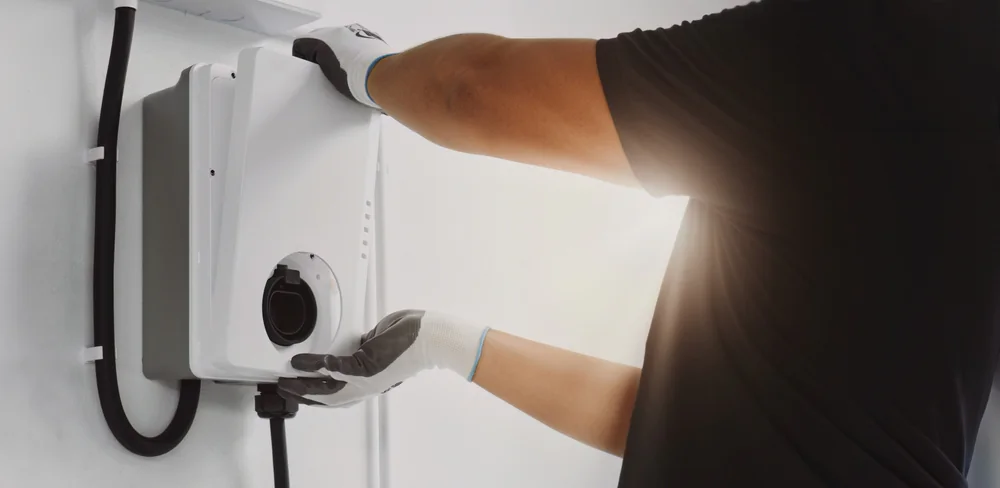
What's Included in EV Charger Installation
This isn’t just about bolting a box to your garage wall. You’re getting a full electrical assessment, permit handling, code-compliant installation, and help accessing rebates that can put over $1,000 back in your pocket.
Duke Energy offers up to $1,117 per household for EV charger installation support, covering things like outlet installation, wiring upgrades, and panel enhancements. The federal government also provides a 30% tax credit on installation costs, up to $1,000. We give you the documentation you need to claim both.
North Carolina is pushing hard to get 1.25 million EVs on the road by 2030, and the state has already allocated $109 million in funding to build out charging infrastructure. That means EV adoption is only going to increase in areas like Dogwood Acres, NC, where the median household income is around $50,000 and homeowners are looking for ways to cut transportation costs without sacrificing convenience.
If you’re planning to sell your home in the next few years, having a Level 2 charger already installed is a selling point. Buyers are specifically looking for homes that can support EVs, and you’ll have proof that the work was done right by a licensed contractor.
How much does it cost to install an EV charger at home?
It depends on your home’s current electrical setup. If your panel has enough capacity and your garage is close to it, you’re looking at a straightforward installation. If you need a panel upgrade or a long wire run, the cost goes up.
That’s why we do an assessment first. We’ll tell you exactly what your home needs and give you a flat-rate price before we start. No hourly billing, no surprise charges halfway through the job.
Most homeowners also qualify for rebates that bring the cost down significantly. Duke Energy’s program covers up to $1,117, and the federal tax credit covers 30% of installation costs up to $1,000. We provide all the paperwork you need to file for both, so you’re not leaving money on the table.
Can I just plug my EV into a regular outlet?
You can, but you won’t like it. A standard 120-volt outlet—what’s called Level 1 charging—adds about 3 to 5 miles of range per hour. That means it takes 12 to 16 hours to fully charge most EVs, and that’s assuming you’re starting from near-empty.
If you only drive 20 miles a day and can leave your car plugged in overnight every night, Level 1 might work. But the second you need your car charged faster—because you forgot to plug it in, or you’re taking a longer trip—you’re stuck.
A Level 2 charger runs on 240 volts and adds 25 to 50 miles of range per hour. That’s the difference between waking up to a full charge and waking up to 40% battery. Most people who try to make Level 1 work end up calling us within a few months to upgrade.
Do I need a permit to install an EV charger?
Yes. Most counties around Dogwood Acres, NC require a permit for EV charger installation because it involves high-voltage electrical work. Skipping the permit might seem like a shortcut, but it can cause real problems if you ever sell your home or file an insurance claim.
Buyers and inspectors will ask if the work was permitted. If it wasn’t, you’ll either have to get it permitted retroactively—which is a hassle—or risk losing the sale. Insurance companies can also deny claims if they find out unpermitted electrical work caused a fire or other damage.
We pull the permits as part of the installation. You don’t have to deal with the county, figure out what forms they need, or wait in line at the building department. We handle it, and you get documentation proving the work was done legally and safely.
Will installing an EV charger increase my electric bill?
Yes, but probably less than you think—and definitely less than you’re spending on gas. Charging an EV at home typically costs about $3 to $5 per 100 miles, depending on your electricity rate and when you charge.
If you charge during off-peak hours—usually overnight—you’ll pay even less. Duke Energy offers time-of-use rates that make overnight charging cheaper, and most modern EV chargers let you schedule charging sessions through an app so it happens automatically when rates are lowest.
Compare that to gas. If you’re driving 1,000 miles a month and getting 25 miles per gallon, you’re buying 40 gallons of gas. At $3.50 a gallon, that’s $140. Charging the same distance at home costs around $30 to $50. Over a year, you’re saving over $1,000 in fuel costs alone.
How long does EV charger installation take?
Most installations take four to eight hours, depending on your home’s setup. If your electrical panel is in the garage or close to it, and you don’t need an upgrade, we can usually finish in half a day.
If we need to upgrade your panel or run wiring a long distance—say your panel is on the opposite side of the house from your garage—it takes longer. We’ll tell you the timeline upfront so you can plan accordingly.
Permit approval can add a few days to the process, but that’s just waiting for the county to process paperwork. The actual installation work happens in one visit. We don’t start the job and then disappear for a week. We show up, do the work, test everything, clean up, and you’re charging that same day.
What if my electrical panel is too old for an EV charger?
Then we upgrade it. A lot of homes in Dogwood Acres, NC have older panels that weren’t designed to handle the load of a 240-volt EV charger on top of everything else running in your house. If that’s the case, we’ll replace the panel with one that has enough capacity.
Panel upgrades aren’t cheap, but they’re necessary if you want to charge safely without tripping breakers or overloading your system. And the good news is that a panel upgrade doesn’t just benefit your EV charger—it also gives you more capacity for other electrical needs down the road.
We include the cost of the panel upgrade in our flat-rate quote, so you know exactly what you’re paying before we start. And because we’re licensed and insured, the work is done to code and backed by our guarantee. If something’s not right, we fix it.
Other Services we provide in Dogwood Acres
About Us

Electrical Service Providers (ESP) has been in business since 2002. ESP started out performing wiring services to new construction, remodeling projects and residential homes. Our company’s president identified a market for electrical services to be performed in homes and businesses independent of new construction. Read More about Electrical Service Providers>>
All Rights Reserved.Organic Marketing LLC
Business Listings


Product Brands Used
Allied, Broan, Cutler Hammer, General Electric, Ideal, Juno, Kohler, Leviton, Lutron, Siemens, Square D
Contact
- Office Address: 3254 S Anthony Ct.
Burlington, NC 27215 - Mailing Address: PO Box 25
Alamance, NC 27201 - Phone: 336-228-3300
- E-mail: [email protected], [email protected]
Service Areas
Chapel Hill, Burlington, Carrboro, Durham, Gibsonville, Hillsborough, Graham, Pittsboro, Morrisville, Cary
About Us
Electrical Service Providers (ESP) has been in business since 2002. ESP started out performing wiring services to new construction, remodeling projects and residential homes. Our company’s president identified a market for electrical services to be performed in homes and businesses independent of new construction. Read More about Electrical Service Providers>>
All Rights Reserved.Organic Marketing LLC