EV Charger Installation in Durham, NC
Charge at Home Without the Guesswork or Risk
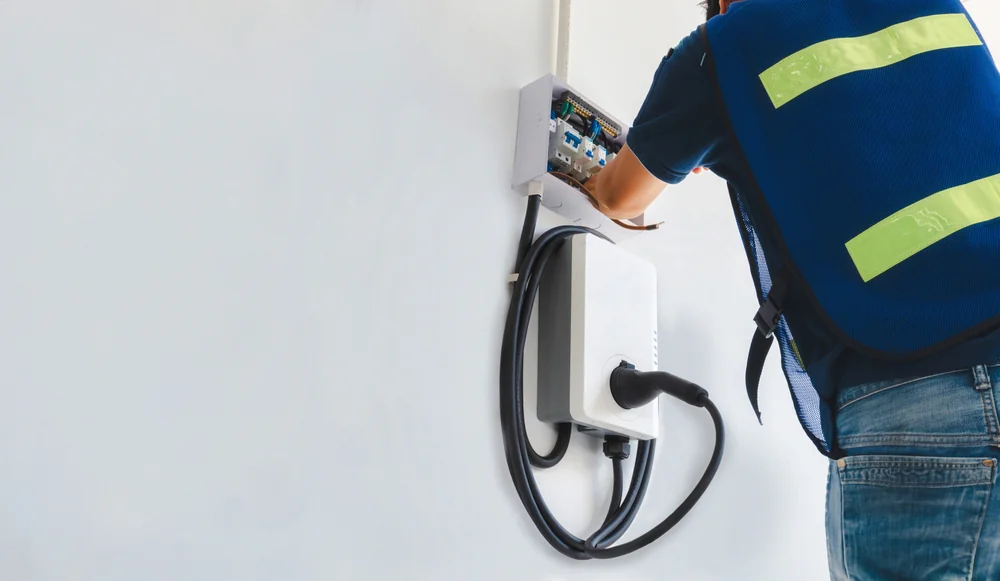
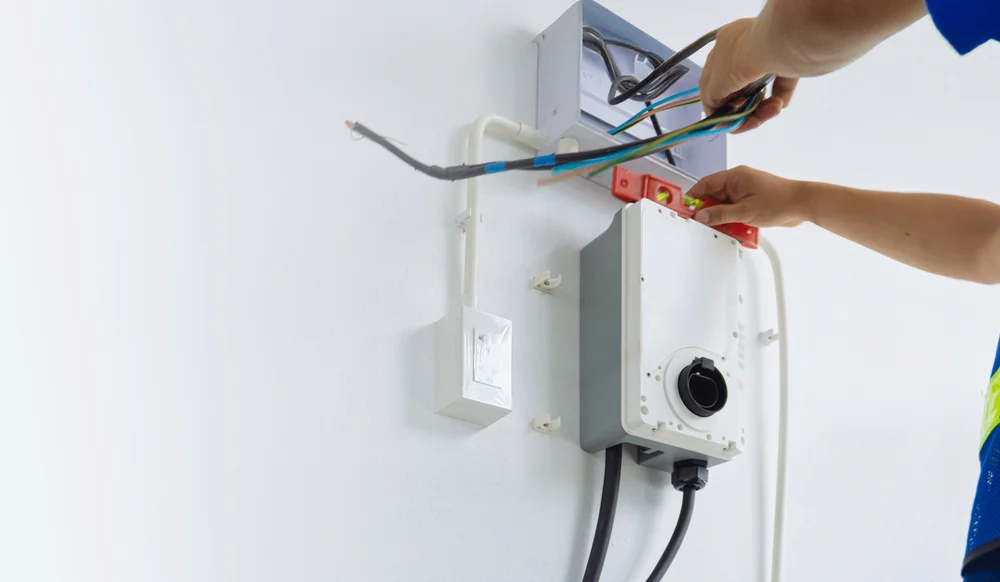
Electric Vehicle Charger Setup Durham
You bought an EV to simplify your life, not to hunt for working public chargers or wonder if your garage outlet can handle the load. A professionally installed Level 2 charging station means you plug in when you get home and wake up ready to drive. No more planning trips around charging stops or dealing with broken equipment at public stations.
Your home becomes your primary fuel source. Most Level 2 chargers fully replenish your battery overnight, delivering 25-30 miles of range per hour compared to the 3-5 miles you’d get from a standard 120-volt outlet. That’s the difference between charging anxiety and charging confidence.
Durham’s EV adoption is accelerating faster than most of North Carolina. With companies like Kempower opening their first US factory here and more EVs hitting local roads every month, the infrastructure you install today protects your investment tomorrow. Your home’s resale value increases, your daily routine simplifies, and you’re set up for whatever electric vehicle you drive next.
Durham EV Charger Electrician Services
We’ve been serving Durham homeowners since 2002. Andy Helton, our Master Electrician, brings over 35 years of electrical experience to every job. That’s not marketing language—it’s verifiable licensing and decades of work in these neighborhoods.
We’re one of the first Level III service providers for Eaton/Cutler Hammer generators in North Carolina, which means we’ve been handling high-voltage residential installations longer than most companies have been in business. EV charger installation requires the same attention to load calculations, panel capacity, and code compliance that we’ve been doing for generator systems for years.
When you call, you’re talking to our team in Durham. We respond immediately because we’re local, not because we’re trying to impress you with customer service theater. Our lifetime warranty on labor—up to 25 years—backs up what we install. We’re still here if something needs attention five years from now.
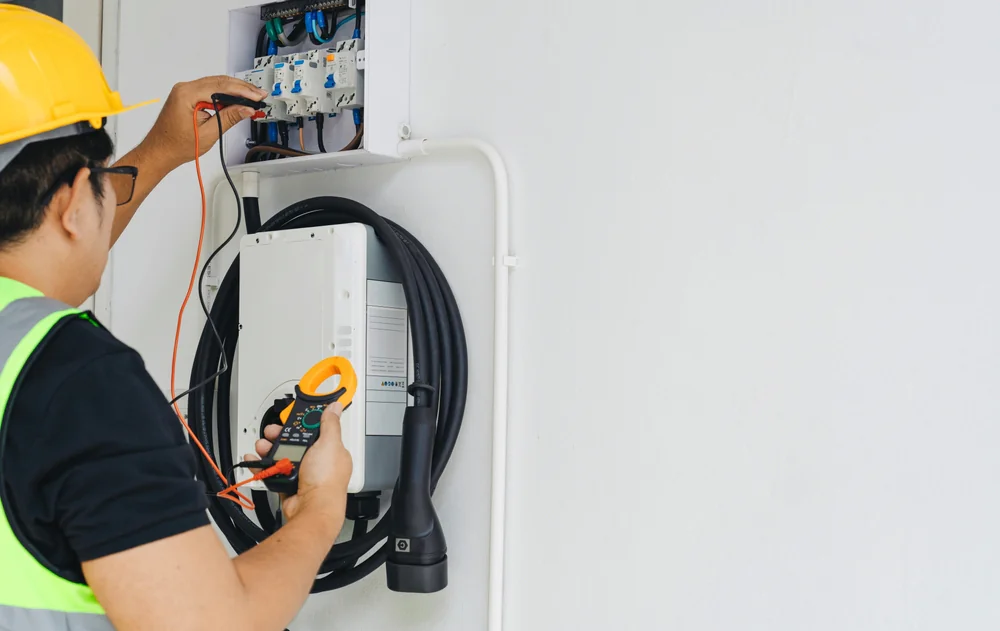
Level 2 EV Charger Installation Process
First, we assess your electrical panel and garage setup. Most homes need a dedicated 240-volt circuit for Level 2 charging, and we’ll tell you upfront if your panel has capacity or needs an upgrade. This isn’t about upselling—it’s about safety and code compliance. If your panel is maxed out, we’ll explain what an upgrade involves and help you access Duke Energy’s rebate program that covers up to $1,133 for qualifying electrical work.
Next, we handle the permit and plan the circuit route from your panel to your charging location. We install the dedicated circuit, mount your charging station (if it’s a wall-mounted unit), and connect everything according to National Electrical Code and local Durham requirements. Most residential installations take 3-5 hours from start to finish.
Before we leave, we test the system and show you how to use your new charger. You’ll know how to start a charge, check status, and troubleshoot basic issues. We also document everything for your records and for Duke Energy rebate submissions if applicable. You’re left with a fully functional charging station and the documentation you need.
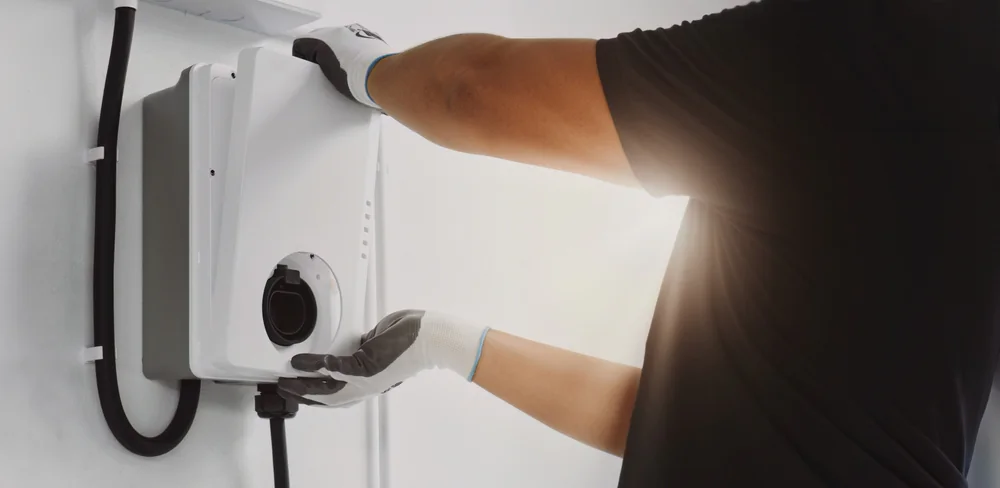
EV Charging Station Installation Durham NC
Every installation includes a full electrical assessment, dedicated 240-volt circuit installation, proper grounding and bonding, code-compliant conduit and wiring, charging station mounting (for hardwired or plug-in units), and final testing. We pull all necessary permits and coordinate inspections with Durham County.
If you’re eligible for Duke Energy’s EV charger rebate program, we provide the documentation you need for your application. Durham residents can receive credits for outlet upgrades, panel modifications, and installation labor. We’ve processed enough of these rebates to know exactly what Duke Energy requires, and we’ll make sure your paperwork is complete.
The Triangle area is seeing significant EV growth, with Durham ranking 36th nationally for EV ownership conditions. That means more charging options, better resale value for EV-ready homes, and a local infrastructure that’s built to support electric vehicles. Your installation isn’t just about today’s car—it’s about positioning your home for a market that’s already here. We work with all major charging brands including Tesla Wall Connectors, ChargePoint, JuiceBox, and Grizzl-E, so you’re not locked into one ecosystem.
How much does EV charger installation cost in Durham?
Most residential Level 2 installations in Durham run between $800 and $2,000, including labor and materials. That’s assuming your electrical panel has available capacity for a new 240-volt circuit. If you need a panel upgrade, add another $1,500 to $3,000 depending on your current panel size and home’s electrical demand.
The wide range comes down to distance from your panel to your garage, whether we’re running conduit through finished walls or an unfinished basement, and what type of charging station you’re installing. A plug-in unit with a NEMA 14-50 outlet is typically less expensive than a hardwired station, though both deliver the same charging speed.
Duke Energy offers rebates up to $1,133 for Durham customers making qualifying electrical upgrades for EV charging. That can cover a significant portion of your installation cost, especially if you’re adding capacity to your panel. We provide all documentation needed for rebate applications and can walk you through eligibility requirements during your assessment.
Do I need to upgrade my electrical panel for an EV charger?
It depends on your current panel capacity and what else is running in your home. A Level 2 EV charger typically requires a 40-50 amp dedicated circuit. If your panel is already near capacity—common in older Durham homes with 100-amp or 150-amp service—you’ll need an upgrade to safely add that load.
We calculate your home’s total electrical demand during the assessment. That includes your HVAC system, water heater, major appliances, and any other high-draw equipment. If adding an EV charger would exceed 80% of your panel’s capacity, code requires an upgrade. Most modern homes with 200-amp service have room, but it’s not universal.
Panel upgrades aren’t just about the EV charger. You’re also increasing your home’s overall electrical capacity, which matters for resale value and future needs. Many Durham homeowners are adding solar, battery backup, or additional HVAC zones—all of which benefit from upgraded service. The Duke Energy rebate program specifically covers panel upgrades related to EV charging, which reduces your out-of-pocket cost significantly.
How long does it take to install a home EV charging station?
Most residential Level 2 installations take between 3 and 5 hours once we’re on site. That’s for a straightforward installation where your panel has capacity, the charger location is relatively close to your panel, and we’re not running wire through complex routes.
More involved installations—panel upgrades, long wire runs, or installations requiring significant wall penetrations—can take a full day or require a second visit. We’ll give you an accurate timeline after assessing your specific situation. Permit approval and inspection scheduling add time to the overall project, typically 1-2 weeks in Durham County depending on current permit office workload.
The actual charging station works immediately once installation is complete. There’s no calibration period or break-in time. You can plug in your EV the same day we finish and start charging at full Level 2 speeds. We test everything before we leave to make sure you’re getting the expected charging rate and that all safety mechanisms are functioning correctly.
What's the difference between Level 1 and Level 2 EV charging at home?
Level 1 charging uses your standard 120-volt household outlet and delivers about 3-5 miles of range per hour. That’s fine if you drive 20-30 miles a day and can leave your car plugged in overnight, but it’s painfully slow for most people’s needs. You’re looking at 24-40 hours for a full charge on most EVs.
Level 2 charging uses a 240-volt circuit—the same voltage as your electric dryer—and delivers 25-30 miles of range per hour. Most EVs fully charge overnight, usually in 6-8 hours. That’s the practical difference: Level 1 is technically functional, Level 2 is actually usable for daily driving.
There’s no comparison for anyone driving more than 40 miles a day or who can’t guarantee 12+ hours of plug-in time every night. Level 2 also matters for resale value. Buyers expect Level 2 capability in EV-ready homes, and a properly installed 240-volt circuit with a quality charging station signals that the home’s electrical system can handle modern demands. Level 1 charging is what you tolerate temporarily, not what you plan around long-term.
Can I install an EV charger myself or do I need an electrician?
Durham County requires permitted electrical work for EV charger installations, which means a licensed electrician must do the work. Even if you’re comfortable with electrical projects, this isn’t a DIY situation legally or practically. You’re running a new 240-volt circuit that draws significant amperage—that requires proper load calculations, correctly sized wire and breaker, and code-compliant installation methods.
The bigger issue is safety and liability. An improperly installed EV charging circuit can overheat wiring, trip breakers repeatedly, or create fire hazards. Your homeowner’s insurance may deny claims related to unpermitted electrical work, and you’ll have to rip it out and reinstall correctly if you ever sell your home and it’s caught during inspection.
Professional installation also ensures you’re eligible for Duke Energy rebates and that your charging station warranty remains valid. Most manufacturers require licensed electrician installation to honor warranty claims. The cost difference between DIY and professional installation isn’t worth the risk—you’re talking about a few hundred dollars in labor to ensure everything is safe, legal, and warrantied. We’ve seen enough amateur electrical work to know that fixing problems costs more than doing it right the first time.
Will an EV charger increase my electricity bill significantly?
Your electricity cost depends on how much you drive and Duke Energy’s current rates in Durham. Most EV owners see their electric bill increase by $30-60 per month, which is still considerably less than gasoline costs for equivalent mileage. A typical EV uses about 3-4 cents per mile in electricity versus 12-15 cents per mile for gas vehicles at current prices.
Duke Energy offers time-of-use rates for EV owners that reduce electricity costs if you charge during off-peak hours, typically overnight. Most Level 2 chargers have scheduling features that automatically start charging when rates drop. That can cut your charging costs by 30-40% compared to charging during peak demand times.
The actual impact on your bill is straightforward math: your EV’s efficiency (miles per kWh), your driving distance, and your electricity rate. A Tesla Model 3 traveling 1,000 miles per month at 4 miles per kWh uses 250 kWh. At Durham’s average rate of about 12 cents per kWh, that’s $30. A comparable gas car getting 30 mpg would cost around $120 in fuel for the same distance. Your charging station itself doesn’t add to your bill—only the electricity your car actually consumes does.
Other Services we provide in Durham
About Us

Electrical Service Providers (ESP) has been in business since 2002. ESP started out performing wiring services to new construction, remodeling projects and residential homes. Our company’s president identified a market for electrical services to be performed in homes and businesses independent of new construction. Read More about Electrical Service Providers>>
All Rights Reserved.Organic Marketing LLC
Business Listings


Product Brands Used
Allied, Broan, Cutler Hammer, General Electric, Ideal, Juno, Kohler, Leviton, Lutron, Siemens, Square D
Contact
- Office Address: 3254 S Anthony Ct.
Burlington, NC 27215 - Mailing Address: PO Box 25
Alamance, NC 27201 - Phone: 336-228-3300
- E-mail: [email protected], [email protected]
Service Areas
Chapel Hill, Burlington, Carrboro, Durham, Gibsonville, Hillsborough, Graham, Pittsboro, Morrisville, Cary
About Us
Electrical Service Providers (ESP) has been in business since 2002. ESP started out performing wiring services to new construction, remodeling projects and residential homes. Our company’s president identified a market for electrical services to be performed in homes and businesses independent of new construction. Read More about Electrical Service Providers>>
All Rights Reserved.Organic Marketing LLC