EV Charger Installation in Efland, NC
Charge at Home Without the Guesswork
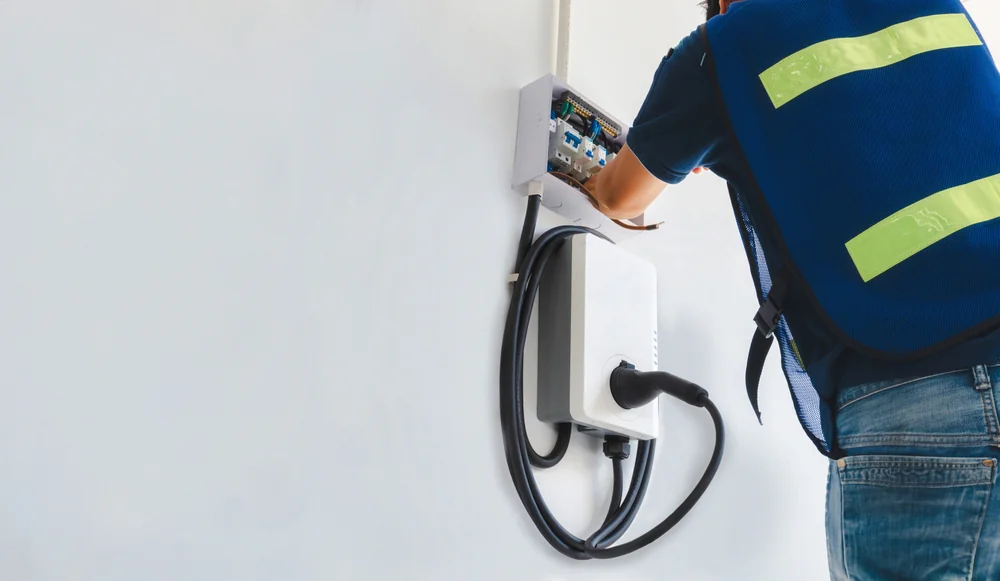
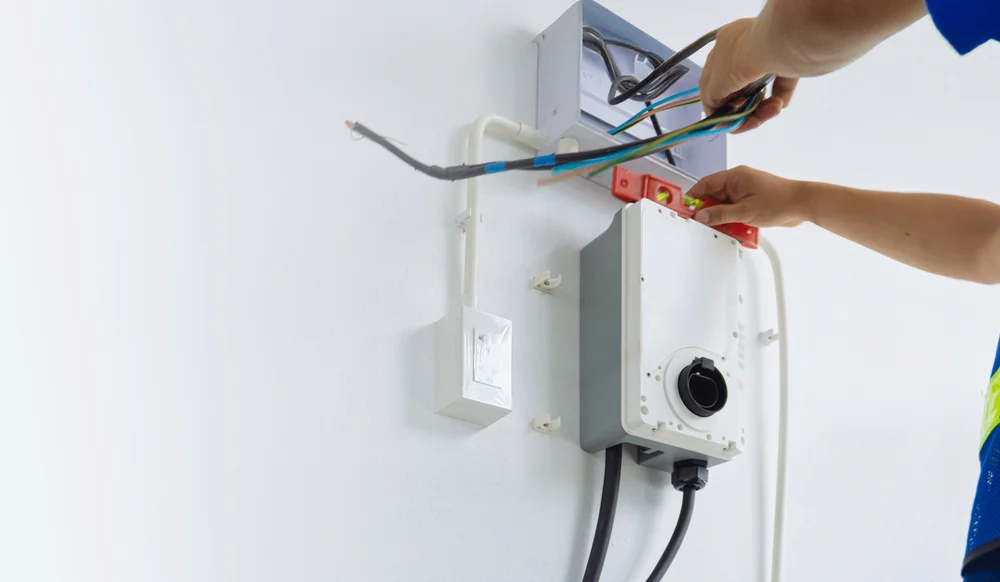
Electric Vehicle Charging Station Setup
You bought an EV to simplify your life, not to plan trips around public charging stations. Home charging means you leave every morning with a full battery, no apps to navigate, no waiting in parking lots, and no wondering if the station’s even working.
The math is straightforward. Charging at home costs about half what you’d pay at commercial stations. Over a year, that’s real money back in your pocket.
But here’s what matters more than savings: you stop thinking about charging altogether. Plug in when you get home. Unplug when you leave. That’s it. No detours, no delays, no second-guessing your battery percentage before a meeting. Your car charges while you sleep, and you get back to focusing on everything else.
Licensed Electricians Serving Efland Homes
We’ve spent over two decades working in Orange County homes. Our master electrician has been licensed since 1989, which means we’ve seen every type of electrical panel, every quirky home setup, and every curveball an older house can throw at an EV charger installation.
We’re not a national franchise reading from a script. We’re local, and we know Efland. We know which neighborhoods have older panels that need upgrades, and we know how to navigate Orange County’s permit process without the runaround.
When you call, you talk to us directly. No call center, no automated system. We give you flat-rate pricing before we start, so you know exactly what you’re paying. And we don’t leave until the job’s done right and you’re satisfied.
How EV Charger Installation Works
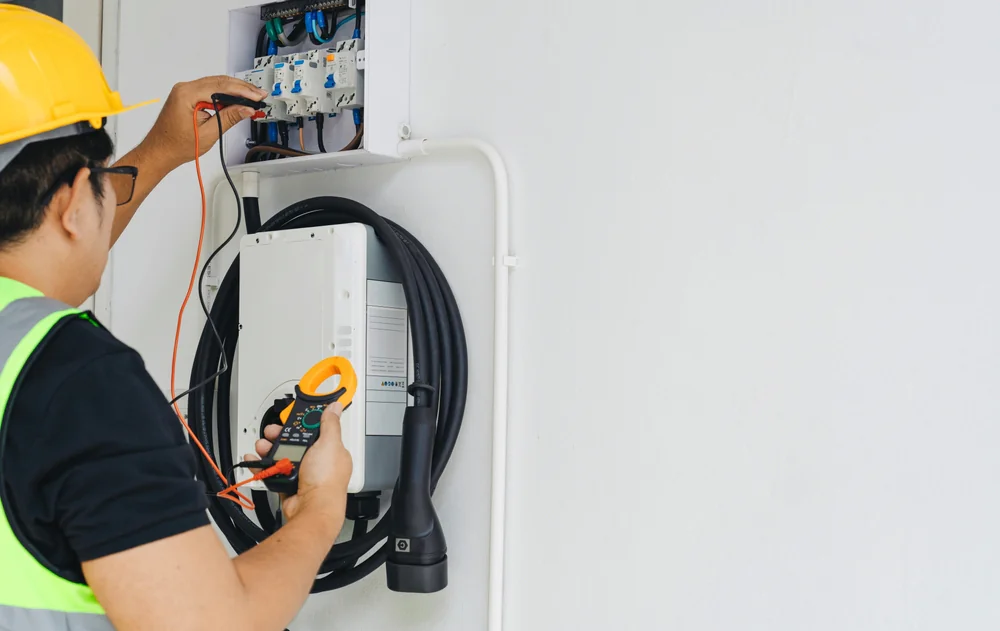
First, we come out and assess your electrical panel. Most EV chargers need a 240-volt circuit, and not every panel can handle that load without an upgrade. We’ll tell you exactly what your system needs, no surprises.
If your panel needs work, we handle it. That might mean adding circuits, upgrading your main panel, or running new wiring to your garage. We pull the permits, schedule the inspections, and make sure everything meets code.
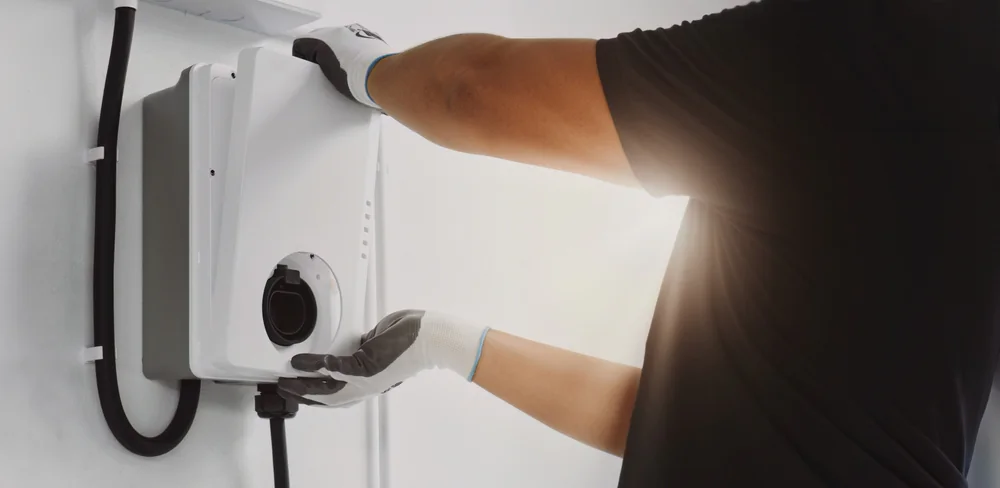
Once your electrical system is ready, we install the charging station. We mount it where you want it, run the wiring, connect everything, and test it to make sure it’s working properly. Then we walk you through how to use it.
Most installations take a day, sometimes two if there’s panel work involved. You’ll know the timeline upfront, and we’ll keep you updated if anything changes.
What's Included in Your Installation
North Carolina’s EV market just hit 100,000 registered vehicles in 2024, and Efland’s seeing more EVs every month. That means more homeowners are realizing their electrical systems weren’t built for this kind of load.
Your installation includes a full electrical assessment to determine if your current panel can support a Level 2 charger. If it can’t, we’ll upgrade it. We also handle the dedicated 240-volt circuit installation, which is what powers your charger and delivers 12 to 80 miles of range per hour depending on your vehicle.
We pull all necessary permits and coordinate inspections with Orange County. You don’t have to call anyone or track down paperwork. We mount your charging station in your garage or wherever makes the most sense for your setup, and we run conduit if the distance from your panel requires it.
Everything we install meets National Electrical Code standards and local requirements. We work with quality brands like Siemens, Square D, and Leviton, so your equipment lasts. And because we’ve been doing electrical work in this area for over 20 years, we know what holds up and what doesn’t.
Do I need to upgrade my electrical panel to install an EV charger?
It depends on your current panel’s capacity and how much load it’s already handling. Most Level 2 EV chargers pull between 30 and 50 amps, and your panel needs to have enough available capacity to support that without overloading.
If your home was built before 2000, there’s a decent chance your panel is already near its limit, especially if you’ve added central air, a heat pump, or other major appliances over the years. We’ll measure your panel’s capacity during the assessment and tell you whether an upgrade is necessary.
Panel upgrades aren’t cheap, but they’re not optional if your system can’t handle the load. The good news is that upgrading your panel doesn’t just solve the EV charging issue—it also gives you capacity for future electrical needs and makes your home safer overall.
How long does an EV charger installation take in Efland?
If your electrical panel is ready and doesn’t need upgrades, most installations take four to six hours. We mount the charger, run the wiring, connect everything, test it, and you’re charging that same day.
If you need a panel upgrade or significant electrical work, the timeline stretches to one or two days depending on the scope. Panel upgrades require permits and inspections, which adds time but ensures everything is safe and code-compliant.
We’ll give you an accurate timeline after the initial assessment. Weather, permit processing, and inspection schedules can occasionally cause delays, but we keep you informed every step of the way so you’re never left guessing when the job will be finished.
What does EV charger installation cost, including electrical work?
The charger itself typically runs between $300 and $1,200 depending on the brand and features. Installation costs vary based on your home’s electrical setup, the distance from your panel to the charging location, and whether you need a panel upgrade.
A straightforward installation with no panel work usually costs between $800 and $1,500. If your panel needs an upgrade, add another $1,500 to $3,000 depending on the size and complexity. Running conduit over long distances or through finished spaces can also add to the cost.
We use flat-rate pricing, so you’ll know the exact cost before we start any work. No hourly rates, no surprise charges. We assess your situation, tell you what it’ll cost, and you decide if you want to move forward. That’s it.
Can I install an EV charger in a detached garage?
Yes, but it’s more involved than installing one in an attached garage. We need to run electrical service from your main panel to the detached structure, which usually means trenching underground or running overhead conduit depending on your property layout and local code requirements.
Underground runs are more common because they’re less visible and better protected, but they require digging a trench, laying conduit, and burying the wire at the proper depth. Overhead runs are faster but need to meet height clearances and may require additional support structures.
Either way, the work is doable, and we handle it regularly. The cost is higher than a standard installation because of the additional labor and materials, but it’s often the only option if your garage isn’t attached. We’ll walk your property, recommend the best approach, and give you a firm price before we dig or drill anything.
Do I need a permit for EV charger installation in Orange County?
Yes. Any time you’re adding a new 240-volt circuit or upgrading an electrical panel, Orange County requires a permit and inspection. This isn’t red tape for the sake of it—it’s to make sure the work is safe and meets code.
We pull the permits as part of the installation process. You don’t have to visit the county office, fill out forms, or schedule inspections yourself. We handle all of that, and we coordinate with the inspector to make sure everything passes the first time.
Skipping the permit might seem tempting to save time or money, but it’s a bad idea. If you ever sell your home, unpermitted electrical work can kill a deal or force you to pay for expensive corrections. And if something goes wrong—a fire, an electrical issue—your insurance may not cover it if the work wasn’t permitted. It’s not worth the risk.
Will an EV charger increase my electric bill significantly?
It’ll increase your bill, but probably less than you think. The average EV driver covers about 1,000 miles per month. At North Carolina’s average electricity rate, that’s roughly $40 to $60 per month in charging costs depending on your vehicle’s efficiency and your local utility rates.
Compare that to what you were spending on gas. If you were filling up twice a week at $40 per tank, you were spending over $300 a month. Even with the electric bill increase, you’re still saving $200 to $250 monthly.
Charging during off-peak hours can lower costs even further if your utility offers time-of-use rates. Most EVs let you schedule charging to start late at night when rates are cheapest. Over a year, that adds up to real savings without any extra effort on your part.
Other Services we provide in Efland
About Us

Electrical Service Providers (ESP) has been in business since 2002. ESP started out performing wiring services to new construction, remodeling projects and residential homes. Our company’s president identified a market for electrical services to be performed in homes and businesses independent of new construction. Read More about Electrical Service Providers>>
All Rights Reserved.Organic Marketing LLC
Business Listings


Product Brands Used
Allied, Broan, Cutler Hammer, General Electric, Ideal, Juno, Kohler, Leviton, Lutron, Siemens, Square D
Contact
- Office Address: 3254 S Anthony Ct.
Burlington, NC 27215 - Mailing Address: PO Box 25
Alamance, NC 27201 - Phone: 336-228-3300
- E-mail: [email protected], [email protected]
Service Areas
Chapel Hill, Burlington, Carrboro, Durham, Gibsonville, Hillsborough, Graham, Pittsboro, Morrisville, Cary
About Us
Electrical Service Providers (ESP) has been in business since 2002. ESP started out performing wiring services to new construction, remodeling projects and residential homes. Our company’s president identified a market for electrical services to be performed in homes and businesses independent of new construction. Read More about Electrical Service Providers>>
All Rights Reserved.Organic Marketing LLC