EV Charger Installation in Farmville, NC
Charge at Home, Save Every Time You Plug In
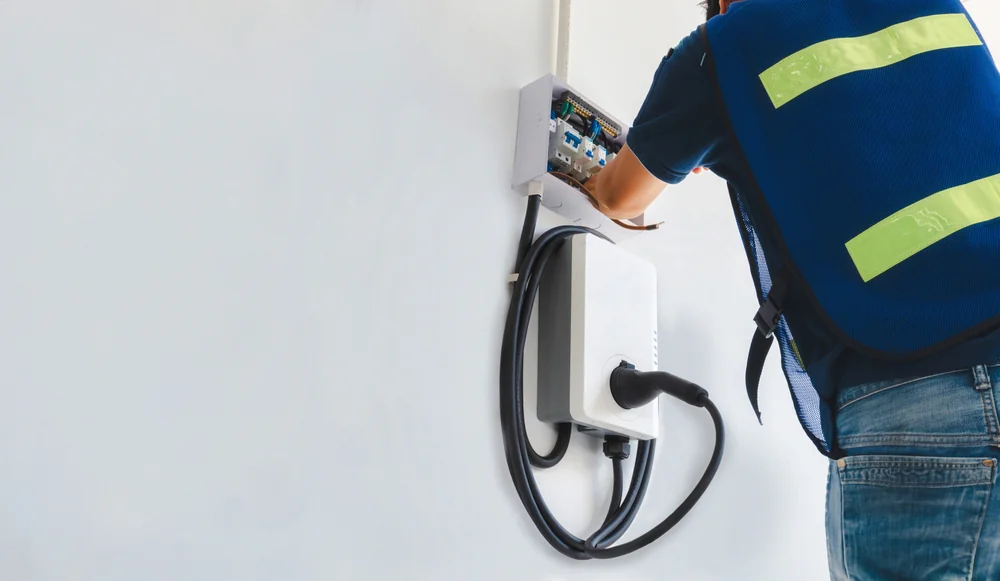
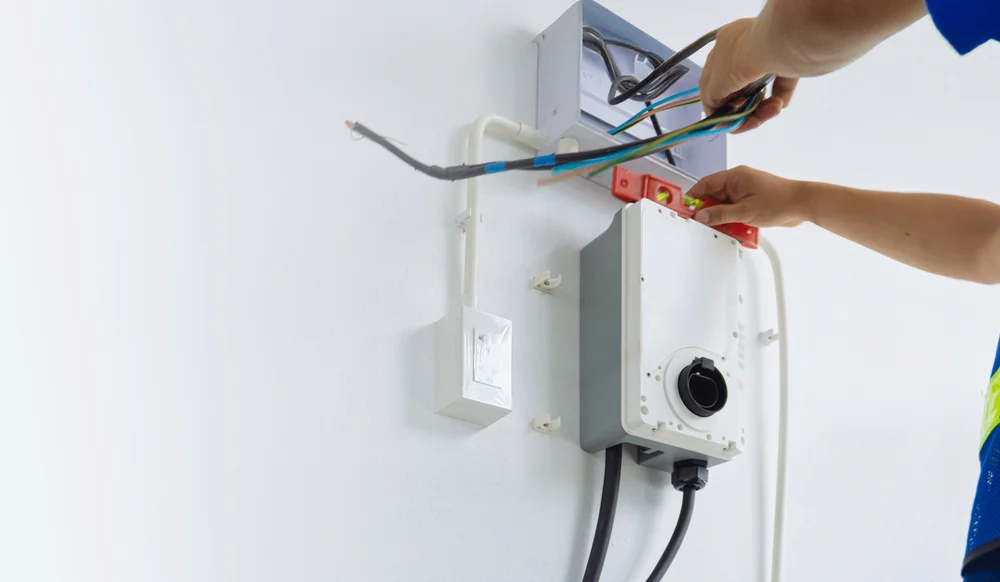
Electric Vehicle Charger Setup Farmville
You stop planning your week around charging stations. No more sitting in parking lots waiting for an open spot or paying premium rates during the day.
Your car charges overnight while you sleep, usually at a fraction of what public stations charge per kilowatt-hour. Most homeowners in Farmville see their cost per charge drop by 30-50% compared to commercial charging. If you’re on Duke Energy’s time-of-use plan, those savings get even better during off-peak hours.
The Level 2 charger we install charges five to seven times faster than a standard outlet. That means a full charge in hours, not days. You’re not stuck with a half-charged battery because you forgot to plug in early enough.
And if you’re planning to sell eventually, you’ve just made your home more attractive to a growing number of buyers. EV adoption is climbing fast in North Carolina—over 16,000 registered EVs statewide and rising. A built-in charging solution isn’t a nice-to-have anymore. It’s becoming expected.
Licensed Electricians Farmville NC
ESP Electrical Service Providers has been handling electrical work across central North Carolina for over 20 years. Our lead electrician has been licensed since 1989 and brings 35+ years of hands-on experience to every job.
We’re not a national franchise or a referral network. We’re local, and we show up in uniform with fully stocked trucks so we’re not making multiple trips or waiting on parts. You get flat-rate pricing before we start, and we don’t leave until the site is clean and you’re satisfied.
Farmville and the surrounding areas have different electrical setups depending on when homes were built. We’ve worked on everything from older homes with 100-amp panels to newer builds with modern electrical infrastructure. That experience matters when you’re adding a high-draw appliance like an EV charger.
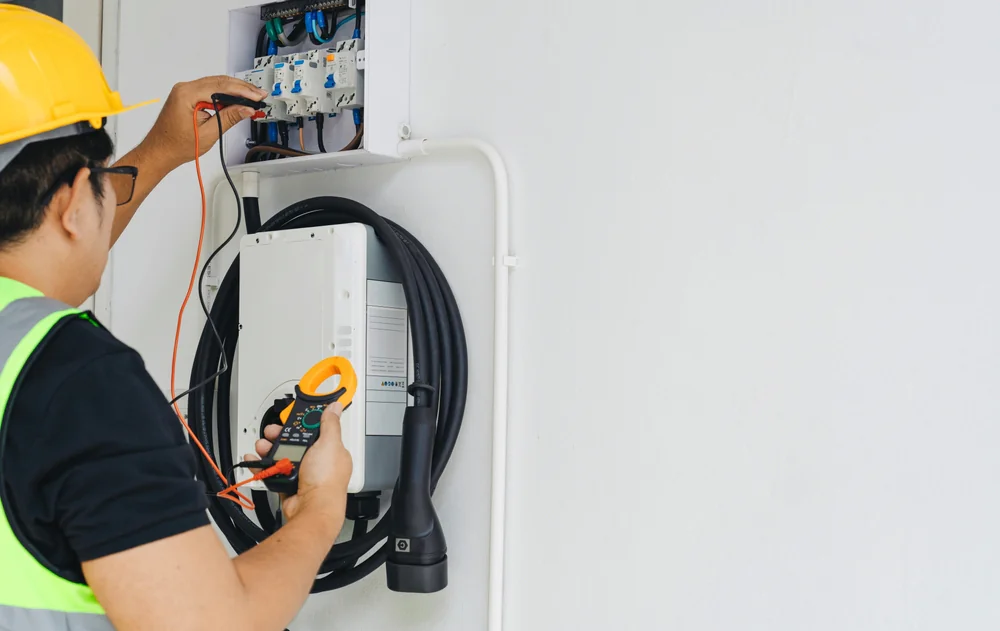
EV Charging Station Installation Process
First, we assess your electrical panel and the location where you want the charger installed. That tells us whether your current setup can handle the load or if you’ll need an upgrade. Most modern homes with 200-amp service are fine. Older homes with 100-amp panels sometimes need work.
We measure the distance from your panel to the install location. The closer the charger is to your panel, the less wiring we need to run and the lower your cost. If the charger needs to go in a garage on the opposite side of the house, that’s more labor and materials.
Once we know what’s required, we give you a flat-rate price. No surprises later. We handle the permit if one’s needed—most Level 2 installs in North Carolina require it. We also walk you through available rebates, like the Duke Energy credit worth up to $1,117 for residential customers.
After you approve, we schedule the install. The work usually takes a few hours depending on complexity. We mount the charger, run the wiring, connect everything to your panel, and test the system. Before we leave, we show you how to use it and answer any questions.
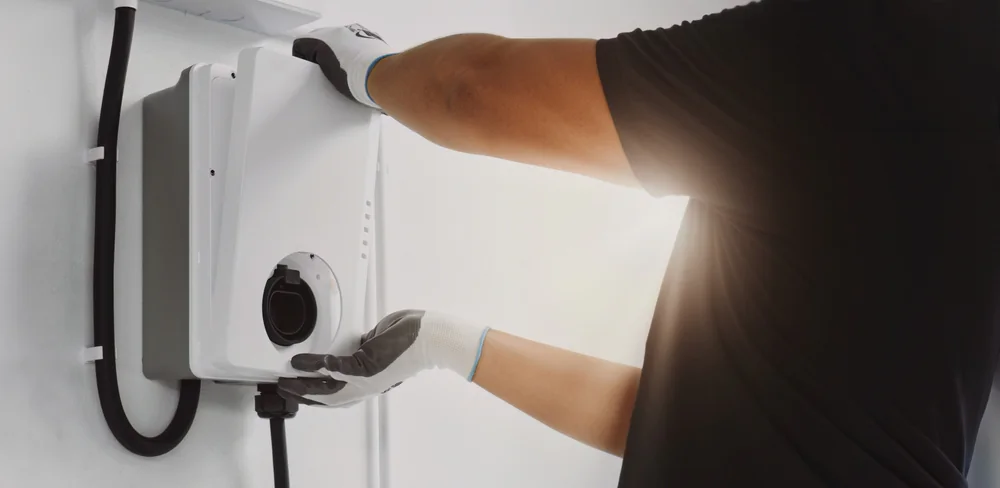
Home EV Charger Installation Farmville
You’re getting a code-compliant installation done by a licensed electrician who knows North Carolina’s electrical requirements. That matters for safety, insurance, and resale value.
We install Level 2 chargers, which are what most EV owners use at home. These run on 240 volts—the same as your dryer or oven—and they charge your vehicle significantly faster than a standard 120-volt outlet. Depending on your EV’s battery size, you’re looking at a full charge in 4-8 hours instead of 24-plus.
If your panel needs an upgrade to handle the additional load, we do that too. Same goes for running new wiring, installing the appropriate breaker, and mounting the unit wherever makes the most sense for your setup. Some customers want it inside the garage. Others prefer an outdoor install closer to where they park.
We also help you access the Duke Energy Carolinas rebate, which covers a significant portion of your install cost if you qualify. On top of that, there’s a federal tax credit covering 30% of installation costs up to $1,000 through June 2026. Both of those programs have expiration dates, so the sooner you move, the more you can save.
North Carolina is pushing hard to get 1.25 million EVs on the road by 2030. Infrastructure is catching up, but home charging is still the most reliable and affordable option for daily use.
How much does it cost to install an EV charger in Farmville?
Most installations run between $800 and $3,000 depending on your home’s electrical setup and how far the charger is from your panel. If your panel is in the garage and you’re mounting the charger on the same wall, you’re on the lower end. If we’re running wire across the house or underground to a carport, costs go up.
Homes with 200-amp service and available breaker space usually don’t need panel upgrades. Older homes with 100-amp panels often do, and that adds to the total. We give you a flat-rate price after we assess your property, so there’s no guessing.
Duke Energy offers a rebate of up to $1,117 for residential customers installing Level 2 chargers, and the federal government offers a 30% tax credit on installation costs up to $1,000. Both of those can significantly reduce your out-of-pocket expense. We’ll walk you through how to apply.
Do I need to upgrade my electrical panel for an EV charger?
It depends on your current panel and how much capacity you have left. Most homes built in the last 20 years have 200-amp service, which is usually enough to add a Level 2 charger without upgrades. Older homes with 100-amp panels often need to be upgraded to handle the additional load.
Even if you have a 200-amp panel, you might be out of breaker slots or close to maxing out your available amperage. We check that during the assessment. If an upgrade is necessary, we handle it as part of the installation.
Panel upgrades add to the cost, but they also increase your home’s electrical capacity for future needs. And if you’re planning to sell, having a modern electrical system is a selling point on its own.
How long does EV charger installation take?
Most straightforward installations take 3-5 hours. That’s for homes where the panel is close to the install location, there’s available breaker space, and no major obstacles like finished walls or long wire runs.
If we need to upgrade your panel, run wiring through walls, or trench underground to reach an outdoor location, it can take longer—sometimes a full day. We give you a time estimate after we assess your property.
Permitting can add a few days to the timeline depending on how quickly the local building department processes applications. We handle that paperwork for you. Once the permit is approved, we schedule the install at a time that works for you.
Can I install an EV charger myself to save money?
Technically, you could if you’re a licensed electrician. But if you’re not, it’s a bad idea for several reasons. EV chargers run on 240 volts, and improper installation can cause electrical fires, damage your home’s wiring, or hurt someone.
You also won’t pass inspection without a licensed electrician signing off on the work. Most jurisdictions in North Carolina require a permit for Level 2 charger installations, and that permit requires a licensed professional.
Beyond safety and code compliance, there’s the insurance issue. If something goes wrong with a DIY install and your house is damaged, your insurance company might deny the claim. A professional installation protects you legally and financially. Plus, you need a licensed electrician’s documentation to claim the Duke Energy rebate and the federal tax credit.
What's the difference between Level 1 and Level 2 charging?
Level 1 charging uses a standard 120-volt outlet—the same kind you plug a lamp into. It’s slow. You’re looking at about 4-5 miles of range per hour of charging. For most EV owners, that means 24-48 hours for a full charge depending on battery size.
Level 2 charging uses a 240-volt circuit, the same voltage as your dryer or oven. It charges 5-7 times faster than Level 1. Most EVs get a full charge overnight, usually in 4-8 hours. That’s why the majority of home EV owners install a Level 2 charger.
Level 1 works if you drive very little and can leave your car plugged in for long periods. But if you’re using your EV as a primary vehicle, Level 2 is the practical choice. It’s faster, more reliable, and it means you’re not constantly worrying about whether your car will be charged when you need it.
Will installing an EV charger increase my electric bill?
Yes, but probably less than you think. Charging an EV at home typically costs 30-50% less than filling up a gas tank for the same distance. Electricity is cheaper per mile than gasoline, even with the increase in your monthly bill.
How much your bill goes up depends on how much you drive, your EV’s battery size, and your electricity rate. If you drive 1,000 miles a month and your EV gets 3-4 miles per kilowatt-hour, you’re using around 250-330 kWh. At North Carolina’s average rate of about $0.12 per kWh, that’s $30-40 per month.
Duke Energy offers time-of-use rates that make charging even cheaper if you plug in during off-peak hours, usually overnight. Some customers save an additional 20-30% by shifting their charging to those windows. We can help you figure out what makes sense for your driving habits and schedule.
Other Services we provide in Farmville
About Us

Electrical Service Providers (ESP) has been in business since 2002. ESP started out performing wiring services to new construction, remodeling projects and residential homes. Our company’s president identified a market for electrical services to be performed in homes and businesses independent of new construction. Read More about Electrical Service Providers>>
All Rights Reserved.Organic Marketing LLC
Business Listings


Product Brands Used
Allied, Broan, Cutler Hammer, General Electric, Ideal, Juno, Kohler, Leviton, Lutron, Siemens, Square D
Contact
- Office Address: 3254 S Anthony Ct.
Burlington, NC 27215 - Mailing Address: PO Box 25
Alamance, NC 27201 - Phone: 336-228-3300
- E-mail: [email protected], [email protected]
Service Areas
Chapel Hill, Burlington, Carrboro, Durham, Gibsonville, Hillsborough, Graham, Pittsboro, Morrisville, Cary
About Us
Electrical Service Providers (ESP) has been in business since 2002. ESP started out performing wiring services to new construction, remodeling projects and residential homes. Our company’s president identified a market for electrical services to be performed in homes and businesses independent of new construction. Read More about Electrical Service Providers>>
All Rights Reserved.Organic Marketing LLC