EV Charger Installation in Fearrington Village, NC
Charge at Home Without the Electrical Headaches
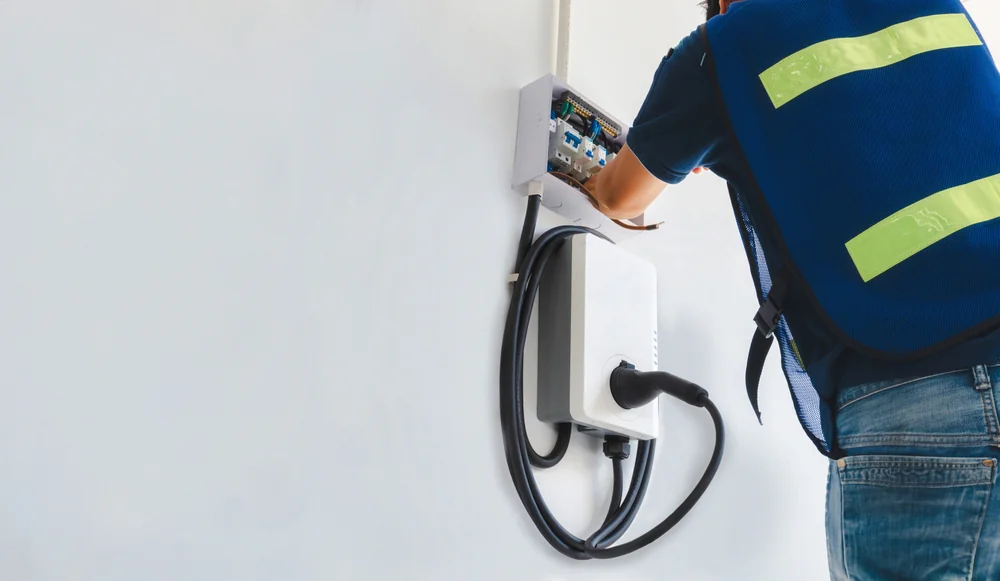
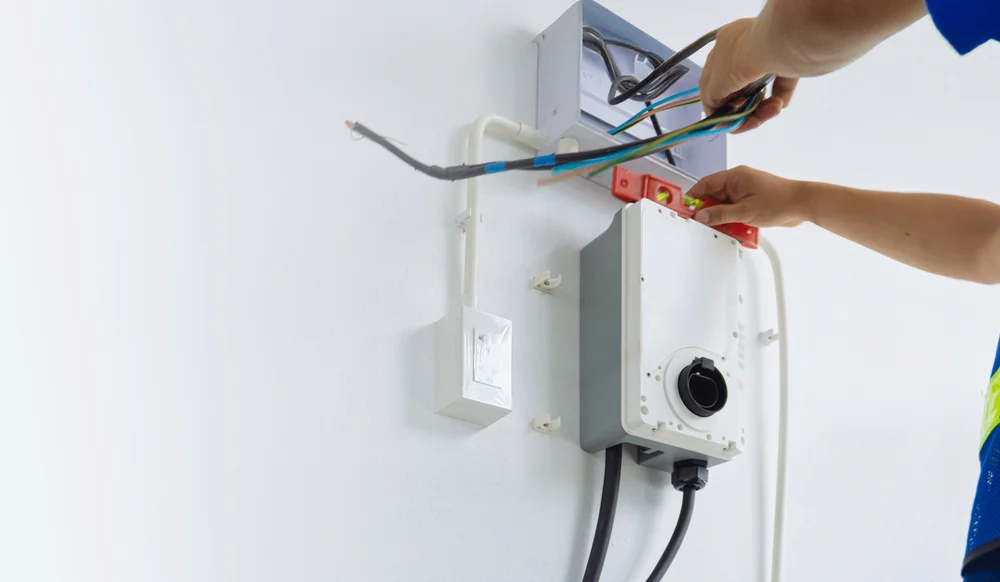
Electric Vehicle Charger Installation Near Fearrington Village
You bought an electric vehicle because it made sense. Lower fuel costs, less maintenance, better for the environment. But charging at public stations eats into your time and costs more than it should.
A Level 2 home charging station changes that. You plug in when you get home, and your car’s ready by morning. No more planning trips around charging stops or waiting in line at a public station. Just consistent, reliable charging on your schedule.
Your home’s electrical system needs to handle the load safely. That means proper wiring, the right breaker size, and installation that meets North Carolina electrical codes. When it’s done correctly, you get faster charging speeds than a standard outlet and the peace of mind that comes with professional work. Plus, homes with EV chargers installed are increasingly attractive to buyers if you ever decide to sell.
Licensed EV Charger Installers Serving Fearrington Village
We’ve been handling residential electrical work in the Chapel Hill and Fearrington Village area since 2002. We’re a family-owned business, and owner Andy Helton is a Master Electrician with more than 35 years of experience.
We’ve watched Fearrington Village grow from a quiet retirement community into one of the most desirable neighborhoods in Chatham County. As more residents switch to electric vehicles—Tesla, Rivian, Ford Lightning, you name it—we’re installing the charging infrastructure to support them.
You’ll work directly with licensed electricians who show up in uniform, in stocked trucks, and who clean up before we leave. We price our work upfront so you know what you’re paying before we start. And we’re local, which means if something needs attention after installation, we’re fifteen minutes away—not in another state.
How the EV Charging Station Installation Process Works
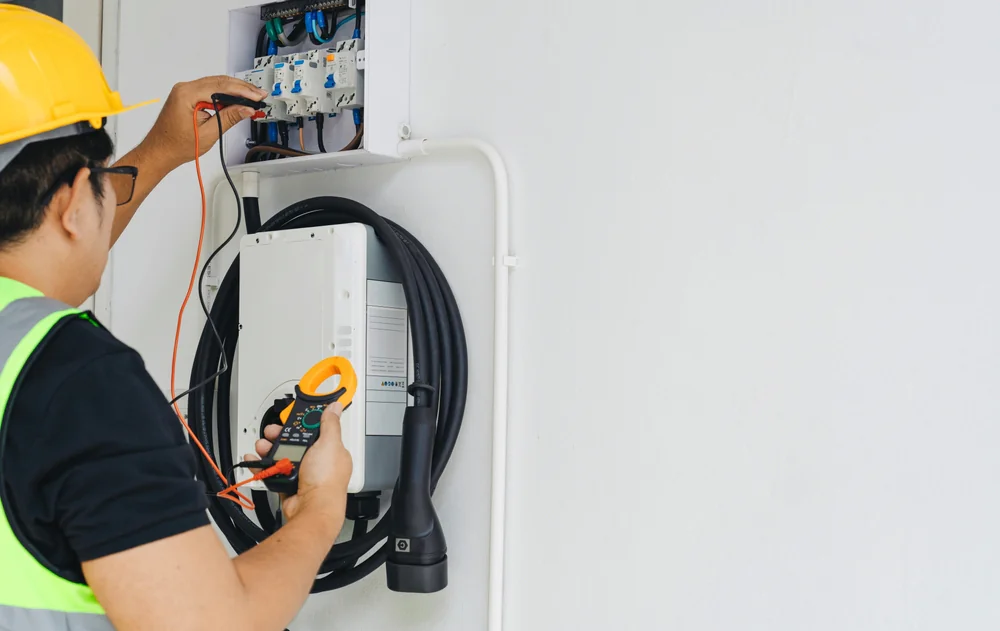
We start with a site assessment at your home. That means looking at your electrical panel, measuring the distance from the panel to where you want the charger, and checking whether your current setup can handle a Level 2 charging station. Many homes in Fearrington Village have 200-amp service, which is usually sufficient. If your panel is older or already near capacity, we’ll discuss an upgrade.
Once we know what’s needed, we give you flat-rate pricing. No surprises. We handle the permit application with Chatham County and coordinate any inspections required by local code. You don’t need to call the county or track down paperwork.
Installation day involves running the appropriate wiring from your panel to the charger location—most people choose their garage or carport. We mount the charging station, connect it to a dedicated circuit, and test everything to make sure it’s working correctly. If you’re eligible for the Duke Energy rebate program, we provide the documentation you need to apply for the $1,133 credit. After a final inspection and walkthrough, you’re ready to charge.
What's Included in Our EV Charger Setup
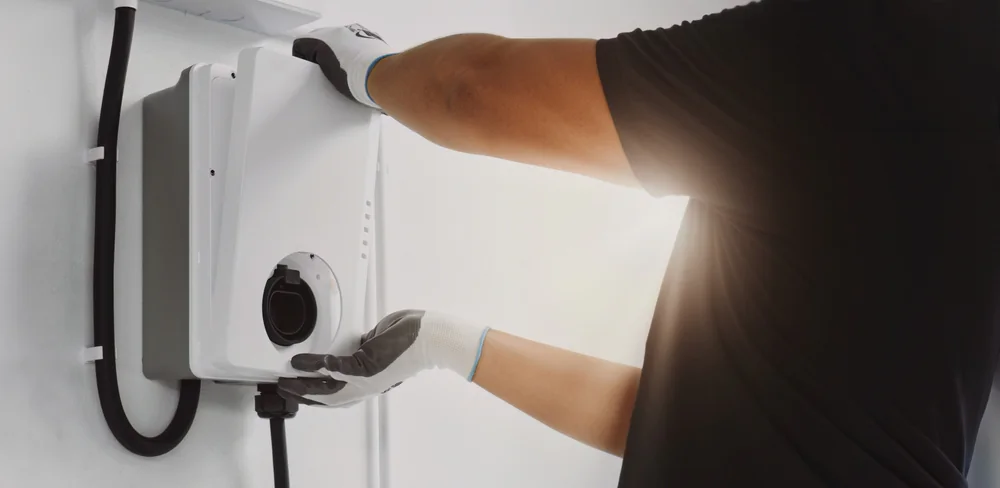
Our electric vehicle charger installation covers the full scope of work. That includes the site evaluation, permit handling, electrical panel assessment, circuit installation, charger mounting, and final testing. If your panel needs an upgrade to support the additional load, we handle that too.
North Carolina gets severe thunderstorms, especially in the spring and summer. We install surge protection and proper grounding to protect your investment from lightning damage. The installation is weatherproofed to handle humidity, temperature swings, and the occasional ice storm.
Fearrington Village has strict community standards, and we respect that. We route wiring to minimize visual impact and make sure the installation looks clean and professional. If you’re in a condo or townhome with HOA guidelines, we can work within those requirements.
You’ll also get guidance on which Level 2 charger works best for your vehicle and driving habits. Some homeowners want the fastest possible charge. Others prioritize smart features like scheduling charging during off-peak hours when Duke Energy rates are lower. We’ll walk through the options without pushing you toward the most expensive unit. And if you’re planning to apply for the Duke Energy rebate, we’ll make sure the charger you choose qualifies.
How much does it cost to install an EV charger in Fearrington Village?
Most installations run between $1,000 and $2,500, depending on the distance from your electrical panel to the charger location and whether your panel needs an upgrade. If your garage is close to your panel and your electrical system can handle the load, you’ll be on the lower end. If we need to run wiring a long distance or upgrade your panel from 100-amp to 200-amp service, the cost goes up.
Duke Energy offers a $1,133 rebate for residential Level 2 charger installations, which helps offset the upfront cost. We provide flat-rate pricing before we start any work, so you’ll know exactly what you’re paying. There are no hidden fees or surprise charges after the fact.
The investment pays off over time. Charging at home costs significantly less per kilowatt-hour than using public charging stations, and you’re adding a feature that increases your home’s resale value as EV adoption continues to grow in North Carolina.
Do I need a permit to install an EV charging station?
Yes. Chatham County requires an electrical permit for Level 2 EV charger installations. This isn’t just bureaucracy—it ensures the work meets safety standards and local electrical codes.
We handle the permit application and coordinate the required inspections. You don’t need to visit the county office or figure out what paperwork to submit. Once the installation is complete, an inspector verifies that everything was done correctly. After approval, you’re fully legal and covered.
Skipping the permit process might seem like a shortcut, but it creates problems down the road. If you ever sell your home, unpermitted electrical work can kill a sale or force you to pay for corrections during closing. It can also void your homeowner’s insurance if there’s an electrical fire. Doing it right the first time protects you on all fronts.
Can my electrical panel handle a Level 2 EV charger?
It depends on your current panel capacity and how much load you’re already using. Level 2 chargers typically require a 40- to 60-amp dedicated circuit. If you have a 200-amp service panel with available capacity, installation is straightforward. Many newer homes in Fearrington Village have 200-amp service, but older homes may have 100-amp or 150-amp panels.
During the site assessment, we measure your panel’s existing load and determine whether there’s room for the additional circuit. If your panel is near capacity, we’ll recommend an upgrade. This isn’t about upselling—it’s about safety. Overloading a panel creates fire risks and trips breakers constantly.
Panel upgrades add to the project cost, but they also future-proof your home’s electrical system. You’re not just adding capacity for the EV charger—you’re creating headroom for other electrical needs down the road. And if you’re planning to install solar panels or a battery backup system in the future, having a larger panel makes that easier.
How long does EV charger installation take?
Most installations take four to eight hours, depending on the complexity. If your electrical panel is in the garage and the charger mounts nearby, we’re usually done in half a day. If we need to run wiring through walls or across longer distances, it takes longer.
Panel upgrades add time—typically a full day for the upgrade and charger installation combined. Permit approval and inspection scheduling can add a few days to the overall timeline, but we coordinate that process to minimize delays.
You don’t need to be home for the entire installation, but we’ll need access to your electrical panel and the charger location. We’ll schedule a walkthrough at the end to show you how everything works and answer any questions. From the day you call us to the day you’re charging your car, the process usually takes one to two weeks, depending on permit processing times with Chatham County.
What's the difference between Level 1 and Level 2 charging?
Level 1 charging uses a standard 120-volt household outlet. It’s the slowest option, adding about three to five miles of range per hour. If you drive 30 miles a day, you’d need roughly six to ten hours of charging overnight. That works for some people, but it’s cutting it close if you have a longer commute or need to charge quickly.
Level 2 charging uses a 240-volt circuit—the same voltage as your electric dryer. It charges much faster, adding 20 to 60 miles of range per hour depending on your vehicle and charger model. For most EV owners, that means a full charge overnight even if you’ve drained the battery during the day.
Level 1 charging also puts strain on standard outlets that weren’t designed for continuous high-load use. Over time, that can overheat wiring and create fire hazards. Level 2 chargers are installed on dedicated circuits with proper wiring and breaker protection, which makes them safer for daily use. If you’re serious about driving an EV as your primary vehicle, Level 2 is the practical choice.
Will installing an EV charger increase my home's value?
Yes. As EV adoption grows, homebuyers are specifically looking for properties with charging infrastructure already in place. North Carolina passed 100,000 EV registrations in 2024, and that number is climbing fast. Buyers don’t want to deal with the hassle and cost of installing a charger after they move in.
A professionally installed Level 2 charging station signals that your home is updated and ready for modern transportation. It’s especially valuable in communities like Fearrington Village, where residents have higher incomes and are more likely to own electric vehicles. Real estate agents are starting to list EV chargers as a feature in property descriptions, similar to how they highlight smart thermostats or solar panels.
The return on investment isn’t just about resale value. You’re also saving money every month by charging at home instead of using public stations. Duke Energy’s off-peak rates make overnight charging even cheaper. Over the years you own your EV, those savings add up. And if you do sell, you’re appealing to a growing segment of buyers who won’t even consider a home without charging capability.
About Us

Electrical Service Providers (ESP) has been in business since 2002. ESP started out performing wiring services to new construction, remodeling projects and residential homes. Our company’s president identified a market for electrical services to be performed in homes and businesses independent of new construction. Read More about Electrical Service Providers>>
All Rights Reserved.Organic Marketing LLC
Business Listings


Product Brands Used
Allied, Broan, Cutler Hammer, General Electric, Ideal, Juno, Kohler, Leviton, Lutron, Siemens, Square D
Contact
- Office Address: 3254 S Anthony Ct.
Burlington, NC 27215 - Mailing Address: PO Box 25
Alamance, NC 27201 - Phone: 336-228-3300
- E-mail: [email protected], [email protected]
Service Areas
Chapel Hill, Burlington, Carrboro, Durham, Gibsonville, Hillsborough, Graham, Pittsboro, Morrisville, Cary
About Us
Electrical Service Providers (ESP) has been in business since 2002. ESP started out performing wiring services to new construction, remodeling projects and residential homes. Our company’s president identified a market for electrical services to be performed in homes and businesses independent of new construction. Read More about Electrical Service Providers>>
All Rights Reserved.Organic Marketing LLC