EV Charger Installation in Glen Raven, NC
Charge at Home Without the Guesswork or Risk
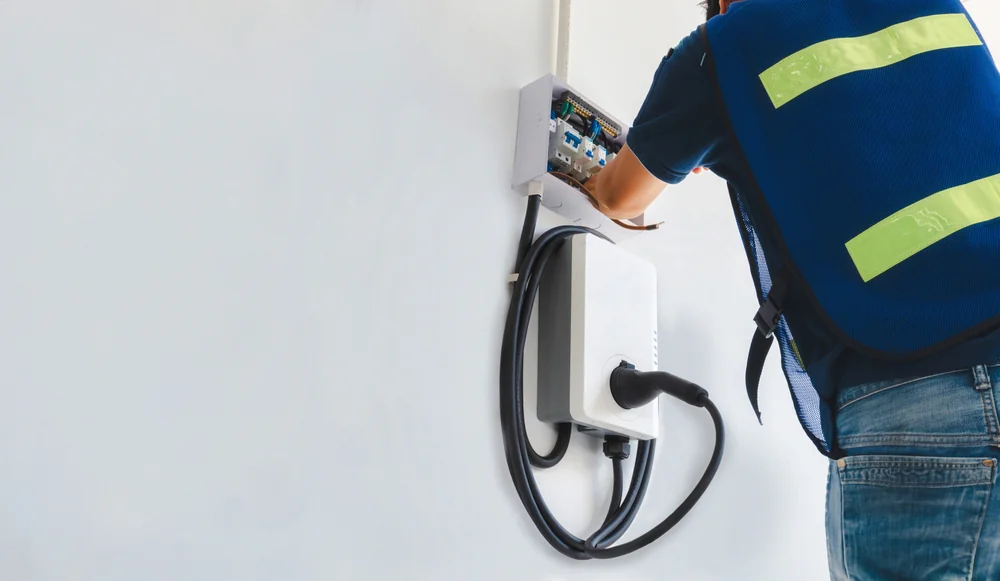
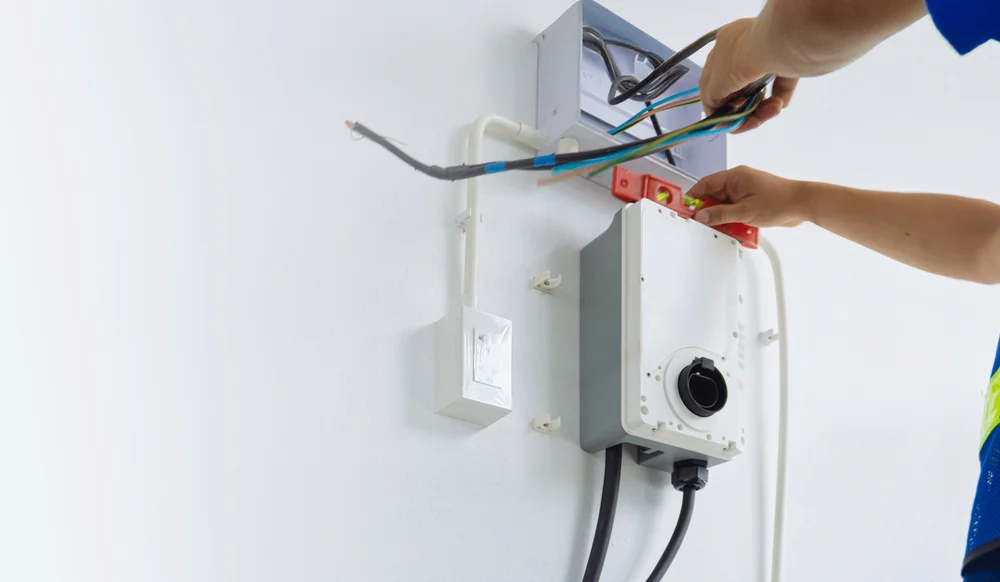
Electric Vehicle Charging Station Setup Glen Raven
You plug in when you get home. By morning, your EV is fully charged and ready to go—no more planning trips around charging stations or sitting in parking lots waiting.
A Level 2 charger in your garage gives you 12 to 60 miles of range per hour, which means a full overnight charge on your schedule. You’re not paying gas station prices per mile, and you’re not wondering if you’ll make it to the next public charger.
Your home’s value goes up because buyers are actively looking for properties with EV charging already installed. You’re also positioned for any future EV purchase without needing another electrician visit. The setup works with every electric vehicle on the market today and whatever you drive next.
Licensed Electricians Serving Glen Raven Since 2002
We’ve been serving Glen Raven, Burlington, Graham, Mebane, and Alamance County since 2002. Our master electrician, Andy Helton, has 35+ years of electrical experience and has held his license since 1989.
We’re not a national franchise or a referral service that farms out your job. You’re working directly with a locally owned team that knows the electrical code requirements in this area and has relationships with local inspectors and Duke Energy programs.
Glen Raven homeowners are adding EVs faster than most people realize—North Carolina hit over 100,000 EV registrations in 2024, well past the state’s goal. That means more of your neighbors need the same electrical upgrades you do, and we’ve been handling those installs throughout Alamance County as the market grows.
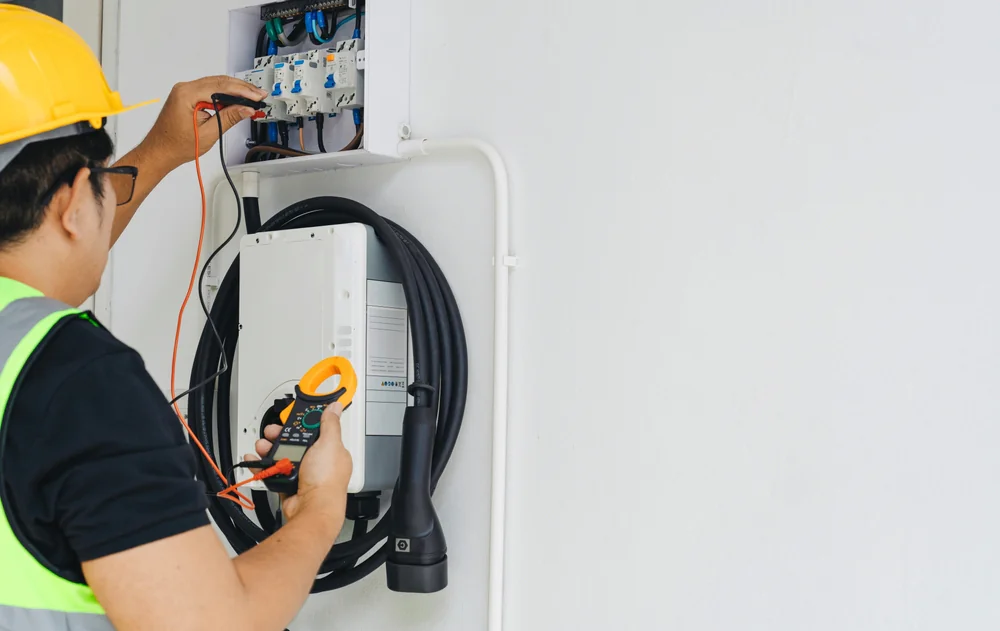
How EV Charger Installation Works in Glen Raven
First, we assess your current electrical panel to see if it can handle a Level 2 charger. Most Level 2 units need a dedicated 40 to 60 amp, 240-volt circuit, and older panels or panels already near capacity usually need an upgrade before we can safely install your charger.
If your panel needs an upgrade, we handle that first—and help you access Duke Energy’s Charger Prep Credit, which covers up to $1,133 per household for the electrical work required to support EV charging. We pull the necessary permits and schedule inspections so everything is code-compliant and won’t create issues with your homeowner’s insurance later.
Once your electrical system is ready, we install the charging station in your garage or preferred location, test the full system, and walk you through how it works. You’ll know exactly how to plug in, monitor charging, and troubleshoot basic issues. Our trucks are fully stocked, so we’re not making multiple trips or waiting on parts—most installations wrap up in a single visit after the panel work is complete.
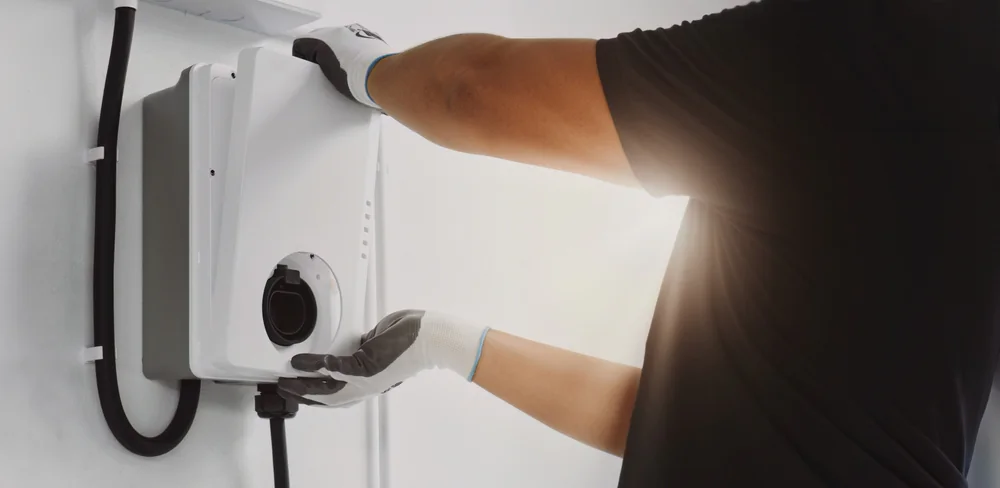
What's Included in Our EV Charger Setup
We run a complete load calculation on your electrical system before any installation begins. That tells us whether your current panel can support the new circuit or if you need an upgrade to handle the load safely.
If an upgrade is required, we coordinate with Duke Energy to maximize your rebate eligibility. Many Glen Raven homeowners end up with net installation costs under $1,000 after applying Duke Energy’s residential rebate and the federal Alternative Fuel Refueling Property Credit, which covers up to $1,000 through June 2026.
We also handle all permit applications and inspections required by Alamance County. Skipping permits might save time up front, but it creates problems when you sell your home or file an insurance claim after an electrical issue. We make sure everything is documented and approved.
You’ll get a dedicated 240-volt circuit installed to code, a properly mounted charging station, and a walkthrough of your new system. If you want smart home integration or WiFi-enabled charging management, we can set that up too—our team has experience with automated systems and energy monitoring tools that let you track charging costs and schedule off-peak charging when electricity rates are lower.
How much does it cost to install an EV charger in Glen Raven?
Most Level 2 charger installations in North Carolina run between $1,100 and $1,200 total when your electrical panel is already set up to handle the load. Labor typically falls in the $269 to $391 range, with the rest going toward the charging unit itself and materials.
If your panel needs an upgrade first, that adds to the cost—but Duke Energy’s Charger Prep Credit covers up to $1,133 per household for the electrical work required to support EV charging. That rebate often covers the majority of the panel upgrade cost.
There’s also a federal tax credit available through June 2026 that reimburses up to $1,000 for qualified EV charger installations. When you stack the Duke Energy rebate with the federal credit, many homeowners end up paying less than $1,000 out of pocket for the entire setup. We help you navigate both programs so you’re not leaving money on the table.
Will my electrical panel need an upgrade for an EV charger?
It depends on your current panel’s capacity and how much load it’s already handling. Most Level 2 EV chargers need a dedicated 40 to 60 amp circuit at 240 volts, which is the same voltage your dryer uses.
If your home has a 100-amp panel or your existing panel is already near capacity with HVAC, water heater, and appliance circuits, you’ll likely need an upgrade to a 200-amp panel before we can safely add an EV charger. Older homes in Glen Raven and throughout Alamance County often have smaller panels that weren’t designed for the electrical demands of modern homes plus an EV.
We run a full load calculation during the initial assessment to determine whether your panel can handle the additional circuit. If an upgrade is needed, that work qualifies for Duke Energy’s rebate program, which significantly reduces the cost. Upgrading your panel also gives you capacity for future electrical needs, not just the EV charger.
How long does an EV charger installation take?
If your electrical panel is already set up to handle the load, most installations are completed in a single visit—usually within four to six hours. That includes running the new 240-volt circuit, mounting the charger, connecting everything, and testing the system.
If your panel needs an upgrade first, that adds time. Panel upgrades typically take a full day, and then we schedule the charger installation once the upgraded panel passes inspection. Permitting and inspection scheduling can add a few days to a week depending on how quickly the county processes the paperwork.
We dispatch fully stocked trucks, so we’re not making multiple trips or waiting on parts to arrive. Once we start your job, we finish it. You’ll know the timeline up front based on what your specific setup requires, and we don’t leave until you can plug in your EV and start charging.
Do I need a permit to install an EV charger in Glen Raven?
Yes. Any electrical work that involves adding a new 240-volt circuit requires a permit in Alamance County, and EV charger installations fall under that requirement. The permit process ensures the work meets national and local electrical codes and gets inspected for safety.
Skipping the permit might seem like a shortcut, but it creates problems later. If you sell your home, unpermitted electrical work can kill a deal or force you to bring everything up to code before closing. If you ever have an electrical fire or issue related to the charger, your homeowner’s insurance can deny the claim if the work wasn’t permitted.
We handle all permit applications and coordinate inspections as part of the installation process. You don’t have to deal with the county or figure out what paperwork is required—we take care of that so the job is done legally and safely from start to finish.
What's the difference between Level 1 and Level 2 EV charging?
Level 1 charging uses a standard 120-volt outlet—the same outlet you’d plug a lamp into. It’s the slowest option, adding about 3 to 5 miles of range per hour of charging. If you drive 40 miles a day, you’re looking at 8 to 12 hours to fully recharge, which works for some people but isn’t practical if you drive more or need faster turnaround.
Level 2 charging uses a 240-volt circuit and adds 12 to 60 miles of range per hour depending on your vehicle and charger. That means a full charge overnight for most EVs, even if you’ve drained the battery. It’s the same voltage your dryer or oven uses, and it’s the standard for home EV charging.
Level 2 is what most Glen Raven homeowners install because it’s fast enough for daily use and works with every EV on the market. It also future-proofs your setup—if you buy a different EV down the road, the charger still works. Level 1 might be fine if you barely drive, but Level 2 gives you flexibility and convenience without planning your life around charging times.
Can I install an EV charger myself or do I need an electrician?
You need a licensed electrician. EV chargers operate at 240 volts and require a dedicated circuit with specific amperage, which means working inside your electrical panel and running new wiring. If you don’t know what you’re doing, you risk electrical fires, damage to your home’s wiring, or a charger that doesn’t work correctly.
There’s also the permit and inspection requirement. Even if you have electrical experience, the county requires a licensed contractor to pull the permit and a certified inspector to approve the work. DIY installations won’t pass inspection, and unpermitted work creates liability issues with your insurance and future home sales.
Beyond safety and legal requirements, a licensed electrician knows how to assess your panel’s capacity, determine if you need an upgrade, and help you access Duke Energy rebates that significantly reduce your out-of-pocket cost. We’ve been doing this since 2002, and we’ve seen plenty of DIY attempts that end up costing more to fix than if it had been done right the first time.
Other Services we provide in Glen Raven
About Us

Electrical Service Providers (ESP) has been in business since 2002. ESP started out performing wiring services to new construction, remodeling projects and residential homes. Our company’s president identified a market for electrical services to be performed in homes and businesses independent of new construction. Read More about Electrical Service Providers>>
All Rights Reserved.Organic Marketing LLC
Business Listings


Product Brands Used
Allied, Broan, Cutler Hammer, General Electric, Ideal, Juno, Kohler, Leviton, Lutron, Siemens, Square D
Contact
- Office Address: 3254 S Anthony Ct.
Burlington, NC 27215 - Mailing Address: PO Box 25
Alamance, NC 27201 - Phone: 336-228-3300
- E-mail: [email protected], [email protected]
Service Areas
Chapel Hill, Burlington, Carrboro, Durham, Gibsonville, Hillsborough, Graham, Pittsboro, Morrisville, Cary
About Us
Electrical Service Providers (ESP) has been in business since 2002. ESP started out performing wiring services to new construction, remodeling projects and residential homes. Our company’s president identified a market for electrical services to be performed in homes and businesses independent of new construction. Read More about Electrical Service Providers>>
All Rights Reserved.Organic Marketing LLC