EV Charger Installation in Goldston, NC
Charge at Home Without the Guesswork or Risk
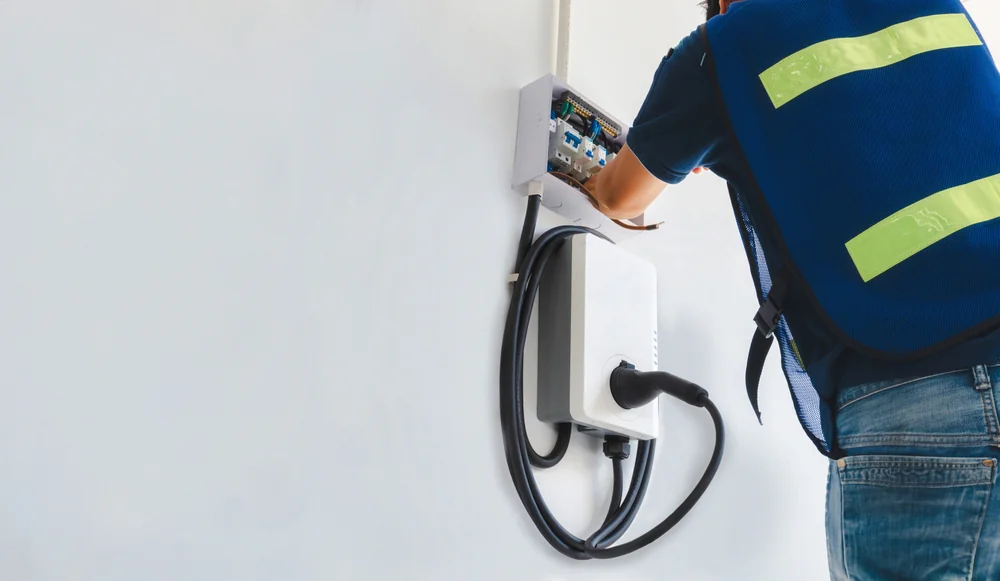
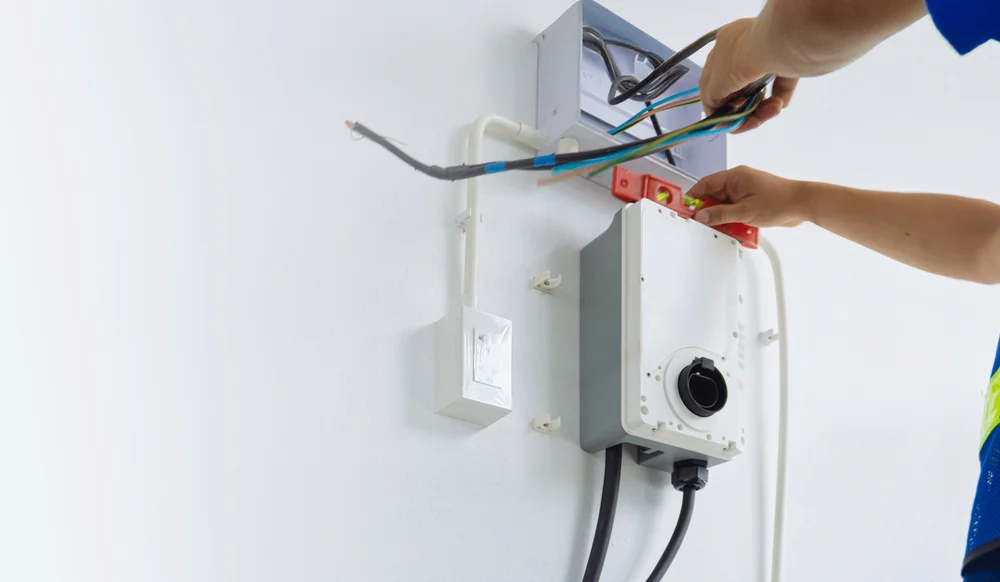
Electric Vehicle Charging Station Setup
You’re done driving to public charging stations and waiting around. A Level 2 home charging station gives you 12 to 60 miles of range per hour—meaning your EV is ready when you are, every single morning.
You’ll charge overnight when electricity rates are lowest. No more planning your week around charging stops or paying premium rates at public stations. Just plug in when you get home and forget about it.
Your home’s value goes up too. Buyers in Chatham County and across the Triangle are specifically looking for homes with EV charging already installed. It’s not just convenient—it’s an investment that pays you back.
Licensed EV Charger Electricians Serving Goldston
ESP Electrical Service Providers has served Goldston, Burlington, and the surrounding Chatham County area for over 20 years. Andy Helton, our owner and Master Electrician, brings more than 35 years of hands-on electrical experience to every job.
We’re not a national franchise or a contractor who Googled “how to install EV chargers” last month. We’ve been installing residential and commercial electrical systems since before EVs were common in North Carolina—and we’ve adapted as the technology and codes have evolved.
When you call, you talk to the owner directly. When we quote your job, that’s the price you pay. When our trucks show up, they’re fully stocked and our technicians are in uniform. We treat your property like it’s ours, and we clean up when we’re done.
Our EV Charger Installation Process
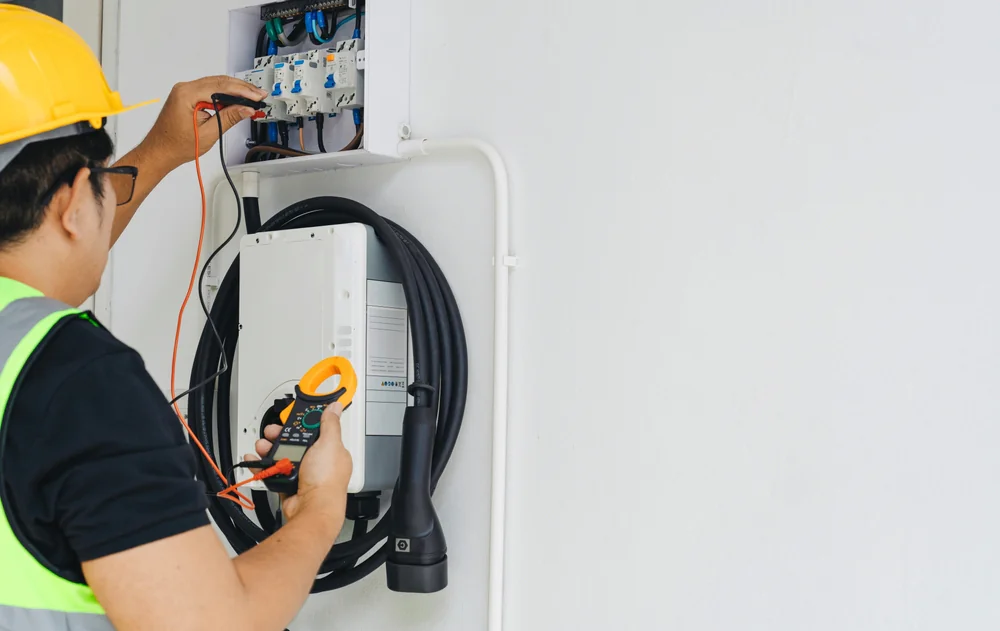
First, we assess your electrical panel and charging location. Most Level 2 chargers need a 240-volt circuit, and older homes in Goldston sometimes need a panel upgrade to handle the load safely. We’ll tell you exactly what’s required before we start.
Next, we handle the permit and plan the installation route. We calculate the electrical load, determine the best path for wiring, and pull the necessary permits with Chatham County. You don’t have to navigate that process—we do it as part of the job.
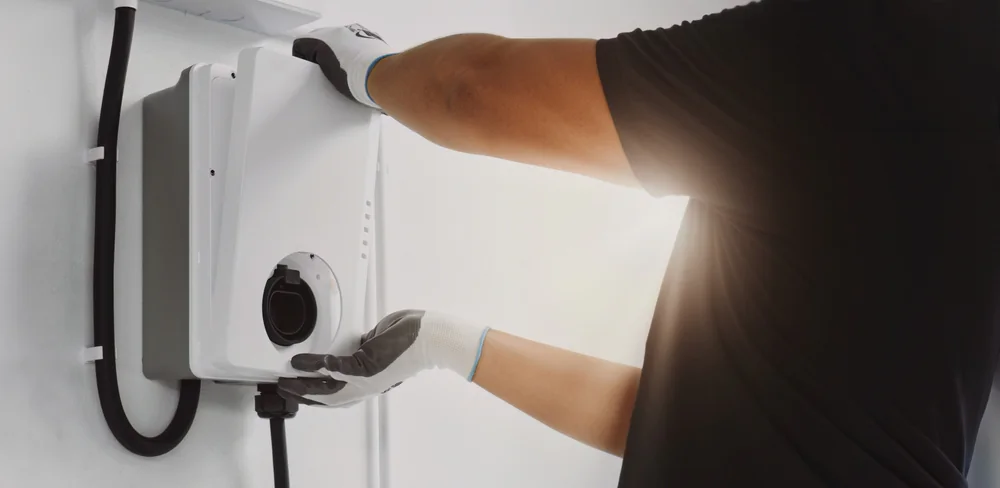
Then we install the charger and schedule the inspection. Our technicians mount your charging station, run the wiring to code, install the dedicated circuit breaker, and test the system. After the county inspector signs off, you’re ready to charge.
We also help you file for rebates. Duke Energy offers up to $1,117 for residential EV charger installations, and there’s a federal tax credit available too. We’ll walk you through the paperwork so you actually get the money back.
What's Included in Your Installation
Your installation includes a full electrical assessment, load calculation, and panel evaluation. We don’t guess whether your system can handle the charger—we measure and verify before we commit to a price.
You get permit acquisition, code-compliant installation, and the final inspection coordination. We pull the permits, install to National Electrical Code standards, and make sure everything passes inspection the first time. No shortcuts, no failed inspections, no callbacks.
North Carolina’s EV adoption is growing fast—the state hit over 100,000 registered EVs in 2024, with nearly half purchased in just the last two years. Goldston and Chatham County are seeing more Teslas, Rivians, and electric F-150s on the road every month. That means more demand for qualified electricians who know how to install charging infrastructure correctly.
We work with all major charger brands and models, including Tesla Wall Connectors, ChargePoint Home Flex, JuiceBox, and Grizzl-E. If you’ve already bought a charger, we’ll install it. If you need help choosing one, we’ll recommend what works best for your vehicle and budget.
How much does it cost to install an EV charger at my home in Goldston?
Installation costs depend on three main factors: your electrical panel’s capacity, the distance from the panel to your charging location, and whether you need any upgrades.
If your panel has space and capacity for a new 240-volt circuit, and the charger location is within 25 feet of the panel, you’re looking at a straightforward installation. That typically runs between $800 and $1,500 for labor and materials, not including the charger itself.
If your panel is maxed out or outdated, you’ll need an upgrade before we can add the charging circuit. Panel upgrades add to the cost, but they’re necessary for safety and code compliance. Older homes in Goldston often have 100-amp or 150-amp panels that need upgrading to 200 amps to handle modern loads plus EV charging. We give you flat-rate pricing after the assessment, so there’s no surprise when the job is done.
Do I need a permit to install an EV charging station in Chatham County?
Yes. Any hardwired Level 2 EV charger installation requires an electrical permit and inspection in Chatham County.
The permit process exists to make sure your installation meets the National Electrical Code and local requirements. It’s not red tape—it’s what keeps your home safe and your insurance valid. Inspectors check wire sizing, circuit breaker ratings, grounding, and GFCI protection.
We handle the permit application and schedule the inspection as part of your installation. You don’t need to visit the county office or deal with the paperwork. After the installation is complete, the inspector comes out, verifies everything is correct, and signs off. Then you’re legal and safe to charge.
How long does a Level 2 charger take to fully charge my EV?
Most EVs charge fully overnight on a Level 2 home charger—usually between 4 and 10 hours depending on your battery size and charger output.
A 40-amp Level 2 charger delivers about 9.6 kilowatts, which adds roughly 25 to 30 miles of range per hour. If you drive 40 miles a day and plug in every night, you’ll wake up with a full battery. Even if you come home nearly empty, you’ll be fully charged by morning.
That’s a massive difference from a standard 120-volt outlet, which only adds 3 to 5 miles per hour. With Level 1 charging, it can take over 24 hours to fully charge an EV with a 60 kWh battery. Level 2 charging gets you back on the road faster and fits into your actual routine without planning around charging time.
Can you install a charger if my electrical panel is full or outdated?
Yes. We upgrade panels regularly, and it’s a common part of EV charger installations in older homes around Goldston and Chatham County.
If your panel doesn’t have space for a new breaker or can’t handle the additional load, we’ll install a new panel with enough capacity for your charger and future electrical needs. A panel upgrade typically takes one day, and it’s an investment that benefits your whole home—not just your EV.
We calculate the load before we recommend an upgrade. Some homes just need a subpanel dedicated to the charger. Others need a full 200-amp service upgrade. We’ll tell you which applies to your situation and give you a flat-rate price before any work starts. You’ll know exactly what you’re paying and why.
What rebates or incentives are available for EV charger installation in North Carolina?
Duke Energy offers rebates up to $1,117 for residential customers who install a qualifying Level 2 EV charger. You’ll need to enroll in a time-of-use rate plan to get the rebate, but that plan also gives you cheaper electricity rates for overnight charging.
There’s also a federal tax credit available under the Inflation Reduction Act. You can claim up to 30% of the installation cost, up to $1,000, when you file your taxes. The credit applies to the labor and materials, not just the charger itself.
We help you file for the Duke Energy rebate. We provide the documentation you need and walk you through the application so you actually get the money. The federal tax credit is handled through your tax return, but we’ll give you an itemized invoice that includes everything your accountant needs.
Will installing an EV charger increase my electric bill significantly?
Yes, your bill will go up—but charging at home still costs way less than paying for gas or using public charging stations.
Electricity in North Carolina averages around 12 cents per kilowatt-hour. If you drive 1,000 miles a month in an EV that gets 3 miles per kWh, you’ll use about 333 kWh, which costs roughly $40. That same 1,000 miles in a gas car averaging 25 mpg costs around $120 at current gas prices.
If you enroll in Duke Energy’s time-of-use rate plan, you’ll pay even less by charging overnight when rates drop. Most EV owners set their car to start charging after 11 p.m. and wake up to a full battery without worrying about peak rates. The bill increase is real, but it’s predictable and far cheaper than the alternative.
Other Services we provide in Goldston
About Us

Electrical Service Providers (ESP) has been in business since 2002. ESP started out performing wiring services to new construction, remodeling projects and residential homes. Our company’s president identified a market for electrical services to be performed in homes and businesses independent of new construction. Read More about Electrical Service Providers>>
All Rights Reserved.Organic Marketing LLC
Business Listings


Product Brands Used
Allied, Broan, Cutler Hammer, General Electric, Ideal, Juno, Kohler, Leviton, Lutron, Siemens, Square D
Contact
- Office Address: 3254 S Anthony Ct.
Burlington, NC 27215 - Mailing Address: PO Box 25
Alamance, NC 27201 - Phone: 336-228-3300
- E-mail: [email protected], [email protected]
Service Areas
Chapel Hill, Burlington, Carrboro, Durham, Gibsonville, Hillsborough, Graham, Pittsboro, Morrisville, Cary
About Us
Electrical Service Providers (ESP) has been in business since 2002. ESP started out performing wiring services to new construction, remodeling projects and residential homes. Our company’s president identified a market for electrical services to be performed in homes and businesses independent of new construction. Read More about Electrical Service Providers>>
All Rights Reserved.Organic Marketing LLC