EV Charger Installation in Governors Village, NC
Charge at Home Without the Guesswork
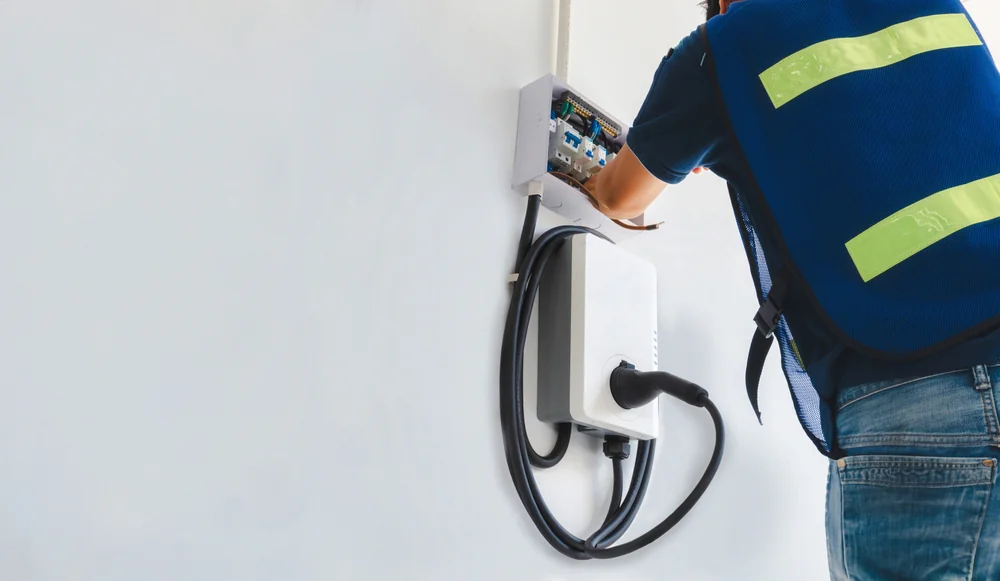
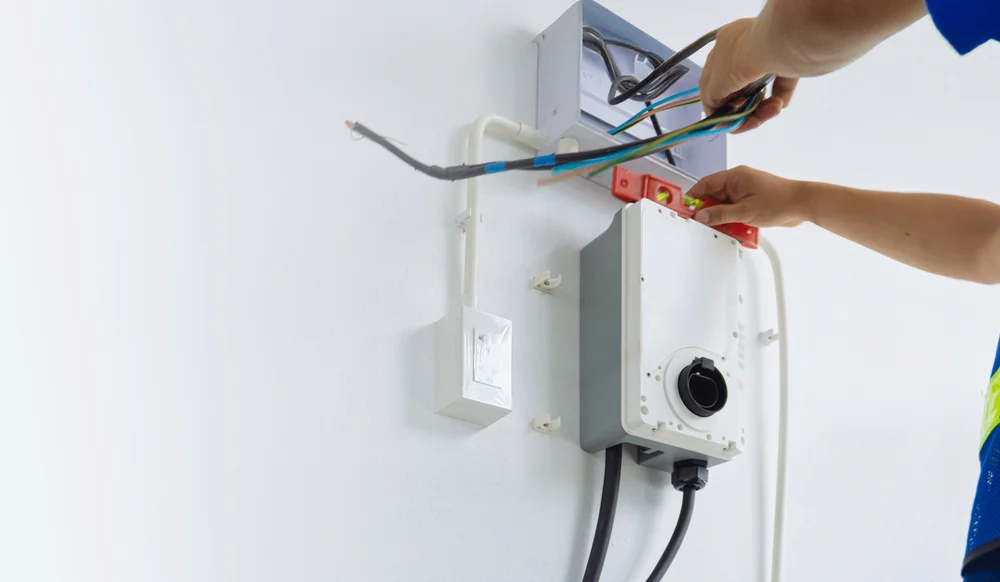
Electric Vehicle Charging Station Setup
You bought an EV to simplify your life. The last thing you need is another errand on your weekly list.
A Level 2 home charging station means you plug in when you get home and wake up ready to drive. No more planning trips around charging stops or sitting in parking lots waiting for a public station to free up. You’re charging overnight when electricity costs less, and you’re doing it on your schedule.
Most Governors Village homes can support a Level 2 charger, but the electrical work has to be done right. That means checking your panel capacity, running the correct gauge wire, installing the right breaker, and making sure everything meets local code. When it’s done correctly, you get faster charging times without overloading your system. When it’s not, you’re looking at tripped breakers, failed inspections, or worse.
This isn’t a DIY project. Your EV charger pulls more power than anything else in your home. The installation needs to be handled by someone who knows how to assess your electrical system and make the necessary upgrades without cutting corners.
Licensed EV Charger Installers Near You
We’ve been serving the Chapel Hill and Chatham County area since 2002. We’re not a franchise or a call center. We’re a local electrical contractor owned and operated by Andy Helton, a Master Electrician with over 35 years in the field.
Our lead technician has been a licensed electrical contractor since 1989. That’s not just time on the job—that’s three decades of panel upgrades, code changes, and real-world problem solving. When you call, you’re talking to someone who actually does the work, not a salesperson reading from a script.
Governors Village is growing fast, and so is EV adoption in this area. North Carolina hit its 2025 EV goal two years early, and the state is now aiming for 1.25 million zero-emission vehicles by 2030. That means more homeowners are asking the same questions you are: Can my panel handle this? Do I need a permit? What rebates am I eligible for? We’ve been answering those questions and doing these installations the right way since EVs started showing up in driveways around here.
How EV Charger Installation Works
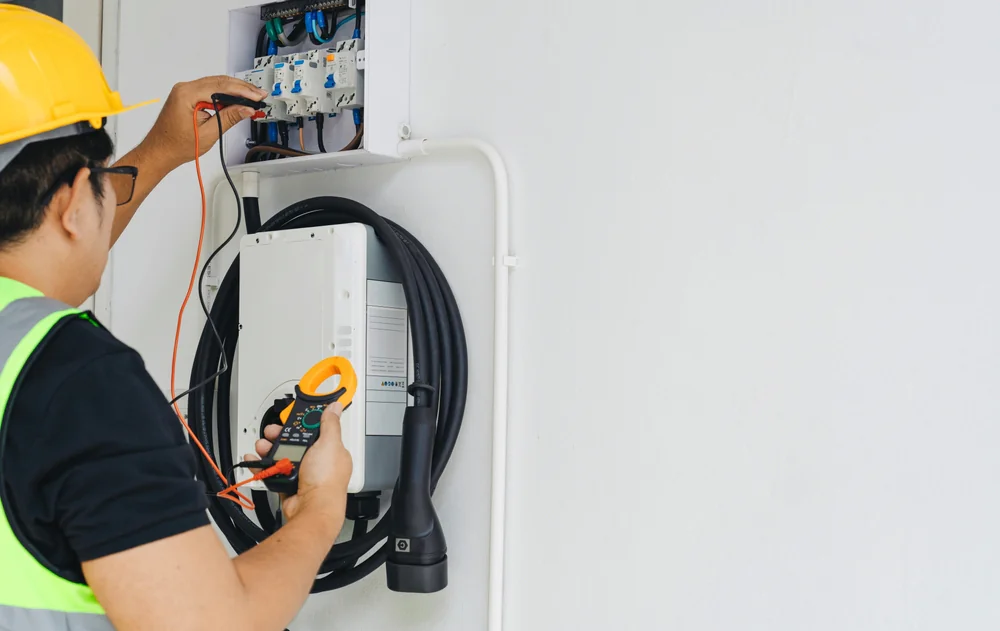
First, we assess your electrical panel. Most homes in Governors Village were built within the last 10 to 15 years, so many already have the capacity for a Level 2 charger. But some don’t. If your panel is full or undersized, we’ll let you know upfront what’s needed—whether that’s a panel upgrade, a subpanel, or just a new dedicated circuit.
Next, we map out the installation. Where’s your charger going? How far is it from the panel? What’s the best route for the conduit and wiring? We walk the site with you so there are no surprises. You’ll know the cost before we start, because we use flat-rate pricing. No hourly guessing games.
Then we handle the permit and do the work. In Chatham County, EV charger installations require a permit and inspection. We pull the permit, install the charger to code, and coordinate the inspection. Once it passes, you’re good to go.
Finally, we test everything and show you how it works. We don’t just install and leave. We make sure the charger communicates with your vehicle, explain how to use any app features, and answer your questions. If something doesn’t work right, we’re fixing it before we pack up.
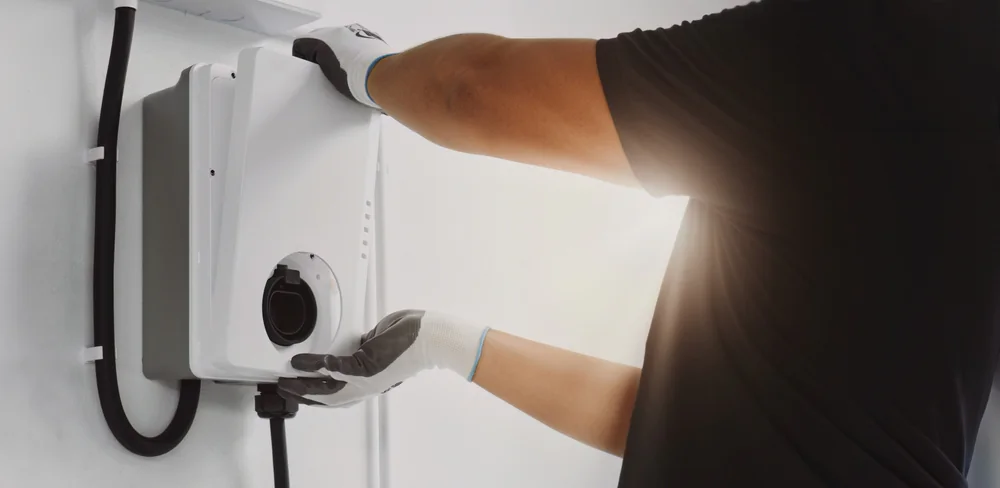
What's Included in Your Installation
Every EV charger installation includes a full electrical assessment. We’re checking your panel capacity, available breaker slots, wire gauge requirements, and whether your grounding system is up to code. If upgrades are needed, we’ll explain what they are and why they matter.
You’re also getting permit handling and inspection coordination. Some installers skip this step or leave it to you. We don’t. Unpermitted electrical work can cause problems when you sell your home, and it voids most equipment warranties. We pull the permit, schedule the inspection, and make sure everything passes the first time.
Duke Energy offers a rebate of up to $1,117 for residential Level 2 charger installations in North Carolina. We’ll walk you through the application process and make sure your installation qualifies. There’s also a federal tax credit that covers 30% of your equipment and installation costs, up to $1,000. These programs won’t last forever, and the paperwork matters. We help you get it right.
Your installation also includes a dedicated 240-volt circuit, proper conduit and wiring, a correctly sized breaker, and a code-compliant mounting setup. If your charger has smart features—scheduling, app control, energy monitoring—we’ll make sure those are configured and working before we leave. You’re not figuring this out on your own.
Do I need to upgrade my electrical panel to install an EV charger?
It depends on your current panel and how much capacity you have left. A Level 2 EV charger typically requires a 40- or 50-amp breaker, which is a significant load. If your panel is already full or close to its limit, you’ll need an upgrade or a subpanel.
Many homes in Governors Village have 200-amp panels, which usually provide enough capacity. But older homes or those with electric heat, well pumps, or other high-draw appliances might be maxed out. We check your panel during the site assessment and give you a straight answer.
If an upgrade is needed, it’s not just about the charger. A panel upgrade also gives you room for future electrical needs and brings your system up to current code standards. It’s an investment in your home’s infrastructure, not just a requirement for the charger.
How long does it take to install a Level 2 EV charger?
Most installations take four to six hours if your panel has capacity and the charger location is close to the panel. If we’re running a longer conduit run, installing a subpanel, or upgrading your main panel, it can take a full day or more.
The permit and inspection process adds time to the overall timeline. In Chatham County, permits can take a few days to a couple of weeks depending on the workload at the inspections office. Once the permit is issued, we schedule the installation. After the work is done, the inspection usually happens within a few days.
We’ll give you a realistic timeline upfront. If you’re in a hurry, we’ll do what we can to move things along, but we’re not skipping steps or cutting corners to save a few hours. The job has to be done right.
Can I install the EV charger myself to save money?
Technically, yes—if you’re a licensed electrician. Realistically, no. This isn’t a weekend DIY project.
Installing an EV charger means working inside your electrical panel, running 240-volt wiring, installing a high-amperage breaker, and ensuring everything is grounded and bonded correctly. One mistake can cause a fire, damage your vehicle’s charging system, or injure someone. It’s also illegal to do this work without a permit in most jurisdictions, and unpermitted work can create serious problems when you sell your home.
Even if you have electrical experience, you still need a permit and inspection. The inspector isn’t going to pass substandard work just because you did it yourself. And if something goes wrong—if your charger damages your EV or causes a fire—your insurance company is going to ask who did the installation. If it wasn’t a licensed professional, you might not be covered.
What rebates or tax credits are available for EV charger installation?
Duke Energy currently offers up to $1,117 per household for Level 2 EV charger installations through their EV Charger Installation Support Program. This is a one-time credit applied to your account after the installation is complete and verified. You’ll need to submit proof of installation and meet the program requirements, which we can help you with.
There’s also a federal tax credit under the Alternative Fuel Refueling Property Credit. It covers 30% of your total equipment and installation costs, up to $1,000 for residential installations. You claim this when you file your taxes, and you’ll need documentation showing what was installed and how much it cost.
These incentives can cover a significant portion of your installation cost, but the programs have specific requirements. The charger has to be installed at your primary residence, the work has to be permitted and code-compliant, and you need to keep your receipts and documentation. We make sure your installation qualifies and provide the paperwork you need to claim the rebates and credits.
How do I choose the right EV charger for my vehicle?
Most EVs sold today use a standard J1772 connector for Level 2 charging, so most chargers will work with most vehicles. Tesla vehicles come with an adapter, or you can install a Tesla Wall Connector if you prefer. The key is matching the charger’s amperage to your vehicle’s onboard charging capacity.
If your EV can accept 11.5 kW of power (about 48 amps), there’s no point installing a charger that only delivers 7.7 kW (32 amps). You’d be leaving charging speed on the table. On the other hand, installing a 50-amp charger for a vehicle that maxes out at 32 amps won’t charge it any faster. We help you match the charger to your vehicle so you’re getting the performance you paid for.
You’ll also want to think about features. Some chargers have Wi-Fi connectivity, scheduling, and energy monitoring through an app. Others are simpler plug-and-charge units. If you’re on a time-of-use electricity plan, scheduling can save you money by charging during off-peak hours. If that doesn’t matter to you, a basic charger works just fine. We’ll walk through your options and recommend what makes sense for your situation and budget.
What happens if my EV charger stops working after installation?
If there’s an issue with the installation—wiring, breaker, connection—we come back and fix it. Our work is guaranteed, and we don’t consider the job done until you’re charging without problems.
If the charger itself has a defect, that’s covered under the manufacturer’s warranty. Most chargers come with a three-year warranty, and some offer longer coverage. We’ll help you troubleshoot the issue and determine whether it’s an installation problem or an equipment problem. If it’s the equipment, we’ll walk you through the warranty claim process.
Regular maintenance isn’t usually necessary for EV chargers, but we’re available if you need service, repairs, or upgrades down the road. If you add another EV or want to upgrade to a faster charger, we can handle that too. You’re not on your own once the installation is finished.
About Us

Electrical Service Providers (ESP) has been in business since 2002. ESP started out performing wiring services to new construction, remodeling projects and residential homes. Our company’s president identified a market for electrical services to be performed in homes and businesses independent of new construction. Read More about Electrical Service Providers>>
All Rights Reserved.Organic Marketing LLC
Business Listings


Product Brands Used
Allied, Broan, Cutler Hammer, General Electric, Ideal, Juno, Kohler, Leviton, Lutron, Siemens, Square D
Contact
- Office Address: 3254 S Anthony Ct.
Burlington, NC 27215 - Mailing Address: PO Box 25
Alamance, NC 27201 - Phone: 336-228-3300
- E-mail: [email protected], [email protected]
Service Areas
Chapel Hill, Burlington, Carrboro, Durham, Gibsonville, Hillsborough, Graham, Pittsboro, Morrisville, Cary
About Us
Electrical Service Providers (ESP) has been in business since 2002. ESP started out performing wiring services to new construction, remodeling projects and residential homes. Our company’s president identified a market for electrical services to be performed in homes and businesses independent of new construction. Read More about Electrical Service Providers>>
All Rights Reserved.Organic Marketing LLC