EV Charger Installation in Green Level, NC
Charge at Home Without the Guesswork or Risk
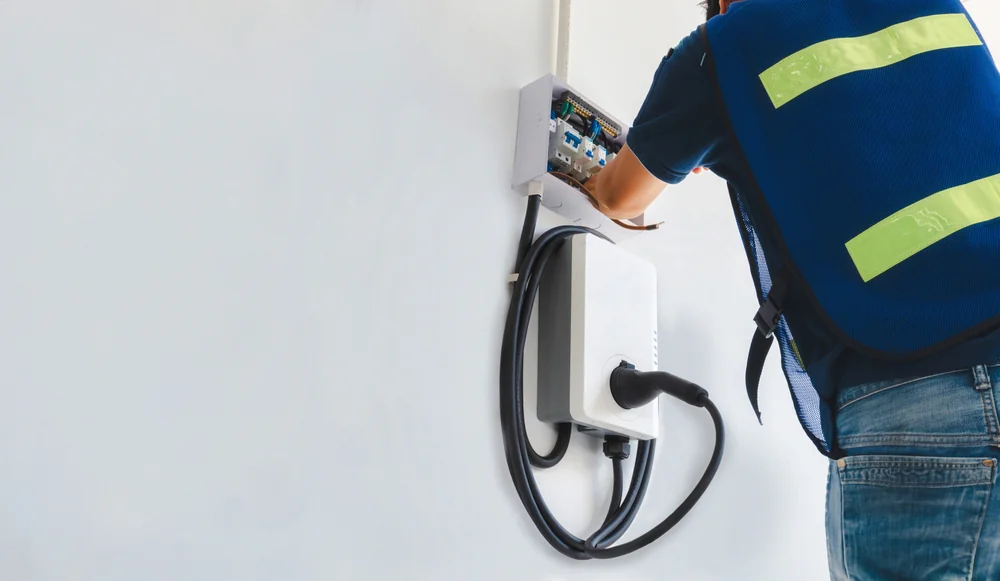
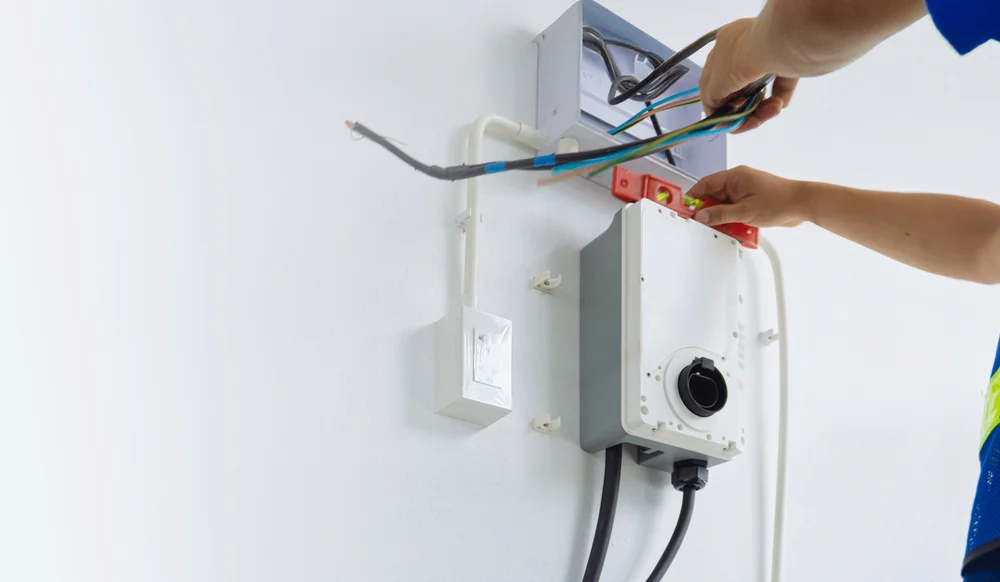
Electric Vehicle Charger Setup in Green Level
You bought an EV to simplify your life, not to plan trips around charging stations or wait in line behind three other cars. A Level 2 home charging station means you plug in when you get home and start every day with a full battery—no apps, no detours, no wondering if you’ll make it.
Charging at home costs less than public stations, especially when you’re pulling power during off-peak hours. You’re also adding real value to your property. Homebuyers in Green Level are actively looking for homes with EV infrastructure already in place, and that number keeps climbing as North Carolina blows past 100,000 registered electric vehicles.
The difference between a charger that works and one that causes problems comes down to how it’s installed. Your electrical panel needs to handle the load. Your wiring needs to meet code. The permit needs to be filed correctly, or your insurance won’t cover issues down the road. That’s where experience matters.
Licensed EV Charger Electricians Near Green Level
We’ve been handling residential and commercial electrical projects in Green Level and surrounding areas since 2002. Our owner, Andy Helton, is a Master Electrician with over 35 years of hands-on experience, and our Operations Manager brings more than 20 years as a licensed electrical contractor.
We’ve watched this area grow, and we’ve seen the shift toward electric vehicles happen faster here than most people expected. Green Level’s demographics skew younger—late 20s to early 40s—and EV adoption in that group is accelerating. We’re installing more home charging stations every month, and we know what works in these homes.
You’ll get flat-rate pricing before we start, so there’s no surprise bill at the end. Our trucks come fully stocked, and we clean up before we leave. If you want to talk through your setup before committing, you can call Andy directly and get straight answers.
How We Install Your EV Charging Station
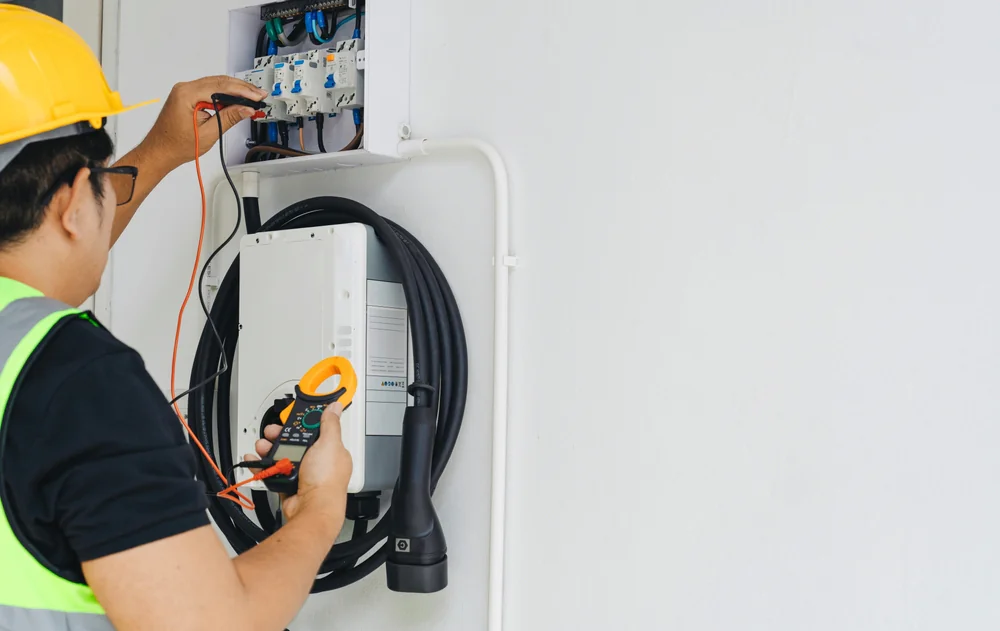
We start with a load calculation on your electrical panel. Most homes in Green Level weren’t built expecting a 40- or 50-amp draw from a Level 2 charger, so we need to confirm your system can handle it safely. If your panel needs an upgrade or a dedicated circuit, we’ll tell you upfront—no surprises halfway through the job.
Once we know your electrical system is ready, we pull the permit. EV charger installations require permits and inspections in North Carolina, and skipping that step can void your homeowner’s insurance if something goes wrong. We file the paperwork, schedule the inspection, and make sure everything passes the first time.
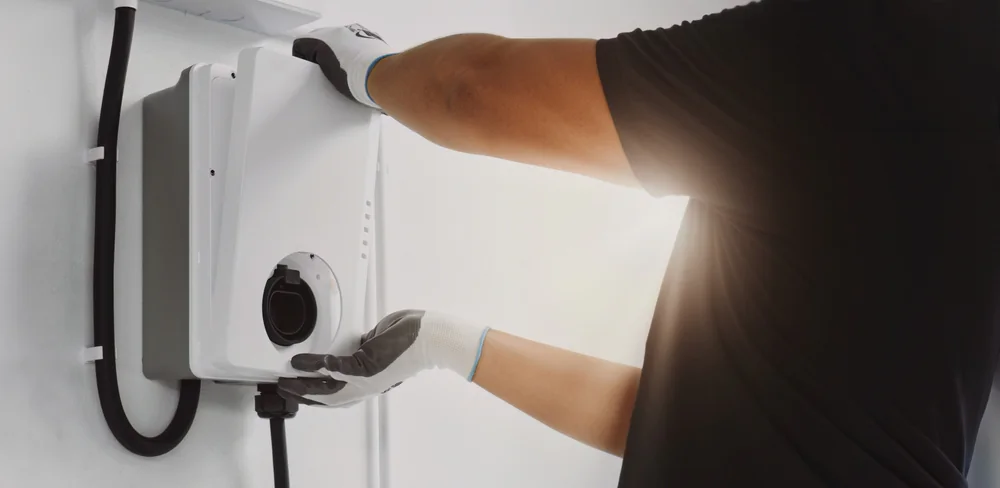
Installation day is straightforward. We mount the charging station where you want it, run the wiring, connect it to your panel, and test the system. If your charger has WiFi or smart features, we’ll walk you through the setup so you can monitor charging from your phone. Then we clean up, and you’re done.
The whole process typically takes a day, depending on whether you need panel work. You’ll know the timeline and the cost before we start, and we don’t leave until the system works exactly how it should.
What's Included in EV Charger Installation
Your installation includes a full electrical assessment, permit filing, the physical installation of your Level 2 charging station, and the final inspection. We also help you access Duke Energy’s EV Charger Installation Support Program, which offers up to $1,117 per household—that credit can cover a significant portion of your install cost.
We work with ENERGY STAR certified chargers that use 40% less energy in standby mode, and most of the units we install include WiFi connectivity. That means you can track your battery level, set charging schedules to take advantage of lower overnight rates, and review your charging history from your phone. It’s not a gimmick—it’s genuinely useful when you want to optimize your energy costs.
Green Level sits in an area where EV adoption is climbing fast. North Carolina hit over 100,000 EV registrations in 2024, well ahead of the state’s original goal, and Alamance County is seeing that growth firsthand. More EVs mean more demand for qualified electricians who know how to install charging equipment correctly. We’ve been doing this work since before it was common, and we’ve seen what happens when it’s done wrong.
If your home needs a panel upgrade, we handle that too. If you’re not sure what charger works best with your vehicle, we’ll walk you through your options. And if you’re planning to add solar or battery storage down the road, we’ll set up your system so it integrates cleanly later.
Do I need to upgrade my electrical panel to install an EV charger?
It depends on your current panel’s capacity and how much load you’re already pulling. Most Level 2 EV chargers draw between 30 and 50 amps, and if your panel is already near its limit, adding that load isn’t safe. We run a complete load calculation before recommending anything.
A lot of homes in Green Level were built in the last 20 years, and many have 200-amp panels, which usually have enough capacity. Older homes with 100-amp panels almost always need an upgrade. If you’ve added central air, a hot tub, or other high-draw appliances over the years, that eats into your available capacity.
Upgrading a panel isn’t as disruptive as it sounds, and it’s not just about the charger—it’s about making sure your entire electrical system is safe and up to code. If an upgrade is necessary, we’ll give you a flat-rate price before starting, and we’ll schedule the work so it doesn’t leave you without power longer than necessary.
How long does it take to install a home EV charging station?
Most installations take one day if your electrical panel is ready and we’re just mounting the charger and running the wiring. If you need a panel upgrade or we’re running a long conduit from your panel to your garage, it might stretch into a second day.
The permit and inspection process adds time to the overall timeline, but that’s not time where we’re at your house. We file the permit, schedule the inspection after installation, and the inspector confirms everything meets code. In most cases, you can use your charger the same day we install it, and the inspection happens shortly after.
We dispatch fully stocked trucks, so we’re not making multiple trips for parts. Our techs show up in uniform, with everything needed to complete the job. If something unexpected comes up—like outdated wiring that needs to be replaced—we’ll talk through it with you before proceeding, and we’ll adjust the timeline if needed.
What's the difference between Level 1 and Level 2 EV chargers?
Level 1 chargers plug into a standard 120-volt outlet and add about 3 to 5 miles of range per hour. That’s fine if you’re only driving 20 miles a day and you can leave your car plugged in overnight, but it’s painfully slow for most people. If you drive 40 or 50 miles a day, you’re barely keeping up.
Level 2 chargers run on 240 volts—the same power your dryer uses—and they add 20 to 60 miles of range per hour depending on your vehicle and charger output. That means a full charge overnight, even if you’re coming home with a nearly empty battery. For most EV owners, Level 2 is the only practical option.
Level 2 chargers also work with any EV you buy in the future, so you’re not locked into one vehicle. The upfront cost is higher because you need a dedicated circuit and professional installation, but the convenience and speed make it worth it. If you’re serious about driving electric, Level 2 is the standard.
Can I install an EV charger myself to save money?
Technically, if you’re a licensed electrician, yes. If you’re not, no—and here’s why that matters. EV charger installations require permits in North Carolina, and the permit process requires a licensed contractor. If you install it yourself without a permit and something goes wrong—a fire, an electrical fault, anything that triggers an insurance claim—your homeowner’s insurance can deny coverage because the work wasn’t permitted.
Beyond the legal and insurance issues, there’s real risk involved. You’re working with 240-volt circuits and high amperage, and if the wiring isn’t sized correctly or the breaker isn’t rated properly, you’re creating a fire hazard. Load calculations aren’t guesswork—they require understanding your entire electrical system and how adding a charger affects it.
The cost of professional installation is a fraction of what you’d pay to fix a botched DIY job, and it’s nothing compared to the cost of a house fire or an insurance claim denial. We’ve been called in to fix DIY installs more than once, and it’s always more expensive to correct than it would’ve been to do it right the first time.
Will installing an EV charger increase my electric bill significantly?
Yes, your bill will go up, but it’s still cheaper than buying gas—and you have control over how much it costs. Charging at home typically costs about half what you’d pay at a public charging station, and if you charge overnight during off-peak hours, it’s even cheaper. Duke Energy offers time-of-use rates that drop significantly after 9 PM, and most EVs let you schedule charging to start automatically during those hours.
How much your bill increases depends on how much you drive and how efficient your vehicle is. If you’re driving 1,000 miles a month in an EV that gets 3 miles per kilowatt-hour, you’re using about 333 kWh. At North Carolina’s average residential rate of around $0.12 per kWh, that’s roughly $40 a month. Compare that to 1,000 miles in a gas car getting 25 mpg at $3.50 per gallon—that’s $140 a month.
The math works in your favor, especially if you’re taking advantage of lower overnight rates and Duke Energy’s EV programs. We can walk you through the numbers based on your driving habits and help you set up your charger to minimize costs.
Do you help with rebates or incentives for EV charger installation?
Yes. Duke Energy offers an EV Charger Installation Support Program that provides up to $1,117 per household, and we’ll help you access that credit. The program is designed to offset installation costs, and it applies to both the equipment and the labor. We’re familiar with the application process and what documentation you need, so we can guide you through it.
There are also federal tax credits available for EV charger installations, though those change depending on current legislation. As of now, the Inflation Reduction Act includes credits for home charging equipment, but the specifics depend on your tax situation and when you install. We’re not tax advisors, but we can point you toward the right resources and make sure your installation qualifies.
Between Duke Energy’s program and federal incentives, you can significantly reduce your out-of-pocket cost. The key is making sure your installation is done by a licensed contractor and that all permits and inspections are completed—those are requirements for most rebate programs, and skipping them disqualifies you.
Other Services we provide in Green Level
About Us

Electrical Service Providers (ESP) has been in business since 2002. ESP started out performing wiring services to new construction, remodeling projects and residential homes. Our company’s president identified a market for electrical services to be performed in homes and businesses independent of new construction. Read More about Electrical Service Providers>>
All Rights Reserved.Organic Marketing LLC
Business Listings


Product Brands Used
Allied, Broan, Cutler Hammer, General Electric, Ideal, Juno, Kohler, Leviton, Lutron, Siemens, Square D
Contact
- Office Address: 3254 S Anthony Ct.
Burlington, NC 27215 - Mailing Address: PO Box 25
Alamance, NC 27201 - Phone: 336-228-3300
- E-mail: [email protected], [email protected]
Service Areas
Chapel Hill, Burlington, Carrboro, Durham, Gibsonville, Hillsborough, Graham, Pittsboro, Morrisville, Cary
About Us
Electrical Service Providers (ESP) has been in business since 2002. ESP started out performing wiring services to new construction, remodeling projects and residential homes. Our company’s president identified a market for electrical services to be performed in homes and businesses independent of new construction. Read More about Electrical Service Providers>>
All Rights Reserved.Organic Marketing LLC