EV Charger Installation in Gulf, NC
Charge at Home Without the Guesswork or Risk
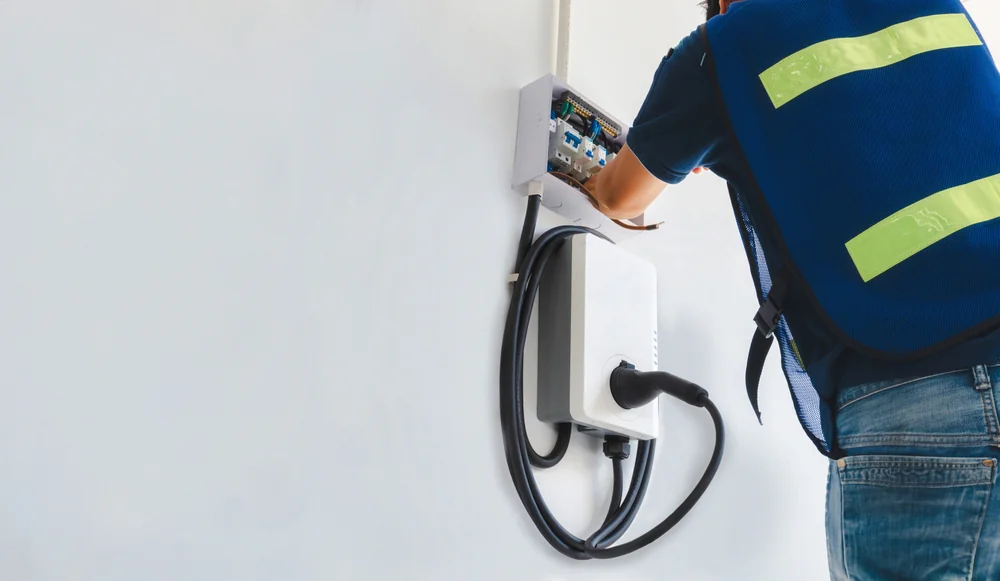
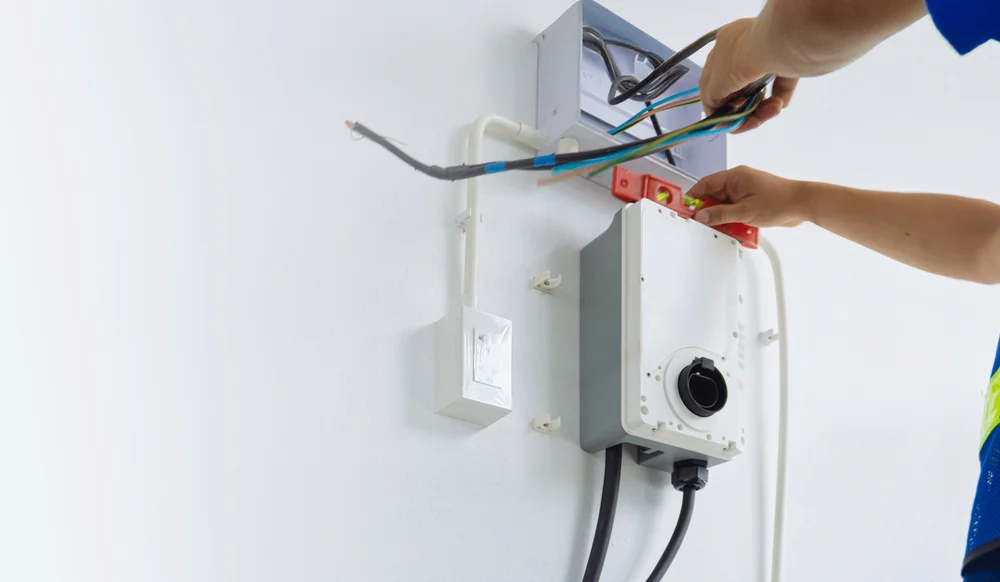
Electric Vehicle Charger Setup in Gulf
You bought an EV to simplify your life, not spend 45 minutes at a charging station hoping someone finishes up. Home charging means you plug in when you get home and start every day at 100%. No apps to navigate. No wondering if the station is broken or occupied.
A proper EV charger installation also protects your investment. Your vehicle’s warranty likely requires professional electrical work. DIY setups or unlicensed installs can void coverage, create fire hazards, or trip your breaker every time you plug in.
You also get faster charging than a standard outlet. A Level 2 EV charging station delivers a full charge in hours, not days. That’s the difference between convenience and constantly planning your schedule around your battery percentage.
Licensed EV Charger Electricians Serving Gulf
We’ve handled residential and commercial electrical work across Gulf, Siler City, and the surrounding Chatham County area since 2002. We’re locally owned, and our lead electrician brings more than 35 years of hands-on experience to every job.
Gulf sits in a growing part of North Carolina where more homeowners are switching to electric vehicles. We’ve seen the demand for home EV charger installation increase as people realize public charging isn’t practical for daily use. Our service trucks stay fully stocked, so most installations wrap up in a single visit.
We price every job upfront with flat rates. You know the cost before we start, and there’s no surprise invoice at the end.
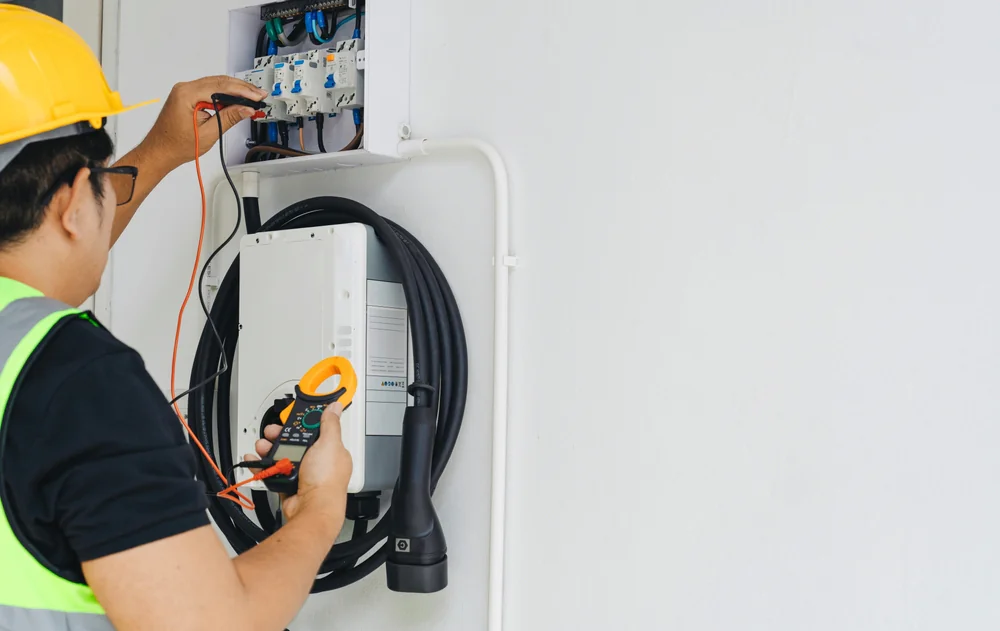
How EV Charger Installation Works in Gulf
First, we assess your electrical panel and garage setup. Most homes need a dedicated 240-volt circuit for a Level 2 charger, and older panels sometimes require an upgrade to handle the load. We’ll tell you exactly what’s needed and what it costs before any work begins.
Next, we pull the necessary permits and handle the inspection process. Chatham County requires permitted electrical work for EV charger installations, and we manage that entire process so you don’t have to deal with the county office or schedule inspectors yourself.
Then we run the wiring, mount the charging station, and connect everything to your panel. We test the system to make sure it’s delivering the right voltage and communicating properly with your vehicle. Once the county inspector signs off, you’re ready to charge.
The whole process typically takes one day for straightforward installs. If your panel needs an upgrade, that adds time, but we’ll map out the timeline during the initial assessment so there are no surprises.
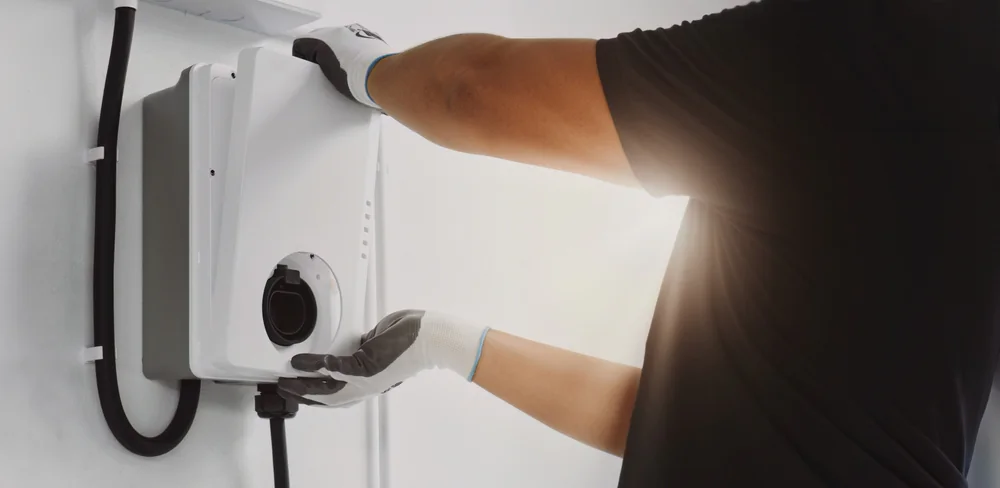
What's Included in Gulf EV Charger Setup
Your EV charger installation includes a full electrical assessment to determine if your current panel can support the additional load. Many homes in Gulf were built before EVs became common, so we check capacity before we proceed. If an upgrade is necessary, we’ll explain why and what it involves.
We handle all permit applications and coordinate the required inspections with Chatham County. This isn’t optional—unpermitted electrical work can cause issues when you sell your home or file an insurance claim. We make sure everything is documented and code-compliant.
You also get professional mounting and wiring. We install the charger in a location that makes sense for your parking setup, run conduit to protect the wiring, and ensure the connection to your panel is secure. If you’re installing a smart charger that connects to your home network, we’ll help with that setup too.
We work with all major EV charger brands, including Tesla Wall Connectors, ChargePoint, JuiceBox, and Grizzl-E. If you haven’t purchased a unit yet, we can recommend options based on your vehicle and budget.
How much does it cost to install an EV charger in Gulf, NC?
Most EV charger installations in Gulf run between $800 and $2,500, depending on your electrical panel’s current capacity and how far the charger is from the panel. If your panel has available space and adequate amperage, the install is straightforward. If we need to upgrade your panel or run a long conduit run to your garage, costs increase.
We provide flat-rate pricing after the initial assessment, so you’ll know the exact cost before we start. That price includes the labor, materials, permits, and coordination with the county inspector.
The charger itself is separate. Most Level 2 home chargers cost between $400 and $1,200, depending on features like smart connectivity or higher amperage. We can install any unit you purchase, or we can recommend models that fit your vehicle and budget.
Do I need a permit to install an EV charger in Gulf?
Yes. Chatham County requires an electrical permit for EV charger installations because you’re adding a new 240-volt circuit to your home. This isn’t just a formality—it ensures the work meets the National Electrical Code and local safety standards.
We handle the permit application and schedule the required inspection once the install is complete. The inspector verifies that the wiring, breaker, and charger are installed correctly. Once they sign off, the permit closes and you’re fully compliant.
Skipping the permit might seem easier, but it creates problems down the road. Unpermitted electrical work can complicate home sales, void your homeowner’s insurance, or lead to fines if discovered during an unrelated inspection. It’s not worth the risk, and we make the process simple by managing it for you.
Can I just use a regular outlet to charge my EV?
You can, but it’s not practical for daily use. A standard 120-volt outlet delivers about 3 to 5 miles of range per hour of charging. If you drive 40 miles a day, you’d need roughly 10 hours plugged in just to break even. That works if you barely drive, but most people find it frustrating.
A Level 2 charger runs on 240 volts and delivers 25 to 30 miles of range per hour. That means a full charge overnight, even if you come home with a low battery. It’s the difference between constantly worrying about your charge level and never thinking about it.
Level 2 chargers also protect your vehicle’s battery. Slow trickle charging from a standard outlet can sometimes cause issues with battery management systems, especially on newer EVs. A dedicated charging station is designed to communicate with your car and deliver the right amount of power safely.
How long does an EV charger installation take in Gulf?
Most installations take four to six hours if your electrical panel has available capacity and the charger location is close to the panel. We complete the work in a single visit, including mounting the unit, running the wiring, connecting it to the breaker, and testing the system.
If your panel needs an upgrade, the timeline extends. Panel upgrades typically add a day to the project because we’re replacing or expanding your main electrical distribution point. We’ll assess your panel during the initial visit and give you a clear timeline before we schedule the work.
Permit processing and inspection scheduling can add a few days to the overall timeline, but that doesn’t require you to be present. We submit the permit, complete the install, and coordinate with the county inspector. You’ll know when everything is scheduled, and we’ll let you know once the inspection is complete and you’re cleared to use the charger.
Will an EV charger increase my electric bill significantly?
It depends on how much you drive, but most people see an increase of $30 to $60 per month. Electricity costs in North Carolina average around 12 cents per kilowatt-hour, and most EVs use about 30 kWh to travel 100 miles. If you drive 1,000 miles a month, that’s roughly 300 kWh, or about $36 in electricity costs.
That’s still far cheaper than gas. A comparable gas vehicle getting 30 miles per gallon would cost around $120 per month at current fuel prices for the same mileage. Charging at home also costs significantly less than using public fast-charging stations, which often charge 40 to 50 cents per kWh.
Some utility companies offer time-of-use rates that make overnight charging even cheaper. Duke Energy, which serves the Gulf area, has programs that reduce electricity costs during off-peak hours. If you charge your EV between 11 PM and 7 AM, you could cut your charging costs by 20% to 30%. We can’t set up those programs for you, but it’s worth calling your utility provider to ask.
What if my electrical panel doesn't have enough capacity for an EV charger?
We upgrade the panel. Most EV chargers require a 40- to 50-amp dedicated circuit, and older panels in Gulf-area homes sometimes max out at 100 or 150 amps total. If your panel is already running your HVAC, water heater, and other appliances, there may not be enough capacity left for an EV charger.
A panel upgrade typically involves installing a 200-amp panel, which gives you room for the charger plus any future electrical needs. The process takes about a day, and it’s a worthwhile investment even beyond EV charging. It increases your home’s value and ensures your electrical system can handle modern appliances and technology.
We’ll assess your panel during the initial visit and let you know if an upgrade is necessary. If it is, we’ll explain what’s involved and provide a flat-rate price that covers the panel replacement, the EV charger installation, and all permits and inspections. You’ll have a clear picture of the full project before we start any work.
Other Services we provide in Gulf
About Us

Electrical Service Providers (ESP) has been in business since 2002. ESP started out performing wiring services to new construction, remodeling projects and residential homes. Our company’s president identified a market for electrical services to be performed in homes and businesses independent of new construction. Read More about Electrical Service Providers>>
All Rights Reserved.Organic Marketing LLC
Business Listings


Product Brands Used
Allied, Broan, Cutler Hammer, General Electric, Ideal, Juno, Kohler, Leviton, Lutron, Siemens, Square D
Contact
- Office Address: 3254 S Anthony Ct.
Burlington, NC 27215 - Mailing Address: PO Box 25
Alamance, NC 27201 - Phone: 336-228-3300
- E-mail: [email protected], [email protected]
Service Areas
Chapel Hill, Burlington, Carrboro, Durham, Gibsonville, Hillsborough, Graham, Pittsboro, Morrisville, Cary
About Us
Electrical Service Providers (ESP) has been in business since 2002. ESP started out performing wiring services to new construction, remodeling projects and residential homes. Our company’s president identified a market for electrical services to be performed in homes and businesses independent of new construction. Read More about Electrical Service Providers>>
All Rights Reserved.Organic Marketing LLC