EV Charger Installation in Harpers Crossroads, NC
Charge at Home Without the Guesswork or Risk
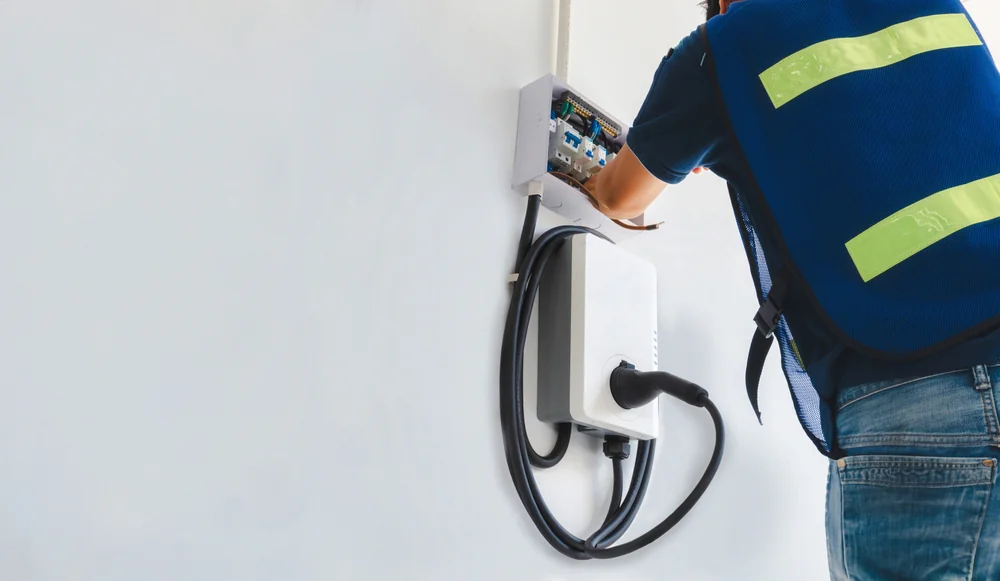
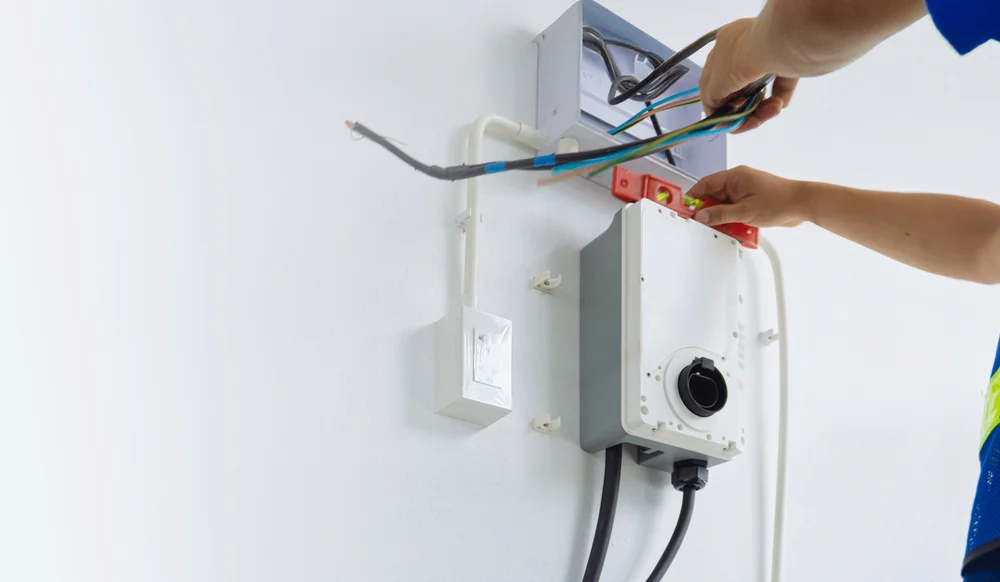
Home EV Charging Station Benefits
You bought an electric vehicle to simplify your life, not to plan your week around public charging stations. A Level 2 home charger adds up to 100 miles of range in under five hours—meaning you plug in after dinner and wake up ready to go.
No more sitting in parking lots. No more paying premium rates at public stations that may or may not be working. Your car charges while you sleep, using your home electricity at rates significantly lower than commercial charging networks.
The upfront cost concerns most people, but Duke Energy offers up to $1,133 in rebates for electrical upgrades, and the federal tax credit covers another $1,000. After incentives, many homeowners in Harpers Crossroads, NC end up paying under $1,000 total for a complete charging setup that adds value to their property and eliminates range anxiety for good.
Licensed EV Charger Electricians Near You
We’ve been handling electrical work in Alamance County and surrounding areas since 2002. We’re a local company led by Andy Helton, a master electrician with over 35 years of hands-on experience, and our senior field technician has been a licensed electrical contractor since 1989.
We’ve watched Harpers Crossroads, NC grow, and we’ve seen the EV market in North Carolina explode—over 100,000 registered EVs in the state as of 2024, with nearly half purchased in just the last two years. That means more homeowners are asking the same questions you are about electrical panel capacity, permit requirements, and whether their home can handle a Level 2 charger.
We use flat-rate pricing, so you know the cost before we start. Our trucks are stocked, our technicians show up in uniform, and we don’t leave until the job is done right and your property is cleaner than we found it.
EV Charger Installation Process Explained
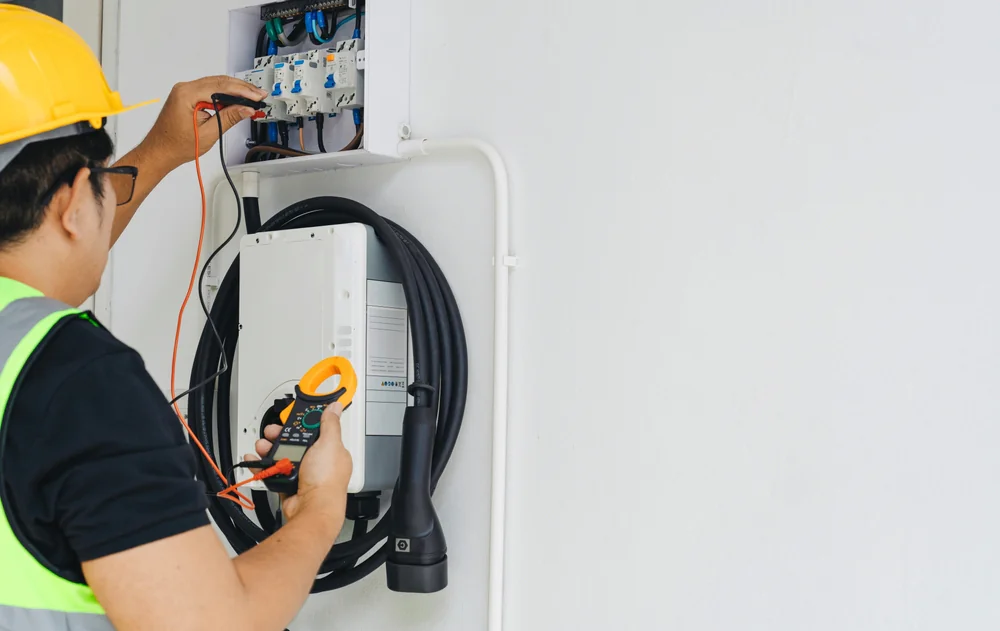
First, we assess your home’s electrical system. Most EV chargers need a 240-volt circuit, and we check whether your panel has the capacity—ideally 200 amps. If you have an older home with 100-amp service, we’ll discuss upgrade options upfront so there are no surprises.
Next, we handle the permit. In North Carolina, EV charger installations require a permit and inspection to meet local electrical codes. We pull the permit, schedule the inspection, and make sure everything passes the first time.
Then we install the charger where you want it—garage wall, exterior mount, wherever makes sense for your parking situation. We run the wiring, mount the unit, test the system, and walk you through how to use it. If you’re applying for Duke Energy rebates or the federal tax credit, we provide all the documentation you need.
The whole process typically takes a few hours for the installation itself, though timelines vary depending on whether electrical upgrades are needed. You’ll know the full scope and cost before we touch a single wire.
What's Included in EV Charger Setup
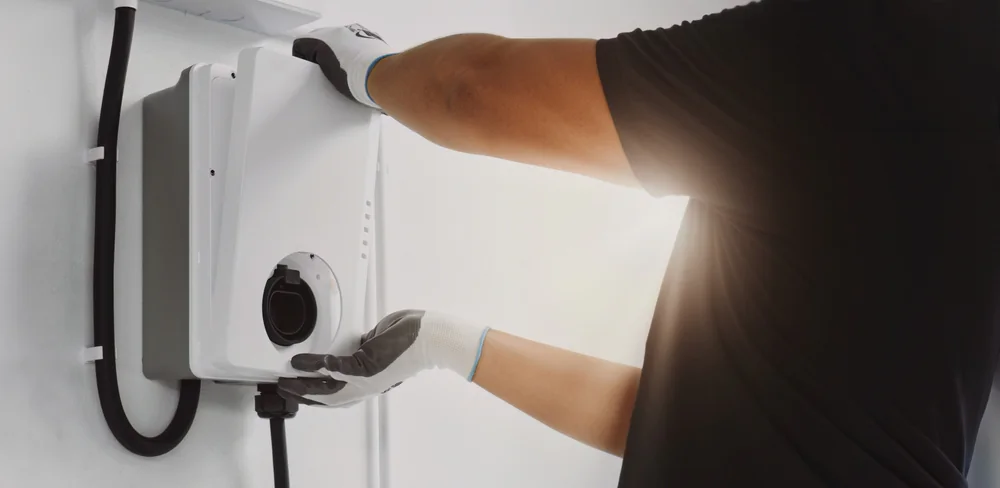
Your installation includes a full electrical assessment to confirm your home can support the charger’s power requirements. We install a dedicated 240-volt circuit with the appropriate breaker size, run conduit and wiring to code, and mount your charging unit in the location that makes the most sense for daily use.
We handle all permit applications and coordinate the required inspection with local authorities in Harpers Crossroads, NC and Alamance County. You don’t have to call the county or figure out code requirements—we’ve done this enough times to know exactly what inspectors look for.
North Carolina is pushing hard toward EV adoption, with statewide goals of 1.25 million registered zero-emission vehicles by 2030. That means infrastructure is expanding fast, but it also means home charging is becoming essential rather than optional. Public charging stations around Burlington, Chapel Hill, and Durham are increasingly crowded, and relying on them adds time and unpredictability to your routine.
We also help you understand available rebates. Duke Energy’s program covers a significant portion of electrical upgrade costs, and the federal Alternative Fuel Refueling Property Credit can reduce your tax liability by up to $1,000. We provide the receipts and documentation needed to claim both.
How much does it cost to install an EV charger in Harpers Crossroads?
The typical range for a complete EV charger installation in North Carolina runs between $1,100 and $1,200, including both the equipment and labor. That’s before rebates and tax credits, which can bring your net cost under $1,000.
Labor alone usually falls between $269 and $391, depending on the complexity of your electrical setup. If your home needs a panel upgrade—common in older homes with 100-amp service—that adds to the cost, but it’s also eligible for Duke Energy’s rebate program, which covers up to $1,133 for electrical infrastructure upgrades.
The federal tax credit adds another $1,000 back at tax time for qualified installations. We provide all the documentation you need to claim it. The upfront number might feel steep, but the long-term savings on fuel and the convenience of home charging make it a smart investment, especially as gas prices fluctuate and public charging costs stay high.
Do I need to upgrade my electrical panel for an EV charger?
It depends on your current panel capacity. Most electricians recommend at least 200-amp service before installing a Level 2 EV charger, which is what you need for reasonable charging speeds. If your home has 100-amp service—common in houses built before the 1980s—you’ll likely need an upgrade.
We start every job with an electrical assessment to determine whether your panel can handle the additional load. A Level 2 charger typically draws 40 to 50 amps, and your panel needs enough capacity to support that without overloading your home’s existing circuits.
Panel upgrades aren’t cheap, but they’re often necessary for safety and performance. The good news is that Duke Energy’s rebate program specifically covers electrical upgrades related to EV charging infrastructure, which can offset a significant portion of the cost. Plus, upgrading your panel adds value to your home and future-proofs your electrical system for other high-draw appliances.
How long does a Level 2 charger take to fully charge my EV?
A Level 2 charger can add about 100 miles of range in roughly 4.5 hours, which means most EVs with a 200- to 300-mile range will fully charge overnight. Compare that to a standard 120-volt outlet—Level 1 charging—which takes over 22 hours to add the same 100 miles.
Charging speed depends on your vehicle’s battery size and the charger’s amperage. Most Level 2 home chargers operate at 32 to 40 amps, delivering 7 to 10 kilowatts per hour. If you drive 30 to 40 miles a day, you’ll easily recover that range in two to three hours of charging.
The real advantage is convenience. You plug in when you get home, and your car is ready the next morning. No planning trips around charging stops, no waiting at public stations, and no paying the premium rates that commercial charging networks charge per kilowatt-hour. Home electricity rates in North Carolina are significantly lower, especially if you charge during off-peak hours.
Can I install an EV charger myself, or do I need an electrician?
You need a licensed electrician. EV chargers operate at 240 volts, and improper installation creates serious safety risks—electrical fires, damaged wiring, or a charger that doesn’t work correctly and potentially damages your vehicle’s battery system.
North Carolina requires a permit and inspection for home EV charger installations. That means even if you have electrical experience, you’ll need to pull a permit, install to code, and pass an inspection. Most homeowners find it’s not worth the liability or hassle when a professional can handle the entire process in a few hours.
There’s also the issue of rebates and tax credits. To qualify for Duke Energy’s rebate and the federal tax credit, you need documentation from a licensed contractor showing the work was done to code. DIY installations don’t qualify, which means you’d be leaving over $2,000 in potential savings on the table. We handle the permits, the installation, the inspection, and the paperwork—so you get a safe setup and maximum financial benefit.
What rebates are available for EV charger installation in North Carolina?
Duke Energy offers a one-time credit of up to $1,133 per household to cover electrical upgrades needed for EV charging infrastructure. This applies to panel upgrades, dedicated circuits, and other electrical work required to safely install a home charger.
The federal government also provides the Alternative Fuel Refueling Property Credit, which gives you up to $1,000 back on your taxes for qualified EV charger installations. You’ll need receipts and documentation from a licensed electrician to claim it, which we provide as part of every installation.
Between the two programs, you’re looking at over $2,000 in potential savings. That often brings the net cost of a complete home charging setup under $1,000, which is a fraction of what you’d spend on gas over a year—and far less than the cumulative cost of using public charging stations. We help you understand what you qualify for and provide all the paperwork needed to claim both rebates.
Will installing an EV charger increase my home's value?
Yes. As EV adoption accelerates in North Carolina—over 100,000 registered EVs in 2024 and growing fast—home buyers are actively looking for properties with charging infrastructure already in place. A professionally installed Level 2 charger is a selling point, not a neutral feature.
Real estate agents in markets with high EV adoption report that homes with chargers sell faster and often command a slight premium, particularly in areas like Harpers Crossroads, NC, Burlington, and Chapel Hill where educated, environmentally conscious buyers are common. It signals that the home is modern, updated, and ready for the future.
Even if you’re not selling anytime soon, the investment pays for itself in convenience and cost savings. You’re avoiding public charging fees, which are significantly higher than home electricity rates, and you’re eliminating the time cost of driving to charging stations and waiting. For most EV owners, home charging isn’t a luxury—it’s the reason they can own an electric vehicle without daily hassle.
About Us

Electrical Service Providers (ESP) has been in business since 2002. ESP started out performing wiring services to new construction, remodeling projects and residential homes. Our company’s president identified a market for electrical services to be performed in homes and businesses independent of new construction. Read More about Electrical Service Providers>>
All Rights Reserved.Organic Marketing LLC
Business Listings


Product Brands Used
Allied, Broan, Cutler Hammer, General Electric, Ideal, Juno, Kohler, Leviton, Lutron, Siemens, Square D
Contact
- Office Address: 3254 S Anthony Ct.
Burlington, NC 27215 - Mailing Address: PO Box 25
Alamance, NC 27201 - Phone: 336-228-3300
- E-mail: [email protected], [email protected]
Service Areas
Chapel Hill, Burlington, Carrboro, Durham, Gibsonville, Hillsborough, Graham, Pittsboro, Morrisville, Cary
About Us
Electrical Service Providers (ESP) has been in business since 2002. ESP started out performing wiring services to new construction, remodeling projects and residential homes. Our company’s president identified a market for electrical services to be performed in homes and businesses independent of new construction. Read More about Electrical Service Providers>>
All Rights Reserved.Organic Marketing LLC