EV Charger Installation in Haywood County, NC
Charge at Home Without the Guesswork
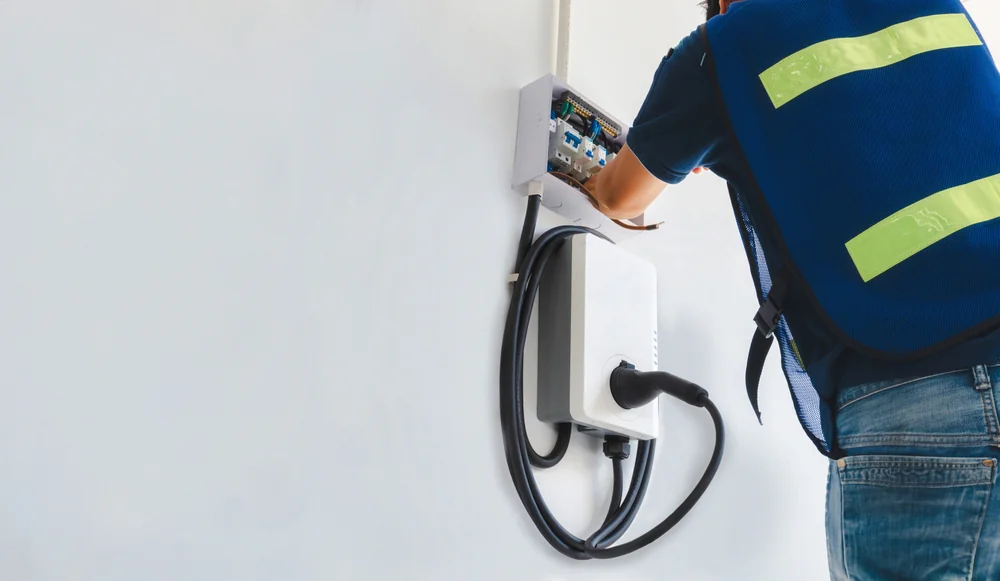
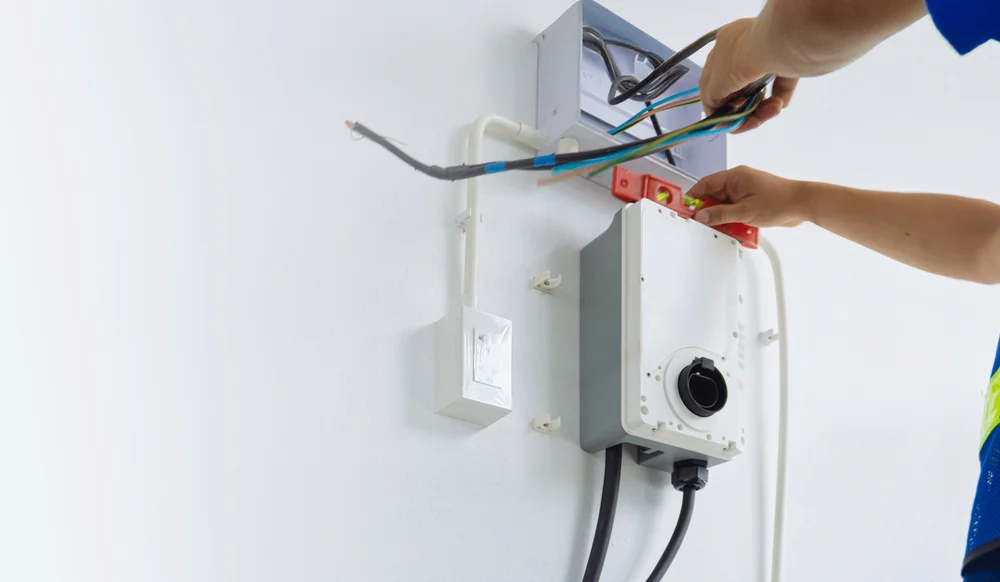
Electric Vehicle Charging Station Setup
You’re done waiting at crowded public charging stations or planning your week around where you can plug in. A Level 2 home charging station means you pull into your driveway, plug in, and walk inside. By morning, your EV is fully charged and ready.
The math is straightforward. Home charging costs you about $3 to $5 per 100 miles. Public DC fast chargers? $10 to $15 for the same distance. Over a year, that difference adds up to real money back in your pocket.
And if you’re thinking about resale value, homes with EV charging stations were listed 91.6% more often in 2025 compared to 2024. Buyers are looking for this feature now, not later. You’re not just installing a charger—you’re making your property more competitive in a market where electric vehicles are becoming the norm.
Licensed Electricians Serving Haywood County
ESP Electrical Service Providers has been handling electrical work across North Carolina since 2002. We’re led by Andy Helton, a Master Electrician with over 35 years of experience, and our senior field technician has been a licensed contractor since 1989.
We’re not a national franchise sending out whoever’s available. You’re working with the same local team that’s been serving Haywood County homeowners for years. We show up in uniform, in stocked trucks, and we don’t leave until the job is done right and your property is cleaner than we found it.
Our pricing is flat rate, so you know the cost before we start. No surprises, no upselling once we’re halfway through. If you’re not satisfied, the work isn’t complete.
How EV Charger Installation Works
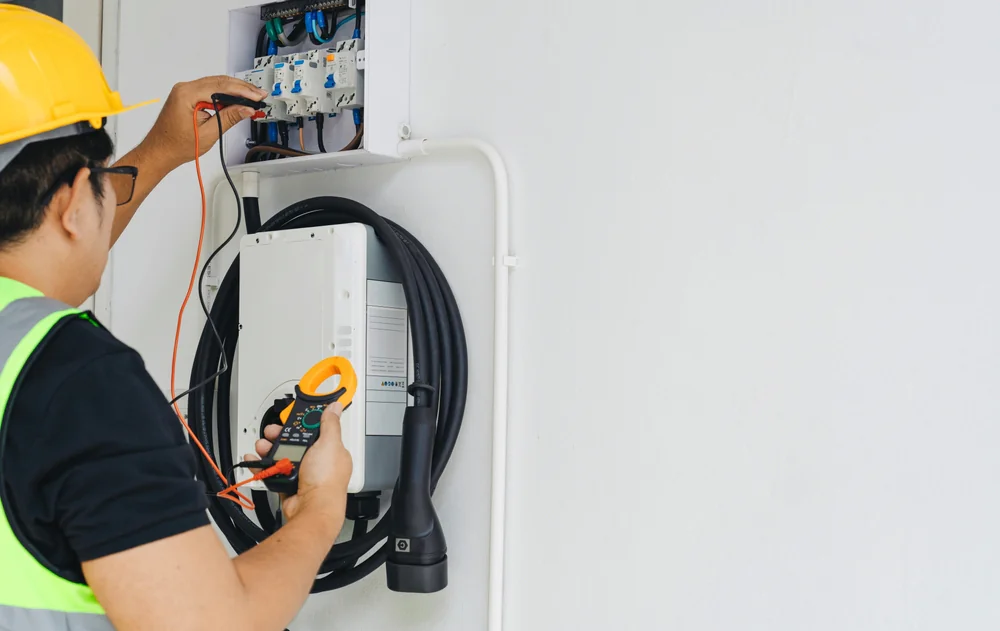
First, we assess your electrical panel. Most Level 2 chargers need a 240-volt circuit with 40-amp service. If your current panel can handle it, great. If not, we’ll let you know what upgrade is needed and give you a flat-rate price before moving forward.
Next, we handle the permits. Haywood County requires electrical permits for this type of work, and we take care of the paperwork so you don’t have to deal with the building department. We also help you apply for the Duke Energy rebate, which can cover up to $1,133 of your installation cost.
Then we install the charger. We run the wiring, mount the unit where you want it (usually in your garage or near your driveway), and test everything to make sure it’s working safely. The whole process typically takes a few hours, depending on your setup. Once it’s done, you’re charging at home that same day.
What's Included in Your Installation
Your installation includes a full electrical assessment to confirm your system can support the new load. If you need a panel upgrade, we’ll handle that too—it’s common in older homes, and it’s not something you want to skip.
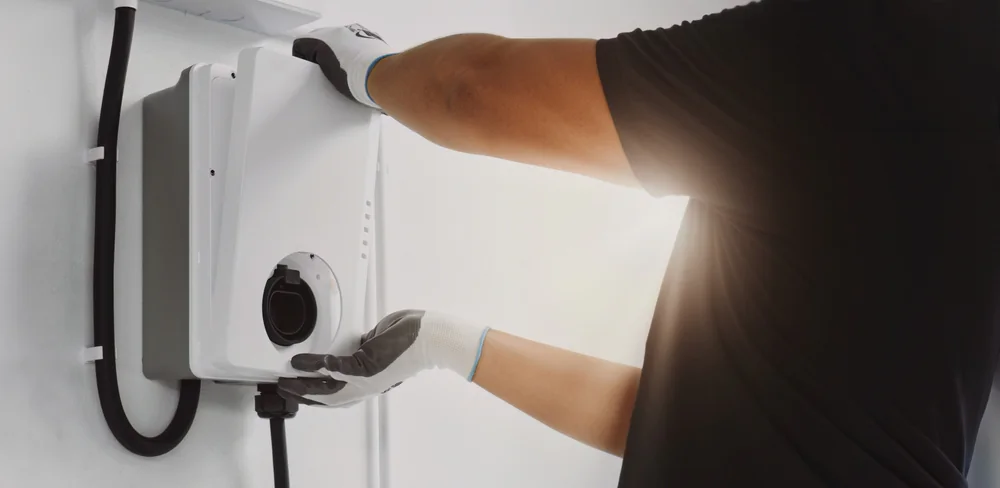
We install the 240-volt outlet or hardwire your Level 2 charging station, depending on your preference and the charger model. Most EV owners in Haywood County go with Level 2 because it charges your vehicle in 4 to 10 hours instead of the 11 to 20 hours you’d get from a standard 120-volt outlet.
You also get help with Duke Energy’s rebate program. North Carolina is one of the states pushing hard for EV adoption—the state hit over 100,000 registered EVs in 2024 and is aiming for 1.25 million by 2030. Duke Energy is backing that goal with rebates, and we make sure you’re taking full advantage. The rebate covers a significant portion of your install cost, but the paperwork has specific requirements. We’ve done it enough times to know what they’re looking for.
How much does it cost to install an EV charger in Haywood County?
Most installations run between $1,000 and $2,500, depending on your electrical panel’s current capacity and how far the charger is from your breaker box. If your panel needs an upgrade to handle the additional load, that adds to the cost, but it’s also a necessary safety measure.
The good news is Duke Energy offers up to $1,133 in rebates for Level 2 charger installations, which offsets a large chunk of the upfront expense. We give you a flat-rate price before we start, so there’s no guessing or surprise charges halfway through the job.
Keep in mind the federal 30C tax credit for EV charger installations ends June 30, 2026. If you’re planning to install a charger, doing it sooner means you can still take advantage of both state and federal incentives.
Do I need to upgrade my electrical panel for an EV charger?
It depends on your current setup. A Level 2 charger typically requires a 240-volt circuit with 40-amp service. If your panel is older or already running close to capacity, you’ll likely need an upgrade.
We start every installation with an assessment of your electrical system. If an upgrade is necessary, we’ll explain why and give you a clear price before moving forward. Panel upgrades aren’t just about adding a charger—they also improve the safety and capacity of your entire home’s electrical system.
Skipping this step isn’t an option. EV chargers pull a significant load, and trying to run one on an undersized panel creates a fire hazard. We make sure everything is up to code and safe for long-term use.
How long does a home EV charger installation take?
Most installations take between three and six hours, depending on the complexity. If your electrical panel is ready to go and the charger location is close to your breaker box, we’re usually done in a few hours.
If you need a panel upgrade or if we’re running wiring a longer distance—say, from your garage to a detached carport—it takes a bit longer. We’ll give you a timeline upfront so you know what to expect.
Permits are required in Haywood County, and we handle that process for you. Once the permit is approved and we’ve scheduled your install, you’re typically charging at home the same day we finish the work.
Can I install an EV charger myself to save money?
Technically, yes, but it’s not recommended. EV chargers operate at 240 volts, which is the same voltage as your dryer or oven. Working with that level of power without the right training and tools is dangerous.
Beyond safety, there’s the code compliance issue. Haywood County requires permits for this type of electrical work, and inspectors will check to make sure everything meets national and local standards. If the installation isn’t done correctly, you could fail inspection, or worse, void your homeowner’s insurance if something goes wrong.
Duke Energy’s rebate program also requires proof of professional installation by a licensed electrician. If you do it yourself, you’re leaving up to $1,133 on the table. The cost of hiring a licensed electrician is worth it for the safety, the rebate, and the peace of mind that it’s done right.
What's the difference between Level 1 and Level 2 charging?
Level 1 charging uses a standard 120-volt outlet—the same kind you plug your phone or laptop into. It’s slow. Depending on your vehicle, it can take 11 to 20 hours to fully charge your EV. That works if you’re only driving short distances and can leave your car plugged in overnight, but it’s not practical for most people.
Level 2 charging uses a 240-volt circuit and charges your EV in 4 to 10 hours. That’s the difference between waking up to a half-charged car and a fully charged one. Over 80% of EV owners charge at home, and the majority use Level 2 chargers because of the speed and convenience.
If you’re serious about owning an EV in Haywood County, Level 2 is the way to go. It’s faster, more reliable, and it makes home charging actually practical for daily use.
Will installing an EV charger increase my home's value?
Yes. Homes with EV charging stations are being listed far more often than they were just a year ago, and buyers are actively looking for this feature. In 2025, listings with EV chargers increased by 91.6% compared to 2024, which tells you where the market is heading.
North Carolina is pushing toward 1.25 million EVs on the road by 2030, and Haywood County is part of that growth. As more people switch to electric vehicles, having a home charger becomes a selling point, not a luxury.
Even if you’re not planning to sell anytime soon, you’re future-proofing your property. Installing a charger now means you’re ahead of the curve, and when the time comes to list your home, you’ll have a feature that more and more buyers expect.
Other Services we provide in Haywood
About Us

Electrical Service Providers (ESP) has been in business since 2002. ESP started out performing wiring services to new construction, remodeling projects and residential homes. Our company’s president identified a market for electrical services to be performed in homes and businesses independent of new construction. Read More about Electrical Service Providers>>
All Rights Reserved.Organic Marketing LLC
Business Listings


Product Brands Used
Allied, Broan, Cutler Hammer, General Electric, Ideal, Juno, Kohler, Leviton, Lutron, Siemens, Square D
Contact
- Office Address: 3254 S Anthony Ct.
Burlington, NC 27215 - Mailing Address: PO Box 25
Alamance, NC 27201 - Phone: 336-228-3300
- E-mail: [email protected], [email protected]
Service Areas
Chapel Hill, Burlington, Carrboro, Durham, Gibsonville, Hillsborough, Graham, Pittsboro, Morrisville, Cary
About Us
Electrical Service Providers (ESP) has been in business since 2002. ESP started out performing wiring services to new construction, remodeling projects and residential homes. Our company’s president identified a market for electrical services to be performed in homes and businesses independent of new construction. Read More about Electrical Service Providers>>
All Rights Reserved.Organic Marketing LLC