EV Charger Installation in Ironwoods, NC
Charge at Home Without the Guesswork or Risk
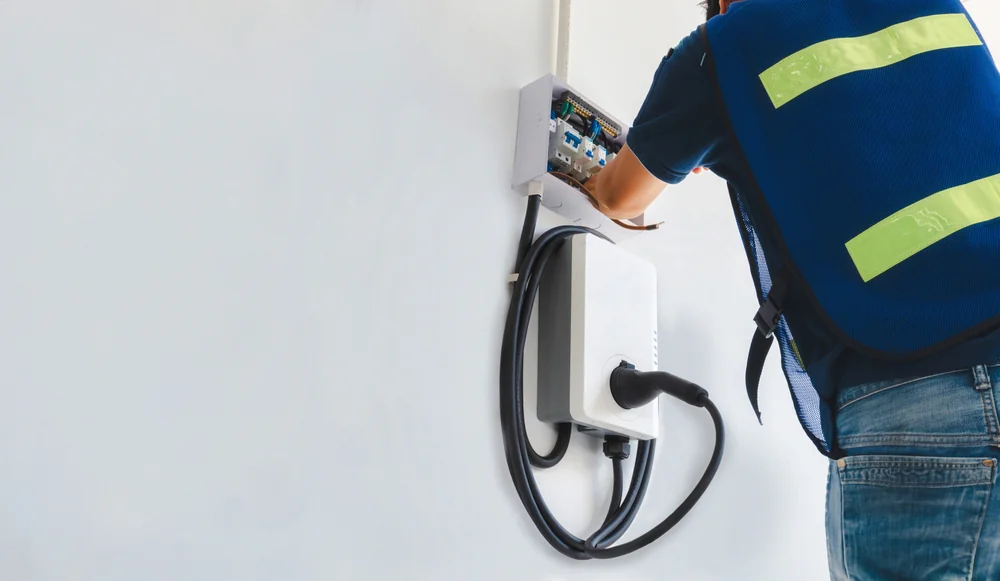
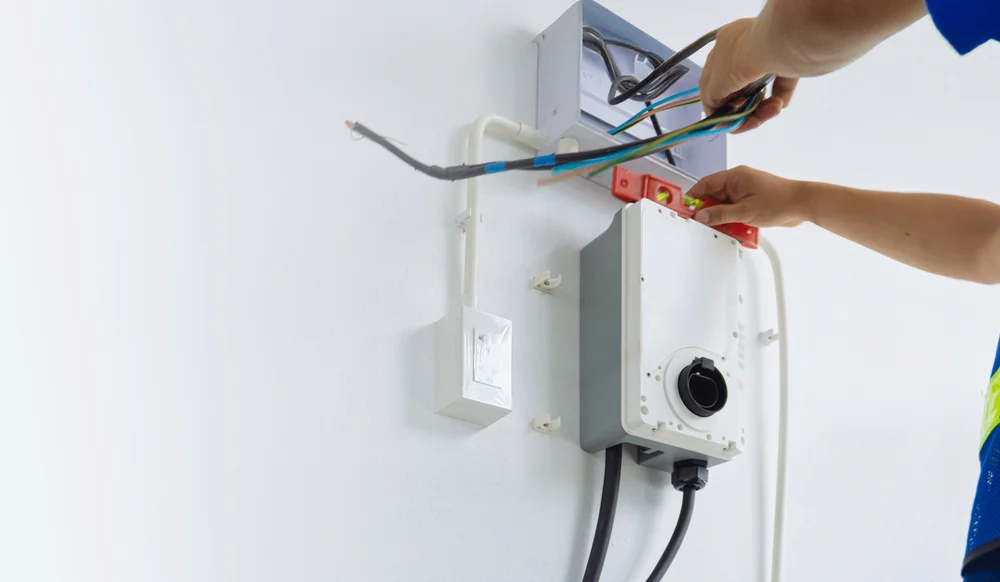
Electric Vehicle Charger Setup in Ironwoods
You bought an EV to save money and skip the gas station. But public charging stations around Ironwoods are hit or miss—crowded, broken, or just not there when you need them.
Home charging fixes that. You plug in when you get home, and your car’s ready by morning. No apps, no waiting, no wondering if the station down the street is actually working today.
The catch is your electrical system has to support it. Most homes weren’t built for the continuous 40- or 50-amp load that a Level 2 charger pulls. If your panel can’t handle it, you’re looking at tripped breakers, overheating, or worse. We assess your system first, upgrade what needs upgrading, and install your charger so it works safely for the long haul.
Licensed Electricians Serving Ironwoods, NC
We’ve been handling electrical work in Alamance County and surrounding areas for over 20 years. Andy Helton, a Master Electrician with 35+ years of experience, runs our company. We’re local, licensed, insured, and bonded.
We’ve seen the EV market explode in North Carolina—over 100,000 registered EVs statewide in 2024, with almost 20% of those purchased just last year. Ironwoods residents are part of that shift, and we’ve installed chargers for dozens of them. We know the local codes, the Duke Energy rebate process, and what your home’s electrical system can realistically handle.
You’re not getting a salesperson on the phone. You’re talking directly to the people doing the work.
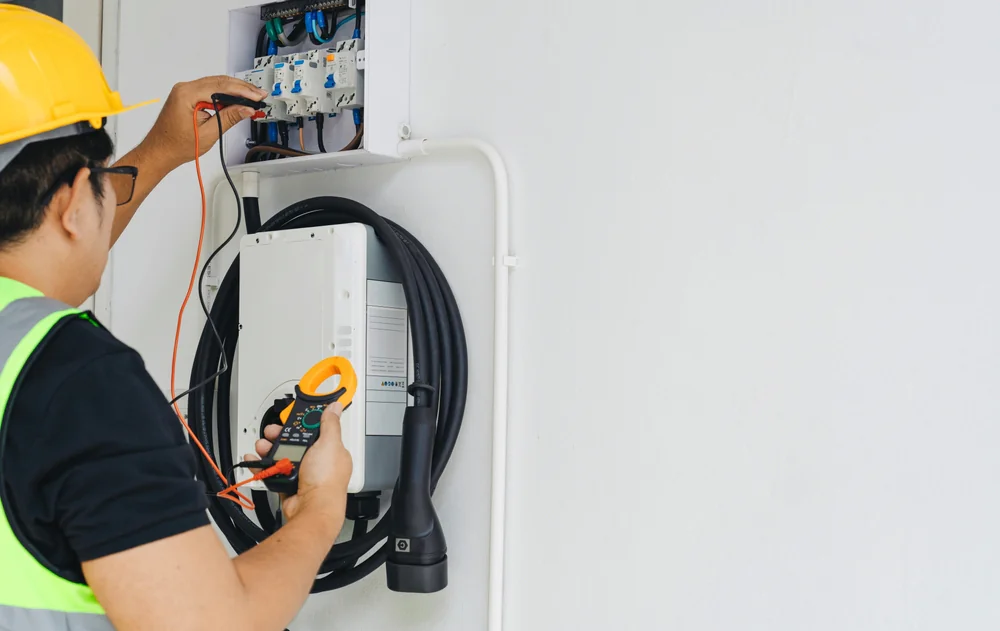
How EV Charger Installation Works
First, we assess your electrical panel. We calculate the load from your HVAC, appliances, and everything else already drawing power. If your panel has capacity for a 40- or 50-amp circuit, great. If not, we’ll recommend an upgrade to 200-amp service—which also future-proofs your home for solar, a second EV, or other additions down the road.
Next, we help you choose the right charger. Level 2 is the standard for home use—it runs on 240 volts, charges 5 to 7 times faster than a regular outlet, and works with most EVs including Tesla. We’ll confirm compatibility with your vehicle and discuss mounting location based on where you park and how far the cable needs to reach.
Then we handle the permits and installation. We pull the necessary permits, run the wiring, mount the charger, and schedule the inspection. Our trucks are fully stocked, so we’re not making multiple trips or waiting on parts. Once it passes inspection, you’re good to go. We also walk you through Duke Energy’s rebate program—you may qualify for up to $1,117 back on installation costs.
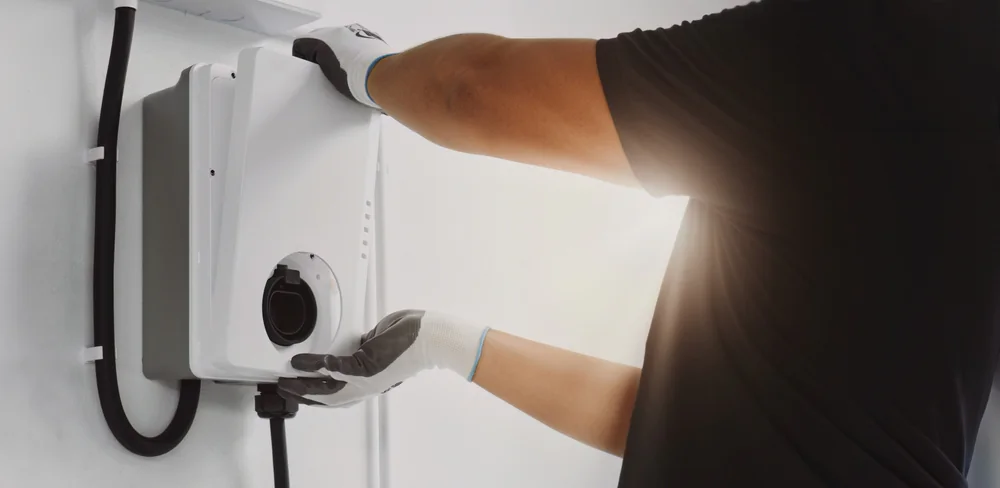
What's Included in Your EV Charging Station Setup
This isn’t a plug-and-play situation. A proper EV charger installation in Ironwoods includes load calculation, circuit installation, charger mounting, permit filing, and final inspection. We also coordinate with Duke Energy if you’re applying for their EV Charger Installation Support Program.
North Carolina hit 100,000 registered EVs in 2024, well ahead of the state’s original goal. Governor Cooper is now targeting 1.25 million EVs by 2030, and Duke Energy is investing heavily in charging infrastructure to support that growth. If you’re a Duke Energy customer in Ironwoods, you’re eligible for rebates that cover a significant chunk of installation prep costs—we help you navigate that paperwork.
We also make sure your system is set up correctly for the long term. EV chargers pull continuous power, which is different from most household appliances that cycle on and off. That’s why panel capacity matters. If we’re upgrading your panel, we’re sizing it to handle not just your charger, but whatever else you might add in the next 10 or 20 years.
Do I need to upgrade my electrical panel for an EV charger?
It depends on your current panel’s capacity and what’s already drawing power in your home. Most homes in Ironwoods were built with 100- or 150-amp service, which might be enough if you’re not running a lot of high-demand appliances at once. But a Level 2 EV charger typically needs a dedicated 40- or 50-amp circuit, and that’s a continuous load—not something that cycles off like your AC or water heater.
We start with a load calculation. We look at your HVAC system, water heater, range, dryer, and anything else on the panel. If the math shows you’re already near capacity, adding a charger could overload the system and trip breakers or create a safety hazard. In that case, upgrading to 200-amp service is the right move.
The good news is that upgrade doesn’t just solve the EV problem—it sets you up for future additions like solar panels, a second EV, or a home addition. And with Duke Energy’s rebate program, you can get up to $1,117 back to offset the cost.
How much does EV charger installation cost in Ironwoods?
Most installations run between $1,000 and $2,500, but the final cost depends on a few factors. If your panel has capacity and the charger mounts close to it, you’re on the lower end. If we need to upgrade your panel, run wiring a long distance, or do significant electrical work, it’ll cost more.
Panel upgrades are the biggest variable. Upgrading from 100-amp to 200-amp service involves replacing the panel, upgrading the meter base, and sometimes upgrading the service line from the utility. That’s not cheap, but it’s also not optional if your system can’t handle the load. We give you flat-rate pricing upfront, so you know what you’re paying before we start.
Duke Energy’s rebate program helps. If you qualify, you can get up to $1,117 credited back for installation preparation costs. We’ll help you apply and make sure the work meets their requirements. There’s also a federal tax credit worth up to $1,000 for residential EV charger installations, which can offset costs even further.
Can I install an EV charger myself or hire a handyman?
Technically, you could—but you shouldn’t. Installing an EV charger involves running a new 240-volt circuit, which requires pulling permits, working inside your electrical panel, and passing inspection. If it’s not done right, you risk electrical fires, voided warranties, and insurance problems. Most insurance companies won’t cover damage from unpermitted electrical work.
In North Carolina, any new 240-volt circuit or hardwired charger installation requires a permit and inspection. That means a licensed electrician needs to do the work, or at least sign off on it. If you hire someone unlicensed or try to DIY it, the inspection will fail, and you’ll end up paying twice—once for the bad install, and again to fix it.
There’s also the load calculation issue. A handyman or DIYer might not know how to assess whether your panel can handle the charger. If they install it on an overloaded panel, you’ll have ongoing problems—tripped breakers, overheating, potential equipment damage. We’ve fixed plenty of bad installs, and it’s always more expensive than doing it right the first time.
What's the difference between Level 1 and Level 2 charging?
Level 1 charging uses a standard 120-volt outlet—the same kind you plug your phone or laptop into. It’s the slowest option, adding about 3 to 5 miles of range per hour. If you drive 30 miles a day, you’d need 6 to 10 hours to recharge overnight. That works for some people, but it’s cutting it close if you have a longer commute or need your car ready quickly.
Level 2 charging uses a 240-volt circuit, like your electric dryer or range. It’s 5 to 7 times faster, adding 20 to 60 miles of range per hour depending on your vehicle and charger. Most EV owners in Ironwoods go with Level 2 because it fully charges the car overnight, even if you drive a lot during the day. It’s the standard for home installations.
Level 2 does require dedicated electrical work—that’s where we come in. We install the circuit, mount the charger, and make sure everything’s up to code. The upfront cost is higher than plugging into a regular outlet, but the convenience and speed make it worth it for most people.
How long does EV charger installation take?
If your panel has capacity and the charger mounts close to it, we can usually complete the installation in one day. That includes running the circuit, mounting the charger, and getting everything ready for inspection. The inspection itself is scheduled separately and typically happens within a few days, depending on the county’s schedule.
If you need a panel upgrade, add another day or two. Panel upgrades involve more work—replacing the panel, upgrading the meter base, and coordinating with Duke Energy if the service line needs upgrading. We’ll give you a timeline upfront so you know what to expect.
Permitting can add time on the back end, but we handle all of that. We pull the permits, schedule the inspection, and make sure everything passes. You don’t have to deal with the county or track down paperwork. Once the inspection clears, you’re all set to start charging at home.
Will an EV charger increase my electric bill?
Yes, but it’s still cheaper than gas. Electricity rates in North Carolina average around 12 cents per kilowatt-hour. Charging a typical EV with a 60-kWh battery from empty to full costs about $7 to $8. If you drive 1,000 miles a month, you’re looking at roughly $40 to $50 in electricity costs, compared to $150+ for gas in a comparable vehicle.
Duke Energy also offers time-of-use rates that can lower your costs even further. If you charge overnight during off-peak hours, you pay less per kilowatt-hour. Some EV owners in Ironwoods save 30% or more by shifting their charging to late-night hours. Most modern chargers and EVs let you schedule charging times, so it’s easy to take advantage of those lower rates.
The other factor is how much you drive. If you’re only charging once or twice a week, the impact on your bill is minimal. If you’re charging daily because you have a long commute, it’ll be more noticeable—but still significantly less than what you’d spend on gas. We can walk you through the math based on your vehicle and driving habits if you want a more precise estimate.
Other Services we provide in Ironwoods
About Us

Electrical Service Providers (ESP) has been in business since 2002. ESP started out performing wiring services to new construction, remodeling projects and residential homes. Our company’s president identified a market for electrical services to be performed in homes and businesses independent of new construction. Read More about Electrical Service Providers>>
All Rights Reserved.Organic Marketing LLC
Business Listings


Product Brands Used
Allied, Broan, Cutler Hammer, General Electric, Ideal, Juno, Kohler, Leviton, Lutron, Siemens, Square D
Contact
- Office Address: 3254 S Anthony Ct.
Burlington, NC 27215 - Mailing Address: PO Box 25
Alamance, NC 27201 - Phone: 336-228-3300
- E-mail: [email protected], [email protected]
Service Areas
Chapel Hill, Burlington, Carrboro, Durham, Gibsonville, Hillsborough, Graham, Pittsboro, Morrisville, Cary
About Us
Electrical Service Providers (ESP) has been in business since 2002. ESP started out performing wiring services to new construction, remodeling projects and residential homes. Our company’s president identified a market for electrical services to be performed in homes and businesses independent of new construction. Read More about Electrical Service Providers>>
All Rights Reserved.Organic Marketing LLC