EV Charger Installation in Julian, NC
Charge at Home Without the Guesswork or Risk
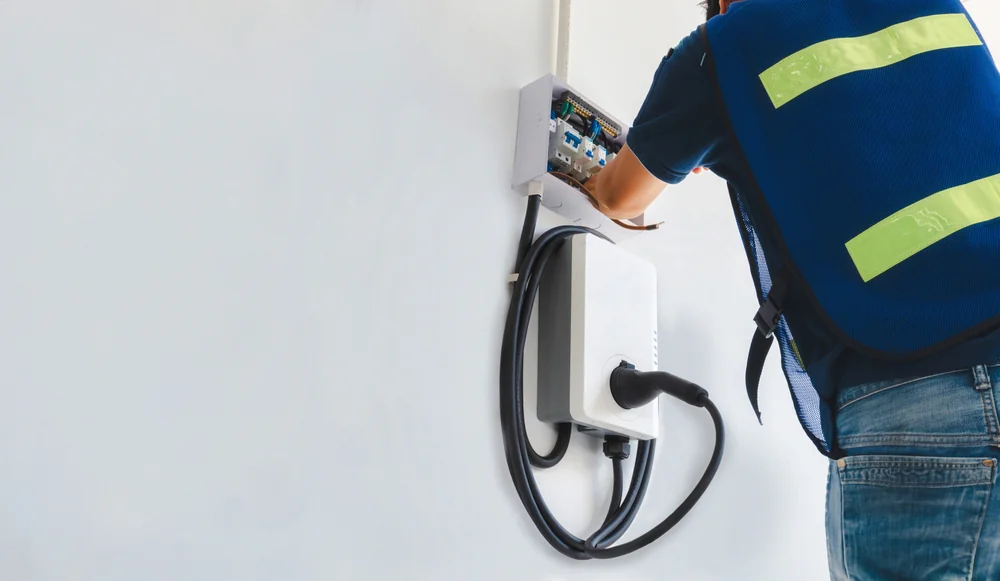
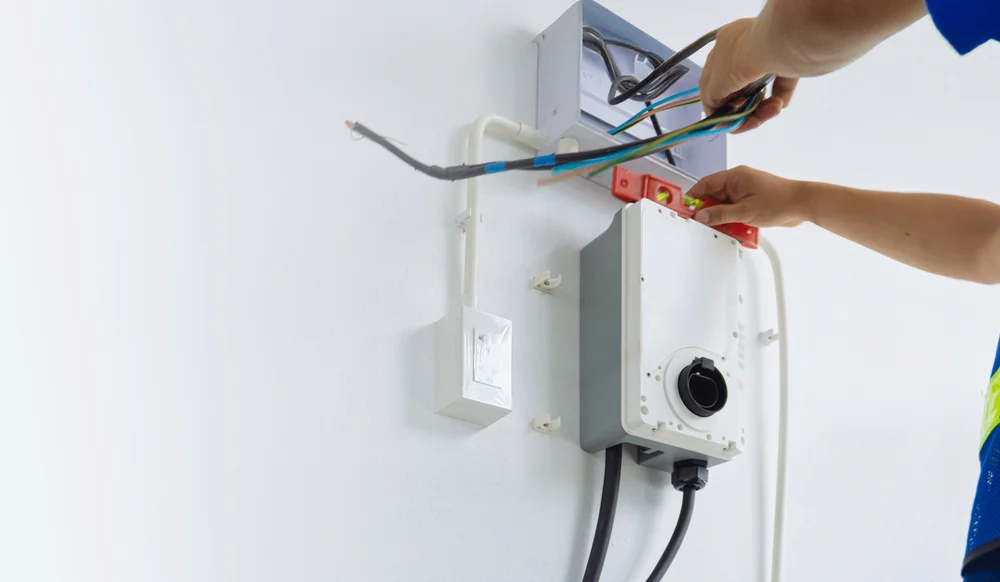
Electric Vehicle Charger Setup in Julian
You bought an EV to simplify your life, not to plan trips around charging stations or wait in line at a public charger. A Level 2 home charging station means you plug in when you get home and wake up ready to go—every single day.
Charging at home costs less per kilowatt-hour than most public stations, especially if you charge overnight during off-peak hours. You’re not just saving time. You’re cutting your fuel costs significantly compared to what you’d spend at a gas pump or public charger.
And when your home has the right setup—proper panel capacity, code-compliant wiring, and a charger that matches your vehicle—you’re also protecting your investment. No fire risks from DIY mistakes. No voided warranties. No failed inspections. Just reliable charging that works when you need it.
Licensed EV Charger Electrician in Julian
ESP Electrical Service Providers is locally owned and operated by Andy Helton, a Master Electrician with over 35 years of experience. We’ve been serving Julian and the surrounding Guilford County area for more than two decades, and we’ve seen how quickly the EV market has grown here.
Julian homeowners have higher-than-average incomes, strong homeownership rates, and a community that values quality and long-term thinking. That’s exactly who we work with best—people who want it done right the first time, not the cheapest way possible.
We’re not a national franchise. We’re not going to upsell you on equipment you don’t need. We show up in uniform, assess your electrical panel, explain what’s required, give you flat-rate pricing before we start, and handle everything from permits to Duke Energy rebate applications.
How EV Charging Station Installation Works
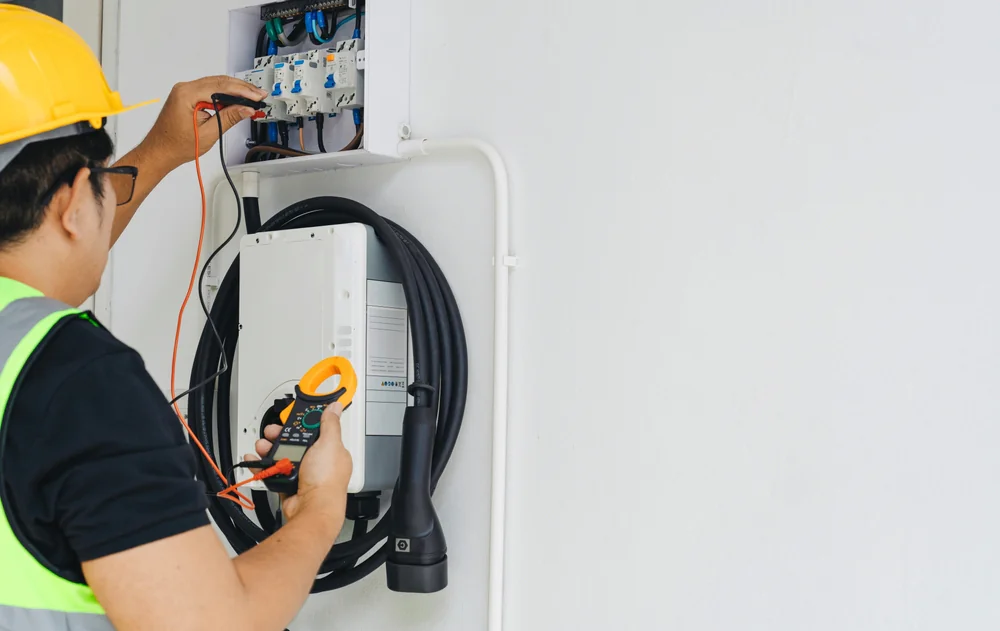
First, we come out and assess your electrical panel. Most homes in Julian were built before EVs were common, so we need to confirm you have enough capacity for a Level 2 charger. If your panel is maxed out or outdated, we’ll recommend an upgrade—and explain exactly why it’s necessary.
Next, we help you choose the right charger for your vehicle and your budget. Tesla, Chevy, Ford, Rivian—we’ve installed chargers for all of them. We’ll also walk you through Duke Energy’s rebate program, which can put up to $1,133 back in your pocket.
Once you approve the quote, we pull the permits, schedule the installation, and complete the work in a single day in most cases. Our trucks are fully stocked, so we’re not making runs to the supply house on your dime. After installation, we coordinate the inspection, make sure everything passes, and help you submit your rebate paperwork. You’re charging that same week.
What's Included in EV Charger Installation
Every installation includes a full electrical assessment of your current panel and capacity. We calculate the load, check for code violations, and determine whether your system can handle the additional demand. If it can’t, we’ll upgrade your panel so it’s safe and future-ready.
We also handle all permitting and inspections. In Julian and Guilford County, electrical work requires permits, and inspections can take days to schedule. We manage that entire process so you’re not stuck waiting or dealing with the county yourself.
You’ll also get help applying for Duke Energy’s Charger Prep Credit, which covers up to $1,133 of your installation cost. North Carolina is one of the fastest-growing EV markets in the country—over 100,000 registered EVs as of 2024—and Duke Energy is actively incentivizing home charging infrastructure. We make sure you get every dollar you’re eligible for.
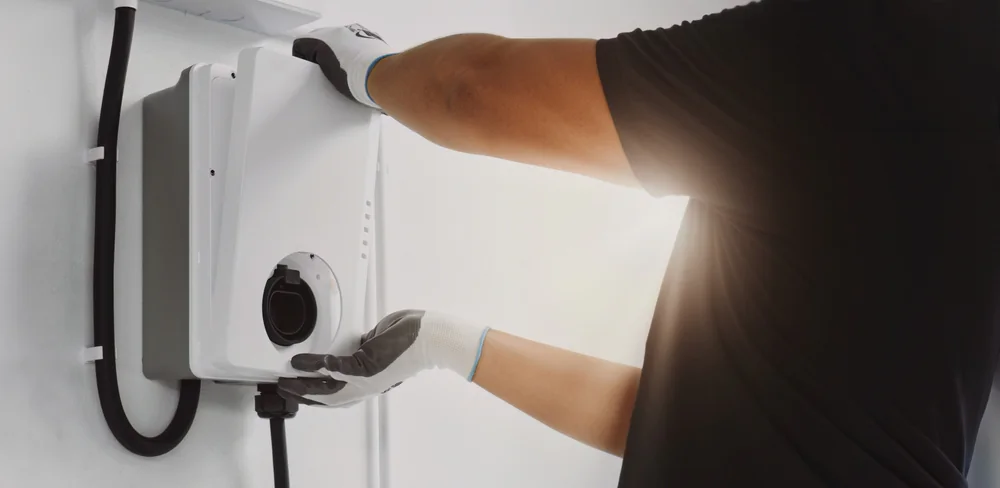
Finally, we install the charger itself—mounted, wired, tested, and ready to use. We don’t leave until it’s working, the site is cleaned up, and you understand how to operate it.
How much does it cost to install an EV charger in Julian, NC?
Most Level 2 EV charger installations in Julian run between $1,500 and $3,000, depending on your electrical panel’s current capacity and how far the charger is from the panel. If your panel needs an upgrade to handle the additional load, that adds to the cost—but it’s also a necessary safety measure and something that benefits your entire home.
We use flat-rate pricing, so you’ll know the exact cost before we start any work. No surprises, no hourly billing, no change orders unless you request additional work. And with Duke Energy’s rebate program offering up to $1,133 per household, a significant portion of that cost can be covered.
The cheapest option isn’t always the safest. We’ve been called out to fix DIY installs that failed inspection, caused breaker trips, or worse—created fire hazards. Spending a bit more upfront means you’re getting a licensed electrician who’s been doing this for over 20 years, proper permitting, and a system that works reliably for the life of your vehicle.
Do I need to upgrade my electrical panel to install an EV charger?
It depends on your current panel and how much capacity you have left. Most Level 2 chargers require a dedicated 40- to 50-amp circuit, which is a significant load. If your panel is already near capacity—common in older homes—you’ll need an upgrade to safely add the charger.
We see this a lot in Julian. Many homes were built in the ’80s and ’90s with 100- or 150-amp panels, and between HVAC systems, water heaters, kitchen appliances, and everything else, there’s not much room left. Adding an EV charger without upgrading the panel can overload your system and create a serious fire risk.
During our initial assessment, we calculate your total load and determine whether an upgrade is necessary. If it is, we’ll explain why, show you what’s involved, and give you a flat-rate price. Panel upgrades also future-proof your home for additional EVs, solar systems, or other high-demand equipment down the road.
How long does EV charger installation take in Julian?
Most installations are completed in a single day, usually within four to six hours. That includes mounting the charger, running the wiring, connecting it to your panel, and testing the system. If your panel needs an upgrade, that adds time—typically another half day to a full day depending on the scope.
The bigger variable is permitting and inspection timing. We pull the permits for you, but Guilford County’s schedule determines how quickly we can get an inspector out after the work is done. In most cases, inspections happen within a few days of installation, and we coordinate all of that so you don’t have to.
From your first call to a fully operational charger, the process usually takes one to two weeks. We’re not dragging it out—we’re just making sure everything is done legally, safely, and in a way that passes inspection the first time. You’ll be charging at home faster than you think.
Can I install an EV charger myself or hire a handyman?
Legally, no. In North Carolina, electrical work like EV charger installation must be performed by a licensed electrician, and it requires a permit and inspection. Hiring a handyman or doing it yourself might seem cheaper upfront, but it’s illegal, unsafe, and will likely cause problems down the road.
We’ve seen DIY installs that failed inspection, tripped breakers constantly, or created fire hazards because the wiring wasn’t sized correctly. We’ve also seen homeowners who couldn’t sell their house because unpermitted electrical work showed up during the buyer’s inspection. Fixing those mistakes costs more than doing it right the first time.
Beyond the legal and safety issues, most EV charger manufacturers void the warranty if the unit isn’t installed by a licensed professional. So even if the charger works initially, you’re on your own if something goes wrong. It’s not worth the risk when you’re dealing with 240-volt circuits and equipment that costs $500 to $1,000 or more.
What's the difference between Level 1 and Level 2 EV chargers?
Level 1 chargers plug into a standard 120-volt outlet—the same outlet you’d use for a lamp or phone charger. They’re slow, adding about 3 to 5 miles of range per hour of charging. If you drive 40 miles a day, you’re looking at 8 to 12 hours to recharge, and that’s assuming you’re starting from empty.
Level 2 chargers run on 240 volts—the same power your dryer or oven uses—and they’re much faster. Depending on your vehicle and charger, you can add 25 to 40 miles of range per hour. For most drivers, that means a full charge overnight, even if you’re starting near empty.
If you’re serious about driving an EV as your primary vehicle, Level 2 is the only practical option. Level 1 works if you barely drive or have another car to fall back on, but it’s not a long-term solution. And since you’re already paying for the electrician, the permit, and the installation, the difference in cost between Level 1 and Level 2 is minimal compared to the difference in performance.
Does ESP help with Duke Energy rebates for EV charger installation?
Yes. Duke Energy offers up to $1,133 per household through their Charger Prep Credit program, and we help you apply for it. The rebate is designed to offset the cost of installing the electrical infrastructure needed to support an EV charger, and it’s available to residential customers in Duke Energy’s North Carolina service area—which includes Julian.
The application process requires documentation of the work performed, proof of payment, and verification that the installation meets Duke Energy’s requirements. We provide all of that as part of our service. We’ve done this enough times to know exactly what Duke Energy needs, so there’s no back-and-forth or rejected applications.
North Carolina is pushing hard to increase EV adoption—the state added over 50,000 EVs in just the last two years—and Duke Energy’s rebate program is a big part of that effort. The rebate won’t last forever, and funding can run out during high-demand periods, so it’s worth moving quickly if you’re planning an installation.
Other Services we provide in Julian
About Us

Electrical Service Providers (ESP) has been in business since 2002. ESP started out performing wiring services to new construction, remodeling projects and residential homes. Our company’s president identified a market for electrical services to be performed in homes and businesses independent of new construction. Read More about Electrical Service Providers>>
All Rights Reserved.Organic Marketing LLC
Business Listings


Product Brands Used
Allied, Broan, Cutler Hammer, General Electric, Ideal, Juno, Kohler, Leviton, Lutron, Siemens, Square D
Contact
- Office Address: 3254 S Anthony Ct.
Burlington, NC 27215 - Mailing Address: PO Box 25
Alamance, NC 27201 - Phone: 336-228-3300
- E-mail: [email protected], [email protected]
Service Areas
Chapel Hill, Burlington, Carrboro, Durham, Gibsonville, Hillsborough, Graham, Pittsboro, Morrisville, Cary
About Us
Electrical Service Providers (ESP) has been in business since 2002. ESP started out performing wiring services to new construction, remodeling projects and residential homes. Our company’s president identified a market for electrical services to be performed in homes and businesses independent of new construction. Read More about Electrical Service Providers>>
All Rights Reserved.Organic Marketing LLC