EV Charger Installation in Moncure, NC
Charge at Home Without the Guesswork
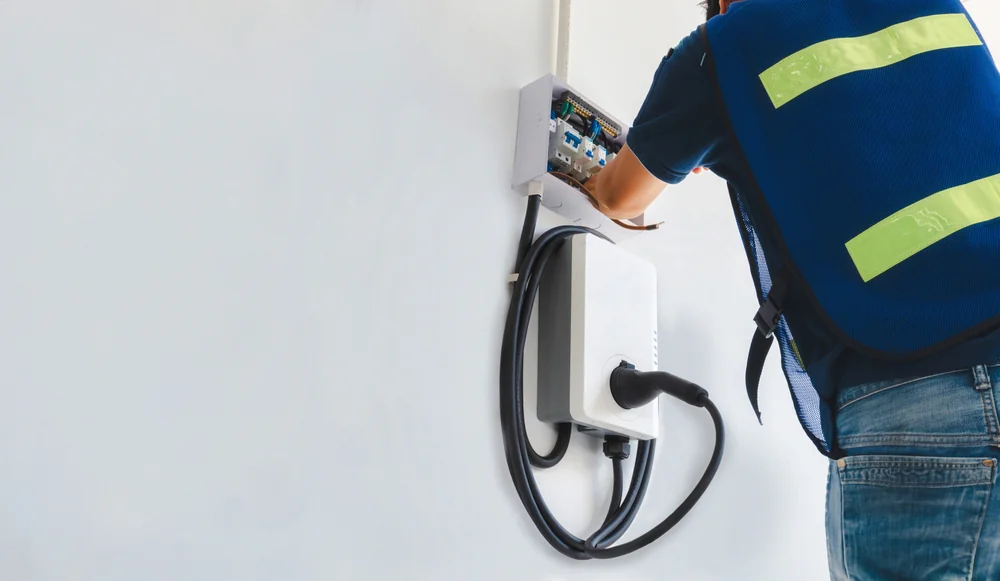
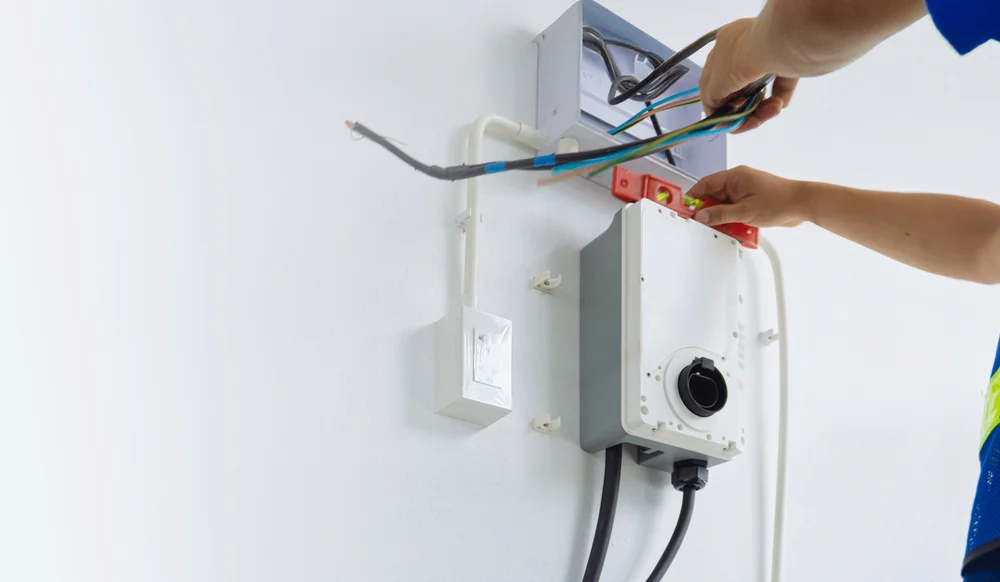
Electric Vehicle Charger Setup Moncure
You’re done driving to crowded public charging stations. No more waiting in line or planning your week around where you can plug in.
With a Level 2 EV charger installed at your home, you plug in when you get home and wake up ready to go. Most electric vehicles fully charge overnight in four to eight hours. That’s 25 to 40 miles of range added per hour while you sleep.
Home charging costs less than public stations, especially if you charge during off-peak hours. Duke Energy offers up to $1,117 in credits to cover installation costs, and federal tax credits can add another $1,000. Your home’s value goes up too—buyers are actively looking for properties with EV charging already installed.
You’re not just adding convenience. You’re making a smart financial move that pays you back in lower fuel costs, higher resale value, and zero trips to the gas station.
Licensed EV Charger Electrician Moncure
ESP Electrical Service Providers has been serving Moncure and the surrounding area for over two decades. Our Operations Manager brings more than 20 years of electrical contracting experience, and our team is led by Andy Helton, a Master Electrician with 35+ years in the field.
We show up in uniform, with fully stocked trucks and flat-rate pricing you’ll know before we start. No surprises, no runarounds, and no mess left behind when we’re done.
Moncure is a small community, and we treat it that way. You’re not a ticket number. You get direct communication with the people doing the work, and we don’t leave until you’re completely satisfied with the installation.
How EV Charging Station Installation Works
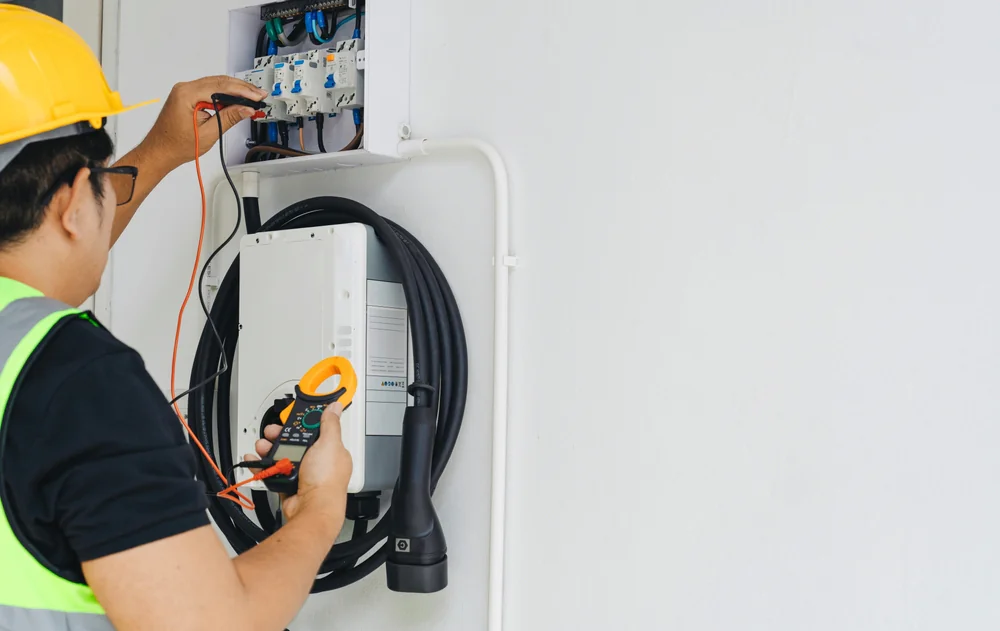
First, we assess your home’s electrical system. Most Level 2 chargers need a 240-volt circuit and at least 40 amps of service. If your panel doesn’t have the capacity, we’ll upgrade it so everything runs safely and up to code.
Next, we help you choose the right charger. Hardwired units are permanent and clean-looking. Plug-in models give you flexibility if you move. We’ll match the charger to your vehicle and your daily driving needs.
Then we handle the permits and installation. We pull the necessary permits, run the wiring, mount the charger where you want it, and schedule the required inspections. Everything gets done to North Carolina electrical code standards.
Finally, we walk you through how to use it. You’ll know how to start a charge, set a schedule if your charger has smart features, and what to do if you ever have a question. We also help you apply for Duke Energy rebates so you’re not leaving money on the table.
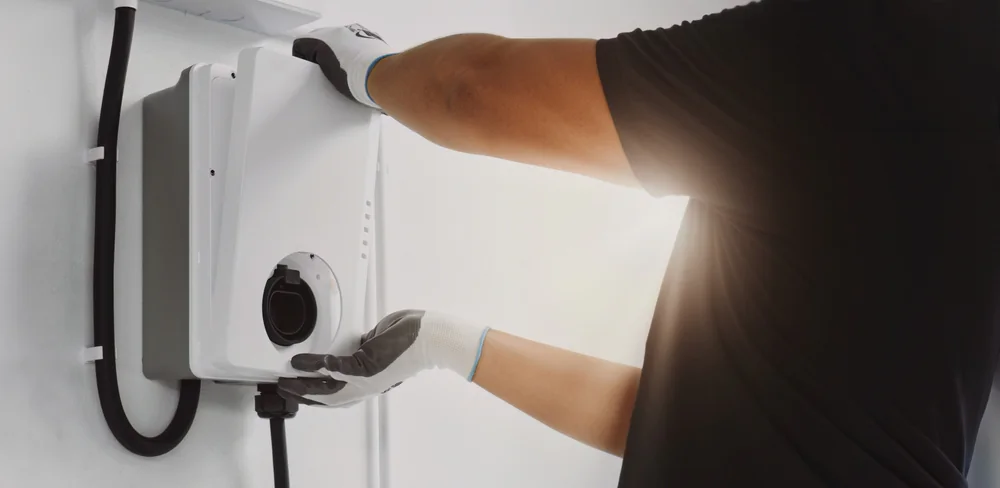
EV Charger Repair and Upgrades Moncure
You get a full electrical assessment before we touch anything. We check your panel capacity, evaluate your existing wiring, and determine whether you need an upgrade to safely support a Level 2 charger.
We install the charger exactly where you need it—garage, carport, driveway. We mount it securely, run conduit if needed, and make sure the setup looks clean and professional. All wiring is done to code, and we handle the permit process and inspections from start to finish.
North Carolina is pushing hard toward 1.25 million EVs on the road by 2030. Moncure homeowners are starting to prepare now, and the ones who install chargers early are seeing the benefits in both convenience and property value. With Duke Energy’s rebate program covering a significant portion of installation costs, there’s never been a better time to set up home charging.
If your charger ever needs repair or you want to upgrade to a newer model down the road, we handle that too. You’re not on your own after installation.
How much does it cost to install an EV charger at my home in Moncure?
Installation typically runs between $800 and $3,000 depending on your home’s electrical setup. If your panel has available capacity and the charger location is close to your electrical panel, you’re on the lower end. If we need to upgrade your panel or run a long wiring distance, costs go up.
Duke Energy offers up to $1,117 in credits to offset installation costs, and federal tax credits can cover up to $1,000 more. That brings your out-of-pocket cost down significantly. We’ll walk you through how to apply for both so you’re not paying more than you need to.
The upfront investment pays back quickly. Home charging costs about half what you’d pay at public stations, and you’ll save even more if you charge overnight during off-peak hours. Most Moncure homeowners see the financial benefit within the first year.
Do I need to upgrade my electrical panel for an EV charger?
It depends on your current panel capacity. Level 2 chargers need a dedicated 240-volt circuit with 40 to 50 amps of service. If your panel is already near capacity or outdated, you’ll need an upgrade to safely support the charger.
Many homes in Moncure were built before electric vehicles became common, so panel upgrades are fairly typical. We assess your system during the initial visit and give you a clear answer about whether an upgrade is necessary. If it is, we handle that as part of the installation.
Upgrading your panel isn’t just about the EV charger. It also gives you more capacity for future electrical needs and makes your home safer overall. It’s an investment that benefits you beyond just charging your car.
How long does it take to fully charge an electric vehicle at home?
With a Level 2 charger, most electric vehicles fully charge in four to ten hours depending on battery size and how depleted it is. You’re adding 25 to 40 miles of range per hour, which is more than enough to top off overnight.
If you’re only driving 30 or 40 miles a day, you’re looking at a couple hours of charging to get back to full. Most people plug in when they get home and wake up with a full battery. It’s not something you have to think about or plan around.
Level 1 charging—using a standard 120-volt outlet—takes much longer, usually 24 hours or more for a full charge. That’s why most EV owners upgrade to Level 2. It’s faster, more convenient, and matches how you actually use your vehicle.
Can I install an EV charger myself or do I need a licensed electrician?
You need a licensed electrician. EV charger installation involves working with 240-volt circuits, which carry serious safety risks if not done correctly. Improper installation can cause electrical fires, damage your vehicle’s charging system, or void your charger’s warranty.
North Carolina requires permits and inspections for this type of electrical work. A licensed electrician knows the code requirements, pulls the necessary permits, and ensures everything passes inspection. If you try to DIY it, you’re risking failed inspections, insurance issues, and costly repairs down the line.
We’ve seen homeowners attempt their own installations and end up calling us to fix the problems. It always costs more to correct a bad install than it does to do it right the first time. Save yourself the headache and the risk—hire someone who knows what they’re doing.
What's the difference between a hardwired and a plug-in EV charger?
A hardwired charger is permanently connected to your electrical system. It’s mounted on the wall and wired directly into a dedicated circuit. Hardwired units look cleaner, have no plug to worry about, and are typically more powerful.
A plug-in charger connects to a 240-volt outlet, similar to what a dryer uses. It’s easier to take with you if you move, and you can unplug it if you need the outlet for something else. Plug-in models give you more flexibility but require an outlet installation.
Most Moncure homeowners go with hardwired chargers because they’re planning to stay in their homes and want the cleanest installation. If you think you might move in the next few years or want the option to relocate the charger, plug-in makes more sense. We’ll help you decide based on your situation.
Will installing an EV charger increase my home's value?
Yes. Homebuyers are actively looking for properties with EV chargers already installed, especially as electric vehicle adoption grows. North Carolina is targeting 1.25 million EVs on the road by 2030, and buyers don’t want to deal with the hassle of installing a charger themselves.
An EV charger signals that your home is modern, energy-conscious, and ready for the future. It’s a selling point that sets your property apart, particularly in areas like Moncure where EV infrastructure is still catching up to demand.
The exact value increase depends on your local market, but real estate agents consistently report that homes with EV chargers sell faster and often command higher offers. You’re not just installing a charger—you’re making an upgrade that pays you back when it’s time to sell.
Other Services we provide in Moncure
About Us

Electrical Service Providers (ESP) has been in business since 2002. ESP started out performing wiring services to new construction, remodeling projects and residential homes. Our company’s president identified a market for electrical services to be performed in homes and businesses independent of new construction. Read More about Electrical Service Providers>>
All Rights Reserved.Organic Marketing LLC
Business Listings


Product Brands Used
Allied, Broan, Cutler Hammer, General Electric, Ideal, Juno, Kohler, Leviton, Lutron, Siemens, Square D
Contact
- Office Address: 3254 S Anthony Ct.
Burlington, NC 27215 - Mailing Address: PO Box 25
Alamance, NC 27201 - Phone: 336-228-3300
- E-mail: [email protected], [email protected]
Service Areas
Chapel Hill, Burlington, Carrboro, Durham, Gibsonville, Hillsborough, Graham, Pittsboro, Morrisville, Cary
About Us
Electrical Service Providers (ESP) has been in business since 2002. ESP started out performing wiring services to new construction, remodeling projects and residential homes. Our company’s president identified a market for electrical services to be performed in homes and businesses independent of new construction. Read More about Electrical Service Providers>>
All Rights Reserved.Organic Marketing LLC