EV Charger Installation in Saxapahaw, NC
Charge at Home Without the Guesswork
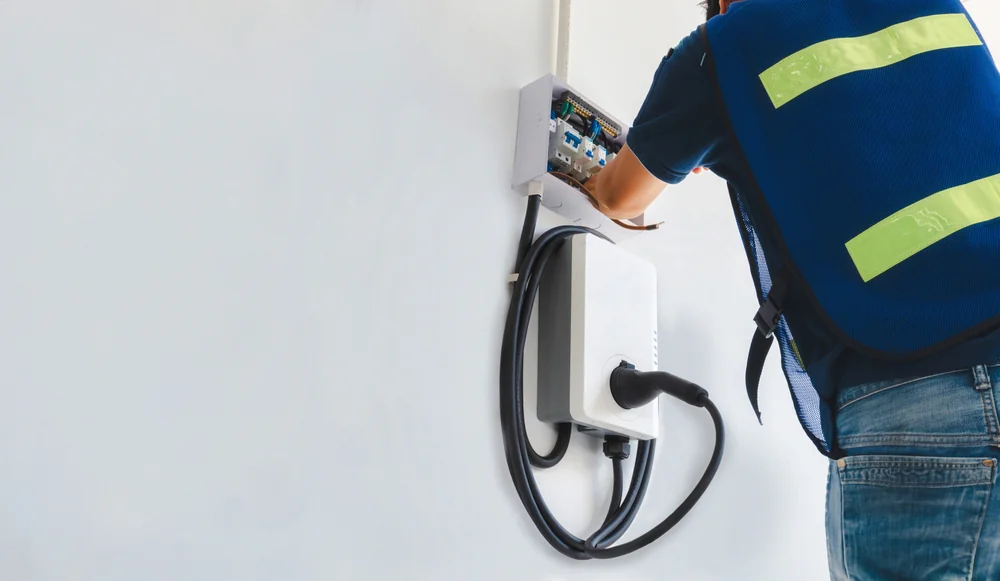
Electric Vehicle Charger Setup Near Saxapahaw
You bought an EV to simplify your life, not to hunt for charging stations or wait in line at overcrowded public chargers. Home charging means you plug in when you get home and wake up ready to drive—no apps, no membership fees, no detours.
Charging at home costs less than public stations, especially if you’re on Duke Energy’s off-peak rates. You’re not just saving time. You’re cutting your fuel costs and adding real value to your property.
The right setup also means safety and reliability. A Level 2 charger installed by a licensed electrician gives you faster charging speeds without overloading your electrical system. You get the power you need without the risk of a DIY disaster or a contractor who’s never touched an EV charger before.
Licensed Electricians Serving Alamance County
ESP Electrical Service Providers is owned and operated by Andy Helton, a Master Electrician with over 35 years of experience. We’ve been serving Saxapahaw, NC and the surrounding Alamance County area for more than two decades, handling everything from panel upgrades to full EV charging station installations.
We’re not a national franchise or a referral service. We’re local, licensed, and we show up in uniform with fully stocked trucks and flat-rate pricing. No surprises, no runarounds.
North Carolina is moving fast on EV adoption—over 100,000 registered EVs in 2024 and major manufacturing investments right here in Chatham County. That means more homeowners in Saxapahaw are asking the same questions you are. We’ve installed chargers in older homes that needed panel upgrades and newer builds that just needed the right circuit. We know what works here.
How EV Charger Installation Works
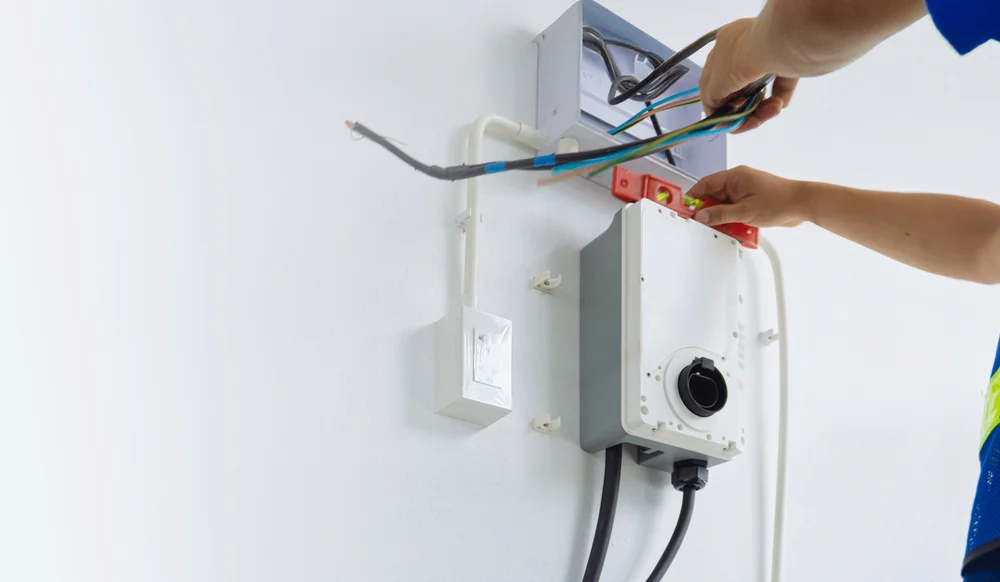
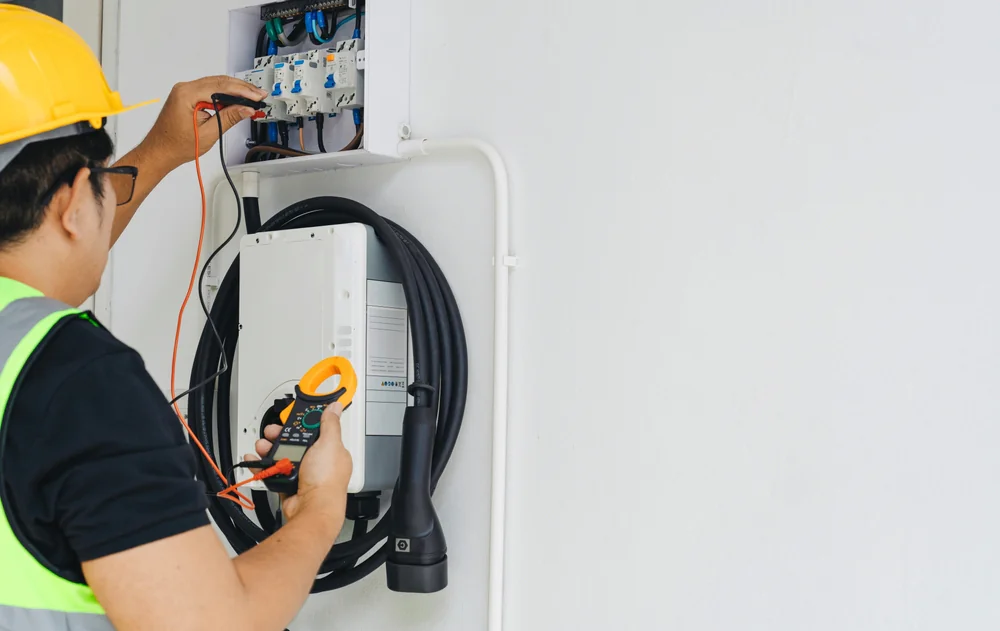
First, we assess your electrical system. Most EV chargers need a 240-volt circuit, and depending on your current panel capacity, you may need an upgrade. We’ll tell you exactly what’s required before any work starts—no hidden costs or surprise bills later.
Next, we handle the permits and code compliance. Local building codes in Alamance County require inspections for this type of work, and we manage that entire process. You don’t have to call the county or figure out what forms to file.
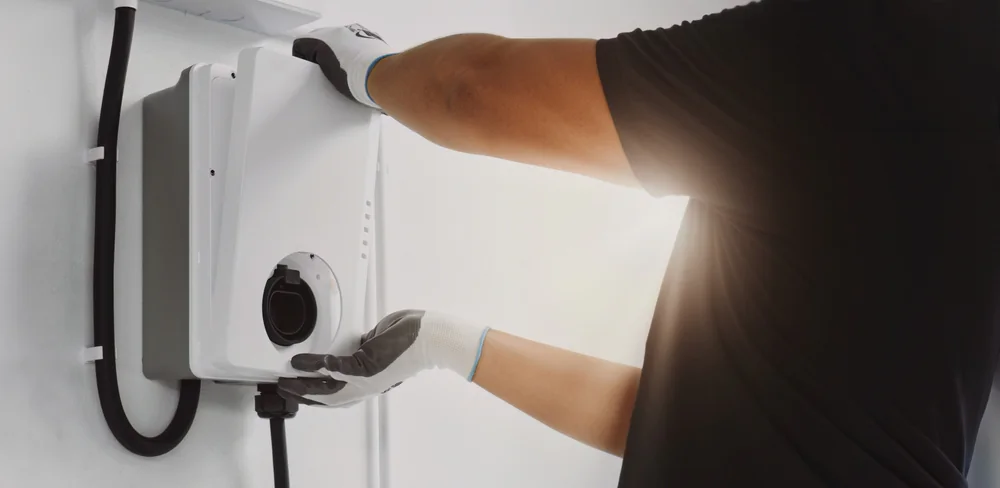
Then we install the charger and run the wiring to your preferred location—garage, carport, driveway. We mount the unit, connect it to your panel, test the system, and walk you through how it works. If your charger has smart features or app controls, we’ll show you how to use those too.
Finally, we help you apply for Duke Energy rebates if you qualify. Their EV Charger Installation Support Program offers up to $1,117 per household, and we’ll make sure you have the documentation you need to claim it.
What's Included in Your EV Charger Setup
Your installation includes a full electrical assessment to determine if your panel can handle the load. If it can’t, we’ll upgrade it. Older homes in Saxapahaw often have 100-amp or 150-amp panels, and a Level 2 charger typically needs a dedicated 40- or 50-amp circuit. We size everything correctly so your system runs safely.
We also handle all permit applications and inspections required by Alamance County. This isn’t optional—it’s code. Skipping permits can cause problems with your insurance, your home sale, or your safety. We pull the permits, schedule the inspections, and make sure everything passes.
You’ll get a professionally mounted charger with proper wiring, conduit, and weatherproofing if it’s outdoors. We install NEMA 14-50 outlets or hardwired units depending on your charger model and preferences. If you’re installing a Tesla Wall Connector, a ChargePoint Home Flex, or any other brand, we’ve done it before.
And if you’re eligible for Duke Energy’s rebate program, we’ll provide the install documentation you need to submit. That rebate can cover a significant portion of your installation cost, and it’s worth the paperwork.
Do I need to upgrade my electrical panel to install an EV charger?
It depends on your current panel capacity and what else is running in your home. Most Level 2 EV chargers pull between 30 and 50 amps, and they need a dedicated circuit.
If your panel is already near capacity—common in homes built before 2000—you’ll likely need an upgrade to a 200-amp panel. We check your load calculation during the assessment to give you a clear answer. If an upgrade is necessary, we handle that as part of the job so your system is safe and code-compliant.
Skipping the upgrade and overloading your panel creates a fire risk and can trip breakers constantly. It’s not worth the gamble, and most insurance companies won’t cover damage from unpermitted or improper electrical work.
How long does it take to install an EV charger at my home?
If your panel has capacity and no upgrades are needed, most installations take four to six hours. That includes mounting the charger, running the wiring, connecting everything to your panel, and testing the system.
If you need a panel upgrade, add another day for that work. Permit approval and inspection scheduling can add a few more days to the timeline, depending on how busy the county is.
We’ll give you a realistic timeline upfront based on your specific situation. We don’t rush the job, and we don’t leave until everything works and passes inspection. You’ll know exactly when you can start charging before we start the work.
Can I claim the Duke Energy rebate for my EV charger installation?
If you’re a Duke Energy customer in North Carolina and you install a qualifying Level 2 charger, you can apply for their EV Charger Installation Support Program. The rebate is up to $1,117 per household, and it’s designed to offset installation costs.
You’ll need proof of installation from a licensed electrician—that’s us—and documentation showing the charger model and installation date. We provide everything you need to submit your rebate application once the job is complete.
There’s also a federal tax credit of up to $1,000 for residential EV charger installations, depending on your tax situation. Between the Duke rebate and the federal credit, you can recover a significant chunk of your total cost. We’ll walk you through what qualifies and what doesn’t so you’re not guessing.
What's the difference between a Level 1 and Level 2 EV charger?
A Level 1 charger plugs into a standard 120-volt outlet—the same kind you use for your phone or laptop. It’s slow, adding about 3 to 5 miles of range per hour of charging. If you drive 30 miles a day, you’re looking at a 6- to 10-hour charge overnight.
A Level 2 charger uses a 240-volt circuit, the same voltage as your dryer or oven. It charges much faster—typically 15 to 30 miles of range per hour depending on your vehicle and charger model. That means a full charge in 4 to 6 hours for most EVs.
If you’re serious about driving electric, Level 2 is the standard for home charging. It’s faster, more convenient, and it’s what most EV manufacturers recommend. Level 1 works if you barely drive, but most people outgrow it quickly.
Do I need a permit to install an EV charger in Saxapahaw, NC?
Yes. Any work that involves adding a new circuit to your electrical panel requires a permit in Alamance County. That includes EV charger installations.
The permit process ensures the work meets the National Electrical Code and local safety standards. It also protects you if you ever sell your home—unpermitted work can kill a sale or force you to rip everything out and redo it.
We handle the permit application, the installation, and the inspection. You don’t have to visit the county office or figure out what forms to file. Once the work passes inspection, you’ll get a signed-off permit that proves the installation was done legally and safely.
Will installing an EV charger increase my home's value?
It can, especially as EV adoption grows in North Carolina. Homebuyers with electric vehicles actively look for properties with chargers already installed, and it’s becoming a selling point in the same way that updated kitchens or energy-efficient windows are.
You’re also future-proofing your home. North Carolina’s goal is 1.25 million EVs on the road by 2030, and charging infrastructure is part of that equation. A home with a charger is more attractive to a larger pool of buyers.
Even if you’re not selling anytime soon, the convenience and cost savings make it worth it. You’re spending less on fuel, avoiding public charging hassles, and adding a feature that will only become more desirable as more people switch to electric vehicles.
Other Services we provide in Saxapahaw
About Us

Electrical Service Providers (ESP) has been in business since 2002. ESP started out performing wiring services to new construction, remodeling projects and residential homes. Our company’s president identified a market for electrical services to be performed in homes and businesses independent of new construction. Read More about Electrical Service Providers>>
All Rights Reserved.Organic Marketing LLC
Business Listings


Product Brands Used
Allied, Broan, Cutler Hammer, General Electric, Ideal, Juno, Kohler, Leviton, Lutron, Siemens, Square D
Contact
- Office Address: 3254 S Anthony Ct.
Burlington, NC 27215 - Mailing Address: PO Box 25
Alamance, NC 27201 - Phone: 336-228-3300
- E-mail: [email protected], [email protected]
Service Areas
Chapel Hill, Burlington, Carrboro, Durham, Gibsonville, Hillsborough, Graham, Pittsboro, Morrisville, Cary
About Us
Electrical Service Providers (ESP) has been in business since 2002. ESP started out performing wiring services to new construction, remodeling projects and residential homes. Our company’s president identified a market for electrical services to be performed in homes and businesses independent of new construction. Read More about Electrical Service Providers>>
All Rights Reserved.Organic Marketing LLC