EV Charger Installation in Sedalia, NC
Charge at Home Without the Fire Risk
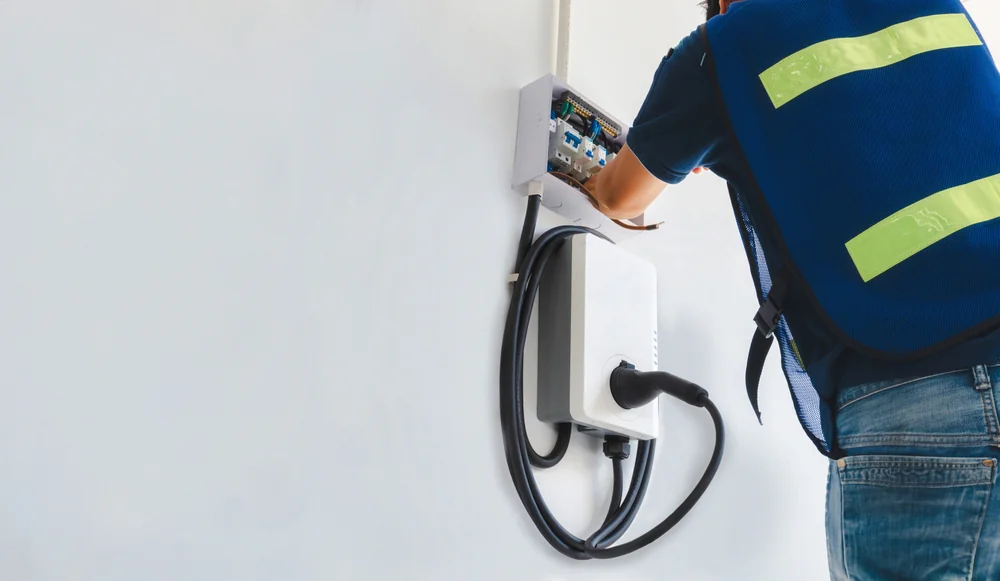
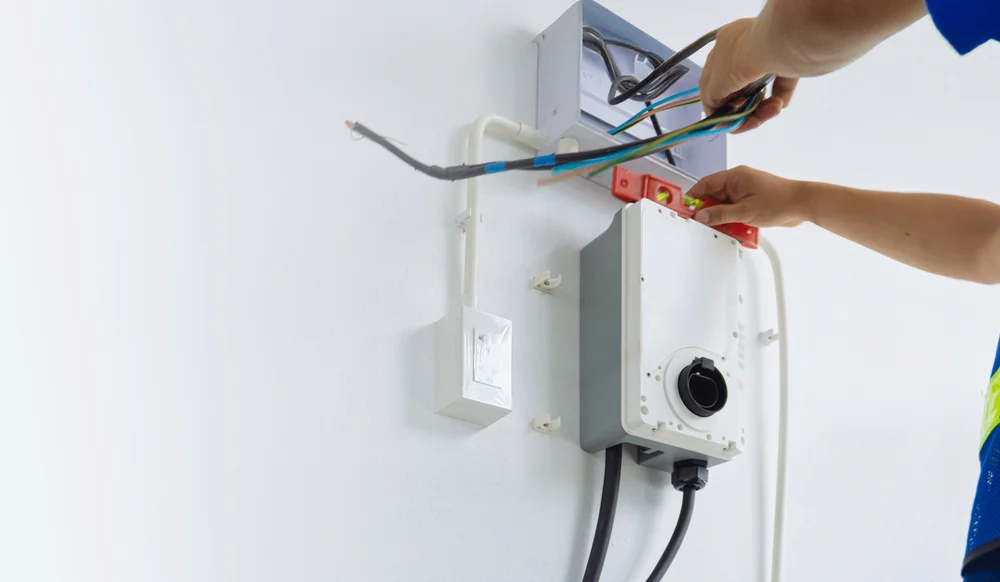
Electric Vehicle Charger Setup Sedalia
You bought an EV to simplify your life, not to plan your week around public charging stations. A proper home charging setup means you plug in when you get home and wake up ready to drive. No apps. No waiting. No detours on the way to work.
Most homes can’t handle a Level 2 charger without an electrical upgrade. That’s not a problem, it’s just reality. Your panel might need more capacity. Your wiring might need an update. We evaluate what you actually have, not what the internet says you need, and give you a flat-rate price before we touch anything.
Duke Energy offers rebates up to $1,133 for EV charger installation in North Carolina. We’ll help you apply and make sure the installation qualifies. You’re already spending the money, you might as well get some of it back.
Licensed Electricians Serving Sedalia Residents
ESP Electrical Service Providers is locally owned and operated by Andy Helton, a Master Electrician with over 35 years of experience. We’ve been serving Sedalia and the surrounding Greensboro, Burlington, and High Point areas for more than two decades. That’s long enough to know what actually works and what causes callbacks.
Our trucks show up fully stocked. Our pricing is flat-rate, so you know the cost before we start. Our technicians are licensed, uniformed, and they clean up before they leave. We’re not trying to be the cheapest option in town. We’re trying to be the one you don’t have to call back.
How EV Charging Station Installation Works
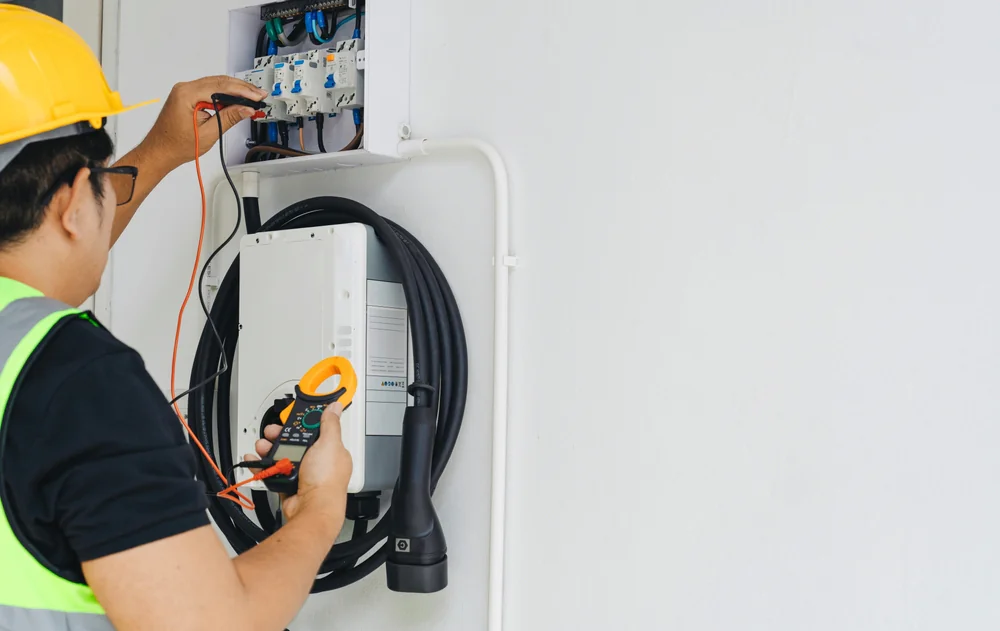
First, we come out and evaluate your electrical system. That means looking at your panel, your available capacity, and where you want the charger installed. Most 240-volt Level 2 chargers need a dedicated 40-amp circuit. If your panel can’t support that, we’ll tell you what needs to upgrade and what it’ll cost.
Next, we handle the permit. Sedalia requires electrical permits for EV charger installations, and inspections have to be scheduled through the county portal. We take care of that so you don’t have to figure out the paperwork or wait on hold with the building department.
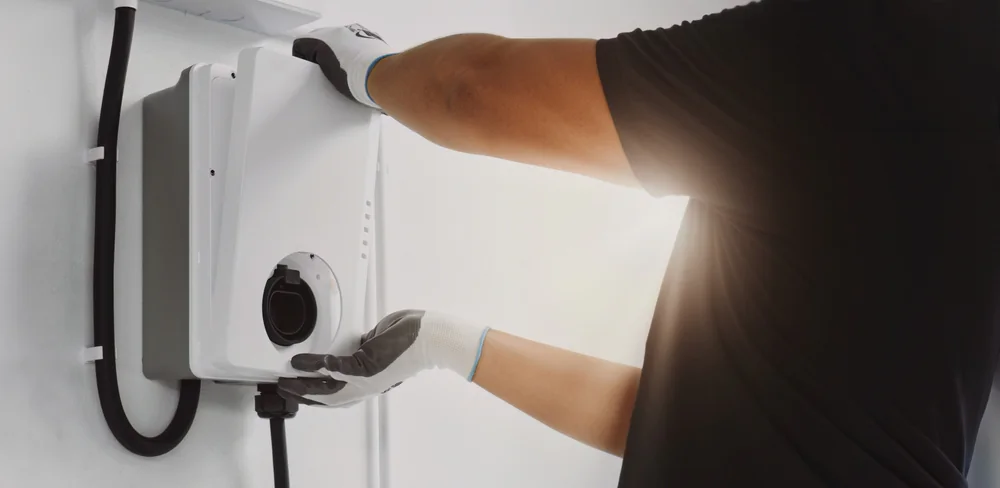
Then we install the charger. We run the wiring, mount the unit, connect everything to code, and test it to make sure it’s charging at the right speed. After that, the county inspector signs off, and you’re done. One team, one point of contact, no runaround.
What's Included in EV Charger Installation
You’re not just getting a charger bolted to your garage wall. You’re getting a full electrical evaluation, load calculation, and any necessary panel upgrades to support the new circuit. If your home was built before EVs became common, there’s a good chance your system needs more capacity. We size everything correctly the first time.
North Carolina exceeded 100,000 EV registrations in 2024, and Sedalia residents are part of that growth. More EVs on the road means more demand for home charging, and that means more electrical systems being pushed beyond what they were designed for. Standard 120-volt outlets aren’t built for hours of continuous EV charging. They overheat. They trip breakers. In some cases, they start fires.
We install Level 2 chargers that are UL-listed, code-compliant, and compatible with all major EV brands including Tesla, Ford, Rivian, and Chevrolet. We also coordinate the Duke Energy rebate application so you can offset some of the installation cost. The rebate doesn’t make the job free, but it helps. And it only applies if the installation is done by a licensed electrician, which we are.
Can my electrical panel handle an EV charger without an upgrade?
It depends on how much capacity you have left. Most Level 2 EV chargers pull between 30 and 50 amps at 240 volts. If your panel is already running your HVAC, water heater, dryer, and other major appliances, there might not be enough room for another large load.
We run a load calculation during the evaluation. That tells us whether your current panel can support a new 40- or 50-amp circuit, or if you need a service upgrade. A lot of homes in Sedalia were built with 100-amp or 150-amp panels, which were fine before EVs. Now, many need to go up to 200 amps.
If an upgrade is needed, we give you a flat-rate price that includes the new panel, the charger circuit, the permit, and the inspection. No surprises. You’ll know the full cost before we start.
How long does it take to install an EV charging station?
If your panel has capacity and the charger location is close to the breaker box, installation usually takes four to six hours. That includes mounting the charger, running the wiring, connecting the circuit, and testing everything. If we need to upgrade your panel or run a longer wire run, it can take a full day or more.
Permitting adds time, but not to the actual work. Once we pull the permit, we schedule the installation. After we’re done, the county inspector comes out to sign off. In most cases, you’re charging your car within a few days of the initial call.
We don’t rush the job to hit a time estimate. We do it right, and we make sure it passes inspection the first time. That’s faster in the long run than cutting corners and failing the inspection.
What's the difference between a Level 1 and Level 2 charger?
Level 1 chargers plug into a standard 120-volt outlet and add about three to five miles of range per hour. That’s fine if you drive 20 miles a day and can leave it plugged in overnight. It’s not fine if you have a longer commute or need your car ready faster.
Level 2 chargers run on 240 volts and add 20 to 60 miles of range per hour, depending on the charger and your vehicle. That’s the same voltage your dryer uses. It requires a dedicated circuit and professional installation, but it’s the standard for home EV charging because it actually keeps up with how much you drive.
If you’re serious about owning an EV, Level 2 is what you want. Level 1 is a backup, not a solution. We install Level 2 chargers because that’s what works for daily use.
Do I need a permit to install an EV charger in Sedalia?
Yes. Any work that involves adding a new 240-volt circuit requires an electrical permit in Sedalia and throughout Guilford County. That permit triggers an inspection to make sure the installation meets the National Electrical Code and local requirements.
Some homeowners try to skip the permit to save money or time. That’s a bad idea. If you ever sell your home, unpermitted electrical work can kill the deal or force you to pay for a retroactive inspection. If there’s ever a fire and the insurance company finds unpermitted work, they can deny your claim.
We pull the permit as part of the installation. It’s included in the flat-rate price. We schedule the inspection, and we make sure everything passes. You don’t have to deal with the county or worry about whether it was done legally.
Will installing an EV charger increase my electric bill?
Yes, but probably less than you’re spending on gas. Charging an EV at home costs about $1 to $2 per gallon equivalent, depending on your electricity rate and how efficient your vehicle is. If you’re driving 1,000 miles a month, that’s roughly $40 to $60 in electricity.
Duke Energy offers time-of-use rates in some areas, which means you pay less if you charge overnight during off-peak hours. Most Level 2 chargers let you schedule charging times, so you can take advantage of lower rates automatically.
The charger itself doesn’t waste power when it’s not in use. It only draws electricity when your car is plugged in and actively charging. The installation is a one-time cost, and after that, your only ongoing expense is the electricity your vehicle uses.
Can you install a charger if my panel is in the basement or far from the garage?
Yes, but the distance affects the cost. Electrical wire isn’t free, and the farther we have to run it, the more material and labor the job requires. We also have to make sure the wire is protected and installed to code, which sometimes means running it through conduit or along specific pathways.
If your panel is far from where you park, we’ll give you a few options. Sometimes it makes sense to install a subpanel closer to the garage. Other times, running the wire directly is simpler. We’ll walk you through what makes sense for your home and your budget.
Distance doesn’t make the job impossible. It just means we need to plan the route and price it accurately. That’s part of the evaluation, and it’s included in the flat-rate quote we give you upfront.
Other Services we provide in Sedalia
About Us

Electrical Service Providers (ESP) has been in business since 2002. ESP started out performing wiring services to new construction, remodeling projects and residential homes. Our company’s president identified a market for electrical services to be performed in homes and businesses independent of new construction. Read More about Electrical Service Providers>>
All Rights Reserved.Organic Marketing LLC
Business Listings


Product Brands Used
Allied, Broan, Cutler Hammer, General Electric, Ideal, Juno, Kohler, Leviton, Lutron, Siemens, Square D
Contact
- Office Address: 3254 S Anthony Ct.
Burlington, NC 27215 - Mailing Address: PO Box 25
Alamance, NC 27201 - Phone: 336-228-3300
- E-mail: [email protected], [email protected]
Service Areas
Chapel Hill, Burlington, Carrboro, Durham, Gibsonville, Hillsborough, Graham, Pittsboro, Morrisville, Cary
About Us
Electrical Service Providers (ESP) has been in business since 2002. ESP started out performing wiring services to new construction, remodeling projects and residential homes. Our company’s president identified a market for electrical services to be performed in homes and businesses independent of new construction. Read More about Electrical Service Providers>>
All Rights Reserved.Organic Marketing LLC