EV Charger Installation in Silk Hope, NC
Charge at Home Without Guessing Your Electric Bill
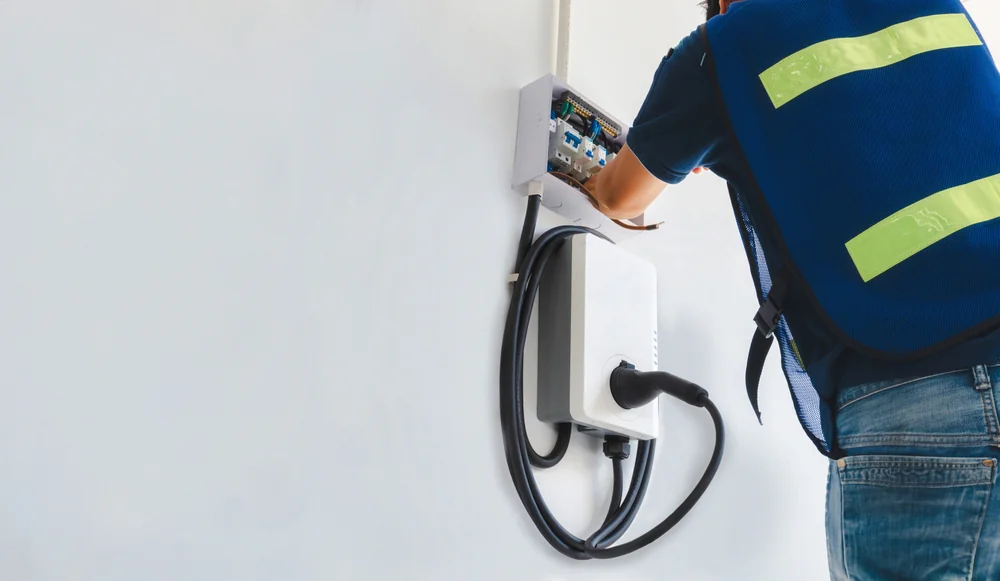
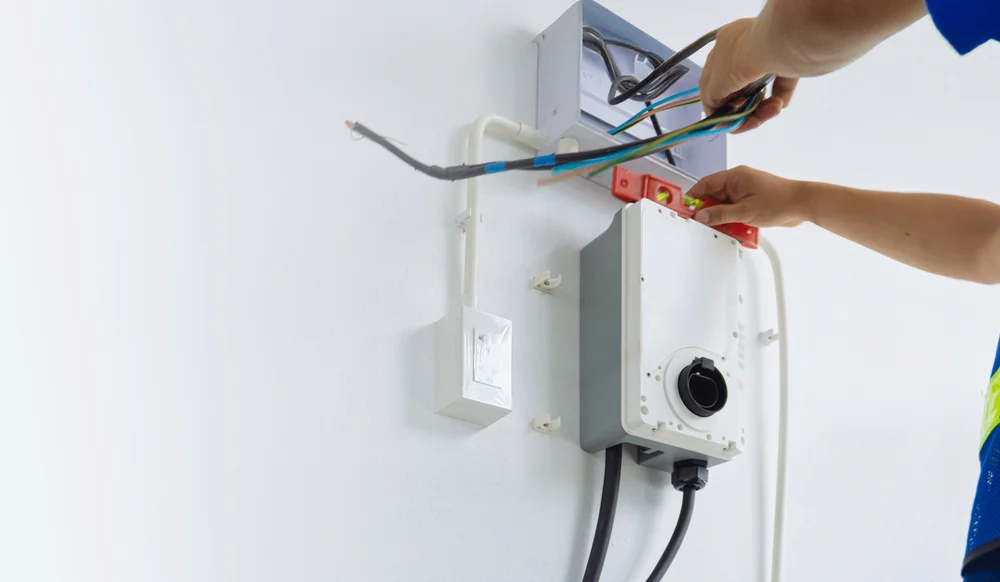
Electric Vehicle Charger Setup in Silk Hope
You plug in when you get home. Your car charges overnight. You wake up to a full battery without thinking about gas stations or waiting in line at public chargers.
That’s what a properly installed Level 2 home charging station does. It turns your garage into your personal fueling station, and you never have to plan your week around where you can charge.
The difference between a charger that works and one that causes problems comes down to the electrical work behind it. Your panel needs to handle the load. The wiring needs to meet code. The installation needs to pass inspection. When those things are handled correctly from the start, you get years of reliable charging without callbacks or safety concerns.
North Carolina added 50,000 EVs in just 23 months, and nearly half of all EVs registered in the state were purchased in the last two years. Most of those owners charge at home because it’s cheaper and more convenient than any other option.
Licensed Electricians Serving Silk Hope, NC
We’ve been handling residential and commercial electrical work in Chatham County and surrounding areas for over 20 years. Our Operations Manager has been a licensed electrical contractor since 1989 with more than 35 years of field experience.
We use flat-rate pricing, so you know what you’re paying before any work starts. Our trucks are fully stocked, and we clean up before we leave. If you need to talk to the owner directly, you can—no answering machines or runarounds.
Silk Hope sits in a part of North Carolina where EV adoption is growing fast, but not every electrician has experience with charging station installations. We’ve been doing electrical panel upgrades, load calculations, and code-compliant installations long enough to know what works and what causes problems down the road.
How EV Charger Installation Works
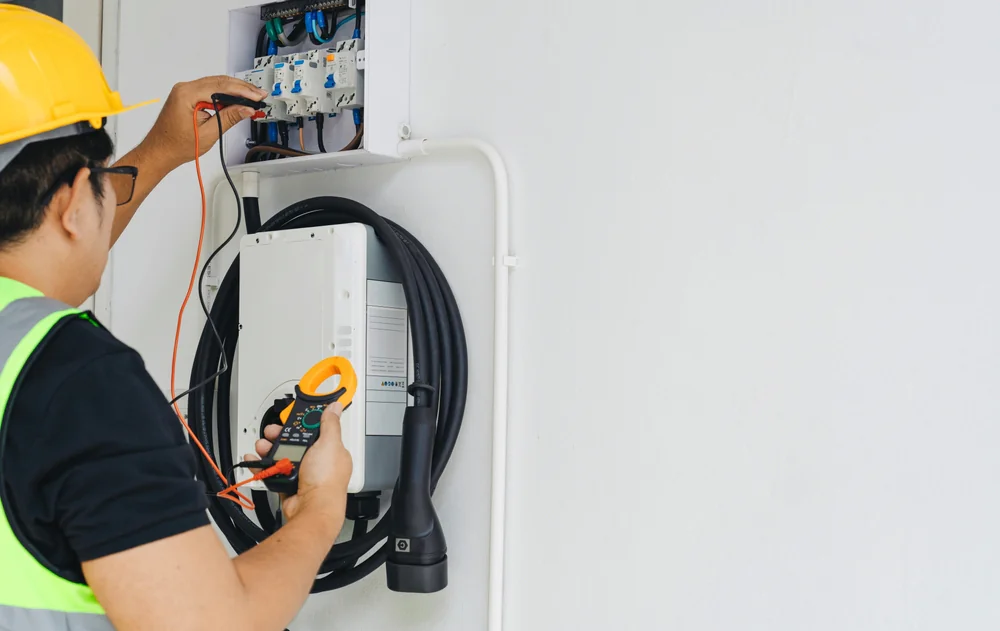
First, we assess your electrical panel. About 20% of homes need an upgrade before they can safely handle a Level 2 charger. If your panel is 60 or 100 amps, we’ll talk through your options—whether that’s a full panel upgrade or a load management system that balances power between your charger and other appliances.
Next, we figure out the best location for your charger. If your preferred spot is far from the panel, we’ll run conduit through finished spaces or underground to your detached garage. We handle the permit process and make sure everything meets NEC Article 625 requirements and local codes.
Then we install the charger, connect it to your panel, and schedule the inspection. Once it passes, you’re set. We also help you access Duke Energy rebates if you qualify—up to $1,133 for residential Level 2 installations.
The whole process is straightforward when you’re working with someone who’s done it before. You’re not figuring it out as you go, and you’re not dealing with surprises halfway through the job.
What's Included in Your EV Charger Setup
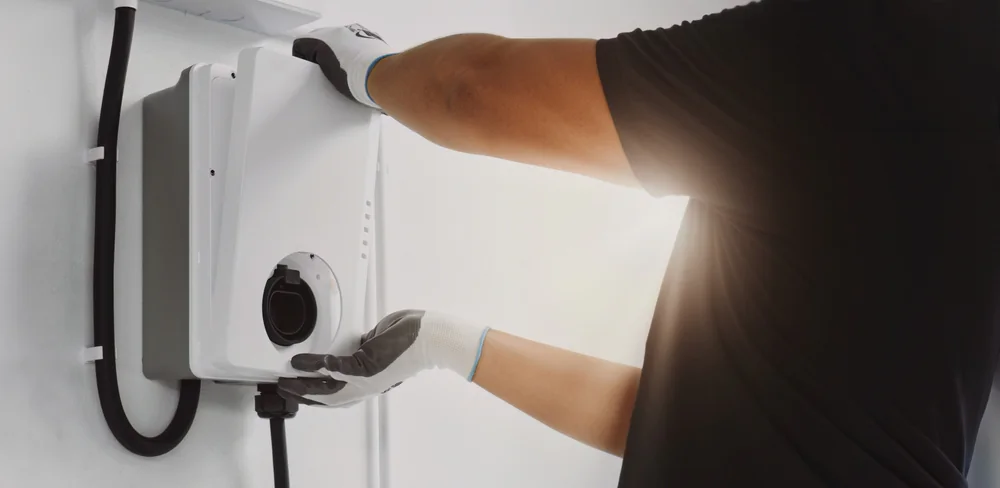
Your installation includes a full electrical panel assessment and load calculation to determine if your current system can handle the additional demand. If it can’t, we provide options—from panel upgrades ($1,500 to $4,000+ depending on your home) to smart load management systems that avoid costly upgrades by balancing power in real-time.
We handle all permitting and inspections required by Chatham County and the state of North Carolina. You don’t have to navigate that process yourself or worry about whether your installation meets code.
You also get a charger installed by a licensed master electrician who’s been doing this work since 1989. That means proper wire sizing, correct breaker selection, and an installation that won’t cause problems with your electrical system down the road.
North Carolina is investing heavily in EV infrastructure—$109 million in federal funding is going toward charging stations across the state. The goal is 1.25 million EVs by 2030, and Silk Hope is part of that growth. Your home charging station puts you ahead of that curve and gives you the convenience that makes EV ownership practical.
Do I need to upgrade my electrical panel to install an EV charger?
It depends on your current panel capacity and how much power your home is already using. Most Level 2 chargers require a 240-volt circuit with a 40 or 50-amp breaker, which draws about 9.6 kW of power.
If your home has a 60 or 100-amp panel, there’s a good chance you’ll need an upgrade to safely handle the additional load. Homes built in the last 20 years typically have 200-amp panels, which usually have enough capacity—but we still need to run a load calculation to be sure.
About 20% of homes need some kind of electrical work before they can support an EV charger. That might be a full panel upgrade, or it might be a load management system that monitors your home’s electricity use in real-time and balances power between your charger and other appliances. We assess your specific situation and give you options with flat-rate pricing so you can decide what makes sense for your home and budget.
How much does it cost to install an EV charging station at home?
Installation costs vary based on your home’s electrical setup and where you want the charger located. A straightforward installation on a home with adequate panel capacity and a garage close to the electrical panel typically runs less than if you need a panel upgrade or long conduit runs.
If your charger location is far from your panel—like a detached garage—expect to add $1,000 to $1,500 for the additional conduit and wiring work. If you need a full panel upgrade, that’s typically $1,500 to $4,000+ depending on your home’s current system and what’s required to bring it up to code.
We use flat-rate pricing, so you’ll know the exact cost before we start any work. That includes the labor, materials, permits, and inspection. Duke Energy also offers rebates up to $1,133 for residential Level 2 charger installations, which we can help you access. The total out-of-pocket cost depends on your specific situation, but you’ll have a clear number before you commit.
How long does EV charger installation take?
A standard installation on a home with adequate electrical capacity usually takes four to eight hours. That includes mounting the charger, running the wiring, connecting it to your panel, and testing the system.
If you need a panel upgrade or we’re running conduit a long distance to a detached garage, the job takes longer—sometimes a full day or more depending on the complexity. Permit approval and inspection scheduling can add a few days to the overall timeline, but the actual installation work is typically completed in one visit.
We show up with fully stocked trucks, so we’re not making multiple trips for parts. Once the installation is done and the inspection passes, you can start charging immediately. The key is working with someone who’s done this before and knows how to handle the variables that come up—like older homes with limited panel space or garages that need underground conduit runs.
Can I install a Tesla charger, or do I need a specific brand?
You can install a Tesla Wall Connector or any other Level 2 charger that meets your needs. Tesla chargers work with Tesla vehicles using the standard plug, and with the right adapter, they can charge other EVs too.
Most EV owners who don’t drive Teslas choose universal Level 2 chargers with a J1772 plug, which works with nearly every electric vehicle on the market. The installation process is the same regardless of brand—we’re running a 240-volt circuit from your panel to the charger location and making sure everything is sized correctly for the amperage your charger requires.
What matters more than brand is choosing a charger with the right power output for your needs and making sure your home’s electrical system can support it. We can walk you through the options based on your vehicle, your driving habits, and how fast you need your car to charge. The electrical work behind the charger is what determines whether it performs reliably for years, and that’s where our experience makes the difference.
Do I need a permit to install an EV charger in Silk Hope?
Yes. Any electrical work that involves adding a new 240-volt circuit to your panel requires a permit and inspection in North Carolina. That’s true whether you’re in Silk Hope, elsewhere in Chatham County, or anywhere else in the state.
The permit process ensures your installation meets the National Electrical Code (NEC) and local requirements. It also protects you—if you ever sell your home, unpermitted electrical work can cause problems during the sale and potentially affect your home’s value or insurability.
We handle the permit application and coordinate the inspection as part of the installation. You don’t have to navigate that process yourself or worry about whether the work will pass. We’ve been doing code-compliant electrical installations since 2002, and we know what inspectors are looking for. Once the inspection is complete and everything passes, you’re good to go.
What's the difference between Level 1 and Level 2 EV chargers?
Level 1 chargers plug into a standard 120-volt outlet—the same outlet you use for lamps and phone chargers. They’re slow, adding about 3 to 5 miles of range per hour of charging. If you drive 30 miles a day, you’re looking at 6 to 10 hours to recharge, which works for some people but not if you drive more or need faster turnaround.
Level 2 chargers run on 240 volts—the same power your dryer or oven uses. They add 20 to 60 miles of range per hour depending on the charger’s amperage and your vehicle’s onboard charging capacity. That means you can fully charge most EVs overnight, even if you drive 100+ miles a day.
Most EV owners who charge at home install Level 2 chargers because they’re faster and more practical for daily use. They require professional installation because you’re adding a dedicated circuit to your electrical panel, but the convenience and speed make it worth it. If you’re serious about charging at home and not relying on public stations, Level 2 is the way to go.
Other Services we provide in Silk Hope
About Us

Electrical Service Providers (ESP) has been in business since 2002. ESP started out performing wiring services to new construction, remodeling projects and residential homes. Our company’s president identified a market for electrical services to be performed in homes and businesses independent of new construction. Read More about Electrical Service Providers>>
All Rights Reserved.Organic Marketing LLC
Business Listings


Product Brands Used
Allied, Broan, Cutler Hammer, General Electric, Ideal, Juno, Kohler, Leviton, Lutron, Siemens, Square D
Contact
- Office Address: 3254 S Anthony Ct.
Burlington, NC 27215 - Mailing Address: PO Box 25
Alamance, NC 27201 - Phone: 336-228-3300
- E-mail: [email protected], [email protected]
Service Areas
Chapel Hill, Burlington, Carrboro, Durham, Gibsonville, Hillsborough, Graham, Pittsboro, Morrisville, Cary
About Us
Electrical Service Providers (ESP) has been in business since 2002. ESP started out performing wiring services to new construction, remodeling projects and residential homes. Our company’s president identified a market for electrical services to be performed in homes and businesses independent of new construction. Read More about Electrical Service Providers>>
All Rights Reserved.Organic Marketing LLC