EV Charger Installation in Southern Village, NC
Charge at Home Without the Guesswork
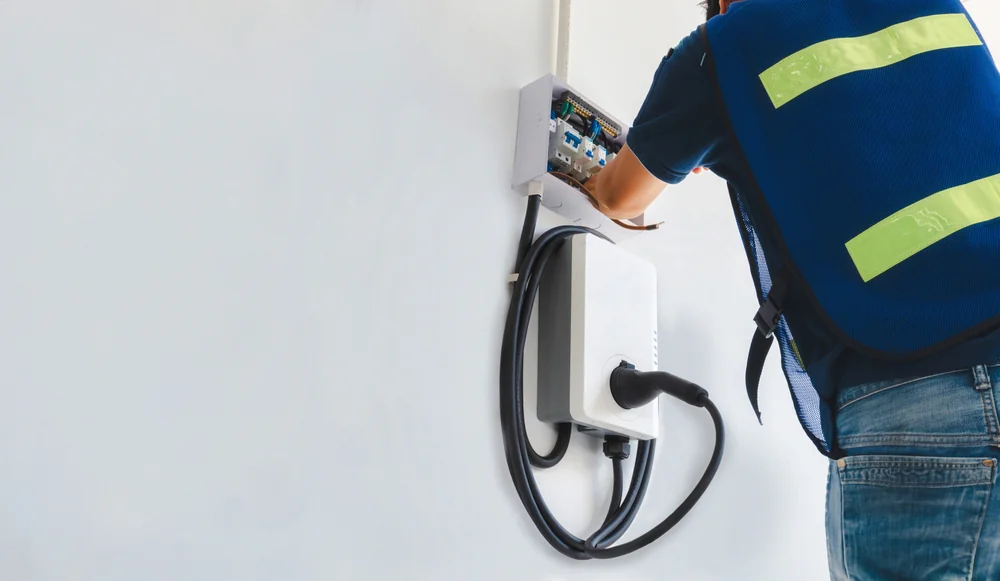
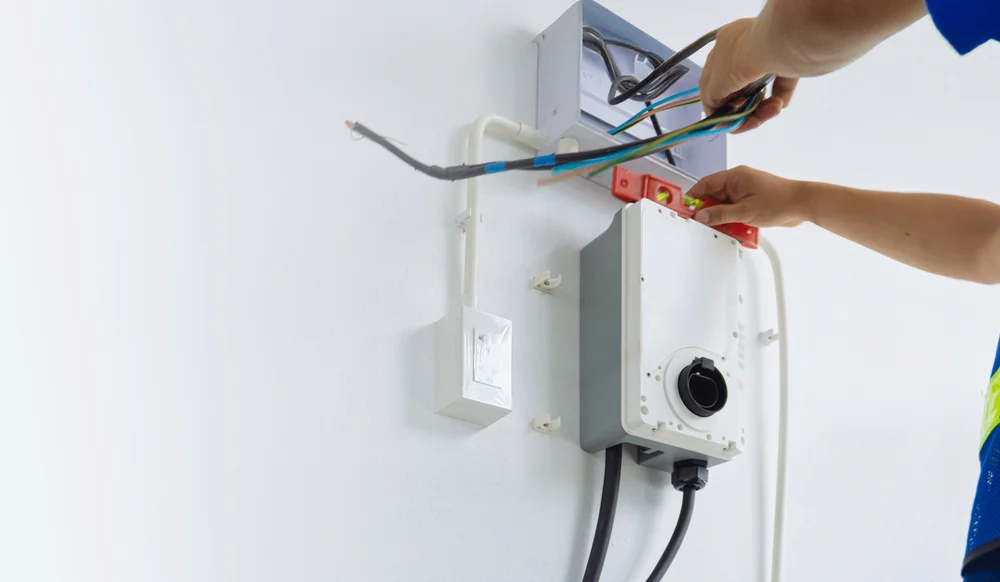
Electric Vehicle Charger Setup Southern Village
You bought an electric vehicle to simplify your life, not to add another layer of logistics. But if you’re still mapping out charging stops or hoping the station near Market Street isn’t broken again, you’re spending mental energy you don’t need to spend.
A home EV charging station changes that. You plug in when you get home, and your car is ready by morning. No apps to navigate, no wondering if someone’s occupying the only working charger, no detours on the way to work.
Level 2 chargers cut your charging time to a quarter of what a standard outlet delivers. That means a full charge overnight, even if you’re starting near empty. And with Duke Energy offering rebates up to $1,133 for residential installations, the upfront cost drops significantly if you know how to apply correctly.
Licensed EV Charger Installers Southern Village
We work throughout the Chapel Hill area, and we’ve handled enough EV charger installations in Southern Village to know what to expect before we open your electrical panel. Homes here vary in age and layout, and not every panel can handle a Level 2 charger without an upgrade.
We’re licensed North Carolina electricians. That means we pull the permits, coordinate inspections, and make sure your installation meets code the first time. We also help you navigate Duke Energy’s rebate process, which can be confusing if you’ve never applied before.
Southern Village residents care about sustainability and long-term value. That’s exactly why a professionally installed home charging station makes sense. You’re not just adding convenience—you’re future-proofing your property in a market where EV adoption is accelerating fast.
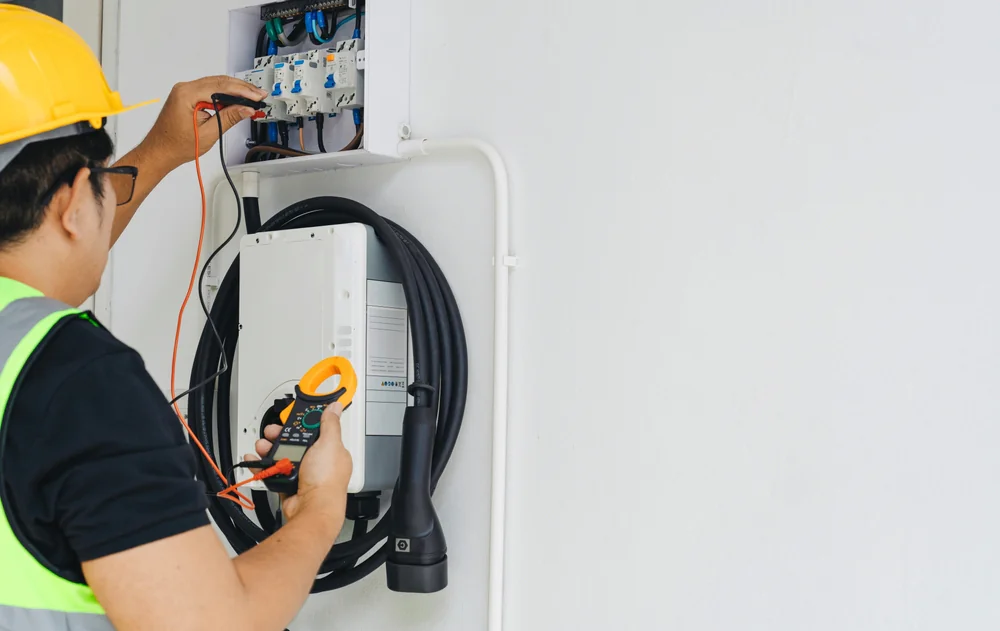
How EV Charging Station Installation Works
First, we assess your electrical panel. Most EV chargers need a dedicated 240-volt circuit, and depending on your current setup, that might require a panel upgrade or a new breaker. We’ll tell you exactly what’s needed before any work starts.
Next, we handle the permit. Chapel Hill requires one for EV charger installation, and we submit it on your behalf. Once approved, we schedule the installation at a time that works for you.
The installation itself typically takes a few hours. We mount the charging unit in your garage or carport, run the wiring, connect it to your panel, and test the system to make sure everything works correctly. Then we walk you through how to use it, including any smart features like scheduling charges during off-peak hours to save on your electric bill.
After installation, we coordinate the final inspection and help you submit your Duke Energy rebate application. You’ll receive a credit on your utility bill within a few billing cycles, assuming you meet the program requirements.
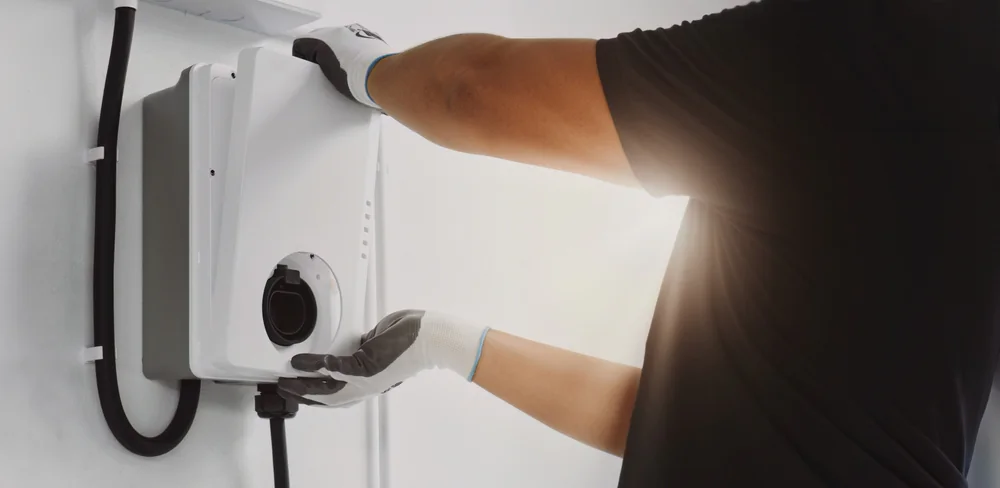
What's Included in EV Charger Installation
Your installation includes a full electrical assessment to determine if your current panel can support a Level 2 charger. If it can’t, we’ll provide a clear estimate for any necessary upgrades before moving forward.
We handle all permit applications and inspections required by local code. In Southern Village, that means coordinating with Chapel Hill’s building department and making sure your installation passes on the first inspection.
The physical installation covers mounting your charging unit, running conduit and wiring from your panel to the charger location, installing a dedicated circuit breaker, and testing the entire system. We also program any smart features your charger offers, like scheduling or energy monitoring through a smartphone app.
North Carolina’s EV market is growing faster than almost anyone predicted. The state hit over 100,000 registered electric vehicles in 2024, and the Triangle area leads that growth. In Southern Village specifically, we’re seeing more Tesla Model 3s, Chevy Bolts, and Ford Mustang Mach-Es than ever before. That means home charging infrastructure isn’t just convenient anymore—it’s becoming an expected feature for homebuyers in this area.
How much does it cost to install an EV charger in Southern Village?
Most installations run between $1,200 and $2,500, depending on your electrical panel’s current capacity and how far the charger is from your panel. That price includes the labor, materials, permits, and inspection fees.
If your panel needs an upgrade to handle the additional load, that adds to the cost. But it’s not optional—trying to run a Level 2 charger on an undersized panel creates a safety risk and won’t pass inspection.
Duke Energy’s rebate program covers up to $1,133 for qualifying residential installations. That rebate applies after the work is done, and we help you with the application to make sure you get the full amount you’re eligible for. Between the rebate and the long-term savings on charging costs compared to public stations, most homeowners recover their investment within a couple of years.
Do I need a permit to install an EV charging station at my home?
Yes. Chapel Hill requires a permit for any EV charger installation that involves electrical work, which all Level 2 chargers do. The permit ensures your installation meets the National Electrical Code and local safety standards.
We handle the permit application for you. That includes submitting the necessary documentation, coordinating with the building department, and scheduling the inspection once the installation is complete. The permit fee is typically included in your total installation cost.
Skipping the permit might seem like a shortcut, but it creates problems down the road. If you ever sell your home, unpermitted electrical work can delay or kill a sale. And if something goes wrong with the installation, your homeowner’s insurance may not cover it if the work wasn’t permitted and inspected.
Can my electrical panel handle a Level 2 EV charger?
It depends on your panel’s current capacity and how much power your home already uses. Most Level 2 chargers draw between 30 and 50 amps, which requires a dedicated 240-volt circuit.
If your panel is older or already running close to capacity, you’ll likely need an upgrade. We can tell you for certain during the initial assessment. We’ll look at your panel’s total amperage, count the existing circuits, and measure your typical electrical load.
Many homes in Southern Village were built in the late 1990s and early 2000s, and their panels were sized for typical household use at the time. Adding an EV charger sometimes pushes them past their safe limit. A panel upgrade isn’t cheap, but it’s not just about the charger—it also gives you capacity for future electrical needs and improves your home’s overall safety.
How long does it take to charge an electric vehicle at home?
With a Level 2 charger, most electric vehicles fully charge overnight. Exact times depend on your car’s battery size and how depleted it is when you plug in, but you’re typically looking at 4 to 8 hours for a full charge.
A standard 120-volt outlet (Level 1 charging) can take 24 hours or more to fully charge the same vehicle. That’s fine if you drive short distances and can leave your car plugged in all day, but it’s not practical for most people.
Level 2 chargers deliver 240 volts, the same as your dryer or oven. That higher voltage means faster charging without any impact on your vehicle’s battery health. And if your charger has smart scheduling, you can set it to charge during off-peak hours when electricity rates are lower, which saves you money over time.
What's the Duke Energy rebate for EV charger installation?
Duke Energy Carolinas offers a rebate of up to $1,133 for residential customers who install a qualifying Level 2 EV charging station. The rebate is applied as a credit on your utility bill after your installation is complete and approved.
To qualify, you need to be a Duke Energy residential customer, install an eligible Level 2 charger, and submit the rebate application within the required timeframe. We help you with the paperwork to make sure you meet all the requirements and get the full rebate amount.
The rebate significantly reduces your out-of-pocket cost, but it’s not automatic. You have to apply for it, and the application needs to include proof of purchase, photos of the installation, and confirmation that the work was done by a licensed electrician. Missing any of those pieces can delay or disqualify your rebate, which is why we walk you through the entire process.
Can I install an EV charger myself to save money?
Technically, yes—but it’s not a good idea unless you’re a licensed electrician. EV charger installation involves working with 240-volt circuits, which carry serious risk if you don’t know what you’re doing. One mistake can damage your electrical panel, create a fire hazard, or injure you.
Beyond the safety concerns, DIY installations usually don’t qualify for Duke Energy’s rebate. The rebate program requires proof that a licensed electrician performed the work, and most homeowner’s insurance policies won’t cover damage from unpermitted or improperly installed electrical work.
Chapel Hill also requires a permit and inspection for EV charger installations. If you do the work yourself without a permit, you’ll have trouble selling your home later. Buyers’ inspectors flag unpermitted electrical work, and it often becomes a negotiating point or a deal-breaker. Paying for a professional installation upfront saves you from bigger headaches down the road.
About Us

Electrical Service Providers (ESP) has been in business since 2002. ESP started out performing wiring services to new construction, remodeling projects and residential homes. Our company’s president identified a market for electrical services to be performed in homes and businesses independent of new construction. Read More about Electrical Service Providers>>
All Rights Reserved.Organic Marketing LLC
Business Listings


Product Brands Used
Allied, Broan, Cutler Hammer, General Electric, Ideal, Juno, Kohler, Leviton, Lutron, Siemens, Square D
Contact
- Office Address: 3254 S Anthony Ct.
Burlington, NC 27215 - Mailing Address: PO Box 25
Alamance, NC 27201 - Phone: 336-228-3300
- E-mail: [email protected], [email protected]
Service Areas
Chapel Hill, Burlington, Carrboro, Durham, Gibsonville, Hillsborough, Graham, Pittsboro, Morrisville, Cary
About Us
Electrical Service Providers (ESP) has been in business since 2002. ESP started out performing wiring services to new construction, remodeling projects and residential homes. Our company’s president identified a market for electrical services to be performed in homes and businesses independent of new construction. Read More about Electrical Service Providers>>
All Rights Reserved.Organic Marketing LLC