EV Charger Installation in Stokesdale, NC
Charge at Home Without Rewiring Your Life
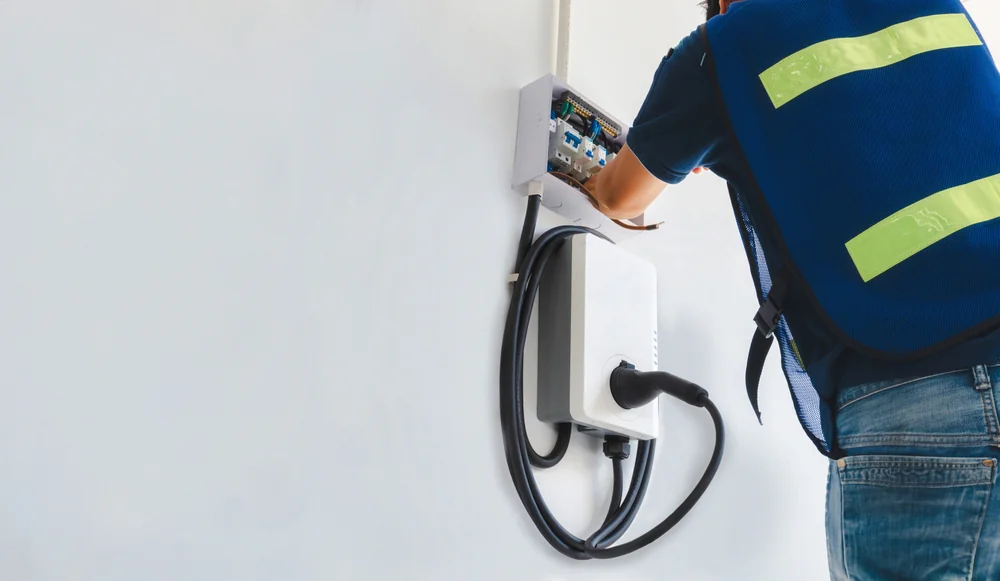
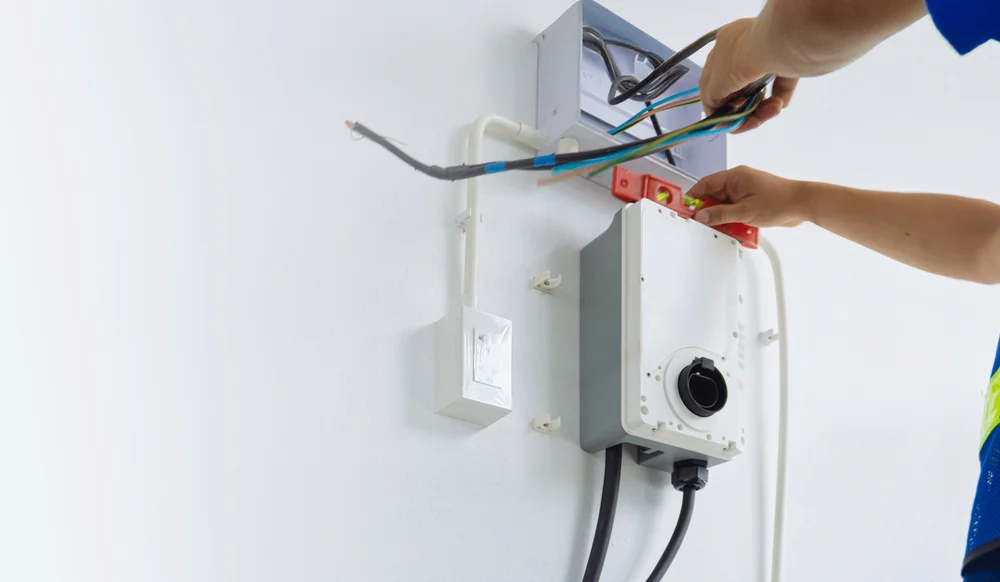
Electric Vehicle Charger Setup in Stokesdale
You bought an EV to simplify your life, not complicate it. Driving around looking for available charging stations defeats the purpose.
A home charging station means you plug in when you get home and wake up to a full charge. No apps to check. No wondering if someone’s using the only charger within 10 miles.
Your car charges overnight using off-peak electricity rates, which costs less than public stations. Duke Energy offers up to $1,117 in credits for the electrical work, which covers a significant portion of the installation cost. You’re not paying full price to avoid the hassle of public charging.
The real benefit isn’t just convenience. It’s knowing your electrical system can handle the load without tripping breakers or creating fire hazards. That requires someone who knows how to assess your panel, upgrade circuits if needed, and install the charger according to code.
Licensed EV Charger Electricians Near Stokesdale
We’ve handled electrical work in Guilford County and surrounding areas for over 22 years. Andy Helton, our Master Electrician, has 35 years of experience and actually answers when you call.
Stokesdale doesn’t have the charging infrastructure that Greensboro or Durham has. Rural areas get overlooked when companies plan public charging networks. That’s why home charging matters more here.
We’re not a national franchise sending whoever’s available. You get electricians who’ve worked on homes in this area and understand what older electrical systems need before adding a 40 or 50-amp circuit for an EV charger.
Our EV Charging Station Installation Process
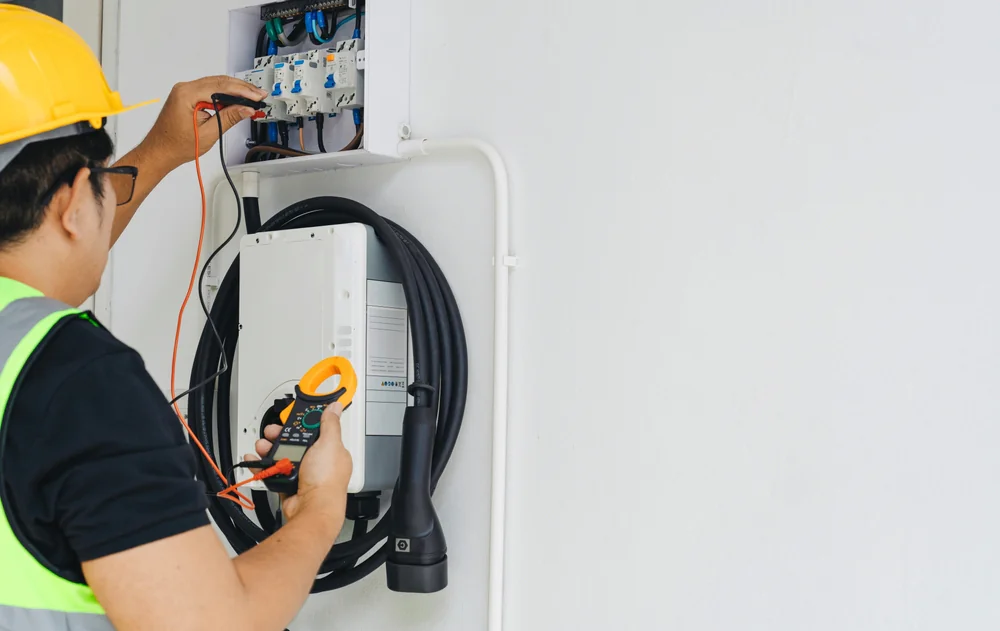
First, we look at your electrical panel to see if it can handle the additional load. Most EV chargers need a dedicated 240-volt circuit, which is the same voltage your dryer uses but pulls more continuous power.
If your panel is maxed out or outdated, we’ll tell you what needs upgrading. Sometimes it’s adding a subpanel. Sometimes it’s replacing the main panel. We give you flat-rate pricing before starting work, so there’s no surprise invoice at the end.
Next, we handle the permit. Guilford County requires permits for EV charger installations, and inspectors check for proper wire gauge, breaker size, and GFCI protection. We know what they’re looking for because we’ve done this repeatedly.
We run the wiring from your panel to wherever you park, mount the charger, and test it with your vehicle. If you’re using Duke Energy’s rebate program, we provide documentation showing the work meets their requirements. The whole process typically takes a day, depending on how much electrical work your home needs.
What's Included in EV Charger Installation
You’re getting a full electrical system evaluation, not just a charger installation. We check your panel’s capacity, measure voltage, and calculate whether your current setup can support continuous charging without overloading circuits.
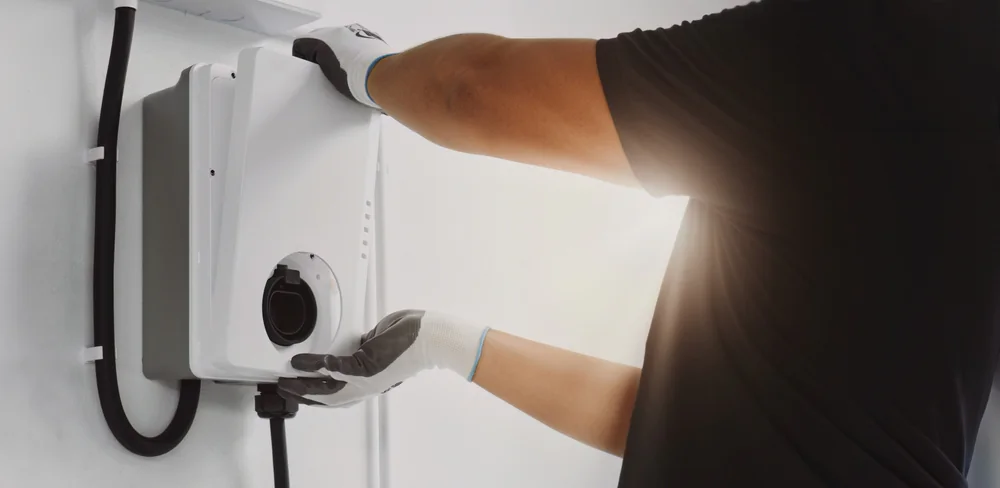
The installation includes running appropriate gauge wire from the panel to the charging location, installing a dedicated breaker, mounting the charging unit, and connecting everything according to National Electrical Code standards. We also install GFCI protection, which is required for EV chargers and prevents electrical shocks.
North Carolina exceeded 100,000 registered EVs in 2024, and Stokesdale is seeing more Teslas, Rivians, and F-150 Lightnings on the road. Most of these owners charge at home because public charging infrastructure hasn’t caught up in rural areas.
We work with Level 1 and Level 2 chargers. Level 1 uses your standard 120-volt outlet and adds about 4 miles of range per hour. Level 2 uses 240 volts and adds 25-30 miles per hour. Most people need Level 2 because Level 1 is too slow for daily driving.
If your home needs panel upgrades, circuit additions, or other electrical work to support the charger, that’s included in the quote. We don’t give you a price for the charger installation and then add costs later when we find issues.
How much does it cost to install an EV charger at home?
Installation costs depend on your home’s current electrical setup and how far the charger is from your panel. If your panel has space for a new 240-volt circuit and the charger mounts close to the panel, you’re looking at the lower end of the cost range.
If your panel is full, outdated, or can’t handle the additional load, you’ll need an upgrade first. Panel upgrades add to the cost but they’re necessary for safety. Running wire a long distance from the panel to your garage or driveway also increases labor and material costs.
Duke Energy offers up to $1,117 in credits for residential customers installing EV charging equipment. That credit covers electrical work like panel upgrades, new circuits, and wiring. It doesn’t cover the charger itself, but it significantly reduces your out-of-pocket cost for installation.
We provide flat-rate pricing after assessing your home. You’ll know the total cost before we start work, including any electrical upgrades needed to safely support the charger.
Do I need a permit to install an EV charger in Stokesdale?
Yes. Guilford County requires permits for EV charger installations because you’re adding a high-amperage circuit to your home’s electrical system. The permit process ensures the work meets safety codes and gets inspected.
Some homeowners try to skip permits to save money or time. That creates problems when you sell your home because unpermitted electrical work shows up in inspections. It also voids your homeowner’s insurance if an electrical fire starts from improper installation.
We handle the permit application and schedule the inspection. The inspector checks wire gauge, breaker sizing, GFCI protection, proper grounding, and whether the installation follows National Electrical Code requirements. If something doesn’t pass, we fix it before you pay the final invoice.
The permit process adds a few days to the timeline but it protects you legally and financially. It’s not optional, and trying to avoid it causes more headaches than it prevents.
Can my electrical panel handle an EV charger?
Most homes built in the last 20 years have 200-amp panels, which can usually handle an EV charger if you’re not running multiple high-draw appliances simultaneously. Older homes with 100-amp or 150-amp panels often need upgrades.
The issue isn’t just the panel’s total capacity. It’s whether you have physical space for another breaker and whether your current load leaves enough capacity for continuous EV charging. A Level 2 charger pulls 30 to 50 amps depending on the model, which is substantial.
We measure your panel’s current load and calculate how much capacity remains. If you’re close to maxed out, adding an EV charger could trip your main breaker or overheat wiring. That’s a fire hazard, which is why proper assessment matters.
If your panel can’t handle the charger, we’ll recommend either upgrading to a larger panel or installing a load management system that prevents the charger from running when other high-draw appliances are on. Both options work, and we’ll explain the cost difference so you can decide what makes sense for your home.
How long does EV charger installation take?
If your electrical panel has capacity and the charger mounts near the panel, installation typically takes 4 to 6 hours. That includes running wire, installing the breaker, mounting the charger, and testing it with your vehicle.
If your home needs a panel upgrade or we’re running wire a long distance, it takes longer. Panel upgrades add several hours because we’re replacing the main panel, reconnecting all existing circuits, and ensuring everything meets current code. Running wire through finished walls or underground to a driveway also extends the timeline.
Permit approval adds time before we start work. Guilford County usually processes electrical permits within a few business days, but it varies depending on their workload. The inspection happens after installation, and you can’t use the charger until it passes.
From your initial call to a fully functional charger, expect one to two weeks if your home needs minimal electrical work. Homes requiring panel upgrades or extensive wiring may take longer, but we’ll give you a realistic timeline after assessing your property.
What's the difference between Level 1 and Level 2 chargers?
Level 1 chargers plug into standard 120-volt outlets and add about 3 to 5 miles of range per hour. They work fine if you drive less than 40 miles daily and can charge overnight. Most EV owners find Level 1 too slow for regular use.
Level 2 chargers require a 240-volt circuit, the same voltage your electric dryer uses. They add 25 to 30 miles of range per hour, which means a fully depleted battery charges overnight. If you drive 50+ miles daily or want flexibility to charge quickly, Level 2 makes more sense.
Installing a Level 2 charger requires electrical work because most garages don’t have an available 240-volt outlet rated for continuous high-amperage draw. We install a dedicated circuit from your panel to the charger location, which ensures safe operation and meets code requirements.
Level 1 chargers don’t usually require professional installation unless you need a new outlet installed in your garage. Level 2 chargers always require professional installation because of the electrical load and safety requirements. Trying to install one yourself creates serious fire and shock hazards.
Will installing an EV charger increase my home's value?
It depends on your local market, but homes with EV chargers are becoming more attractive to buyers as EV adoption increases. North Carolina added roughly 20,000 EVs in 2024 alone, and buyers with electric vehicles specifically look for homes with charging infrastructure already installed.
The charger itself doesn’t add thousands of dollars to your home’s value, but it makes your property more appealing to a growing segment of buyers. It’s similar to having a whole-house generator or solar panels—it’s a feature that matters to specific buyers and can be a deciding factor between similar properties.
In areas like Stokesdale where public charging infrastructure is limited, home charging is even more important. Buyers with EVs won’t want to drive to Greensboro every time they need a charge, so a home with an installed charger has a clear advantage.
The electrical panel upgrades required for EV charger installation also benefit your home regardless of the charger. A modern 200-amp panel with proper capacity supports other upgrades like heat pumps, additional HVAC zones, or workshop equipment. That infrastructure adds value even if the next buyer doesn’t own an EV.
Other Services we provide in Stokesdale
About Us

Electrical Service Providers (ESP) has been in business since 2002. ESP started out performing wiring services to new construction, remodeling projects and residential homes. Our company’s president identified a market for electrical services to be performed in homes and businesses independent of new construction. Read More about Electrical Service Providers>>
All Rights Reserved.Organic Marketing LLC
Business Listings


Product Brands Used
Allied, Broan, Cutler Hammer, General Electric, Ideal, Juno, Kohler, Leviton, Lutron, Siemens, Square D
Contact
- Office Address: 3254 S Anthony Ct.
Burlington, NC 27215 - Mailing Address: PO Box 25
Alamance, NC 27201 - Phone: 336-228-3300
- E-mail: [email protected], [email protected]
Service Areas
Chapel Hill, Burlington, Carrboro, Durham, Gibsonville, Hillsborough, Graham, Pittsboro, Morrisville, Cary
About Us
Electrical Service Providers (ESP) has been in business since 2002. ESP started out performing wiring services to new construction, remodeling projects and residential homes. Our company’s president identified a market for electrical services to be performed in homes and businesses independent of new construction. Read More about Electrical Service Providers>>
All Rights Reserved.Organic Marketing LLC