EV Charger Installation in Swepsonville, NC
Charge at Home Every Night, Skip the Station
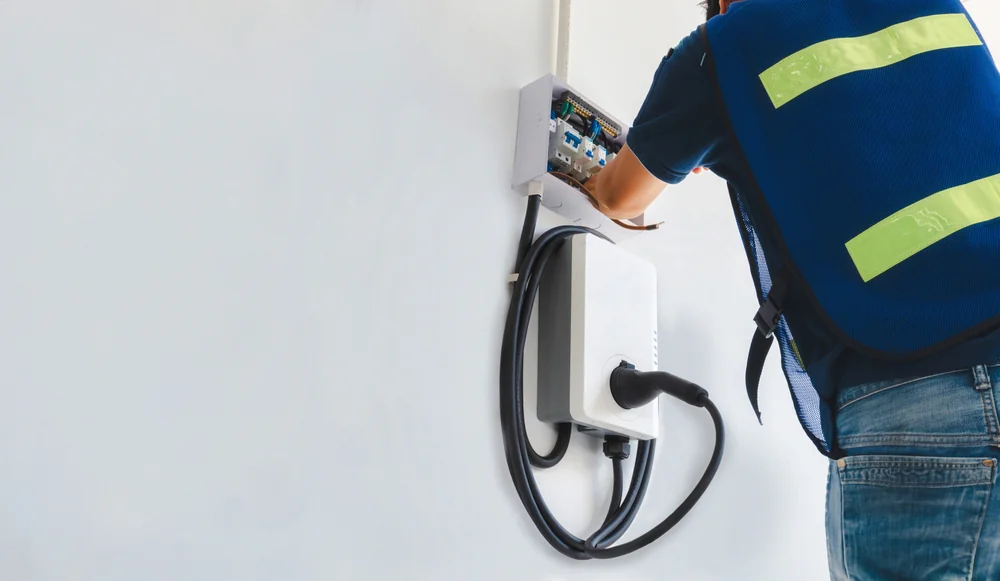
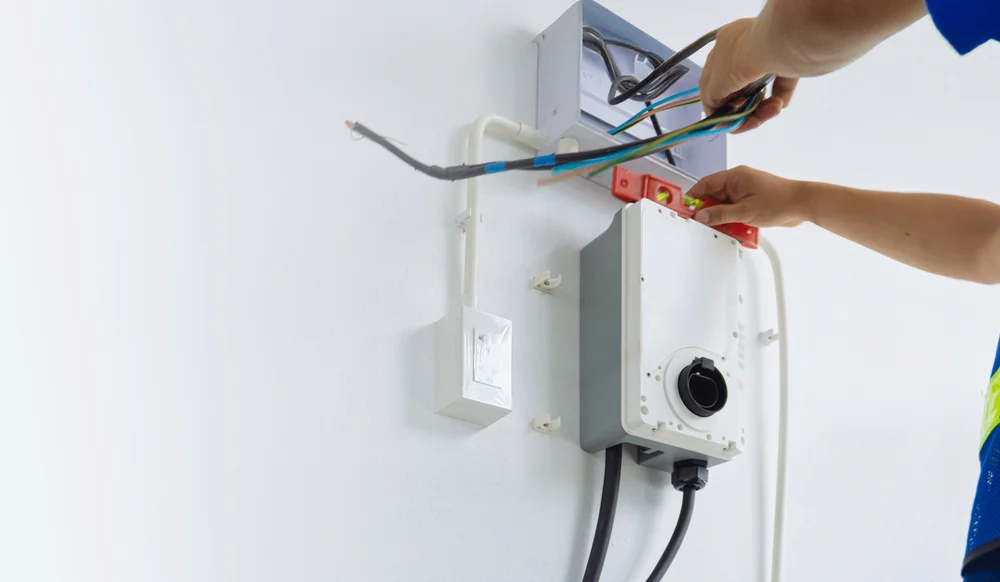
Electric Vehicle Charger Setup in Swepsonville
You’re not dealing with broken public chargers anymore. No more sitting in parking lots waiting for a charge. No more wondering if the station will work when you get there.
When you have a home EV charging station, your car charges overnight while you sleep. You start every day with a full battery, and you’re paying 50-70% less per charge than you would at a public station—especially if you charge during off-peak hours.
Your home becomes your fueling station. That’s not just convenient—it’s a shift in how you think about your time and your routine. And if you ever sell, you’re adding a feature that buyers are actively looking for now that North Carolina has over 100,000 EVs on the road.
Licensed EV Charger Installers Near Swepsonville
We’ve been serving Swepsonville, Burlington, and Alamance County since 2002. We’re locally owned and operated by Andy Helton, a Master Electrician with over 35 years of experience.
Our Operations Manager has been a licensed electrical contractor since 1989. That’s more than two decades of hands-on work in residential and commercial electrical systems—including the kind of panel upgrades and 240-volt circuit installations that most EV charger setups require.
We show up in uniform, in fully stocked trucks, and we use flat-rate pricing so you know the cost before we start. You’re not getting an answering machine when you call—you’re talking to someone who can actually answer your questions.
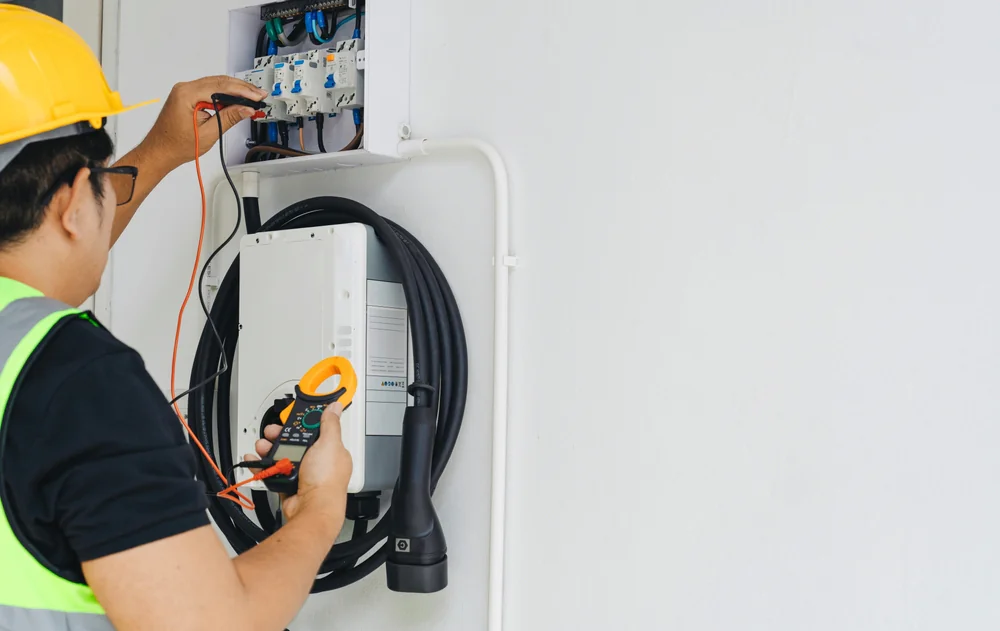
How EV Charging Station Installation Works
First, we look at your electrical panel to see if it can handle a Level 2 charger. Most need a 240-volt, 40-amp circuit. If your panel doesn’t have the capacity, we’ll let you know up front what an upgrade costs—usually between $1,500 and $3,500, depending on your setup.
Next, we help you figure out which charger works for your vehicle and your charging habits. Level 2 chargers add anywhere from 12 to 60 miles of range per hour, depending on wattage. We’ll also walk you through Duke Energy’s rebate program, which covers up to $1,133 per household in North Carolina.
Then we install everything to code. That means proper wiring, correct breaker sizing, and a safe connection that won’t overload your system. We test it, clean up, and make sure you know how to use it before we leave.
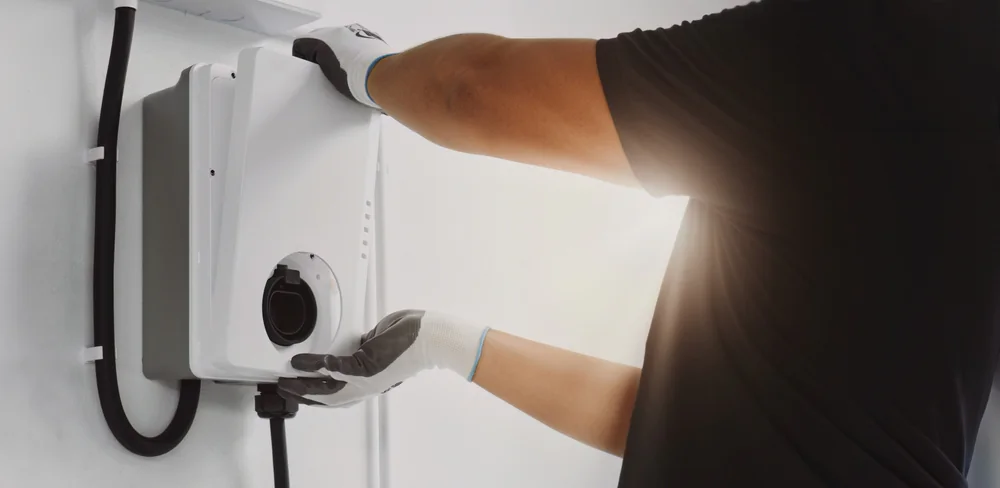
What's Included in EV Charger Installation
You’re getting a full electrical assessment before anything gets installed. We check your panel capacity, your existing wiring, and the best location for your charger based on where you park and how your home is laid out.
We handle the permit and inspection process. In Swepsonville and the surrounding Burlington area, EV charger installations need to meet local electrical codes, and we make sure everything passes the first time.
We also help you apply for the Duke Energy Charger Prep Credit, which reimburses up to $1,117 for residential EV charger installations. That covers a big chunk of your setup cost, but only if the work is done by a licensed electrician—which is where most DIY installs fall apart.
And if your electrical panel needs an upgrade to safely handle the load, we do that too. Most homes built before 2000 weren’t designed for the kind of power draw a Level 2 EV charger requires, so panel upgrades are common. We’ll tell you if you need one and what it’ll cost before we move forward.
How much does it cost to install an EV charger at home in Swepsonville?
The charger itself runs between $400 and $1,200 depending on the brand and features. Installation typically costs between $800 and $2,000 if your electrical panel can handle the load.
If you need a panel upgrade, add another $1,500 to $3,500. That sounds like a lot, but most homes built before 2000 don’t have the capacity for a 240-volt, 40-amp circuit without some kind of upgrade.
The good news is Duke Energy offers a rebate of up to $1,133 per household in North Carolina for EV charger installation costs. We help you apply for that, and it covers a significant portion of the work. You’re also saving money every time you charge at home instead of using a public station, where rates are typically 50-70% higher than residential electricity.
Do I need a Level 2 charger, or will a regular outlet work?
A regular 120-volt outlet—what’s called Level 1 charging—will work, but it’s slow. You’re looking at about 4 to 5 miles of range per hour. If you drive 40 miles a day, that’s an 8 to 10-hour charge just to break even.
Level 2 chargers run on 240 volts, the same as your dryer or oven. They add 12 to 60 miles of range per hour depending on the charger’s wattage and your vehicle’s onboard system. That means a full charge overnight, even if you’re starting near empty.
If you’re driving more than 30 miles a day or you want the flexibility to charge quickly between trips, Level 2 is the right move. It’s also what most homebuyers expect to see if you ever sell, since it works with any EV on the market now or in the future.
Can I install an EV charger myself, or do I need an electrician?
You need a licensed electrician. EV chargers pull a lot of power, and if the wiring isn’t sized correctly or the breaker isn’t rated for the load, you’re risking an electrical fire or damage to your home’s system.
Most Level 2 chargers require a dedicated 240-volt circuit, which means running new wiring from your panel to your garage or wherever you’re parking. That’s not a weekend DIY project—it’s electrical work that needs to meet local code and pass inspection.
In Swepsonville and the rest of Alamance County, you also need a permit for this kind of installation. And if you want to qualify for the Duke Energy rebate, the work has to be done by a licensed contractor. Trying to save money by doing it yourself usually ends up costing more when you have to hire someone to fix it later.
How long does EV charger installation take?
If your electrical panel has the capacity and we’re just running a new circuit and mounting the charger, it usually takes 4 to 6 hours. That includes testing everything and making sure it’s working correctly before we leave.
If you need a panel upgrade, add another day. Panel upgrades take longer because we’re replacing or expanding your main electrical service, and that requires shutting down power to your home temporarily while we work.
We’ll give you a clear timeline during the estimate so you know what to expect. Most installations in Swepsonville are straightforward, but older homes sometimes need extra work to bring everything up to code. We don’t rush it—we do it right the first time so you’re not dealing with problems later.
Will installing an EV charger increase my electric bill?
Yes, but not as much as you’d think—and it’s still way cheaper than paying for gas or using public charging stations. Charging an EV at home typically costs between $30 and $60 per month, depending on how much you drive and your local electricity rates.
Duke Energy offers time-of-use rates in North Carolina, which means you pay less per kilowatt-hour if you charge overnight during off-peak hours. Most people set their charger to start after 9 or 10 p.m. and wake up to a full battery without seeing a huge spike in their bill.
Compare that to public fast chargers, which can cost $15 to $30 per session, and you’re saving significant money over time. You’re also avoiding the cost of driving to a charging station, waiting in line, and dealing with broken equipment—which happens at about 1 in 5 public charging sessions according to recent data.
What's the Duke Energy rebate, and how do I qualify?
Duke Energy’s Charger Prep Credit reimburses up to $1,117 per household in North Carolina for the cost of installing a Level 2 EV charger. That includes the electrical wiring, circuit upgrades, and any technology needed to support the charger.
To qualify, the work has to be done by a licensed electrician, and you need to submit your application within a certain timeframe after installation. We help you with that process—it’s part of what we do when we install your charger.
The rebate doesn’t cover the charger itself, but it covers most of the installation cost, which is usually the bigger expense. It’s one of the better incentives available right now for EV owners in North Carolina, and it makes the upfront cost a lot easier to manage. We’ll walk you through the paperwork and make sure you get the full amount you’re eligible for.
Other Services we provide in Swepsonville
About Us

Electrical Service Providers (ESP) has been in business since 2002. ESP started out performing wiring services to new construction, remodeling projects and residential homes. Our company’s president identified a market for electrical services to be performed in homes and businesses independent of new construction. Read More about Electrical Service Providers>>
All Rights Reserved.Organic Marketing LLC
Business Listings


Product Brands Used
Allied, Broan, Cutler Hammer, General Electric, Ideal, Juno, Kohler, Leviton, Lutron, Siemens, Square D
Contact
- Office Address: 3254 S Anthony Ct.
Burlington, NC 27215 - Mailing Address: PO Box 25
Alamance, NC 27201 - Phone: 336-228-3300
- E-mail: [email protected], [email protected]
Service Areas
Chapel Hill, Burlington, Carrboro, Durham, Gibsonville, Hillsborough, Graham, Pittsboro, Morrisville, Cary
About Us
Electrical Service Providers (ESP) has been in business since 2002. ESP started out performing wiring services to new construction, remodeling projects and residential homes. Our company’s president identified a market for electrical services to be performed in homes and businesses independent of new construction. Read More about Electrical Service Providers>>
All Rights Reserved.Organic Marketing LLC