EV Charger Installation in West Hillsborough, NC
Charge at Home Without the Electrical Guesswork
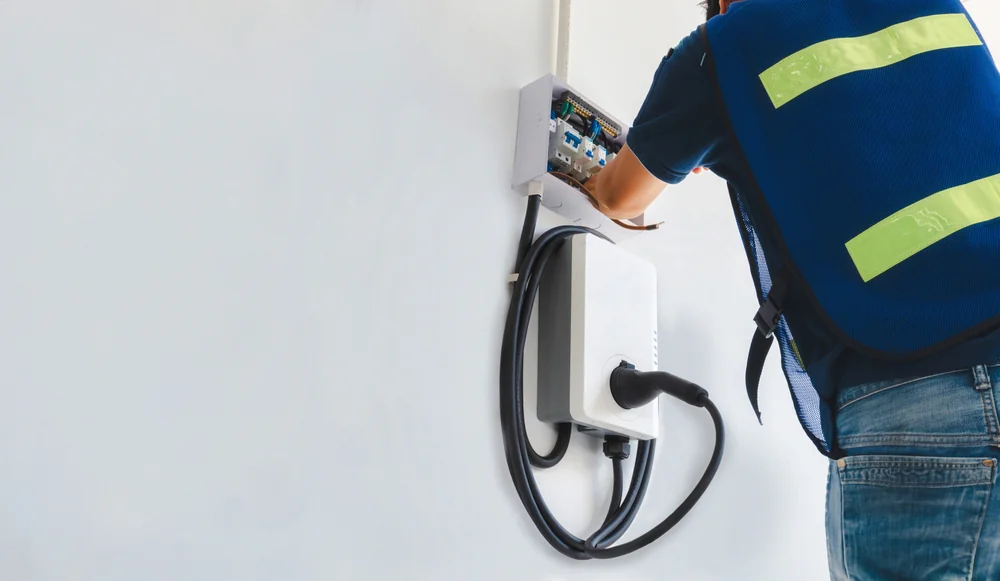
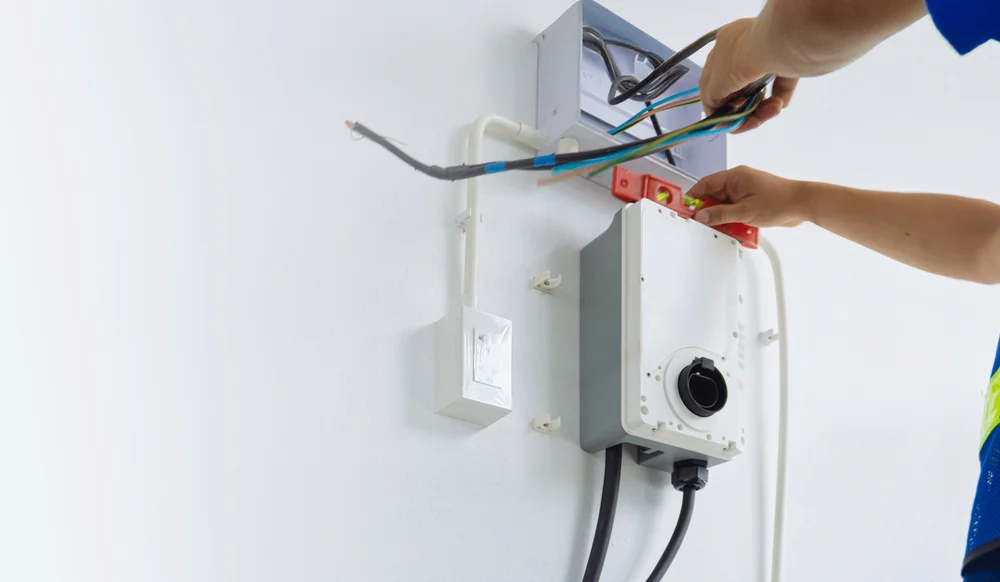
Electric Vehicle Charger Setup West Hillsborough
You’re not dealing with public charging stations anymore. No more planning your week around where you can plug in or sitting in parking lots waiting for a spot to open up.
A Level 2 home charger adds 25 to 40 miles of range per hour. That means your EV goes from drained to fully charged overnight while you sleep. Most vehicles finish in three to eight hours depending on battery size.
You plug in when you get home. You unplug when you leave. That’s it. No apps to check, no stations to hunt down, no wondering if the charger’s broken when you get there. Your driveway becomes your fueling station, and your schedule stays yours.
Licensed EV Charger Electrician West Hillsborough
ESP Electrical Service Providers is led by Andy Helton, a Master Electrician with over 35 years in the field. We’ve been serving West Hillsborough, Chapel Hill, Durham, and the surrounding Triangle area for more than two decades.
We’re not a national franchise. We’re local, and we know how homes are wired around here. Older panels, undersized breakers, garages without dedicated circuits—we’ve seen it all and we know how to handle it without overselling you on work you don’t need.
You’ll talk to a real person when you call, not a call center. Our trucks are stocked, our electricians are uniformed, and we clean up before we leave. We’ve built our reputation here one job at a time.
How EV Charging Station Installation Works
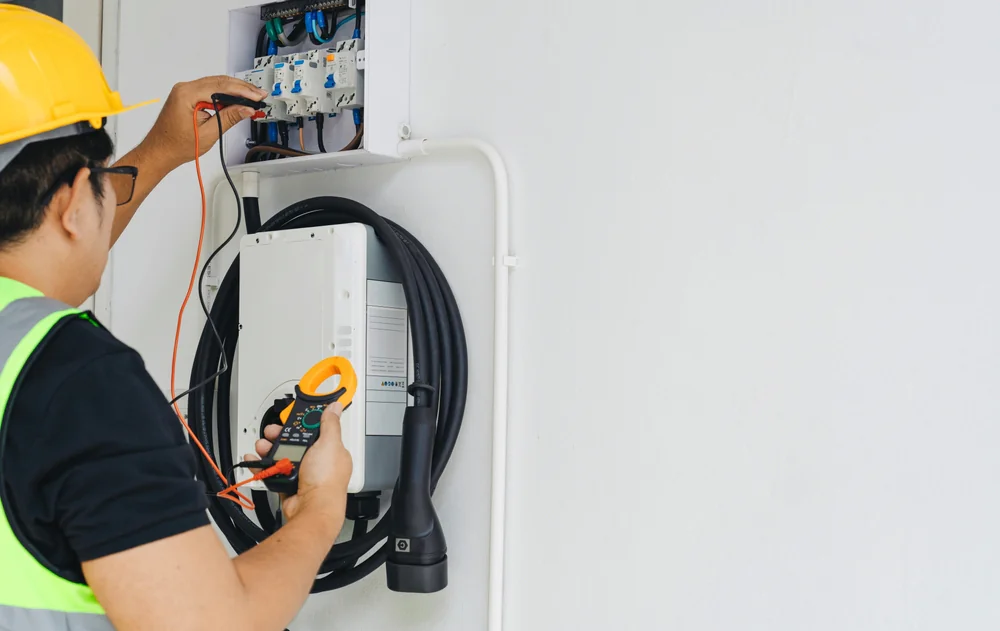
First, we come out and look at your electrical panel. Most Level 2 chargers need a 240-volt circuit with 40 to 50 amps. If your panel has the capacity, great. If it doesn’t, we’ll talk through what an upgrade looks like and what it costs before we do anything.
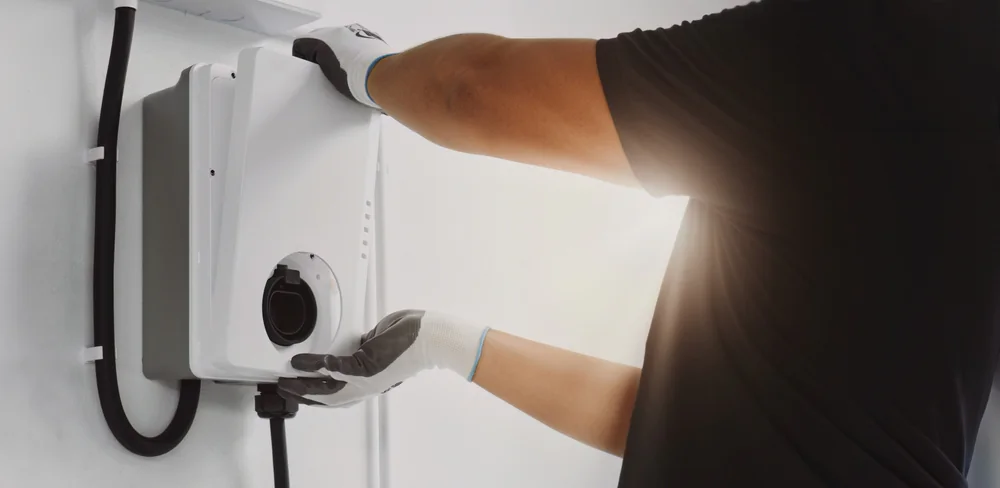
Next, we figure out where the charger goes. Garage wall, exterior mount, near your parking spot—it depends on your setup. We’ll run the wiring, install the breaker, mount the charging station, and make sure everything’s grounded and code-compliant.
Then we pull the permit and handle the inspection. In West Hillsborough, that’s required for this kind of electrical work. We schedule it, we’re there for it, and we make sure it passes. Once it clears, you’re live. We’ll show you how the charger works, answer any questions, and you’re good to go.
EV Charger Installation Cost and Rebates
You’re paying for the charger itself, the installation labor, any electrical upgrades your panel needs, and the permit. We give you flat-rate pricing up front so there’s no surprise when the job’s done.
Here’s something that helps: Duke Energy offers rebates for EV charger installation. If you’re a Duke Energy Progress customer in this area, you can get up to $1,117 back. We’ll walk you through how to apply and what documentation you need. It’s not automatic, but it’s worth doing.
North Carolina is pushing hard to get more EVs on the road—1.25 million by 2030. That means more charging infrastructure, more incentives, and more support for homeowners making the switch. You’re also looking at a federal tax credit of up to $1,000 for residential EV charger installation if you qualify. Between the rebate and the credit, you’re covering a significant chunk of the total cost.
And if you’re charging at home instead of paying per session at public stations, you’re saving monthly. The charger pays for itself over time just in convenience and cost per mile.
Do I need to upgrade my electrical panel to install an EV charger?
It depends on your current panel and how much capacity you have left. A Level 2 EV charging station typically pulls 40 to 50 amps on a 240-volt circuit. If your panel is already near its limit or you’ve got an older 100-amp service, you’ll likely need an upgrade to a 200-amp panel.
We check your panel during the estimate. We look at what’s already running—HVAC, water heater, appliances—and calculate how much room is left. If there’s space, we add the circuit. If there’s not, we talk through the upgrade cost and timeline before moving forward.
Most homes built in the last 20 years can handle it without major work. Older homes in West Hillsborough sometimes need more attention. Either way, we’re transparent about what’s required and why.
How long does it take to install a home EV charger?
If your panel has capacity and the charger’s going in your garage near the breaker box, we’re usually done in four to six hours. That includes running the circuit, mounting the unit, and testing everything.
If we need to upgrade your panel first, add another day for that work. If the charger’s going outside or far from the panel and we’re running conduit across the house, it might take a bit longer depending on the distance and what’s in the way.
Permitting adds time but not labor time. We pull the permit, schedule the inspection, and handle that process separately. You’re not waiting around for us—you’re waiting on the county. Inspections in this area usually happen within a few days of scheduling.
Can I install any EV charger or does it have to match my car?
You can install any Level 2 charger. They all use the same J1772 plug, which works with every electric vehicle sold in the U.S. except for older Teslas—and even those come with an adapter.
The difference between chargers is mostly features. Some have WiFi so you can monitor charging from your phone. Some have longer cables. Some let you schedule charging during off-peak hours to save on electricity costs. But they all do the same basic job.
What matters more is the amperage. A 40-amp charger delivers about 9.6 kilowatts and adds roughly 25 to 30 miles of range per hour. A 50-amp charger bumps that to 12 kilowatts and closer to 40 miles per hour. We help you pick the right size based on your vehicle’s onboard charger capacity and how you actually drive.
What's the difference between Level 1 and Level 2 charging?
Level 1 charging uses a standard 120-volt outlet—the same one you plug a lamp into. It’s slow. You’re adding about three to five miles of range per hour. If you drive 40 miles a day, you’re looking at 10 to 12 hours to recharge. That works for some people, but it’s tight if you have a longer commute or forget to plug in.
Level 2 charging uses a 240-volt circuit, the same kind that runs your dryer or oven. It’s six to eight times faster. You’re adding 25 to 40 miles of range per hour depending on the charger and your car. A full charge happens overnight, usually in three to eight hours depending on battery size.
If you’re serious about driving electric and you want the flexibility to actually use your car without planning around charging time, Level 2 is the standard. It’s what most EV owners install at home, and it’s what we recommend unless you’re barely driving.
Do I need a permit to install an EV charger in West Hillsborough?
Yes. Any time you’re adding a new 240-volt circuit and a hardwired charging station, you need a permit and an inspection. That’s true in West Hillsborough and throughout Orange County.
We handle the permit as part of the installation. We pull it, we schedule the inspection, and we’re there when the inspector comes out. You don’t have to deal with the county or figure out what forms to fill out.
The permit protects you. It makes sure the work is done to code, the circuit is safe, and your homeowner’s insurance won’t have a problem if something ever goes wrong. Skipping it might save a couple hundred bucks up front, but it’s not worth the risk if you ever sell the house or file a claim.
Will installing an EV charger increase my electric bill?
Yes, but you’re replacing gas, not adding a new expense. The real question is how much it costs compared to what you’re paying now to fuel your car.
Electricity in North Carolina averages around 11 to 12 cents per kilowatt-hour. Charging a typical EV with a 60-kilowatt-hour battery from empty to full costs about $7. That gives you roughly 200 to 250 miles of range depending on the vehicle. Compare that to filling a gas tank for $40 to $50 and getting similar range.
If you drive 1,000 miles a month, you’re looking at an extra $35 to $50 on your electric bill. Most people spend triple that on gas. Duke Energy also offers time-of-use rates in some areas, so if you charge overnight during off-peak hours, your cost per kilowatt-hour drops even lower.
You’ll see the increase on your bill, but you’ll stop seeing charges at the gas pump. For most drivers, it’s a net savings every month.
About Us

Electrical Service Providers (ESP) has been in business since 2002. ESP started out performing wiring services to new construction, remodeling projects and residential homes. Our company’s president identified a market for electrical services to be performed in homes and businesses independent of new construction. Read More about Electrical Service Providers>>
All Rights Reserved.Organic Marketing LLC
Business Listings


Product Brands Used
Allied, Broan, Cutler Hammer, General Electric, Ideal, Juno, Kohler, Leviton, Lutron, Siemens, Square D
Contact
- Office Address: 3254 S Anthony Ct.
Burlington, NC 27215 - Mailing Address: PO Box 25
Alamance, NC 27201 - Phone: 336-228-3300
- E-mail: [email protected], [email protected]
Service Areas
Chapel Hill, Burlington, Carrboro, Durham, Gibsonville, Hillsborough, Graham, Pittsboro, Morrisville, Cary
About Us
Electrical Service Providers (ESP) has been in business since 2002. ESP started out performing wiring services to new construction, remodeling projects and residential homes. Our company’s president identified a market for electrical services to be performed in homes and businesses independent of new construction. Read More about Electrical Service Providers>>
All Rights Reserved.Organic Marketing LLC