EV Charger Installation in Woodlawn, NC
Charge at Home Without the Wait or Worry
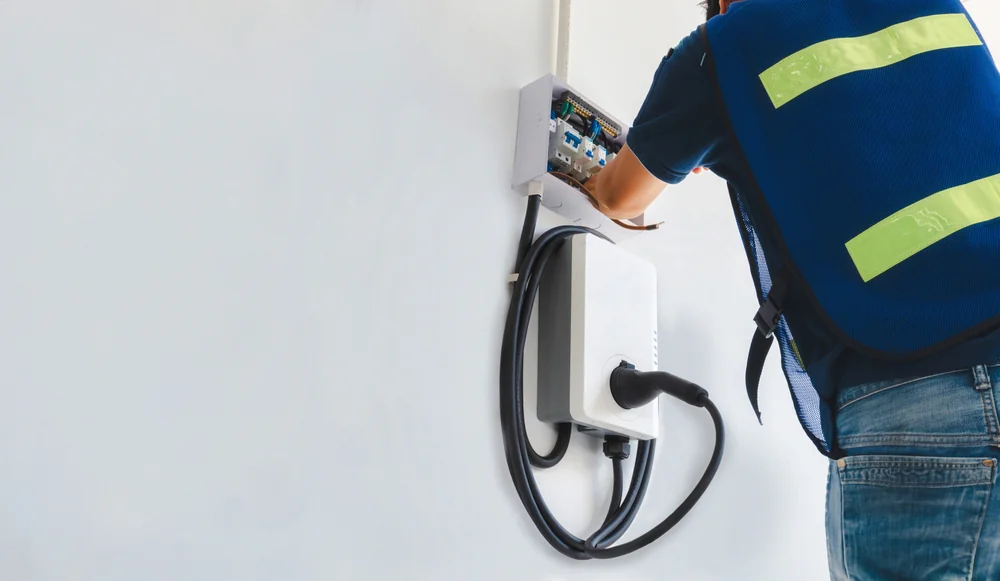
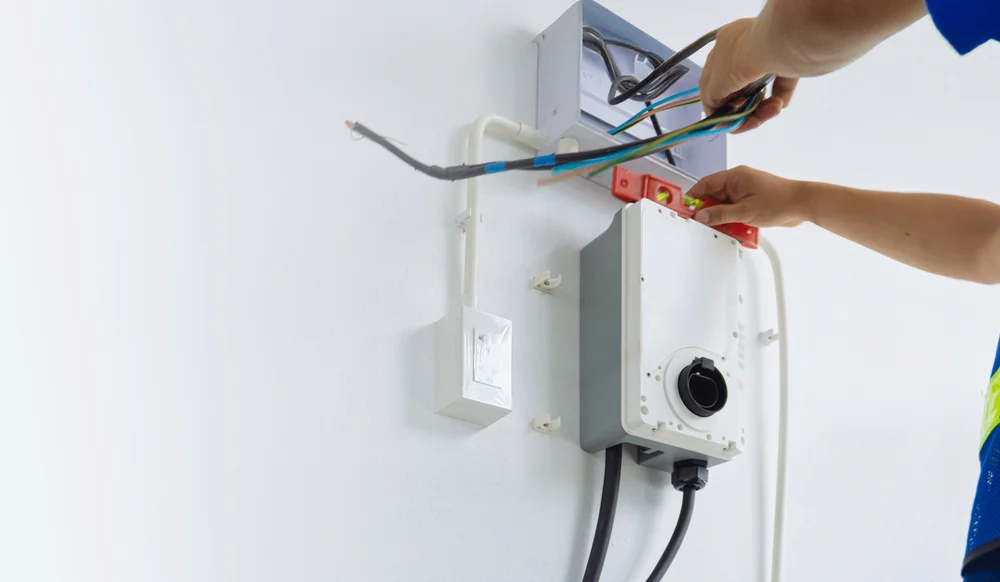
Electric Vehicle Charging Solutions in Woodlawn
You bought an electric vehicle to save money and skip the gas station. But if you’re still driving around looking for available charging stations or waiting hours for a Level 1 outlet to do its job, you’re not getting the convenience you paid for.
A proper home EV charger installation changes that. You plug in when you get home, and your car is ready by morning. No planning your day around charging stops. No wondering if the station near work will have an open spot. No paying premium rates at public chargers that keep going up.
Level 2 home charging cuts your charge time from 12-plus hours down to 4-8 hours depending on your vehicle. That’s the difference between hoping you have enough range and knowing you do. And when Duke Energy is offering up to $1,117 in rebates for installation, the upfront cost becomes a lot easier to justify.
Your home value goes up too. Buyers with EVs specifically look for homes with charging already installed. You’re not just solving today’s problem—you’re making a smart investment that pays off when it’s time to sell.
Licensed EV Charger Electricians Serving Woodlawn
We’ve been serving Woodlawn, NC and the surrounding Alamance County area for over two decades. Our Operations Manager has been a licensed electrical contractor since 1989, bringing more than 35 years of hands-on experience to every job.
You’re not calling a national franchise or getting routed to a call center. You’re working with a locally owned company where the owner, Andy Helton, encourages customers to reach out directly for straight answers. Our Office Manager has been with us since day one and knows how to get the right electrician to your property at the right time.
We show up in uniform, in fully stocked trucks, with flat-rate pricing so you know the cost before we start. And we don’t leave until the job is done right and your property is cleaner than we found it. That’s been our standard in Woodlawn and throughout the Triangle area since 2002.
How EV Charger Setup Works in Woodlawn
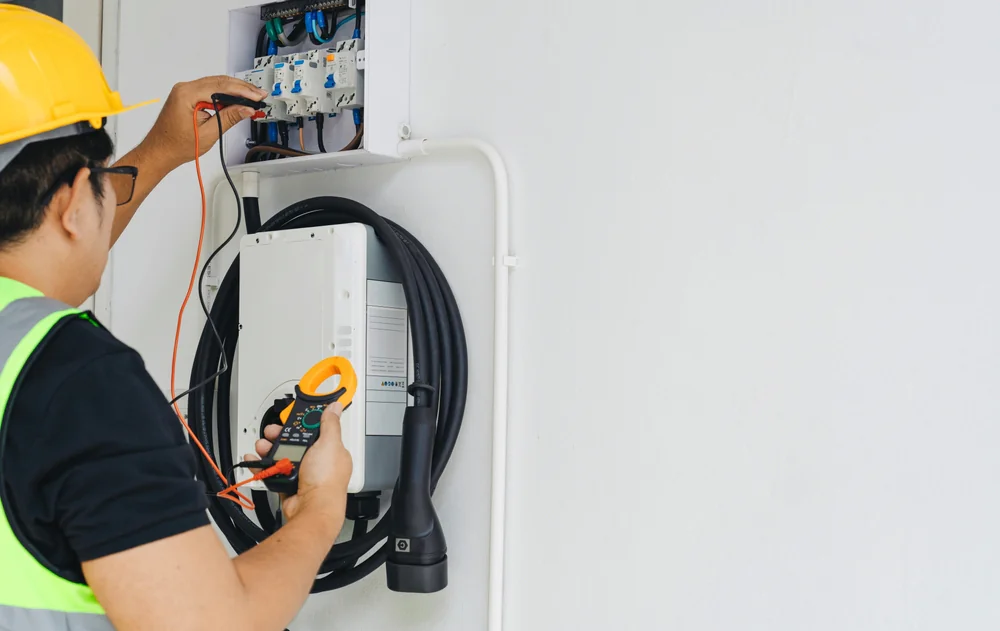
First, we assess your electrical panel. Not every home can handle the load of a Level 2 EV charger without modifications. We calculate your current electrical demand—HVAC, major appliances, existing circuits—and determine whether your panel has the capacity or needs an upgrade. You’ll know exactly what’s required before any work begins.
Next, we help you choose the right charger for your vehicle. Some EVs need specific amperage. Chargers over 40 amps must be hardwired and can’t use a standard plug. We walk through your options and recommend what works best for your car and your budget, including access to Duke Energy’s rebate program if you qualify.
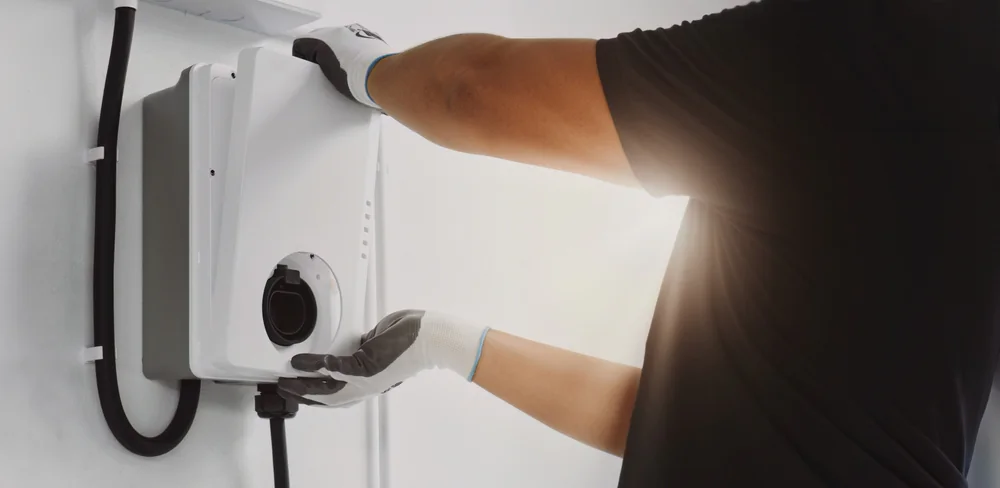
Then we handle the installation and permitting. All electrical work is done to code, inspected, and guaranteed. We mount the charging station, run the wiring, connect it to your panel, and make sure everything is safe and functional. If you want smart features like app control or usage tracking, we set that up too.
When we’re done, you plug in your car and it charges. No guessing, no troubleshooting, no callbacks. Just a working home charging station that’s ready when you are.
What's Included in Residential EV Charger Installation
Your installation includes a full electrical load calculation to confirm your panel can support the charger. If it can’t, we’ll explain what upgrades are necessary and give you a flat-rate price before moving forward. No surprises halfway through the job.
We install the charger itself—whether it’s a Tesla Wall Connector, a universal Level 2 unit, or another brand you’ve chosen. The unit gets mounted in your garage or outside near your parking area, hardwired or plugged depending on amperage, and connected to a dedicated circuit with the proper breaker.
All work is permitted and inspected according to local codes in Woodlawn and Alamance County. North Carolina has been pushing hard toward its goal of 50% zero-emission vehicle sales by 2030, and that means local inspectors are seeing more EV charger installs. We know what they’re looking for and make sure your setup passes the first time.
You also get help navigating Duke Energy’s rebate program, which can cover a significant portion of your installation cost. With over 16,000 electric vehicles registered in North Carolina and that number climbing fast, these incentives are designed to make home charging more accessible. We’ll walk you through the paperwork so you’re not leaving money on the table.
How long does it take to install an EV charger at my home in Woodlawn?
Most residential EV charger installations take between four and eight hours, depending on your electrical panel’s location and whether any upgrades are needed. If your panel is in the garage where the charger will be mounted, the job is usually faster. If we need to run new wiring across your home or upgrade your panel to handle the load, it takes longer.
We’ll give you a clear timeline during the initial assessment. If your panel needs an upgrade, that’s typically a separate job that happens first, then we come back to install the charger once everything is ready. We don’t rush the work—we make sure it’s done safely and up to code.
You’ll have a working charging station the same day we install it. No waiting for follow-up visits or additional parts. Once we flip the breaker, you’re good to plug in and charge.
Will my electrical panel need an upgrade to support an EV charger?
It depends on your current electrical load and panel capacity. Many homes in Woodlawn, especially older ones, have 100-amp or 150-amp panels that are already near capacity with HVAC, water heaters, and other appliances. A Level 2 EV charger typically pulls 30 to 50 amps, which can push some panels over their limit.
We calculate your total load before recommending anything. If your panel has room, we install the charger on a dedicated circuit and you’re done. If it doesn’t, we’ll explain your options—either upgrading to a 200-amp panel or installing a load-sharing device that manages power between your charger and other circuits.
Panel upgrades aren’t cheap, but they’re not always necessary either. And if you do need one, it’s an investment that increases your home’s value and makes future electrical work easier. We’ll give you the honest assessment and a flat-rate price so you can decide what makes sense.
Can I get a rebate for installing an EV charger in North Carolina?
Yes. Duke Energy offers the EV Charger Installation Support Program, which provides up to $1,117 per household to help cover installation costs. The program is designed to encourage home charging as part of North Carolina’s push toward 50% zero-emission vehicle sales by 2030.
The rebate applies to the installation labor and materials, not the charger itself. You’ll need to apply through Duke Energy’s program, and there are some eligibility requirements around the type of charger and how it’s installed. We help customers navigate the application process so you’re not figuring it out alone.
Rebates like this don’t last forever. As more people install home chargers, funding can run out or program rules can change. If you’re planning to install an EV charging station anyway, it’s worth applying while the money is still available.
What's the difference between Level 1 and Level 2 EV charging?
Level 1 charging uses a standard 120-volt outlet—the same kind you plug a lamp into. It’s slow. Depending on your vehicle, it can take 12 to 20 hours to fully charge. That works if you drive very little and can leave your car plugged in overnight, but for most people, it’s not practical.
Level 2 charging uses a 240-volt circuit, the same kind that powers your dryer or oven. It charges much faster—usually 4 to 8 hours for a full charge, depending on your car’s battery size and the charger’s amperage. That’s the difference between waking up to a half-charged car and one that’s ready to go.
If you’re serious about driving an EV as your primary vehicle, Level 2 is the way to go. It gives you the flexibility to charge quickly and not worry about whether you’ll have enough range for tomorrow. Level 1 is fine as a backup, but it’s not a long-term solution for daily drivers.
Do I need a specific charger for my Tesla or other EV brand?
Tesla vehicles come with a proprietary connector, but you have options. You can install a Tesla Wall Connector, which only works with Tesla vehicles, or you can install a universal Level 2 charger and use the adapter that came with your car. Both work fine—it just depends on whether you plan to own only Teslas or might switch brands later.
Most other EVs use the standard J1772 connector, which works with any Level 2 charger. If you have a Chevy Bolt, Nissan Leaf, Ford Mustang Mach-E, or most other non-Tesla EVs, any universal charger will work. Some newer chargers even have smart features like app control and energy monitoring, which can be helpful if you’re tracking usage or charging during off-peak hours.
We help you figure out what makes sense for your vehicle and your household. If you have two EVs or think you might buy a different brand down the road, a universal charger gives you more flexibility. If you’re all-in on Tesla, their Wall Connector is a solid choice.
Can I install an EV charger outside or does it need to be in a garage?
You can install an EV charger outside as long as it’s rated for outdoor use. Most Level 2 chargers are weatherproof and designed to handle rain, heat, and cold. The bigger consideration is where you park and how far the charger needs to be from your electrical panel.
If you park in a driveway or carport, an outdoor installation makes sense. We mount the charger on an exterior wall or a post near your parking spot and run the wiring from your panel. The farther the run, the more labor and materials are involved, but it’s doable.
Garage installations are usually simpler because the panel is often nearby and the charger is protected from the elements. But if you don’t have a garage or prefer to park outside, that’s not a dealbreaker. We’ll assess your property and recommend the best location based on your electrical setup and where you actually park your car.
Other Services we provide in Woodlawn
About Us

Electrical Service Providers (ESP) has been in business since 2002. ESP started out performing wiring services to new construction, remodeling projects and residential homes. Our company’s president identified a market for electrical services to be performed in homes and businesses independent of new construction. Read More about Electrical Service Providers>>
All Rights Reserved.Organic Marketing LLC
Business Listings


Product Brands Used
Allied, Broan, Cutler Hammer, General Electric, Ideal, Juno, Kohler, Leviton, Lutron, Siemens, Square D
Contact
- Office Address: 3254 S Anthony Ct.
Burlington, NC 27215 - Mailing Address: PO Box 25
Alamance, NC 27201 - Phone: 336-228-3300
- E-mail: [email protected], [email protected]
Service Areas
Chapel Hill, Burlington, Carrboro, Durham, Gibsonville, Hillsborough, Graham, Pittsboro, Morrisville, Cary
About Us
Electrical Service Providers (ESP) has been in business since 2002. ESP started out performing wiring services to new construction, remodeling projects and residential homes. Our company’s president identified a market for electrical services to be performed in homes and businesses independent of new construction. Read More about Electrical Service Providers>>
All Rights Reserved.Organic Marketing LLC