
Motor Control Troubleshooting Alamance County, NC

When Motors Fail, We Find Why

Your production line just stopped. Again. The motor won’t start, the starter keeps tripping, or the VFD is throwing codes nobody understands. You need someone who can diagnose the real problem—fast—and get you back online.
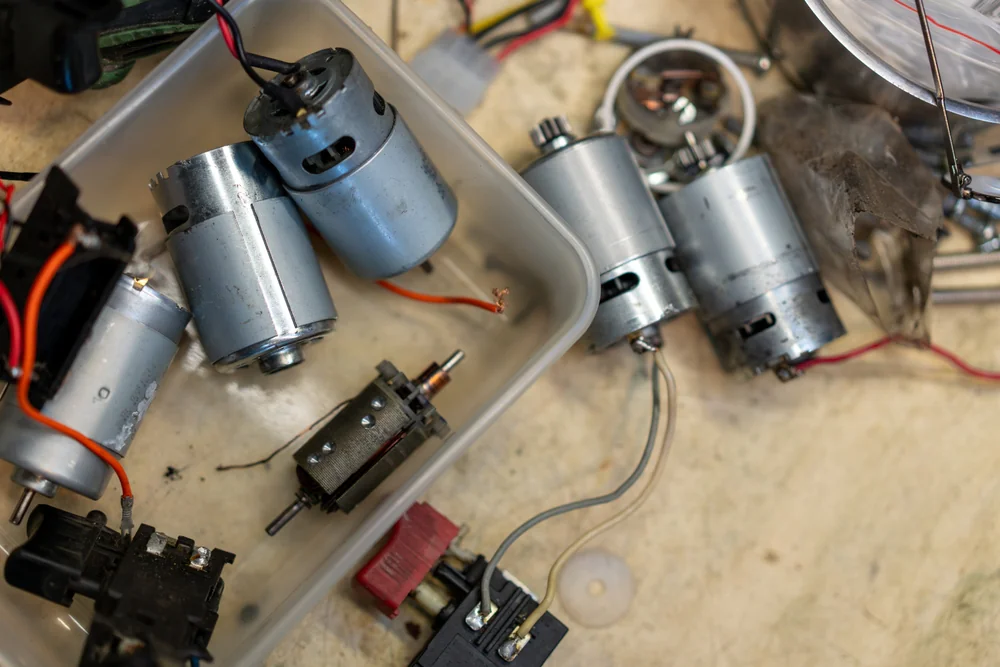
A close-up view of several small electric motors and assorted electronic components scattered on a work surface and inside a plastic container. Wires and connectors are visible among the parts.

Licensed Since 1989

Our senior technician brings over 35 years of hands-on experience troubleshooting industrial and commercial motor control systems across North Carolina.

Proper Diagnostic Equipment

We use megohmmeters, power quality analyzers, and multimeters to test accurately—not guess. You get real answers, not parts swapping.

Serving Since 2002

We've been troubleshooting electrical systems for local facilities for over 20 years. We know the equipment in this region.

Flat Rate Pricing

You know the cost before we start. No surprises, no hourly rate creep, no wondering what the final bill will look like.

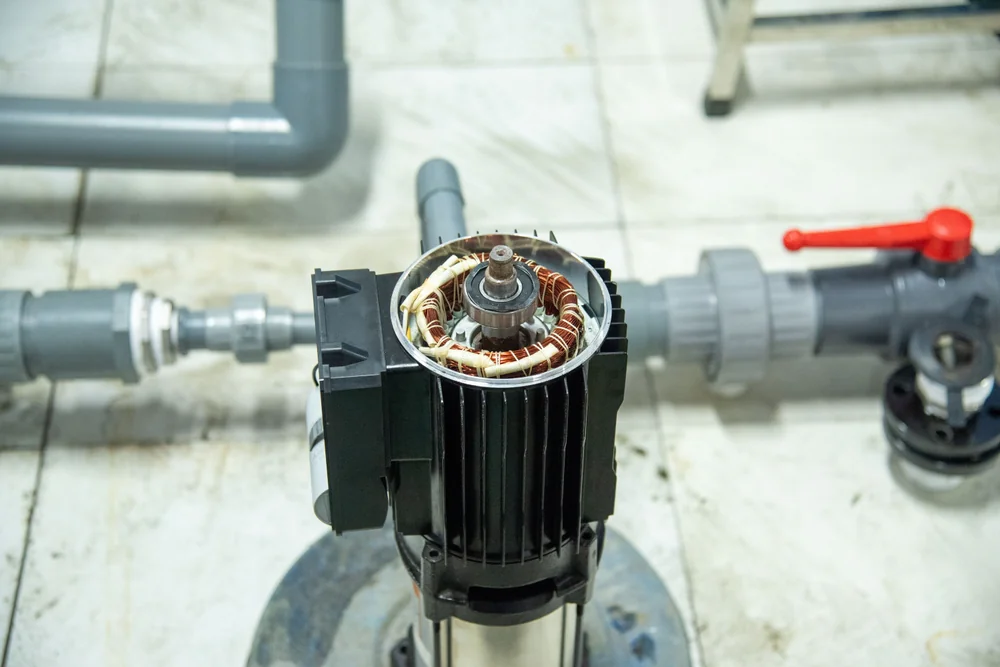
Top view of an electric water pump motor with its cover removed, showing exposed copper windings and internal parts, surrounded by PVC plumbing pipes and a red-handled valve on a tiled floor.

Electric Motor Diagnostics Near You

We Troubleshoot What Others Can't Figure Out

Motor control troubleshooting isn’t about swapping starters until something works. It’s about understanding three-phase systems, reading power quality, testing windings and bearings, and knowing what voltage imbalance does to a motor over time. When your motor keeps tripping the breaker, overheating, or failing after a few months, there’s a reason. Maybe it’s single-phasing. Maybe it’s harmonic distortion from a VFD. Maybe the soft starter settings are wrong, or the power supply has an imbalance nobody caught. We find it. Our team handles motor starters, soft starters, variable frequency drives, and the power quality issues that destroy them. We’ve worked on everything from conveyor motors in manufacturing plants to HVAC systems in commercial buildings across Alamance County, Durham County, Chatham County, and Orange County, NC.

Motor Repair Services That Solve Problems

What You Get When We Troubleshoot

You’re not paying for someone to stand around scratching their head. You’re paying for answers, solutions, and equipment that works the way it should.

Your downtime gets shorter because we diagnose systematically, not randomly—testing voltage, current, resistance, and balance to isolate the fault.

You stop replacing the same motor every six months because we identify the power quality or installation issue that's killing it.

Your maintenance team gets a clear explanation of what failed and why, so they can watch for early warning signs next time.

Your motors run cooler and last longer when we fix phase imbalances, harmonic issues, and improper starter settings.

You avoid the cost of a new motor when the real problem is a $200 soft starter that's misconfigured or a loose connection.

Your energy bills drop when we correct voltage imbalances and power factor issues that make motors work harder than they should.

Ready to get started?

A bold orange number 1 is centered inside a solid dark blue circle on a light gray background.

Share project details

Call us or get a free online quote to help us identify your project needs.

A large orange number 2 is centered inside a solid dark blue circle on a light gray background.

We'll follow up

If you requested an online quote, you can expect a callback within 24-48 hours of your request.

A large orange number 3 is centered inside a solid dark blue circle on a light gray background.

The floor is yours

Connect with an expert and share all project specifics.

A bold orange number 4 centered inside a solid dark blue circle on a light gray background.

Plan your project

Like what you hear? We'll provide next steps and expert guidance.
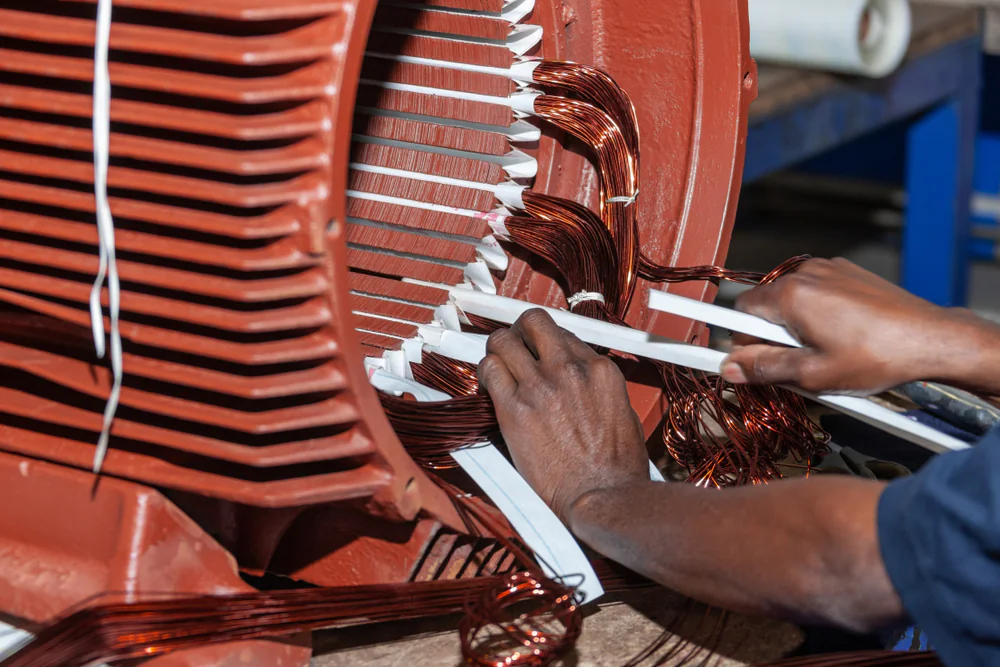
A person’s hands winding copper wires inside the stator of a large electric motor during assembly or repair in an industrial setting.

Power Quality Analysis for Motors

Most Motor Problems Start With Power

A 2.3% voltage imbalance doesn’t sound like much. But it can cause an 18% current imbalance in your motor, raising the temperature by 30 degrees and cutting the motor’s life in half. That’s not a motor problem—that’s a power problem. We test for voltage sags, transient spikes, harmonic distortion, and phase imbalances that slowly destroy windings and bearings. These issues don’t announce themselves. They just make your motors run hot, trip breakers randomly, or fail earlier than they should. A power quality analyzer tells us what’s really happening on your electrical system, and that information changes everything. If you’ve been told “the motor’s just old” or “you need to replace it,” ask whether anyone actually tested the power feeding it. Voltage problems, harmonic content from VFDs, and unbalanced phases are common in facilities with mixed loads, older infrastructure, or recent equipment additions. We measure it, document it, and fix it.

Motor Starter and Soft Starter Repair

When Starters Fail, We Know Why

Motor starters and soft starters control how your motor powers up and shuts down. When they fail, it’s rarely the whole unit. It’s usually a worn contactor, a blown fuse on one phase, incorrect wiring, or settings that don’t match the motor’s actual load. We test resistance through contacts, check for single-phasing, verify ground integrity, and inspect for loose or corroded connections. Soft starters are supposed to reduce inrush current and mechanical stress during startup. But if the ramp time is wrong, the SCRs are damaged, or the bypass contactor isn’t engaging, you’ll see nuisance trips, overheating, or motors that won’t reach full speed. We troubleshoot the control circuit, verify settings against the motor nameplate, and test under load to confirm proper operation. Variable frequency drives add another layer of complexity. Reflections on the drive output, improper grounding, harmonic feedback, and cooling issues can all cause failures that look like motor problems. We check input and output voltage, inspect for fault codes, verify wiring and terminations, and test the motor separately to isolate where the fault actually is.
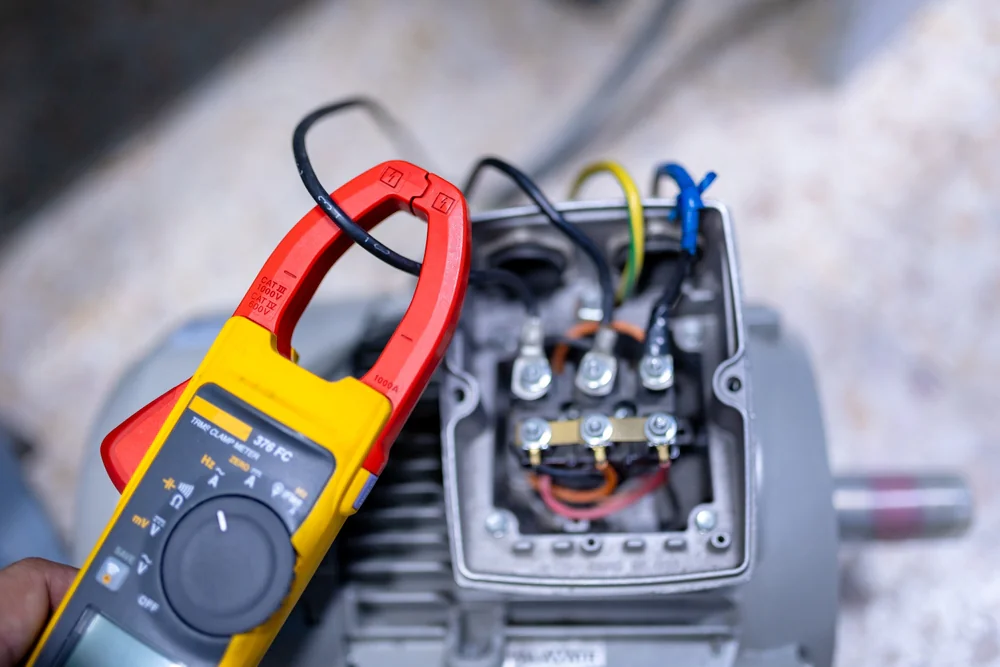
A person holds a digital clamp meter near exposed wires and terminals inside an open electrical motor housing, checking electrical connections.
A black circle with white number one.

On-Site Assessment

We talk to your operators, review recent changes, check the motor nameplate, and gather history before we start testing anything.

A bold white number 2 centered inside a solid black circle on a light gray background.

Systematic Testing

We test voltage at the starter, measure resistance, check phase balance, inspect connections, and test windings and bearings with proper equipment.

A bold white number 3 is centered inside a solid black circle on a plain light gray background.

Clear Findings and Fix

You get a straight explanation of what failed, why it failed, and what it takes to fix it—plus a cost before we proceed.