Electrical Company in Lowes Grove, NC
Your Power Stays On, Your Property Stays Safe
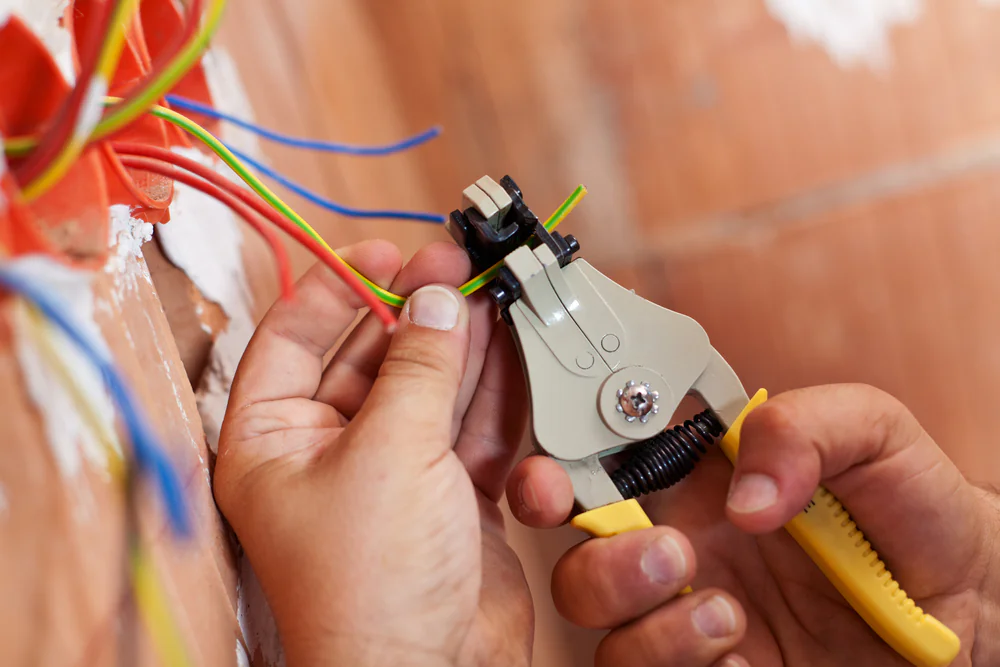

Licensed Electrical Contractor Serving Lowes Grove
Your lights stop flickering at random. Your breakers stop tripping every time you run the microwave and the coffee maker at the same time. You’re not wondering if that burning smell is something serious or just paranoia.
You know what it costs before we pick up a tool. We show up when we say we will, in a truck that’s actually stocked with what we need. We don’t leave a mess behind or disappear halfway through the job.
Your electrical panel can handle what you’re asking it to do – which matters more now than it did fifteen years ago. The average home in North Carolina needs about 50% more capacity than older systems were built for. If your panel is outdated, you’re not just dealing with annoyance. You’re dealing with a safety issue that gets worse the longer it sits.
Local Electrical Company in Lowes Grove, NC
ESP Electrical Service Providers has been handling residential electrical services and commercial electrical work in Lowes Grove and the surrounding Chatham County area for over twenty years. We’re not a franchise. We’re locally owned, and the owner is a Master Electrician with more than three decades in the field.
That means when you call, you’re talking to someone who actually knows what they’re doing – not a call center. When someone shows up, they’re licensed, insured, and driving a truck that’s stocked for the job. We’ve seen what happens when electrical work gets done wrong or half-finished, and we’re not interested in being that company.
Lowes Grove sits in a part of Chatham County where you’ve got a mix of older homes and newer construction. Older homes often have outdated wiring or panels that can’t keep up. Newer builds sometimes cut corners. Either way, you need someone who knows how to troubleshoot the problem and fix it right the first time.

How Electrician Services Work in Lowes Grove
You call or text, and you talk to a real person – not a recording. We ask what’s going on, and if it’s an emergency, we move fast. Most of the time, we can get someone out the same day.
When we arrive, we’ll walk through what we’re seeing and what needs to happen. Before any work starts, you get a flat-rate price. No hourly guessing games. No surprise fees tacked on at the end. You know the number before we touch anything.
Once you approve it, we get to work. Our trucks are stocked with the parts and tools most jobs require, so we’re not making runs to the supply house in the middle of your service call. When the work’s done, we test it, clean up the area, and walk you through what we did.
If something doesn’t feel right or you have questions later, you can reach us. We’re not interested in finishing a job and disappearing. The work isn’t done until you’re satisfied with how it turned out.
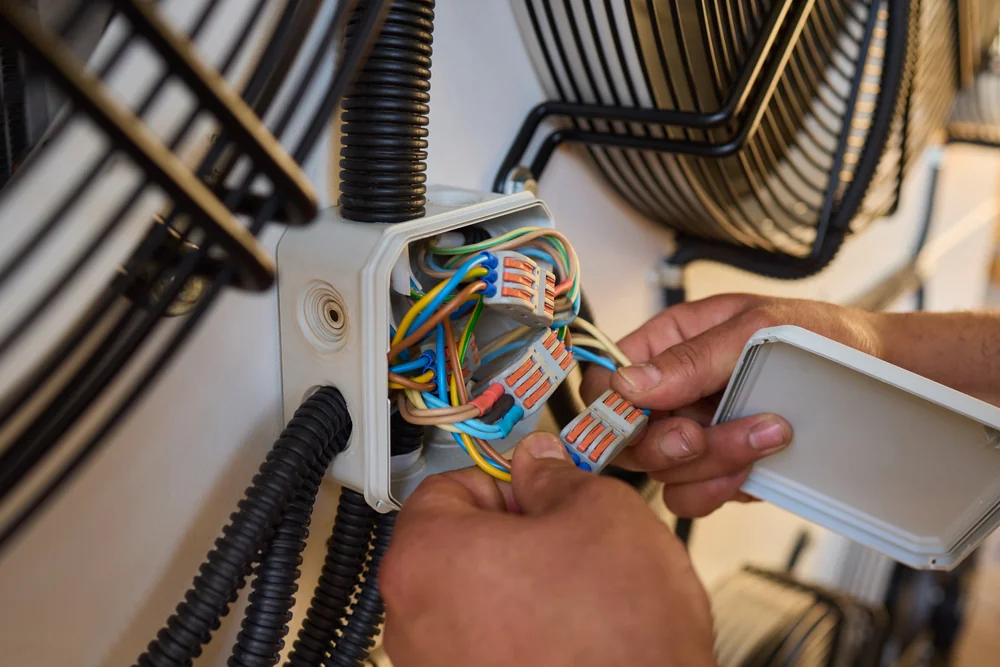
Residential Electrical Company Serving Lowes Grove, NC
We handle electrical repair, panel upgrades, generator installation, smart home wiring, lighting installation, outlet and switch replacement, circuit troubleshooting, and code compliance work. If it involves your electrical system, we’ve probably dealt with it before.
In Lowes Grove and the rest of Chatham County, we’re seeing more requests for generator installs – especially with hurricane season and the unpredictable weather patterns North Carolina’s been getting. A Generac home standby system kicks on automatically when the power drops, so your fridge, your HVAC, and your medical equipment don’t go offline.
We’re also getting more calls about EV charging stations and smart home setups. If you’re adding an electric vehicle or upgrading to smart lighting, thermostats, or security systems, your existing electrical panel might not have the capacity to support it. That’s where an electrical panel upgrade comes in. We’ll assess what you’ve got, what you need, and what it takes to get your system up to speed without overloading your circuits.
Every job we do is performed by a licensed electrical contractor. We pull permits when required, and we follow North Carolina electrical code. That’s not just for safety – it’s also so your homeowner’s insurance doesn’t have a reason to deny a claim if something goes wrong down the line.
How much does it cost to hire an electrician in Lowes Grove, NC?
Most electrical companies in North Carolina charge between fifty and one hundred dollars per hour, plus trip fees and markup on materials. Emergency calls or after-hours work can cost more – sometimes double.
We use flat-rate pricing instead. That means you get a price for the job before we start, not an estimate that changes once we’re halfway through. You’ll know what it costs to replace that panel, install that outlet, or rewire that circuit before we pick up a tool.
The actual cost depends on what needs to happen. A simple outlet replacement is going to cost a lot less than a full panel upgrade or a generator install. But either way, the price we give you is the price you pay – no surprises, no hourly creep, no “we ran into something” upcharges unless we genuinely find a safety issue that needs addressing and you approve the additional work.
What are the signs I need an electrical panel upgrade?
Your breaker trips frequently, especially when you’re running multiple appliances. Your lights dim when the AC kicks on. You’re using power strips in every room because you don’t have enough outlets. Your panel is warm to the touch, or you smell something burning near it.
Those are all signs your panel is either outdated, undersized, or failing. A lot of homes in Chatham County were built with 100-amp or 150-amp panels. That was fine twenty years ago. But if you’ve added central air, a home office, an electric vehicle charger, or modern appliances, you’re probably pushing that system past what it was designed to handle.
Upgrading to a 200-amp panel gives you the capacity to run what you actually need without overloading your circuits. It also makes your home safer and brings your electrical system up to current code, which matters if you ever sell the property or file an insurance claim.
Do I really need a licensed electrical contractor, or can I hire someone cheaper?
You can hire whoever you want. But if they’re not licensed, you’re taking on all the risk – and your homeowner’s insurance knows it.
Unlicensed work isn’t covered by most insurance policies. If a fire starts because of faulty wiring or an improper install, your claim can get denied. If someone gets hurt on your property because of electrical work that wasn’t done to code, you’re liable.
A licensed electrical contractor in North Carolina has passed state exams, carries insurance, and pulls permits when required. That means the work gets inspected, it meets code, and if something does go wrong, you’re covered. It also means the person doing the work actually knows what they’re doing – not just someone who watched a YouTube video and bought a voltage tester.
How long does it take to install a whole-home generator?
Most Generac home standby generator installations take one to three days, depending on the size of the system, where it’s going, and what your electrical panel situation looks like.
Day one usually involves site prep – pouring a concrete pad, running the gas line or propane connection, and getting the transfer switch installed. Day two is when the generator gets set in place, wired up, and connected to your panel. Day three is testing, startup, and walkthrough.
If your panel needs an upgrade to handle the load, that adds time. If we’re dealing with tricky access or local permitting delays, it can stretch a bit longer. But in most cases, you’re looking at a few days from start to finish – and once it’s in, it’s automatic. When the power drops, the generator kicks on within seconds. You don’t have to do anything.
What's the difference between a service call and an emergency call?
A service call is scheduled. You’ve got an issue – an outlet that doesn’t work, a light fixture you want installed, a panel that needs upgrading – but it’s not putting anyone in danger right now. We can usually get someone out the same day or within a day or two, depending on the schedule.
An emergency call is when something’s actively wrong and it’s a safety risk. Sparks coming from an outlet. A burning smell near your panel. A breaker that won’t reset and half your house is without power. Water getting into your electrical system. Those situations get priority, and we move fast – usually within an hour, even on weekends or holidays.
Emergency calls can cost more depending on the company and the time of day. We’re upfront about that. But whether it’s a service call or an emergency, you’re still getting the same flat-rate pricing structure. We’re not going to inflate the cost just because it’s urgent – we’re just going to get there faster.
Can you work on older homes with outdated wiring?
Yes. A lot of homes in Lowes Grove and the surrounding Chatham County area were built decades ago, and plenty of them still have knob-and-tube wiring, aluminum wiring, or undersized circuits that aren’t safe by today’s standards.
We’ve worked on older homes for years. The process usually starts with an assessment – we’ll look at what you’ve got, what’s up to code, and what needs to be updated. Sometimes it’s a full rewire. Sometimes it’s just replacing the panel and upgrading a few key circuits. It depends on the condition of the system and what you’re trying to accomplish.
Aluminum wiring, for example, was common in the 1960s and 70s, but it’s a fire hazard if it’s not handled correctly. We can retrofit it with copper pigtails or rewire the problem areas entirely. Knob-and-tube wiring isn’t grounded and can’t handle modern electrical loads, so that usually needs to be replaced. Either way, we’ll walk you through what’s required and what it costs before we start tearing into walls.
About Us

Electrical Service Providers (ESP) has been in business since 2002. ESP started out performing wiring services to new construction, remodeling projects and residential homes. Our company’s president identified a market for electrical services to be performed in homes and businesses independent of new construction. Read More about Electrical Service Providers>>
All Rights Reserved.Organic Marketing LLC
Business Listings


Product Brands Used
Allied, Broan, Cutler Hammer, General Electric, Ideal, Juno, Kohler, Leviton, Lutron, Siemens, Square D
Contact
- Office Address: 3254 S Anthony Ct.
Burlington, NC 27215 - Mailing Address: PO Box 25
Alamance, NC 27201 - Phone: 336-228-3300
- E-mail: [email protected], [email protected]
Service Areas
Chapel Hill, Burlington, Carrboro, Durham, Gibsonville, Hillsborough, Graham, Pittsboro, Morrisville, Cary
About Us
Electrical Service Providers (ESP) has been in business since 2002. ESP started out performing wiring services to new construction, remodeling projects and residential homes. Our company’s president identified a market for electrical services to be performed in homes and businesses independent of new construction. Read More about Electrical Service Providers>>
All Rights Reserved.Organic Marketing LLC