Electrical Contractor in Haywood, NC
Safe, Code-Compliant Work Without the Surprises
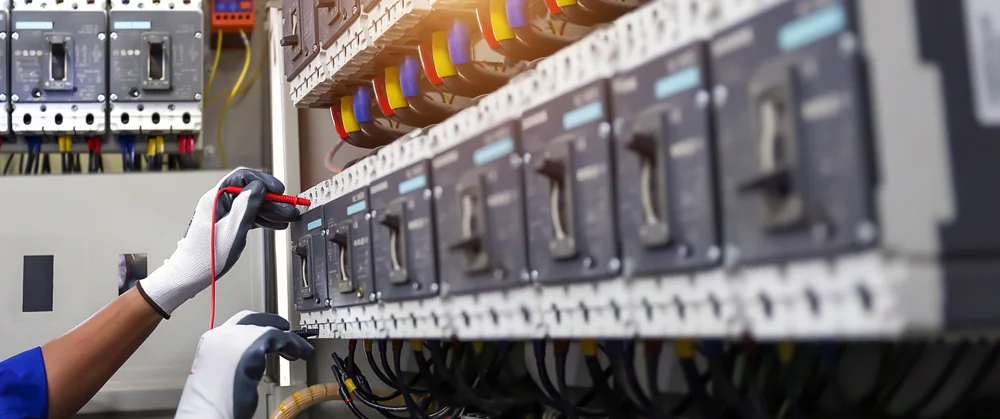
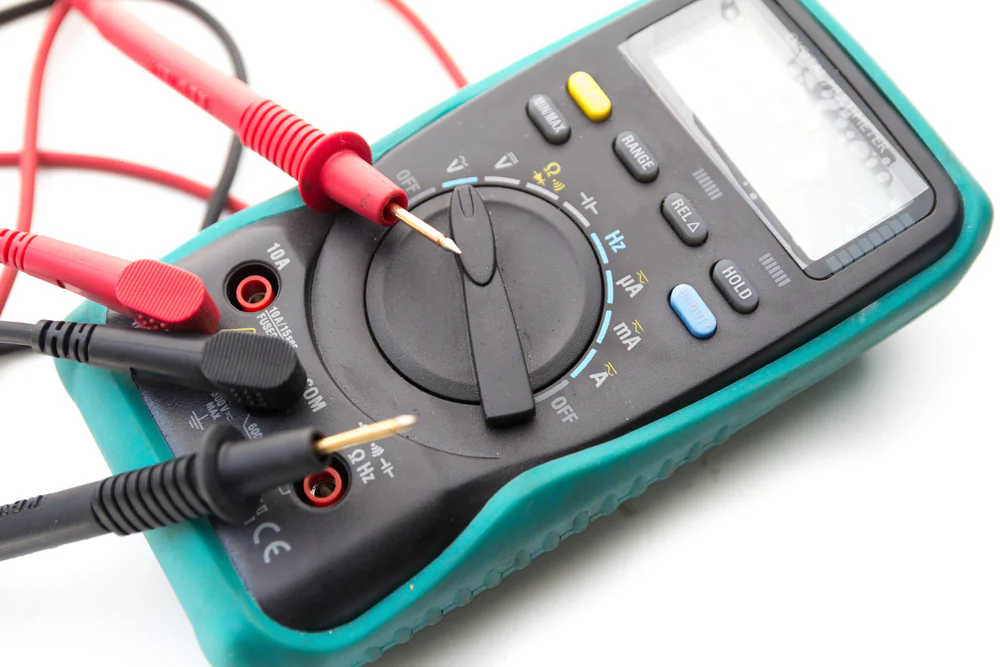
Licensed Electrical Contractor Haywood County
When your breaker keeps tripping or half your outlets stop working, you’re not just dealing with an inconvenience. You’re dealing with a safety risk that could escalate into fire hazards or equipment damage if ignored.
You need someone who shows up when they say they will, diagnoses the actual problem instead of guessing, and fixes it right the first time. That’s what separates a quick patch job from electrical work that protects your family or keeps your business running without interruption.
In Haywood County, where storms roll through the mountains and older homes still have outdated wiring, your electrical system needs more than a handyman with a voltage tester. You need a licensed electrical contractor who understands local code requirements and won’t leave you with hidden problems that surface six months later.
Local Electrical Company Haywood NC
We’ve been handling residential and commercial electrical work since 2002. We’re locally owned, operated by Andy Helton—a master electrician with over 35 years in the field—and we’ve built our reputation on showing up prepared and leaving your property cleaner than we found it.
Our trucks are fully stocked, so we’re not making multiple trips to the supply house on your dime. You speak directly to a service representative, not an answering machine. And when we give you a price, that’s what you pay—no surprise charges after the work is done.
Haywood County has unique electrical challenges, from older mountain homes with knob-and-tube wiring to commercial properties dealing with power fluctuations during storm season. We’ve seen it all, and we know how to handle it.
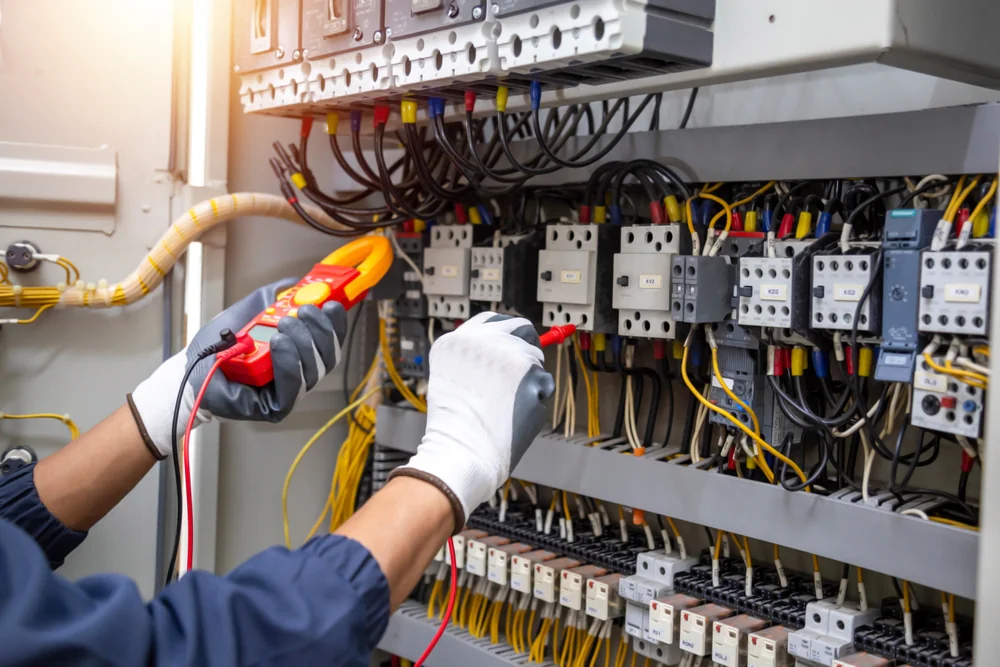
Electrician Services Process Haywood County
First, you reach an actual person who listens to what’s going on. We ask the right questions to understand whether this is an emergency that needs immediate attention or something we can schedule at your convenience.
When our technician arrives—in uniform, in a clearly marked truck—they assess the situation and walk you through what they found. Before any work starts, you get a flat-rate price. No hourly guessing games, no “we’ll see what happens” estimates.
Once you approve, we get to work. We use quality components from brands like Square D, Siemens, and Generac—equipment that lasts and performs under real-world conditions. After the job’s complete, we test everything, clean up the work area, and make sure you understand what was done and why.
If you ever have questions after we leave, you can call us. We don’t disappear once the invoice is paid.
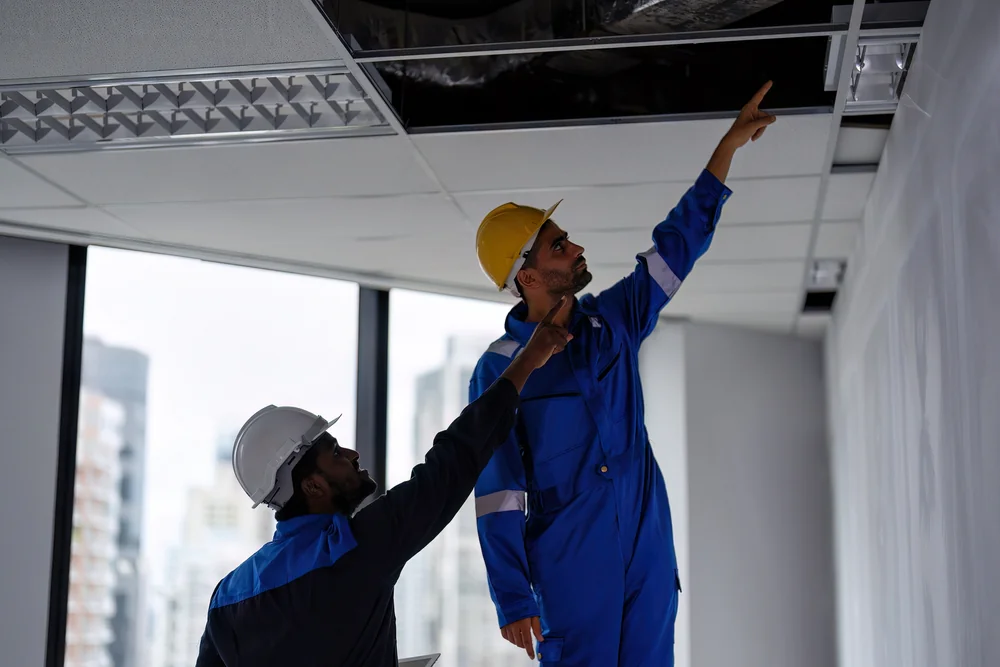
Commercial Electrical Services Haywood NC
You get electrical repair that fixes the root cause, not just the symptom. Panel upgrades that bring your system up to code and give you room to expand. Generator installation that keeps your power on when the grid goes down—something that matters more every year in Western North Carolina.
For commercial properties in Haywood County, we handle everything from lighting retrofits that cut your energy costs to three-phase installations for new equipment. Your business can’t afford downtime, and we don’t cause it. We schedule around your operations and work efficiently so you’re not paying for someone to stand around figuring things out.
Residential customers get the same level of attention. Whether it’s rewiring an older home, adding circuits for a workshop, or installing EV charging stations, we treat your property with respect. We’re not tracking mud through your house or leaving wire scraps in your yard.
Emergency and after-hours service is available because electrical problems don’t wait for business hours. When you need help, you can reach us.

How much does it cost to hire an electrical contractor in Haywood County?
It depends entirely on what needs to be done. A simple outlet repair might run a couple hundred dollars. A full panel upgrade or whole-house rewire could be several thousand.
Here’s what matters more than the number: you should know the cost before work begins. We use flat-rate pricing, which means we assess the job, tell you the price, and that’s what you pay. No hourly rates that climb as the job drags on. No surprise charges for “unforeseen complications” that any experienced electrician should have caught during the initial assessment.
If someone gives you a price that seems too good to be true, it probably is. You’re either getting unlicensed work that won’t pass inspection, or you’re getting a lowball estimate that’ll balloon once they’re halfway through the job and you feel stuck.
What should I look for when choosing an electrical contractor?
Start with licensing and insurance. In North Carolina, electrical work requires a state license. If someone can’t show you their credentials, walk away. Insurance protects you if something goes wrong—and in electrical work, “wrong” can mean serious property damage or injury.
Experience matters, especially with older homes common in Haywood County. Someone who’s only worked on new construction won’t necessarily know how to troubleshoot a 1950s electrical system or bring it up to current code without tearing out half your walls.
Ask about their pricing structure upfront. Hourly rates can spiral out of control. Flat-rate pricing gives you cost certainty. Also ask who’s actually doing the work—are you getting the master electrician or a crew of apprentices with minimal supervision?
Finally, check how they communicate. If it takes three days to get a callback during the estimate phase, imagine trying to reach them when there’s a problem after the job’s done.
Do I really need a licensed electrician, or can a handyman handle it?
Legally, any electrical work beyond changing a light bulb requires a licensed electrician in North Carolina. Practically, there’s a reason for that law.
Electrical work done wrong can kill someone or burn down your house. It’s not like a crooked shelf or a leaky faucet where the worst-case scenario is annoying. It’s life-and-death serious. A handyman might be great at ten different things, but unless they hold an electrical license, they shouldn’t be touching your wiring.
Beyond safety, there’s the code compliance issue. When you sell your home, an inspector will look at any electrical work that was done. If it wasn’t permitted and done by a licensed contractor, you could be forced to rip it out and redo it properly—at your expense. That cheap repair just became very expensive.
Insurance companies also care. If your house burns down and the investigation traces it back to unpermitted electrical work, your claim could be denied.
How long does electrical work typically take to complete?
A standard service call—replacing an outlet, fixing a tripped breaker, installing a ceiling fan—usually takes a couple of hours once we’re on site. We carry most common parts on our trucks, so we’re not making supply runs in the middle of your job.
Panel upgrades typically take a full day, sometimes two if we’re dealing with an older home that needs additional work to meet current code. Your power will be off during portions of the work, but we coordinate with you to minimize disruption.
Whole-house rewires or large commercial projects can take several days to a few weeks, depending on the size and complexity. We’ll give you a realistic timeline upfront and keep you updated if anything changes.
What slows jobs down is usually poor planning or contractors who don’t stock their trucks properly. We’ve been doing this long enough to anticipate what we’ll need and bring it with us. That’s how we complete jobs efficiently without cutting corners.
What's involved in bringing an older home's electrical system up to code?
Older homes in Haywood County often have undersized panels, outdated wiring, and insufficient grounding. Bringing them up to code usually means upgrading the main panel to handle modern electrical loads, replacing old wiring that’s deteriorated or dangerous, and adding GFCI and AFCI protection where required.
The scope depends on what’s already there. Some homes just need a panel upgrade and a few circuit additions. Others need significant rewiring, especially if they still have knob-and-tube wiring or aluminum wiring from the 1960s and 70s.
We start with a thorough assessment. We’ll identify what’s dangerous, what’s outdated but functional, and what can stay as-is. Then we prioritize the work based on safety and code requirements. You don’t always have to do everything at once—we can phase the work if budget is a concern—but we’ll be honest about what needs immediate attention versus what can wait.
The goal isn’t just passing inspection. It’s making sure your electrical system is safe and reliable for the next several decades.
Why do electrical contractors charge more than I expected?
Because quality electrical work costs more than bad electrical work. You’re not just paying for someone to connect wires. You’re paying for licensing, insurance, ongoing training, quality materials, and the experience to diagnose problems correctly the first time.
A licensed master electrician has invested years and thousands of dollars into their education and credentials. They carry insurance that protects you if something goes wrong. They use code-compliant methods and quality components that won’t fail in two years. All of that costs money.
When you see a significantly cheaper quote, ask yourself what they’re cutting. Are they licensed? Insured? Using quality materials? Do they pull permits? Will they be around in five years if you have a problem?
The cheapest option often becomes the most expensive when you factor in callbacks, failed inspections, and eventually hiring someone else to fix what the first person messed up. We price our work fairly for the value and protection you’re getting—not as cheap as possible, but as good as it needs to be.
About Us

Electrical Service Providers (ESP) has been in business since 2002. ESP started out performing wiring services to new construction, remodeling projects and residential homes. Our company’s president identified a market for electrical services to be performed in homes and businesses independent of new construction. Read More about Electrical Service Providers>>
All Rights Reserved.Organic Marketing LLC
Business Listings


Product Brands Used
Allied, Broan, Cutler Hammer, General Electric, Ideal, Juno, Kohler, Leviton, Lutron, Siemens, Square D
Contact
- Office Address: 3254 S Anthony Ct.
Burlington, NC 27215 - Mailing Address: PO Box 25
Alamance, NC 27201 - Phone: 336-228-3300
- E-mail: [email protected], [email protected]
Service Areas
Chapel Hill, Burlington, Carrboro, Durham, Gibsonville, Hillsborough, Graham, Pittsboro, Morrisville, Cary
About Us
Electrical Service Providers (ESP) has been in business since 2002. ESP started out performing wiring services to new construction, remodeling projects and residential homes. Our company’s president identified a market for electrical services to be performed in homes and businesses independent of new construction. Read More about Electrical Service Providers>>
All Rights Reserved.Organic Marketing LLC