
Thermal Imaging Alamance County NC

See Electrical Problems Before They Cost You

Electrical failures don’t give warnings until it’s too late. Thermal imaging catches overheating connections, overloaded circuits, and failing components before they shut you down or start a fire—without cutting into walls or powering down your operation.
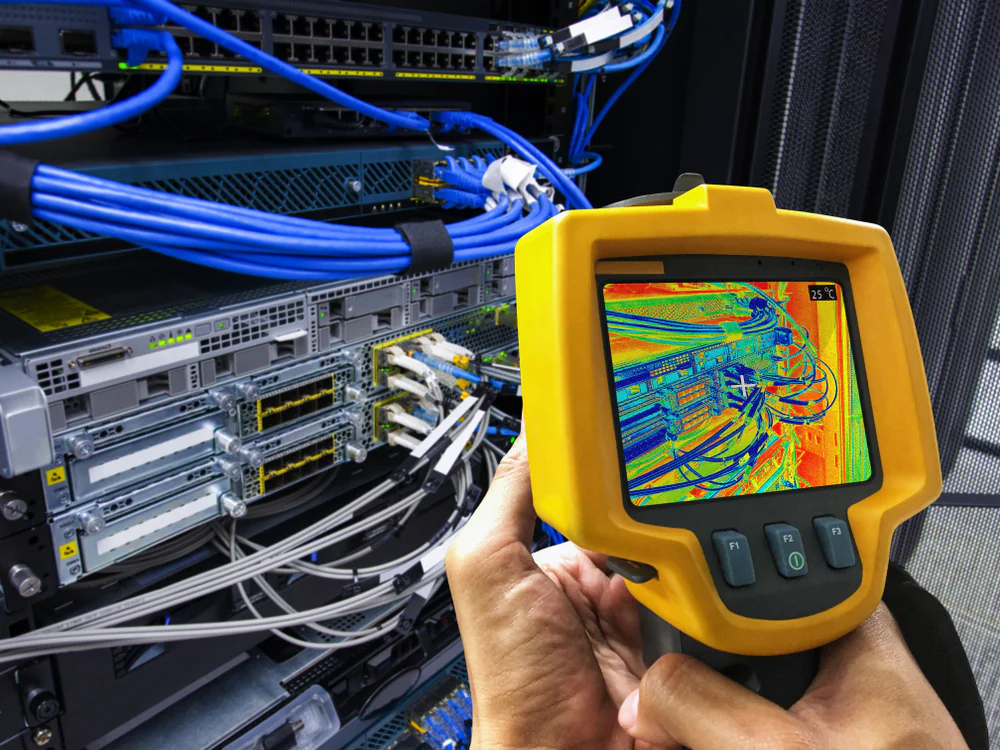
A person uses a handheld thermal imaging device to check heat levels on servers and cables in a data center; the screen shows a colorful thermal map highlighting hot and cool areas.

Licensed Since 1989

Our lead technician has been a licensed electrical contractor for over three decades, bringing deep service and maintenance expertise to every inspection.

Flat Rate Pricing

You know the cost before we start. No surprises, no hidden fees—just honest pricing so you can make informed decisions about your electrical system.

Fully Stocked Service Trucks

Our uniformed technicians arrive ready to work with everything needed on-site, minimizing delays and getting your inspection done efficiently without multiple trips.

Serving NC Since 2002

Over two decades of trusted electrical service across Alamance, Durham, Orange, and Chatham Counties means we understand local facilities and their unique challenges.

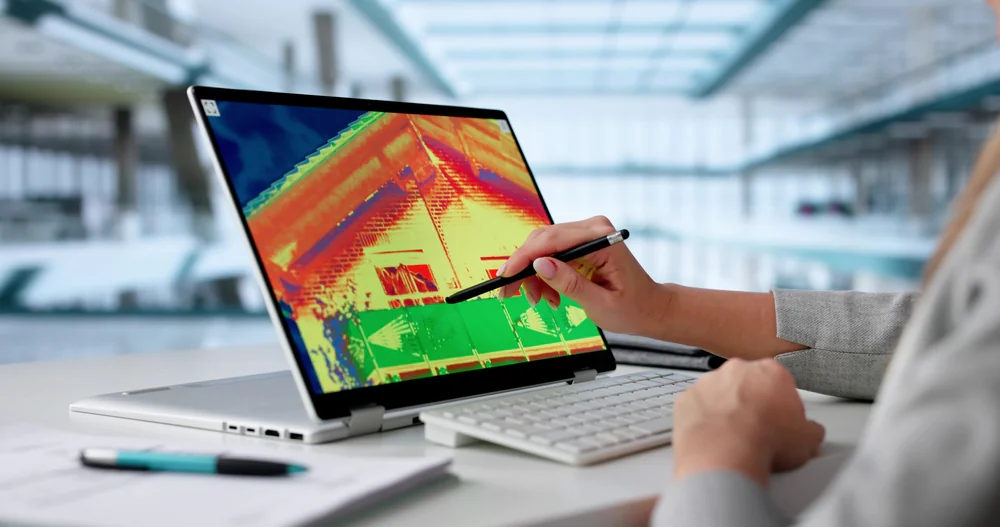
A person uses a stylus to analyze a thermal image of a house displayed on a laptop screen, in a modern office setting with bright natural light.

Infrared Thermography Electrical Services NC

What Thermal Imaging Does for Your Electrical System

Thermal imaging uses infrared cameras to detect heat patterns in your electrical equipment. Overheating is one of the earliest warning signs that something’s wrong—a loose connection, an overloaded circuit, a component that’s starting to fail. These problems generate excess heat long before they cause visible damage or trip a breaker. We scan your electrical panels, transformers, switchgear, and distribution systems while they’re energized and under normal load. The camera reveals temperature differences that indicate trouble. Hot spots show up clearly on the thermal image, giving you a visual record of exactly where the problem is and how serious it might be. This isn’t guesswork. It’s data. And it gives you time to fix issues during scheduled downtime instead of dealing with emergency failures, fire hazards, or insurance headaches down the road.

Hot Spot Detection Electrical Inspections

What You Actually Get from Thermal Imaging

This service isn’t about checking boxes. It’s about protecting your operation, your budget, and your people from electrical failures that you can’t see coming with traditional inspections.

You catch failing components before they take down critical systems or cause unplanned outages that cost you time and revenue.

You get visual proof of electrical conditions that satisfies insurance requirements and supports compliance with preventive maintenance programs.

You avoid the cost of emergency repairs by scheduling fixes during planned downtime when parts and labor are easier to coordinate.

You extend the life of expensive electrical equipment by addressing heat damage and resistance issues before they cause permanent failure.

You identify energy waste from poor connections and imbalanced loads, which means lower utility costs over time.

You reduce fire risk significantly by detecting overheating that could lead to electrical fires, protecting your property and occupants.

Ready to get started?

A bold orange number 1 is centered inside a solid dark blue circle on a light gray background.

Share project details

Call us or get a free online quote to help us identify your project needs.

A large orange number 2 is centered inside a solid dark blue circle on a light gray background.

We'll follow up

If you requested an online quote, you can expect a callback within 24-48 hours of your request.

A large orange number 3 is centered inside a solid dark blue circle on a light gray background.

The floor is yours

Connect with an expert and share all project specifics.

A bold orange number 4 centered inside a solid dark blue circle on a light gray background.

Plan your project

Like what you hear? We'll provide next steps and expert guidance.
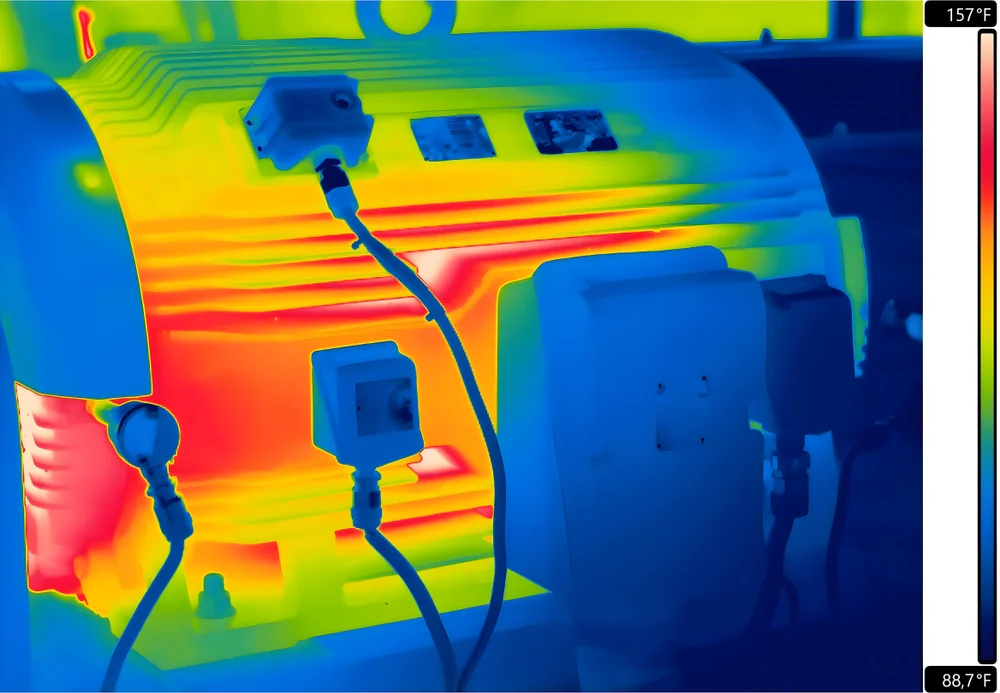
Thermal image of industrial equipment showing hot areas in red and yellow, cooler areas in blue. Temperature scale on the right ranges from 88.7°F to 157°F. Cables and devices are connected to the equipment.

Thermographic Surveys Burlington Chapel Hill Durham

Why Thermal Imaging Beats Traditional Inspection Methods

Traditional electrical inspections rely on visual checks, voltage readings, and physical testing. They’re useful, but they have limits. You can’t see inside a sealed panel. You can’t detect a connection that’s heating up but hasn’t failed yet. And you can’t inspect energized equipment without significant safety risk. Infrared thermography changes that. The inspection is non-contact and non-invasive. Your equipment stays online. We don’t need to open panels or disconnect anything to see what’s happening inside. The thermal camera detects infrared radiation—heat—that every electrical component emits. When resistance increases due to corrosion, loose connections, or component wear, heat increases. The camera picks that up instantly. Studies show that nearly 25 percent of electrical failures stem from faulty connections. Many insurance companies now require annual infrared surveys because they know this technology prevents the kinds of losses that cost tens of thousands of dollars. Thermal imaging can save you between ten and twenty thousand dollars by catching problems early. We’ve seen scans identify issues that would have caused fires, blown transformers, or total system failures within weeks.

Electrical Fire Prevention Thermal Imaging NC

What's Included in a Thermal Imaging Inspection

We start by understanding your facility and your electrical load. Thermal imaging works best when equipment is operating under at least 40 percent of its typical load, so we schedule inspections during normal business hours when your systems are active. Our technician scans electrical panels, breakers, transformers, disconnects, motor control centers, and any other distribution equipment you want evaluated. The infrared camera captures thermal images that show temperature variations across components. We document hot spots, temperature differentials, and any anomalies that indicate potential problems. You receive a detailed report with both thermal images and visible-light photos of each area we inspected. The report identifies issues by severity, explains what’s causing the heat signature, and recommends corrective action. If we find something that needs immediate attention, we’ll let you know on the spot. For less urgent findings, you’ll have time to plan repairs, order parts, and schedule the work without disrupting operations. This is predictive maintenance at its best—fixing things before they break, often preventing 70 to 75 percent of unexpected breakdowns.
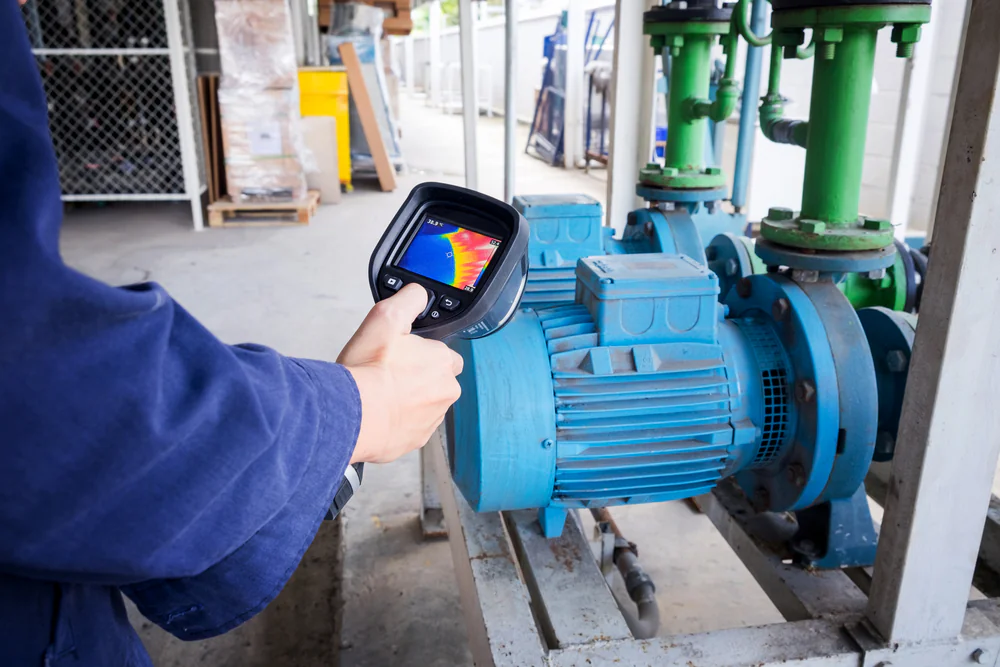
A person uses a handheld thermal imaging camera to inspect a blue industrial electric motor connected to green pipes in a facility. The camera screen displays the motor’s heat signature in various colors.
A black circle with white number one.

Schedule During Normal Operations

We coordinate a time when your electrical systems are energized and under typical load so thermal readings accurately reflect real-world conditions.

A bold white number 2 centered inside a solid black circle on a light gray background.

Scan Equipment with Infrared Camera

Our technician uses a professional-grade thermal imaging camera to capture heat signatures from panels, transformers, switchgear, and distribution points throughout your facility.

A bold white number 3 is centered inside a solid black circle on a plain light gray background.

Receive Detailed Report with Findings

You get thermal images, analysis, severity ratings, and recommended actions so you can prioritize repairs and schedule maintenance without guesswork or surprises.