Electrician in Caldwell, NC
Know the Price Before the Work Starts
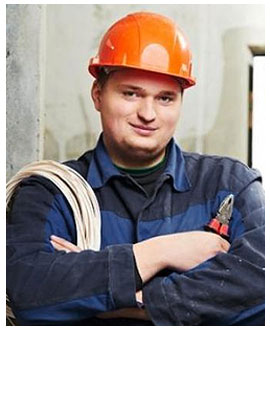

Licensed Electrical Contractor Caldwell NC
You run the dishwasher and the microwave at the same time without killing power to half the kitchen. Your lights don’t flicker every time the AC kicks on. You charge your devices, watch TV, run the laundry, and cook dinner without playing electrical Tetris to avoid tripping a breaker.
That’s what happens when your electrical system is built for how you actually live, not how people lived in 1982. No more rationing outlets or timing appliance use. Just a home that works the way you need it to, safely and reliably.
Most houses in Caldwell County—whether you’re in Lenoir, Granite Falls, Hudson, or anywhere across the county—were built when a 100-amp panel and basic wiring were considered plenty. Back then, homes didn’t have central air running all summer, multiple computers, smart home systems, or electric vehicle chargers. Your electrical system wasn’t designed for the load you’re putting on it now. When you upgrade that system to match modern demand, everything just works better.
Local Electrical Company Caldwell NC
ESP Electrical Service Providers is owned and operated by Andy Helton, a Master Electrician with more than 35 years of hands-on electrical experience. Since 2002, we’ve been serving homeowners across North Carolina, including throughout Caldwell County, with a straightforward approach: respond fast, price it upfront, do the work right, and back it with a real warranty.
Caldwell County has one of the highest homeownership rates in the region, with over 71% of residents owning their homes. People here take care of what they’ve built, and they expect the contractors they hire to do the same. We approach every job—whether it’s a service call in a neighborhood off Highway 321 in Lenoir or a panel upgrade in a home near the Brushy Mountains—with the same commitment to quality and transparency.
We started with new construction wiring and evolved into full-service residential electrical work because that’s where the real need was: homeowners dealing with aging systems, safety concerns, and contractors who didn’t show up or communicate clearly. We built our reputation by doing the opposite.
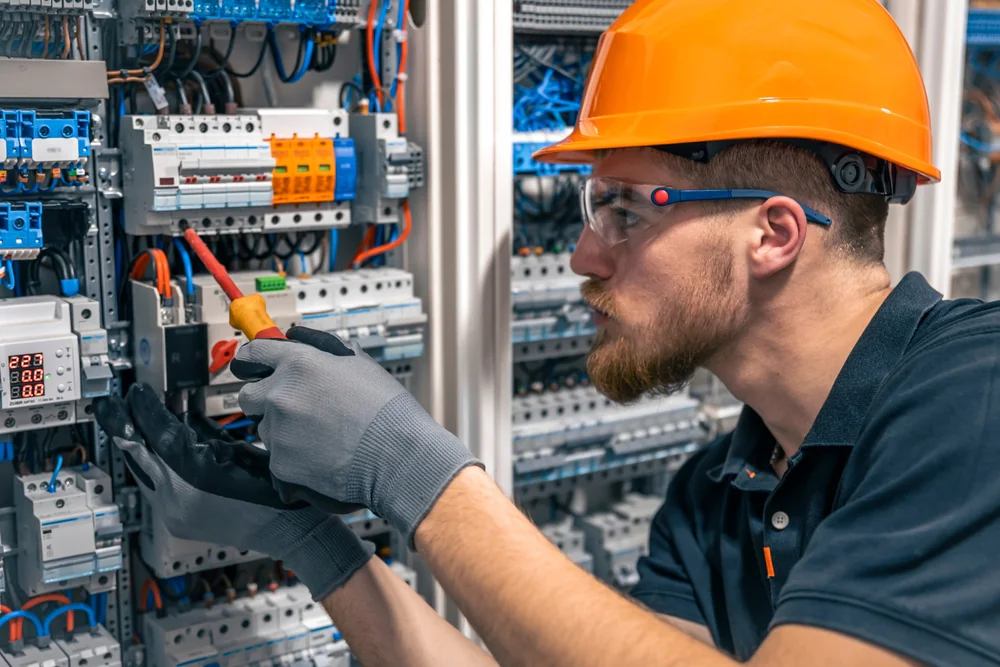
Electrician Services Caldwell NC
You call or reach out online. You talk to a real person who listens to what’s happening and schedules a time that actually works for your schedule. Not “sometime between 8 and 5″—a real window you can plan around.
A licensed electrician shows up in a fully stocked truck, ready to assess whatever’s going on. They walk through the issue with you, explain what they’re seeing, and tell you what needs to happen to fix it properly. Then they give you flat-rate pricing—the actual cost, not an estimate that balloons once they’re halfway through the job.
If you approve the work, they handle it right then if possible. Panel upgrades, circuit installations, outlet replacements, generator hookups, rewiring, safety inspections—whatever the job requires. They don’t leave messes, they don’t disappear for three days in the middle of a project, and they don’t consider the job done until you’re satisfied. We back every job with a lifetime labor warranty up to 25 years, which means if something goes wrong with our work, we fix it. That’s not standard in this industry, but it should be.
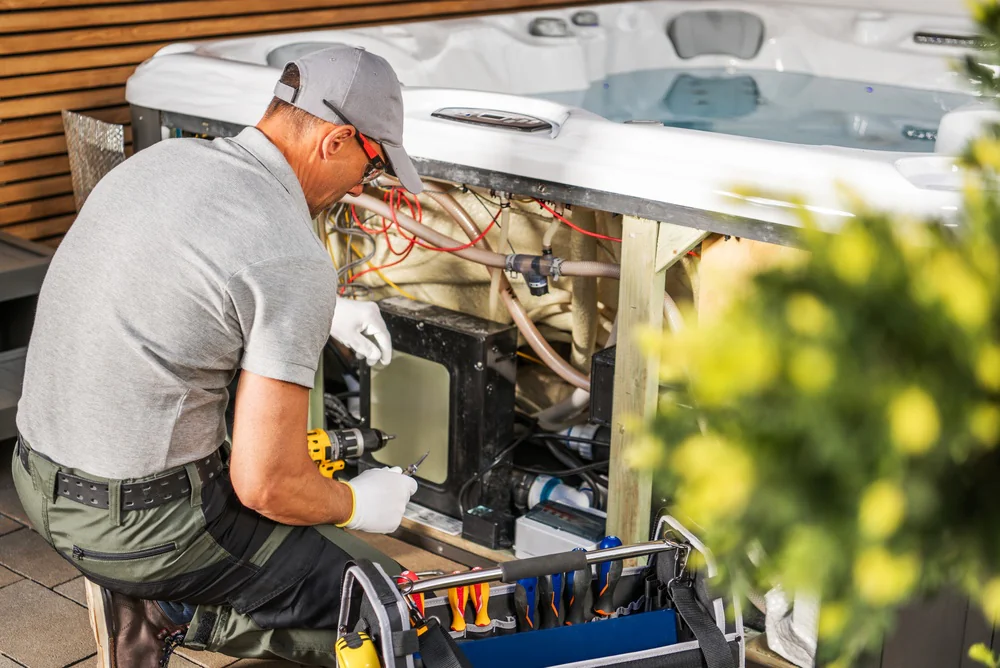
Residential Electrical Services Caldwell NC
We handle the full range of residential electrical services across Caldwell County. Electrical panel upgrades are one of the most common jobs—taking homes from outdated 100-amp or 150-amp panels up to 200-amp service that can handle modern electrical loads without constant breaker trips. Whole-home rewiring for older houses where the wiring itself has become a safety issue. GFCI and AFCI outlet installations to bring homes up to current electrical code requirements. Generator installation and transfer switch hookups for backup power during outages. Dedicated circuits for appliances that need them, like HVAC systems, electric ranges, or EV chargers. Lighting installations, both interior and exterior. Electrical troubleshooting when something’s not working right but you can’t pinpoint why. Safety inspections to identify hazards before they become emergencies.
In a county where the median home was built in 1982, a lot of houses are running on electrical systems that were never designed for today’s demands. Homes in Granite Falls, Hudson, Sawmills, and throughout the area are dealing with the same issue: an electrical infrastructure built for a different time. We work with homeowners to bring those systems up to modern standards—not because it’s a nice-to-have upgrade, but because it’s a safety issue and a quality-of-life issue.
We use flat-rate pricing, so you’re not left guessing what the final bill will be. Our technicians drive fully stocked trucks, which means they’re not making multiple trips or telling you they’ll have to come back next week with the right parts. And with a Master Electrician running the operation, you’re working with someone who’s seen just about every electrical problem a home can present and knows how to fix it correctly the first time.
How do I know if my electrical panel needs to be upgraded?
If your breakers trip frequently—especially when you’re just running normal household appliances—that’s your panel telling you it can’t handle the load. Other warning signs include lights that flicker or dim when appliances turn on, outlets that feel warm to the touch, a burning smell near the panel, or visible rust and corrosion on the panel box itself. Any of those mean it’s time to have an electrician take a look.
Most homes in Caldwell County built before the 1990s have 100-amp or 150-amp service. That was fine when homes had fewer electrical demands, but today’s houses need 200-amp panels to safely run HVAC systems, kitchen appliances, computers, entertainment systems, and anything else you plug in. If you’re adding a major appliance, finishing a basement, or installing a generator, you’ll almost certainly need an upgrade.
An electrician can run a load calculation to figure out whether your current panel is adequate or if you’re pushing it beyond its limits. This isn’t just about convenience—an overloaded panel is a legitimate fire hazard. Upgrading improves safety, increases your home’s resale value, and gives you the electrical capacity to live without constantly managing which devices you can use at the same time.
What's the difference between a licensed electrician and someone who just does electrical work?
A licensed electrical contractor in North Carolina has completed the required training, passed state exams, and holds an active license from the NC State Board of Examiners of Electrical Contractors. That license proves they know the National Electrical Code, understand local regulations, and can perform electrical work safely and correctly. They’re also required to carry insurance, which protects you if something goes wrong during the job.
Someone who “does electrical work” without a license might have some hands-on experience, but they haven’t met the state’s standards for competency. If they wire something incorrectly, install a panel that doesn’t meet code, or create a safety hazard, you’re the one stuck dealing with it. Insurance companies and home inspectors will flag unpermitted or non-compliant electrical work, which can kill a home sale or leave you unable to file a claim if there’s a fire.
North Carolina law requires that electrical work be performed or directly supervised by a licensed contractor. Hiring someone unlicensed might look cheaper upfront, but it usually costs more when you have to pay a licensed electrician to come fix what was done wrong. Working with a licensed contractor like us means the job gets done safely, correctly, and in full compliance with code requirements.
How much does it cost to upgrade an electrical panel in Caldwell County?
The cost of a panel upgrade depends on what your specific situation requires. The main factors are the size of the new panel (most residential upgrades go to 200-amp service), whether the main service line from the utility company needs upgrading, the condition of your existing wiring, and whether there are other code compliance issues that need to be addressed at the same time.
A straightforward swap—replacing an old 100-amp panel with a new 200-amp panel in a house where everything else is in decent shape—falls within a predictable range. But if the service entrance needs work, if your grounding system isn’t up to code, or if there are other issues discovered during the inspection, the scope and cost increase accordingly.
We use flat-rate pricing, which means you get the exact cost before any work begins. No hourly rates that keep climbing. No surprise charges when the electrician discovers something halfway through the job. We assess your home’s specific needs, explain what has to be done to bring the system up to standard, and give you a clear, fixed price. For a project like a panel upgrade, where costs can vary significantly based on the condition of your existing system, that kind of transparency matters.
Can I install a whole-home generator myself, or do I need an electrician?
Installing a whole-home generator involves both electrical and mechanical work, and North Carolina law requires that the electrical portion be handled by a licensed electrician. The generator connects to your home’s electrical system through a transfer switch, which automatically shifts power from the utility to the generator during an outage. If that transfer switch is installed incorrectly, you risk backfeeding—sending power back into the utility lines, which is extremely dangerous for utility workers and can destroy your equipment.
Beyond the electrical hookup, generators need proper fuel connections (natural gas or propane), a stable concrete pad for mounting, and compliance with local setback requirements and noise ordinances. Most manufacturers require professional installation to keep the warranty valid, and most jurisdictions require permits and inspections before you can legally operate the unit.
A licensed electrician handles the transfer switch installation, makes sure the generator is properly grounded, confirms everything meets code, and tests the system to verify it works correctly when you need it. Trying to DIY a generator install might seem like a money saver, but the risks—electrical hazards, failed inspections, voided warranties, and potential code violations—make it a job that should be left to professionals. We’ve handled generator installations throughout Caldwell County and can manage the entire process from permitting through final testing.
What should I do if I have an electrical emergency?
If you’re seeing sparks, smelling burning plastic, noticing smoke, or dealing with any situation where you feel unsafe, your first move is to cut power to that area. If you can safely reach your breaker panel, turn off the breaker for that circuit. If the problem involves the main panel itself, or if you’re not sure which breaker controls the affected area, shut off the main breaker to kill power to the whole house. Then call a licensed electrician immediately.
For issues like a total loss of power but no immediate danger, first check whether your neighbors have power. If they do and you don’t, the problem is with your home’s system, not the utility. Check your breaker panel for tripped breakers. If resetting a breaker doesn’t fix the problem, or if it trips again as soon as you reset it, don’t keep flipping it. That’s a sign of a serious underlying issue that needs professional diagnosis.
We treat electrical emergencies with the urgency they deserve. Electrical problems don’t wait for convenient business hours, and when something goes wrong—whether it’s a breaker that won’t stay reset, an outlet throwing sparks, or a panel showing signs of failure—you need someone who can get there quickly, figure out what’s happening, and fix it right. We prioritize emergency calls because we understand that electrical issues can escalate from inconvenient to dangerous fast.
Why do my lights flicker when I turn on certain appliances?
Flickering lights when you fire up an appliance usually means one of three things: the appliance is pulling more power than the circuit was designed to handle, you’ve got loose wiring connections somewhere in the system, or your electrical panel doesn’t have enough capacity to support your home’s total electrical load. Large appliances like HVAC systems, refrigerators, and microwaves draw a surge of power when they start up, and if the circuit or panel is already running near its limit, that surge causes a brief voltage drop that makes your lights flicker.
In older homes—and Caldwell County has plenty of them, with a median build year of 1982—this is often a sign that the electrical system hasn’t kept pace with how people live now. A 100-amp panel that was perfectly adequate when the house was built may not be sufficient once you add central air conditioning, modern kitchen appliances, home office equipment, and smart home devices. The system is just overloaded.
Loose wiring connections are a more serious problem because poor connections create heat, and heat leads to electrical fires. An electrician can inspect your system, determine whether you’re dealing with an overloaded circuit, insufficient panel capacity, or faulty wiring, and recommend the right fix. Sometimes it’s as simple as running a dedicated circuit for a high-draw appliance. Other times, it’s a clear signal that your panel needs an upgrade. Either way, flickering lights aren’t something to ignore—they’re your electrical system telling you it’s struggling.
About Us

Electrical Service Providers (ESP) has been in business since 2002. ESP started out performing wiring services to new construction, remodeling projects and residential homes. Our company’s president identified a market for electrical services to be performed in homes and businesses independent of new construction. Read More about Electrical Service Providers>>
All Rights Reserved.Organic Marketing LLC
Business Listings


Product Brands Used
Allied, Broan, Cutler Hammer, General Electric, Ideal, Juno, Kohler, Leviton, Lutron, Siemens, Square D
Contact
- Office Address: 3254 S Anthony Ct.
Burlington, NC 27215 - Mailing Address: PO Box 25
Alamance, NC 27201 - Phone: 336-228-3300
- E-mail: [email protected], [email protected]
Service Areas
Chapel Hill, Burlington, Carrboro, Durham, Gibsonville, Hillsborough, Graham, Pittsboro, Morrisville, Cary
About Us
Electrical Service Providers (ESP) has been in business since 2002. ESP started out performing wiring services to new construction, remodeling projects and residential homes. Our company’s president identified a market for electrical services to be performed in homes and businesses independent of new construction. Read More about Electrical Service Providers>>
All Rights Reserved.Organic Marketing LLC