EV Charger Installation in Apex, NC
Charge at Home Without the Electrical Headaches
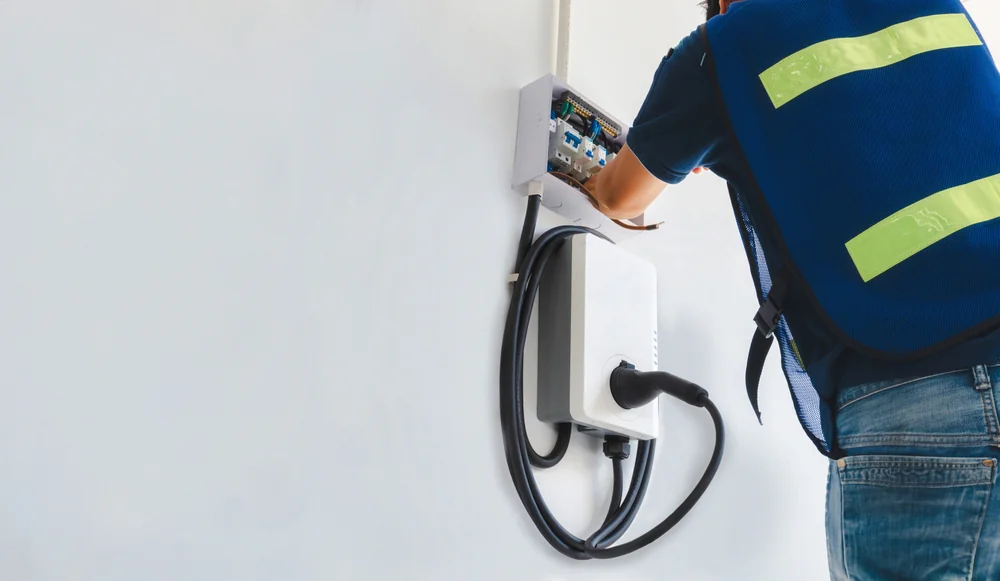
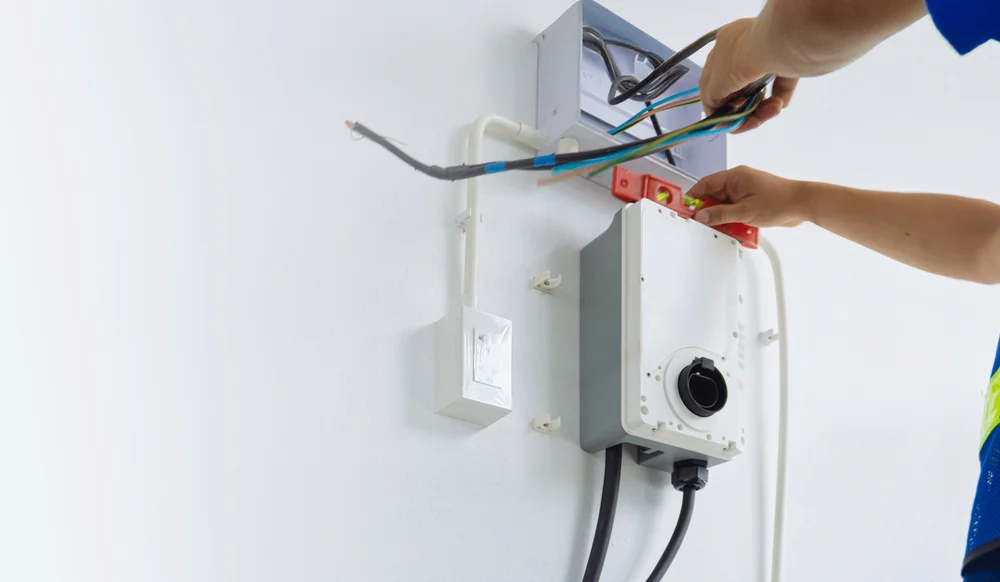
Electric Vehicle Charger Setup Apex, NC
You bought an electric vehicle to simplify your life, not spend Saturday mornings at the Harris Teeter charging station. A Level 2 home charger means you plug in when you get home and start every day with a full battery—no apps, no waiting, no wondering if someone’s using the one charger at Peak City.
Wake County added over 5,000 new EVs last year alone. Public charging infrastructure hasn’t kept up. The 39 public ports around Apex get crowded fast, especially during peak hours when everyone’s trying to top off before work.
With a professionally installed home charging station, you’re charging while you sleep. Most EVs go from empty to full overnight on a 240-volt Level 2 system. That’s 25-30 miles of range per hour versus the 3-4 miles you get from a standard outlet. Your morning commute to Research Triangle Park or Raleigh? Covered, every single day.
Licensed Electricians Serving Apex Residents
ESP Electrical Service Providers is locally owned and operated by Andy Helton, a Master Electrician with 35 years in the field. We’ve been serving Apex and Wake County since 2002, back when most people thought electric cars were golf carts with doors.
We’re not a national franchise sending whoever’s available. You get licensed electricians who know Apex’s housing stock—the older homes near Salem Street that need panel upgrades, the newer builds in Bella Casa that have capacity but need proper permitting. We’ve done enough installations around here to know what works and what causes problems down the road.
Our trucks are fully stocked, our pricing is flat-rate so you know costs upfront, and we don’t leave until the job’s done right. No surprises, no upsells, no coming back three times because we didn’t bring the right equipment.
How EV Charging Station Installation Works
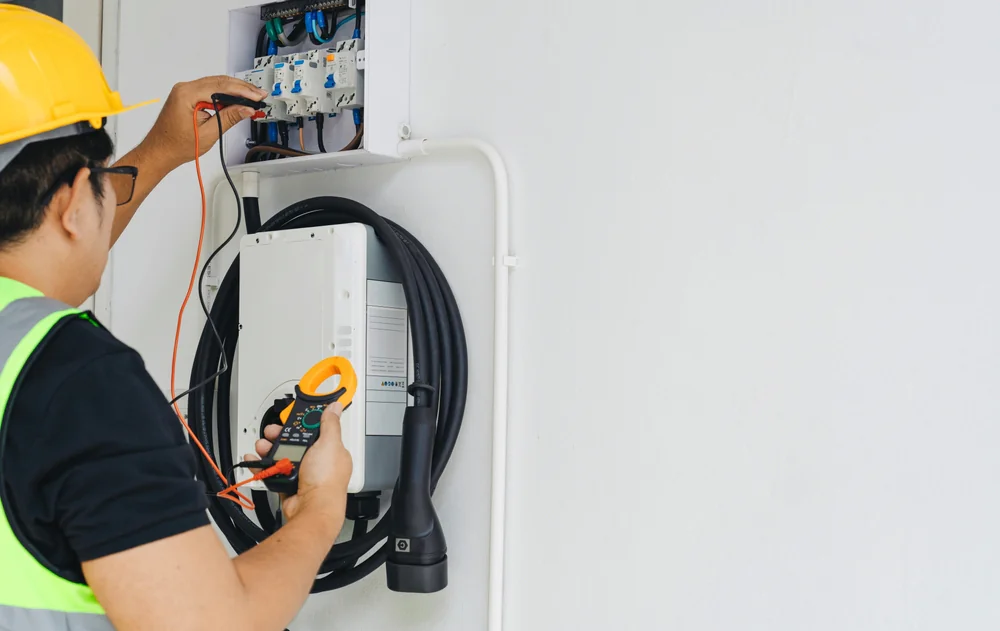
First, we assess your electrical panel. Most homes in Apex built before 2010 have 100-amp or 150-amp panels. A Level 2 EV charger typically pulls 40-50 amps. If your panel’s already running your HVAC, water heater, and everything else, we’ll need to upgrade it. We tell you this upfront, not after we’ve started tearing into walls.
Next comes permitting. Wake County requires electrical permits for EV charger installations. We handle that paperwork. Most permits get approved within a few days, though it can take up to two weeks depending on the county’s workload.
Installation day, we run a dedicated 240-volt circuit from your panel to wherever you’re parking—garage, carport, driveway. We mount the charging unit, make all connections, test the system, and walk you through how it works. Most installations take 4-6 hours if no panel upgrade is needed. With an upgrade, plan on a full day.
Before we leave, we verify everything’s code-compliant and schedule the county inspection if required. You’re not paying for a second trip when the inspector shows up.
What's Included in Apex EV Charger Setup
You’re getting a complete electrical evaluation, not just someone bolting a charger to your wall. We check your panel capacity, calculate your home’s existing load, and determine if you need an upgrade. If you do, we give you the cost before any work starts. Flat-rate pricing means no hourly surprises.
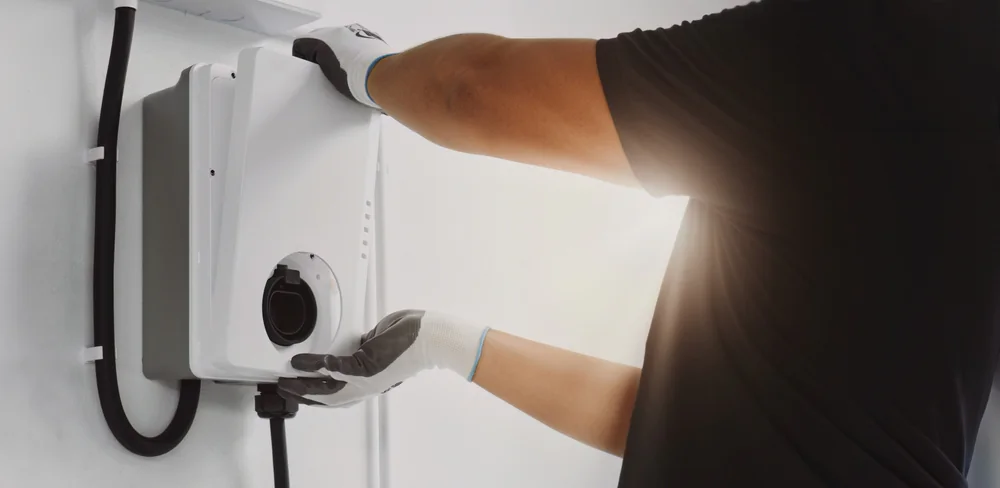
The installation includes running a new 240-volt circuit with proper gauge wire, installing a dedicated breaker, mounting your charging station, and making all connections to code. We’re installing NEMA 14-50 outlets or hardwiring units, depending on your charger model and preference.
Duke Energy customers in Apex can get up to $1,133 back through their EV charger rebate program. We’ll walk you through what documentation you need to submit. The rebate doesn’t come to us—it goes to you—but we make sure the installation qualifies.
Around here, most people are installing 40-amp or 48-amp Level 2 chargers. That’s enough to fully charge a Tesla Model 3, Chevy Bolt, or Ford Mustang Mach-E overnight. If you’ve got a larger battery or a truck like the F-150 Lightning, we’ll recommend a higher-amp setup if your panel can handle it.
How much does it cost to install an EV charger in Apex?
Installation costs in Apex typically run between $800 and $2,500, depending on three main factors: distance from your electrical panel to the charging location, whether you need a panel upgrade, and which charger model you’re installing.
If your garage shares a wall with your electrical panel and you’ve got available capacity, you’re looking at the lower end. If we’re running wire 50 feet to a detached garage and upgrading your 100-amp panel to 200 amps, you’re closer to the higher end.
The charger itself is separate—that’s usually $400 to $900 depending on features. Some people want basic plug-and-charge units. Others want WiFi connectivity, scheduling, and app controls. We install what you buy, or we can recommend models based on what we’ve seen hold up well.
Duke Energy’s $1,133 rebate covers a big chunk of installation costs for qualifying customers. You’ll need proof of purchase, photos of the installation, and your vehicle registration. We provide the documentation you need to submit.
Do I need to upgrade my electrical panel for an EV charger?
It depends on your current panel size and how much capacity you’re already using. A 200-amp panel can usually handle an EV charger without upgrades. A 100-amp panel almost always needs an upgrade, especially in older Apex homes where you’re already running central air, electric water heater, and modern appliances.
Here’s the math: A 40-amp Level 2 charger is a continuous load, meaning it runs for extended periods. Code requires that continuous loads don’t exceed 80% of your circuit capacity. If your panel’s already at 70-80% capacity with existing loads, adding a 40-amp charger pushes you over safe limits.
We measure your actual load during the assessment. Sometimes we find that your panel has more headroom than expected. Other times, especially in homes built in the 1980s and 1990s, an upgrade is non-negotiable for safety reasons.
Panel upgrades aren’t cheap—usually $1,500 to $3,000—but you’re also increasing your home’s electrical capacity for everything else. If you were going to upgrade eventually anyway, doing it now makes sense.
How long does EV charger installation take in Apex?
A straightforward installation takes about 4 to 6 hours. That’s assuming your panel has capacity, the charger location is within 25 feet of the panel, and we’re not dealing with unusual obstacles like finished walls or complex routing.
If you need a panel upgrade, add another 4 to 6 hours. We’re typically looking at a full day for upgrade-plus-installation jobs. We don’t split this across multiple days unless permitting or inspections require it.
Permitting adds time on the front end, not during installation. Wake County usually processes electrical permits within 3 to 7 business days. We submit permits as soon as you approve the quote. Some installations require a county inspection after we’re done, which we schedule for you.
Weather can delay outdoor installations if we’re mounting a charger on an exterior wall or running conduit outside. We’re not installing charging stations in thunderstorms or when it’s pouring rain. We’ll reschedule rather than rush through a job that needs to be watertight.
What's the difference between Level 1 and Level 2 charging at home?
Level 1 charging uses your standard 120-volt outlet—the same one you plug a lamp into. It’s slow. You’re getting about 3 to 5 miles of range per hour of charging. If you drive 40 miles a day, you need 8 to 12 hours plugged in just to break even.
Level 2 charging uses 240 volts, the same power your dryer or oven uses. You’re getting 25 to 30 miles of range per hour with a typical 40-amp charger. That same 40-mile daily drive? Covered in about 90 minutes of charging.
Most EV owners in Apex who try to get by on Level 1 end up calling us within six months. It works if you’re driving under 30 miles a day and can leave the car plugged in all night, every night. But one longer trip to Durham or a day of running errands, and you’re behind.
Level 2 isn’t just faster—it’s flexible. You can charge your car in a few hours instead of all night. If you forget to plug in, you’re not stuck the next morning. And if North Carolina keeps pushing toward 1.25 million EVs by 2030 like the state’s planning, public chargers are going to get more crowded, not less.
Can I install an EV charger myself to save money?
Legally, no—not in Wake County. Electrical work that involves new circuits, panel modifications, or 240-volt installations requires a licensed electrician and a permit. Even if you’re comfortable with electrical work, the county inspector won’t approve a DIY installation.
Practically, it’s also a bad idea. A 240-volt circuit installed incorrectly can cause electrical fires, damage your vehicle’s charging system, or create shock hazards. We’ve been called to fix DIY installations that failed inspection, and the cost to correct someone else’s work usually exceeds what professional installation would’ve cost in the first place.
Your homeowner’s insurance is another factor. If an improperly installed charger causes a fire and the insurance company finds out it wasn’t permitted or installed by a licensed electrician, they can deny your claim. That’s an expensive risk for saving a few hundred dollars.
If cost is the concern, factor in Duke Energy’s rebate and the time-of-use rates they offer EV owners. You can charge during off-peak hours for as little as $0.04 per kWh. The money you save on charging costs covers installation expenses pretty quickly.
Will installing an EV charger increase my home's value in Apex?
Yes, especially in Apex where EV adoption is climbing fast. Wake County’s EV registrations jumped 40% last year. Buyers shopping for homes here are increasingly looking for properties with charging infrastructure already in place.
A professionally installed Level 2 charger signals that your home’s electrical system can handle modern demands. It’s similar to having updated HVAC or a newer roof—it removes a barrier for buyers who’d otherwise need to budget for installation after closing.
Real estate agents around the Triangle are starting to list EV charging as a feature in listings, particularly in Apex’s newer developments and in neighborhoods near Research Triangle Park where EV ownership is higher. It’s not adding $10,000 to your home value, but it’s becoming a checkbox item for a growing segment of buyers.
The bigger value is in the panel upgrade if you needed one. A 200-amp electrical panel is something buyers expect in modern homes. If your home still had a 100-amp panel, upgrading it for the charger installation also brings your electrical system up to current standards, which absolutely affects resale value and insurability.
Other Services we provide in Apex
About Us

Electrical Service Providers (ESP) has been in business since 2002. ESP started out performing wiring services to new construction, remodeling projects and residential homes. Our company’s president identified a market for electrical services to be performed in homes and businesses independent of new construction. Read More about Electrical Service Providers>>
All Rights Reserved.Organic Marketing LLC
Business Listings


Product Brands Used
Allied, Broan, Cutler Hammer, General Electric, Ideal, Juno, Kohler, Leviton, Lutron, Siemens, Square D
Contact
- Office Address: 3254 S Anthony Ct.
Burlington, NC 27215 - Mailing Address: PO Box 25
Alamance, NC 27201 - Phone: 336-228-3300
- E-mail: [email protected], [email protected]
Service Areas
Chapel Hill, Burlington, Carrboro, Durham, Gibsonville, Hillsborough, Graham, Pittsboro, Morrisville, Cary
About Us
Electrical Service Providers (ESP) has been in business since 2002. ESP started out performing wiring services to new construction, remodeling projects and residential homes. Our company’s president identified a market for electrical services to be performed in homes and businesses independent of new construction. Read More about Electrical Service Providers>>
All Rights Reserved.Organic Marketing LLC