EV Charger Installation in Bear Creek, NC
Charge at Home Without the Guesswork or Risk
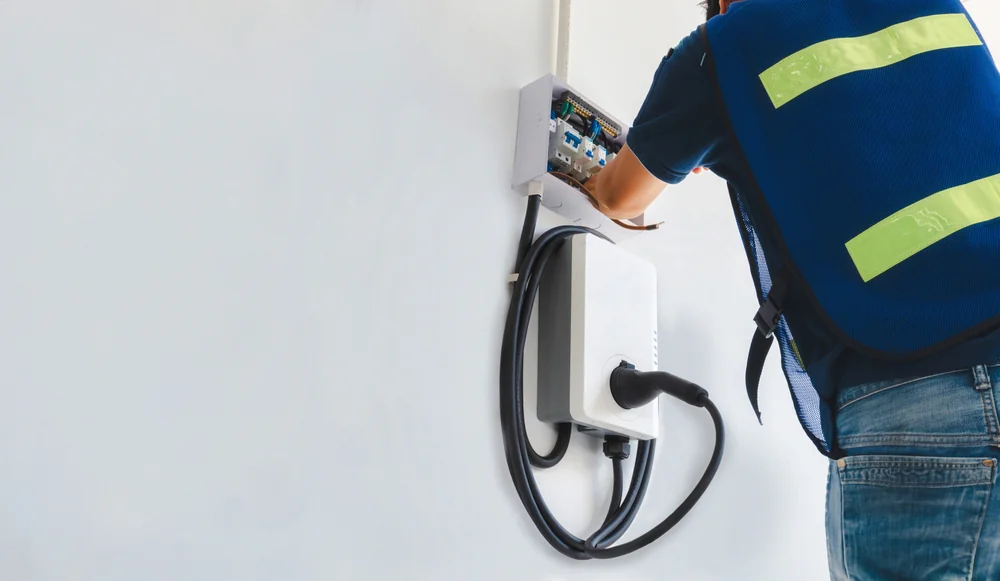
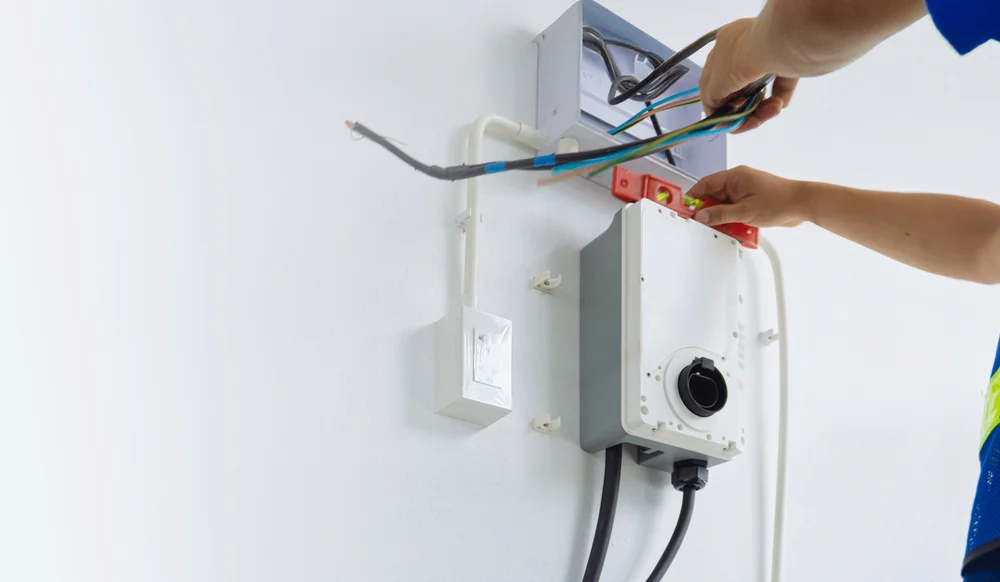
Electric Vehicle Charger Setup Bear Creek
You stop planning your day around public charging stations. No more sitting in parking lots waiting for a charge or wondering if the station will be available when you need it.
Your car charges overnight in your own garage. You unplug in the morning with a full battery, ready for whatever the day brings.
If you’re already driving an EV or planning to buy one, home charging changes everything. It’s faster than a standard outlet, safer than a DIY setup, and more convenient than any public station. Your electrical panel gets assessed properly so there’s no overload risk. Permits get handled. The charger gets mounted where it makes sense for your space and your routine.
North Carolina hit its 2025 EV goal two years early, and Duke Energy is offering rebates up to $1,133 for Level 2 charging station installations. More EVs are coming to Bear Creek, and the homes that can charge them are already a step ahead.
Licensed EV Charger Electrician Bear Creek
We’re locally owned and operated by Andy Helton, a Master Electrician with over 35 years of experience. We’ve been serving Bear Creek and the surrounding Chatham County area for more than two decades.
You’re not calling a franchise or getting routed to a call center. You talk directly to someone who knows the local electrical codes, works with the same inspectors, and understands what Duke Energy requires for rebate approval.
Our trucks are stocked, our technicians show up in uniform, and we clean up before we leave. We’ve built our reputation here by doing the work right and treating your property like it matters—because it does.
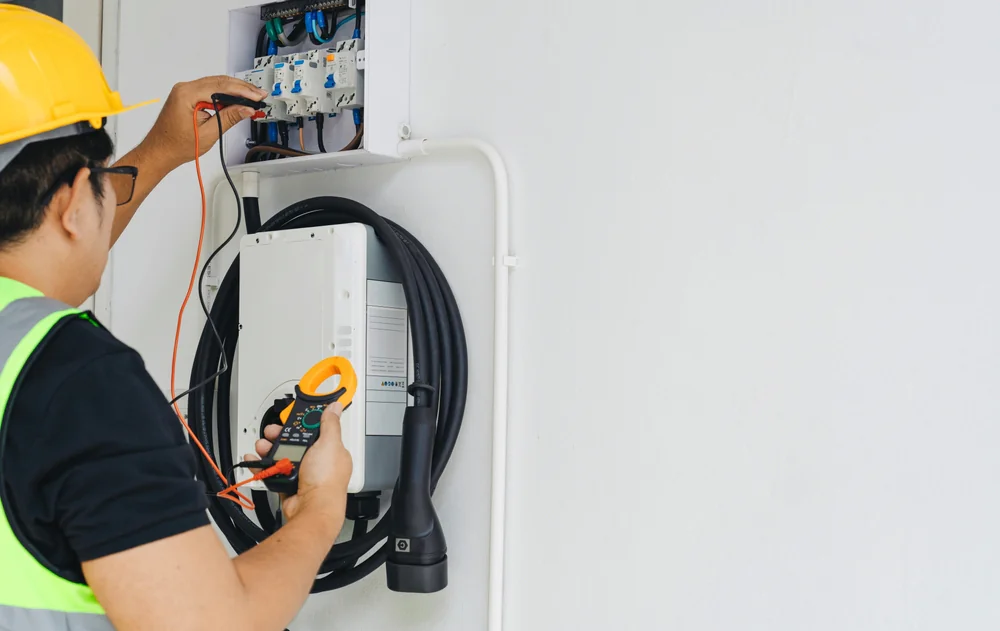
EV Charging Station Installation Process Bear Creek
First, we assess your electrical panel and calculate the load. Most modern homes with 200-amp service can handle a Level 2 EV charger without upgrades, but about one in five need some work before installation. We’ll tell you exactly where you stand before any work begins.
If your panel has capacity, we move forward with installation. If it doesn’t, we talk through your options—whether that’s a panel upgrade, a smart load management system, or another solution that keeps costs reasonable.
We handle the permit application and schedule the inspection. You don’t chase down paperwork or wait on hold with the county. Once permits are approved, we install the charger, mount it securely, and make sure everything is code-compliant and safe.
After installation, the inspector signs off, and you’re done. If you’re eligible for the Duke Energy rebate, we help with that paperwork too. The whole process typically takes a few days from start to finish, depending on permitting timelines.
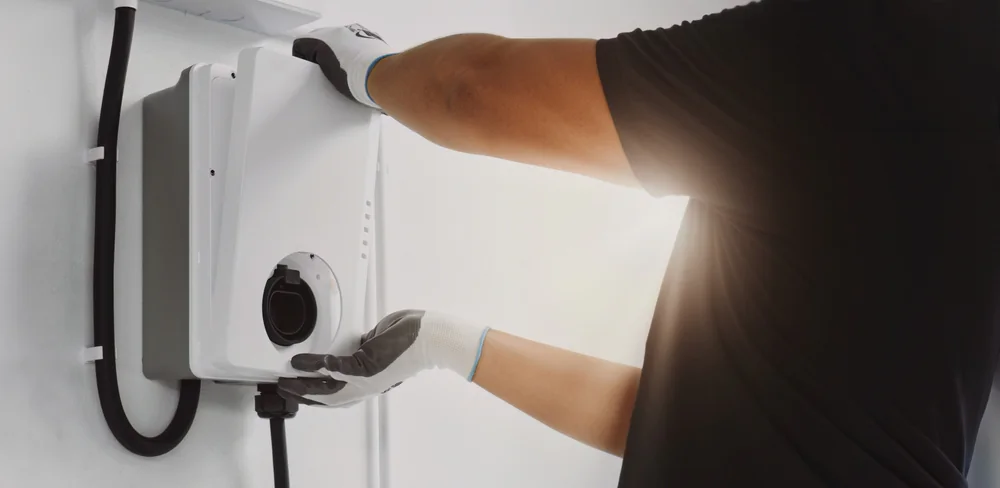
Residential EV Charger Installation Bear Creek NC
You get a full electrical assessment and load calculation to determine if your current panel can support the charger. This isn’t a guess—it’s a professional evaluation that factors in your home’s existing electrical draw and what adding an EV charger will require.
We handle all permit applications and coordinate inspections with Chatham County. You don’t need to figure out what forms to fill out or which codes apply. We also help you apply for the Duke Energy rebate if you’re a Duke Energy Carolinas customer, which can cover up to $1,133 of your installation cost.
The installation itself includes mounting the charging station, running the necessary wiring, connecting it to your electrical panel, and testing the system to make sure it’s working safely. We install Level 2 chargers, which charge your EV significantly faster than a standard 120-volt outlet.
Bear Creek is part of North Carolina’s push to get 1.25 million EVs on the road by 2030, and charging infrastructure is a big part of that. Homes with EV chargers are becoming more attractive to buyers, especially as EV adoption grows across Chatham and surrounding counties.
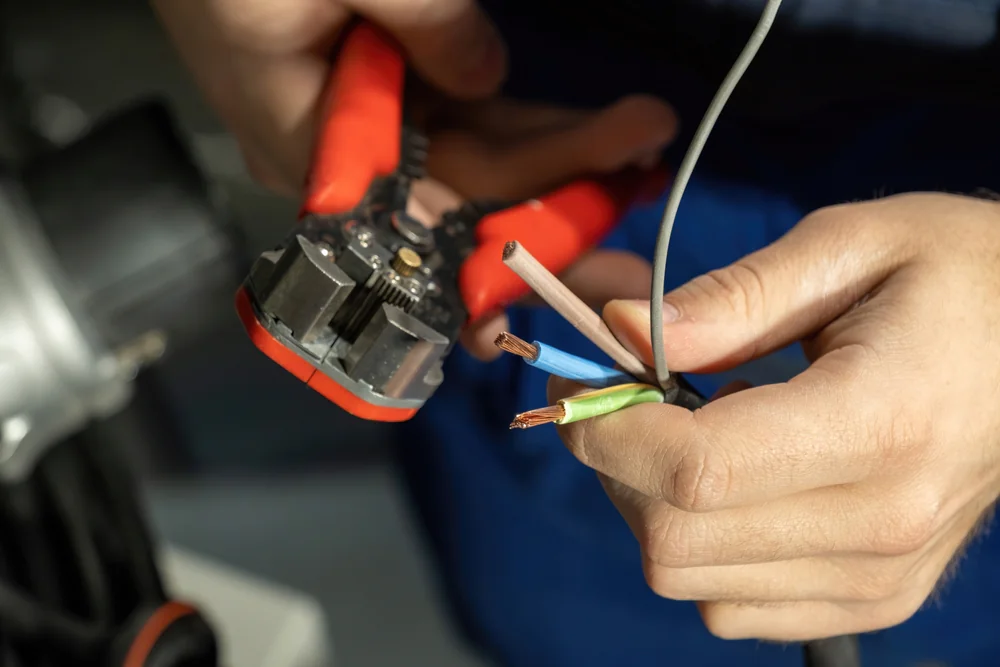
Do I need to upgrade my electrical panel to install an EV charger?
It depends on your current panel capacity and what else is drawing power in your home. Most homes built in the last 20 years have 200-amp panels, which can typically support a Level 2 EV charger without upgrades.
But if you’re running a lot of high-draw appliances—like central air, electric heat, a hot tub, or multiple large devices—you might be close to your panel’s limit. Adding an EV charger could push it over, which creates safety risks and tripped breakers.
We do a load calculation during the assessment to see exactly where you stand. If your panel can’t handle the additional load, you have options. You can upgrade the panel, install a smart load management system that balances power between your charger and other devices, or adjust your charging schedule to off-peak times. We’ll walk through what makes sense for your home and your budget.
How much does EV charger installation cost in Bear Creek?
Installation costs vary based on your home’s electrical setup, the distance from your panel to where the charger will be mounted, and whether you need any upgrades. A straightforward installation on a home with adequate panel capacity typically costs less than one that requires a panel upgrade or extensive wiring.
Duke Energy Carolinas customers can apply for a rebate of up to $1,133 toward the installation of a Level 2 charging station, which can offset a significant portion of the cost. We help with that application process.
The charger itself is a separate cost—you can purchase it yourself or we can source one for you. Level 2 chargers range in price depending on features like smart connectivity, cable length, and brand. We’ll give you a flat-rate price for the installation work after we assess your home, so there are no surprises. The investment pays off quickly when you factor in the convenience of home charging and the money you save versus using public stations regularly.
Can I install an EV charger myself to save money?
Technically, you can—but it’s not a good idea unless you’re a licensed electrician. EV charger installation involves working with 240-volt circuits, which is the same power level as your dryer or oven. If the wiring isn’t done correctly, you risk electrical fires, damaged equipment, or a charger that doesn’t work reliably.
There’s also the permitting and inspection requirement. Chatham County requires permits for this type of electrical work, and the installation has to pass inspection. If you do it yourself and something goes wrong, your homeowner’s insurance might not cover the damage.
Beyond safety, improper installation can void your charger’s warranty and disqualify you from utility rebates. Duke Energy’s rebate program requires professional installation by a licensed electrician. DIY work also won’t include a load calculation, so you might not know if your panel can actually handle the charger until it’s too late. The cost of fixing a bad install almost always exceeds what you’d pay for professional installation upfront.
How long does it take to install an EV charger?
The physical installation usually takes a few hours, but the full process from assessment to final inspection typically takes a few days to a week. Most of that time is waiting on permit approval and scheduling the inspection, not the actual work.
Here’s the typical timeline: We come out for the initial assessment and load calculation, which takes about an hour. If your panel is ready and no upgrades are needed, we submit for permits. Permit approval in Chatham County usually takes a few business days.
Once permits are approved, we schedule the installation. The work itself—mounting the charger, running wiring, connecting everything, and testing—takes anywhere from two to four hours depending on your home’s layout and how far the charger is from the panel. After installation, the county inspector comes out to sign off, which can happen the same day or within a few days depending on their schedule. Once you pass inspection, you’re good to go.
What's the difference between Level 1 and Level 2 EV chargers?
Level 1 charging uses a standard 120-volt outlet—the same kind you plug a lamp into. It’s the slowest option, adding about 3 to 5 miles of range per hour of charging. If you drive 30 miles a day, you’re looking at 6 to 10 hours to recharge, which might work if you’re only using your EV for short trips and can charge overnight.
Level 2 charging uses a 240-volt circuit, the same power level as your electric dryer. It charges much faster—typically adding 15 to 30 miles of range per hour depending on your vehicle and charger. Most EV owners can fully charge overnight, even after a long day of driving.
Level 2 is what most people install at home because it’s practical for daily use. It requires professional installation and a dedicated circuit, but the speed and convenience make it worth it. If you’re serious about driving an EV as your primary vehicle, Level 1 charging gets frustrating fast. Level 2 keeps up with your actual driving habits without making you plan your life around charging times.
Will installing an EV charger increase my home's value?
It can, especially as EV adoption increases in North Carolina. Buyers who already own an EV or are planning to buy one see a home with an installed charger as a major convenience. It’s one less thing they have to deal with, and it signals that the home’s electrical system is up to date.
North Carolina is ahead of schedule on EV adoption, and Chatham County is seeing more electric vehicles on the road every year. As EVs become more common, homes with charging infrastructure will have an edge in the market. It’s similar to how homes with updated electrical panels or energy-efficient features appeal to more buyers.
The value boost isn’t huge, but it’s real—especially in areas where EV ownership is growing. You’re also making your home more functional for your own use right now, which has immediate value even if you’re not planning to sell anytime soon. And if you do sell, you’re appealing to a segment of buyers who might skip over homes without charging capability.
Other Services we provide in Bear Creek
About Us

Electrical Service Providers (ESP) has been in business since 2002. ESP started out performing wiring services to new construction, remodeling projects and residential homes. Our company’s president identified a market for electrical services to be performed in homes and businesses independent of new construction. Read More about Electrical Service Providers>>
All Rights Reserved.Organic Marketing LLC
Business Listings


Product Brands Used
Allied, Broan, Cutler Hammer, General Electric, Ideal, Juno, Kohler, Leviton, Lutron, Siemens, Square D
Contact
- Office Address: 3254 S Anthony Ct.
Burlington, NC 27215 - Mailing Address: PO Box 25
Alamance, NC 27201 - Phone: 336-228-3300
- E-mail: [email protected], [email protected]
Service Areas
Chapel Hill, Burlington, Carrboro, Durham, Gibsonville, Hillsborough, Graham, Pittsboro, Morrisville, Cary
About Us
Electrical Service Providers (ESP) has been in business since 2002. ESP started out performing wiring services to new construction, remodeling projects and residential homes. Our company’s president identified a market for electrical services to be performed in homes and businesses independent of new construction. Read More about Electrical Service Providers>>
All Rights Reserved.Organic Marketing LLC