EV Charger Installation in Belmont, NC
Charge at Home Without the Headaches
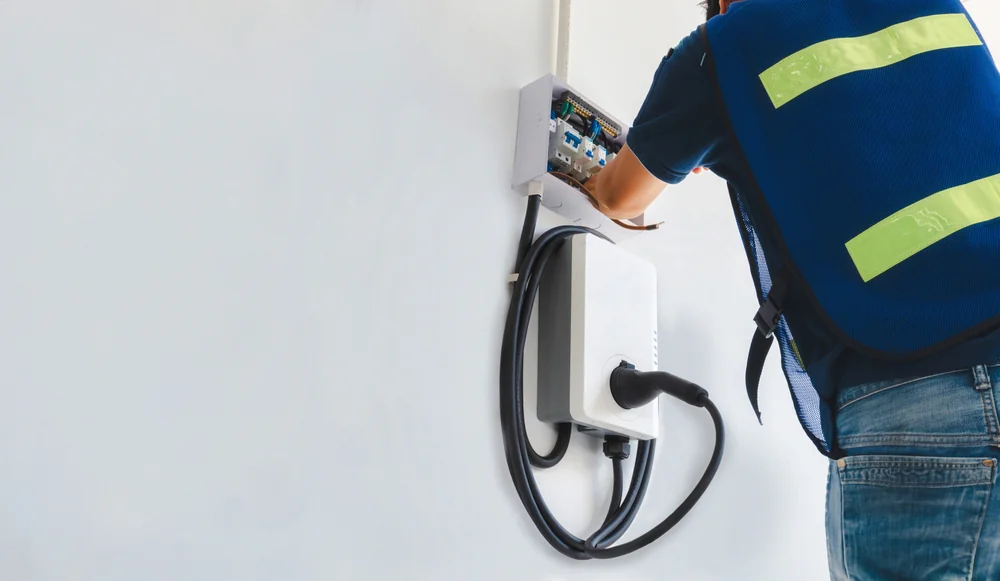
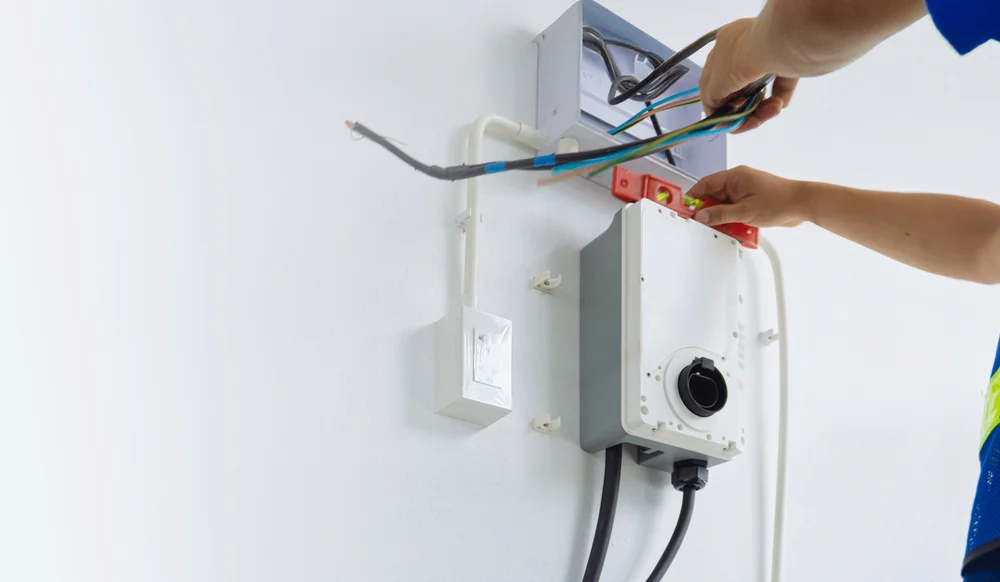
Electric Vehicle Charger Setup Belmont
You plug in when you get home. Your car charges overnight while you sleep. By morning, you’re ready to go without planning your day around charging stations or waiting in line behind three other Teslas at the grocery store lot.
Home charging costs you less per kilowatt-hour than public stations, especially if you charge during off-peak hours. Duke Energy offers lower rates at night, which means your fuel costs drop compared to what you’d pay at a commercial charging station.
Your home’s value goes up too. Buyers in Belmont are specifically looking for homes with EV charging already installed. You’re not just adding convenience for yourself—you’re making a smart property investment that pays off whether you stay for five years or fifteen.
Licensed Electricians Serving Belmont, NC
We’ve been handling electrical work in the greater Burlington and Belmont area for over 22 years. Our senior technician has been a licensed electrical contractor since 1989, which means we’ve seen every type of electrical system in every type of home around here.
Belmont’s housing stock ranges from older homes near downtown to newer construction closer to Charlotte. We know which panels need upgrades, which permits the county requires, and how to get Duke Energy’s rebate paperwork filed correctly the first time. You’re not explaining your electrical panel to someone over the phone—you’re working with electricians who’ve probably worked on a house just like yours already.
We show up in uniform, in stocked trucks, and we clean up when we’re done. You get a flat-rate price before we start, not a surprise bill after.
How EV Charging Station Installation Works
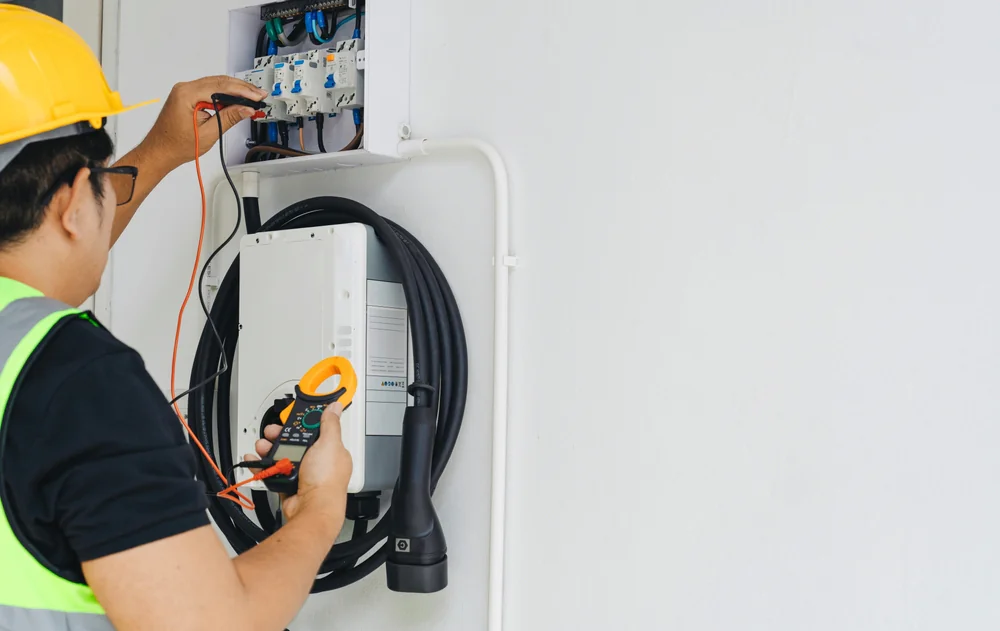
First, we look at your electrical panel and the location where you want your charger installed. Most Level 2 charging stations need 240-volt service with a 40-amp circuit. If your panel can handle it, great. If not, we’ll tell you what upgrade is needed and what it costs before moving forward.
Next, we handle the permit application with the county. Belmont requires specific documentation, and they only accept PDF files with particular formatting. We submit everything correctly so you don’t get kicked back for a technicality.
Then we install the charger, run the wiring, and make sure everything is up to code. We test the system to confirm it’s charging at the right speed and that your electrical panel isn’t overloaded. If you’re claiming the Duke Energy rebate, we provide all the documentation you need to submit for your credit. You’ll also get what you need for the federal tax credit, which covers 30% of installation costs up to $1,000.
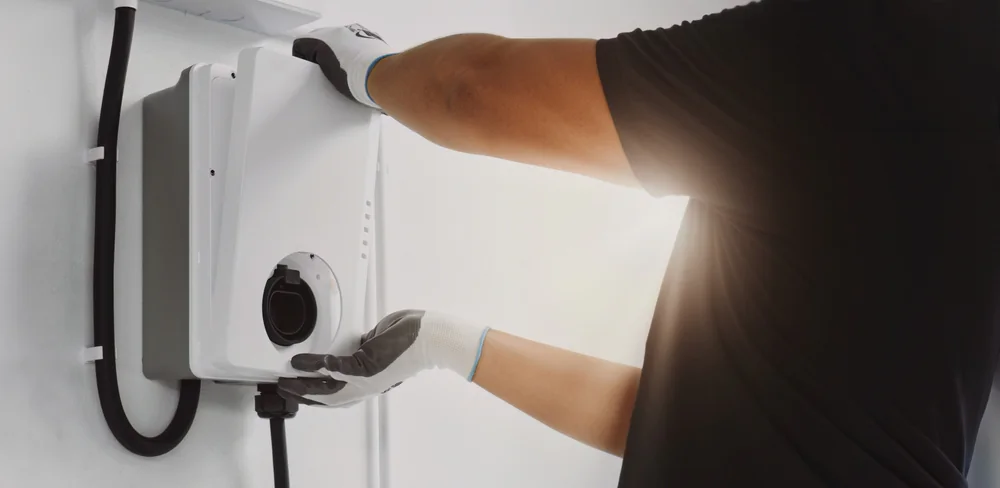
EV Charger Installation Services Belmont
You get a full electrical assessment to determine if your current panel can support a Level 2 charger or if you need an upgrade. We measure the distance from your panel to your desired charger location because that distance affects your total cost—the farther the run, the more materials and labor involved.
We handle all permit applications and coordinate inspections with Gaston County. You don’t have to take time off work to meet an inspector or resubmit paperwork because a form was filled out wrong.
Your installation includes the circuit breaker, wiring, conduit, and mounting of your charging station. We install chargers for all vehicle types—Tesla, Rivian, Ford Lightning, Chevy Bolt, whatever you’re driving. If you want a hardwired unit or a plug-in model, we’ll walk you through the pros and cons of each.
North Carolina hit 100,000 registered EVs in 2024, and Belmont’s proximity to Charlotte means more residents here are making the switch. The state is investing $109 million in charging infrastructure, but home charging is still the most convenient option if you own your property. We’re seeing more two-EV households too, which sometimes means installing a second charger or upgrading your electrical service to handle both.
How much does it cost to install an EV charger in Belmont?
Most installations run between $800 and $3,000 depending on how far your charger location is from your electrical panel and whether you need a panel upgrade. If your charger is going in your garage and your panel is already there, you’re looking at the lower end. If you’re mounting the charger on the outside of your house and your panel is on the opposite side, the wiring run costs more.
Panel upgrades add to the cost, but they’re sometimes necessary. Older homes in Belmont might have 100-amp or 150-amp service, and adding a 40-amp circuit for an EV charger can max that out if you’re also running your AC, water heater, and other appliances. Upgrading to 200-amp service gives you room for the charger plus any future electrical needs.
Duke Energy offers up to $1,133 in rebates for residential customers who install EV chargers, which covers a significant chunk of your installation cost. The federal tax credit adds another 30% back, up to $1,000. Between those two programs, you’re recovering a lot of what you spend upfront.
Can I just plug my EV into a regular outlet?
You can, but it’s slow and it’s not safe for regular use. A standard 120-volt outlet gives you about 3 to 5 miles of range per hour of charging. If you drive 40 miles a day, you’re looking at 8 to 12 hours to recharge, and that’s assuming you’re not using the outlet for anything else.
The bigger issue is safety. Standard outlets aren’t designed for the continuous high load that EV charging requires. Running that much power through a regular household circuit for hours every night creates heat, and heat causes fires. We’ve seen outlets melt, breakers trip repeatedly, and wiring degrade because someone tried to avoid paying for a proper installation.
A Level 2 charger on a dedicated 240-volt circuit gives you 25 to 30 miles of range per hour. You plug in at night, and your car is fully charged by morning without stressing your electrical system. It’s faster, safer, and it doesn’t wear out your home’s wiring. If your car manufacturer requires professional installation to keep your warranty valid, using a regular outlet might void that coverage too.
Do I need a permit to install an EV charger?
Yes. Gaston County requires an electrical permit for EV charger installations because you’re adding a new high-voltage circuit to your home. The permit process ensures the work meets the National Electrical Code and local requirements, which protects you if something goes wrong and protects future buyers if you sell your home.
The permit application requires specific documentation including a site plan, load calculations, and proof that your installation meets code. The county only accepts PDF files, and if your paperwork isn’t formatted correctly, they’ll reject it and you’ll have to resubmit. After installation, an inspector comes out to verify everything was done correctly before you can legally use the charger.
We handle all of that for you. We submit the application, schedule the inspection, and make sure everything passes the first time. Skipping the permit might seem like a shortcut, but it can cause major problems when you sell your home or file an insurance claim. Unpermitted electrical work is a red flag during home inspections, and it can kill a sale or force you to pay for expensive corrections later.
How long does EV charger installation take?
Most installations take four to eight hours depending on your specific setup. If your electrical panel is in your garage and we’re mounting the charger on the same wall, we can usually finish in half a day. If we’re running wiring through your attic or underground to reach a charger location on the other side of your house, it takes longer.
Panel upgrades add time. Upgrading your main service from 100-amp to 200-amp can add several hours or require a second visit, especially if we need to coordinate with Duke Energy to disconnect and reconnect your power. We’ll give you an accurate timeline after we assess your property.
The permit and inspection process adds a few days to the overall timeline, but that’s not time you need to be home. We submit the permit, do the installation, and schedule the inspection. You’re only involved when we’re physically at your house doing the work. From your first call to a fully operational charger, most customers are up and running within a week or two depending on permit processing times and our schedule.
Will installing an EV charger increase my electric bill?
Yes, but it’s still cheaper than gas. Electricity costs less per mile than gasoline, even with North Carolina’s average residential rate of around 12 cents per kilowatt-hour. If you drive 1,000 miles a month and your EV gets 3 miles per kilowatt-hour, you’re using about 333 kWh, which costs roughly $40. That same 1,000 miles in a gas car averaging 25 mpg costs about $120 at $3 per gallon.
Duke Energy offers time-of-use rates that make charging even cheaper if you plug in during off-peak hours, typically late at night. Your EV’s charging settings let you schedule when it starts charging, so you can take advantage of lower rates automatically. Some customers see their electricity bill go up by $30 to $50 a month, but they’re saving $80 to $100 on gas, so they’re still coming out ahead.
Your actual costs depend on how much you drive, how efficient your vehicle is, and what rate plan you’re on. We can’t control Duke Energy’s rates, but we can make sure your charger is installed correctly so it’s not wasting power or causing your system to work harder than it should. Proper installation means efficient charging, which keeps your costs as low as possible.
What's the difference between Level 1 and Level 2 charging?
Level 1 charging uses a standard 120-volt outlet and adds about 3 to 5 miles of range per hour. It’s what you use if you plug your EV into a regular wall outlet. It works for people who don’t drive much or who can leave their car plugged in for 24 hours at a time, but it’s not practical for most drivers.
Level 2 charging uses a 240-volt circuit, the same voltage as your electric dryer or oven. It adds 25 to 30 miles of range per hour, which means you can fully charge most EVs overnight in six to eight hours. That’s what most homeowners install because it’s fast enough to keep up with daily driving without requiring expensive upgrades to commercial-level equipment.
There’s also Level 3 charging, which is what you see at Tesla Superchargers or public fast-charging stations. Those systems require industrial power and cost tens of thousands of dollars to install. They’re not practical for home use. Level 2 is the sweet spot—fast enough to be useful, affordable enough to make sense for a residential property, and compatible with every EV on the market.
Other Services we provide in Bellemont
About Us

Electrical Service Providers (ESP) has been in business since 2002. ESP started out performing wiring services to new construction, remodeling projects and residential homes. Our company’s president identified a market for electrical services to be performed in homes and businesses independent of new construction. Read More about Electrical Service Providers>>
All Rights Reserved.Organic Marketing LLC
Business Listings


Product Brands Used
Allied, Broan, Cutler Hammer, General Electric, Ideal, Juno, Kohler, Leviton, Lutron, Siemens, Square D
Contact
- Office Address: 3254 S Anthony Ct.
Burlington, NC 27215 - Mailing Address: PO Box 25
Alamance, NC 27201 - Phone: 336-228-3300
- E-mail: [email protected], [email protected]
Service Areas
Chapel Hill, Burlington, Carrboro, Durham, Gibsonville, Hillsborough, Graham, Pittsboro, Morrisville, Cary
About Us
Electrical Service Providers (ESP) has been in business since 2002. ESP started out performing wiring services to new construction, remodeling projects and residential homes. Our company’s president identified a market for electrical services to be performed in homes and businesses independent of new construction. Read More about Electrical Service Providers>>
All Rights Reserved.Organic Marketing LLC