EV Charger Installation in Bennett, NC
Charge at Home Without the Fire Risk
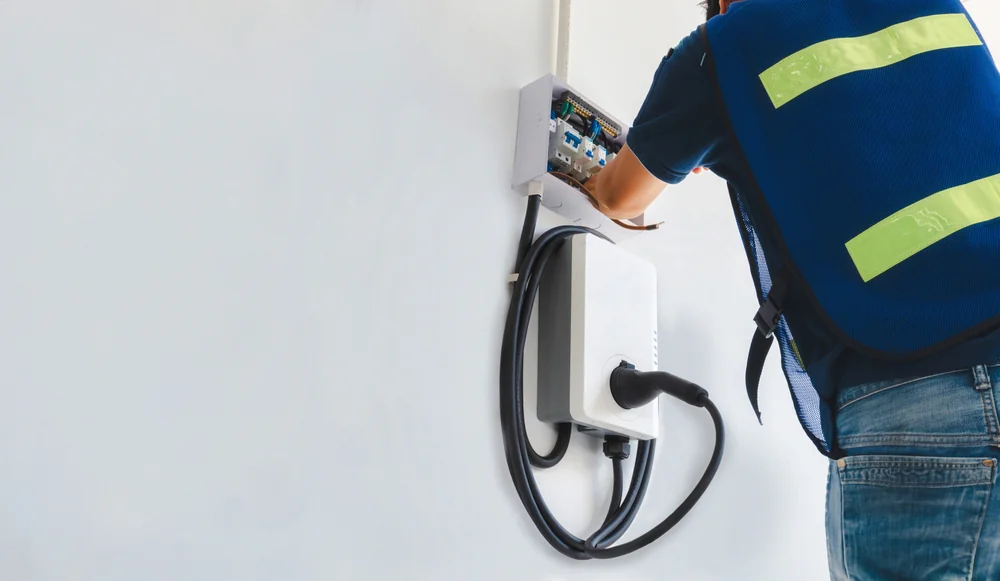
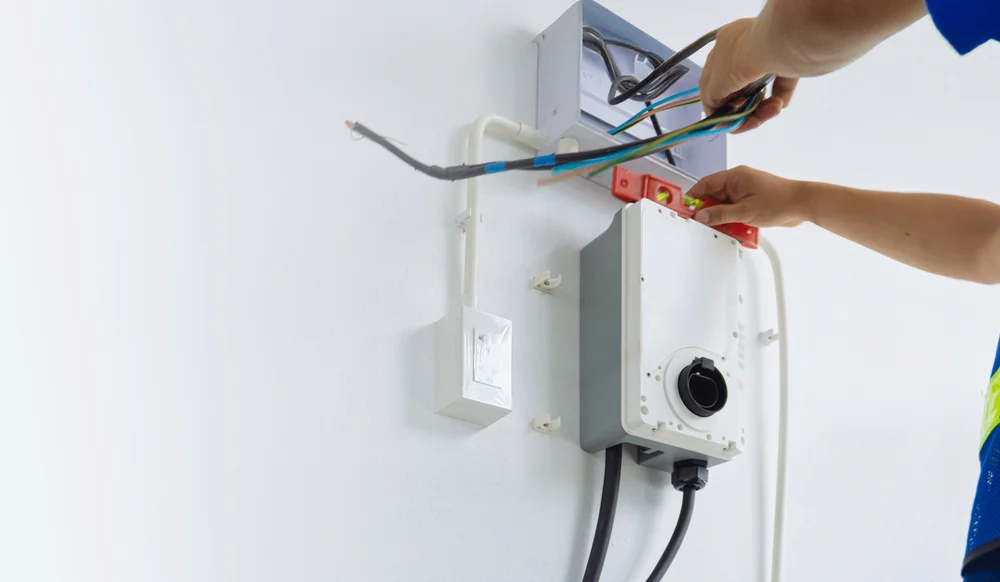
Electric Vehicle Charger Setup Bennett
You bought an electric vehicle to simplify your life, not add another errand to your week. But if you’re still relying on that 120-volt outlet in your garage, you’re looking at 12 to 16 hours just to get back to full. And if you’re driving to public charging stations around Burlington or Chapel Hill, you’re wasting time you don’t have.
A Level 2 EV charger installation changes that. You pull in after work, plug in, and you’re done. No planning around charging station availability. No sitting in your car at a shopping center for 45 minutes. Just consistent, reliable charging while you sleep.
And it’s not just about convenience. Charging at home costs less per kilowatt-hour than most public stations. Duke Energy even offers rebates up to $1,117 for Bennett homeowners upgrading their electrical systems to support EV charging. That covers panel upgrades, wiring, outlet installation, and the labor that goes with it.
But here’s what matters more than the rebate: your home’s electrical system needs to handle this safely. Standard outlets aren’t designed for the sustained load an EV pulls. Overloaded circuits overheat. Wiring degrades. Insurance claims get denied when fires start from improper charging setups.
Licensed Electricians Serving Bennett, NC
We’ve been doing electrical work in and around Bennett since 2002. That’s 22 years of service calls, panel upgrades, and code-compliant installations across Alamance County, Chatham County, and Orange County.
Andy Helton, our owner and master electrician, has 35 years of hands-on electrical experience. Our senior field technician has been a licensed contractor since 1989. This isn’t a side hustle or a new venture chasing the EV trend. It’s what we’ve been doing for decades, now applied to the fastest-growing home upgrade in North Carolina.
We’re local. We know the inspection requirements in Alamance County. We know which panels in older Bennett homes need upgrades before adding a 240-volt circuit. And we show up in uniform, in a fully stocked truck, with flat-rate pricing so you know the cost before we start.
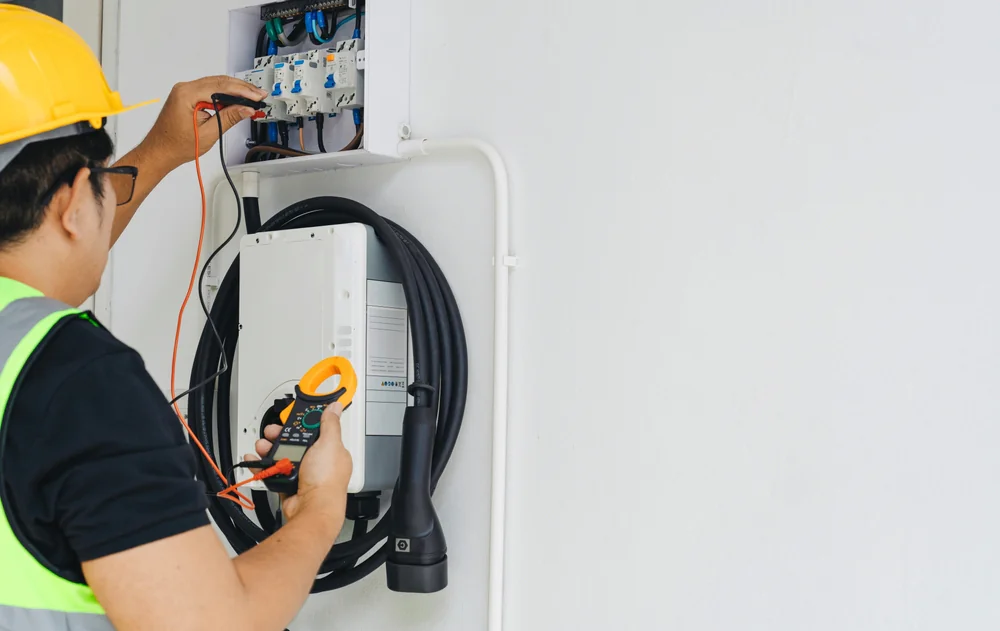
How EV Charging Station Installation Works
First, we assess your electrical panel. Most EV charger installations require a dedicated 240-volt circuit, and not every panel in Bennett has the capacity to add one without an upgrade. We’ll tell you upfront if your system can handle it or if you need more amperage.
Next, we run the wiring. Depending on where your panel is and where you park, that might mean running conduit through your garage, along an exterior wall, or underground to a detached carport. We follow NEC code requirements and local Bennett permitting rules. No shortcuts.
Then we mount and connect the charger. Whether you bought a Tesla Wall Connector, a ChargePoint Home Flex, or another Level 2 unit, we install it according to manufacturer specs. We test the circuit, verify the voltage, and make sure everything’s grounded properly.
Finally, we walk you through how it works. You’ll know how to plug in, how to check the status lights, and what to do if something ever seems off. We also coordinate the inspection if Alamance County requires one, and we help you submit documentation for the Duke Energy rebate if you’re eligible.

What's Included in EV Charger Installation
Every EV charger installation from us includes a full electrical system evaluation. We don’t just bolt a charger to your wall and hope your panel keeps up. We check your current load, calculate what your EV will add, and make sure your home can handle it safely.
If your panel needs an upgrade, we handle that too. A lot of homes in Bennett were built before EVs existed, and older 100-amp or 150-amp panels don’t leave room for a 40 or 50-amp EV circuit. Upgrading to a 200-amp panel isn’t just about the charger. It future-proofs your home for other electric upgrades down the road.
You also get proper permitting and code compliance. Alamance County requires permits for this kind of work, and inspections ensure it’s done safely. We pull the permits, schedule the inspections, and handle any follow-up if the inspector has questions. North Carolina has added over 50,000 EVs in the last two years, and local building departments are paying close attention to how these systems get installed.
And if you’re eligible for the Duke Energy rebate, we’ll provide the documentation you need to claim it. That rebate covers electrical panel upgrades, new circuits, wiring, and installation labor. It’s designed specifically to help North Carolina homeowners like you make the switch to home charging without eating the full upfront cost.
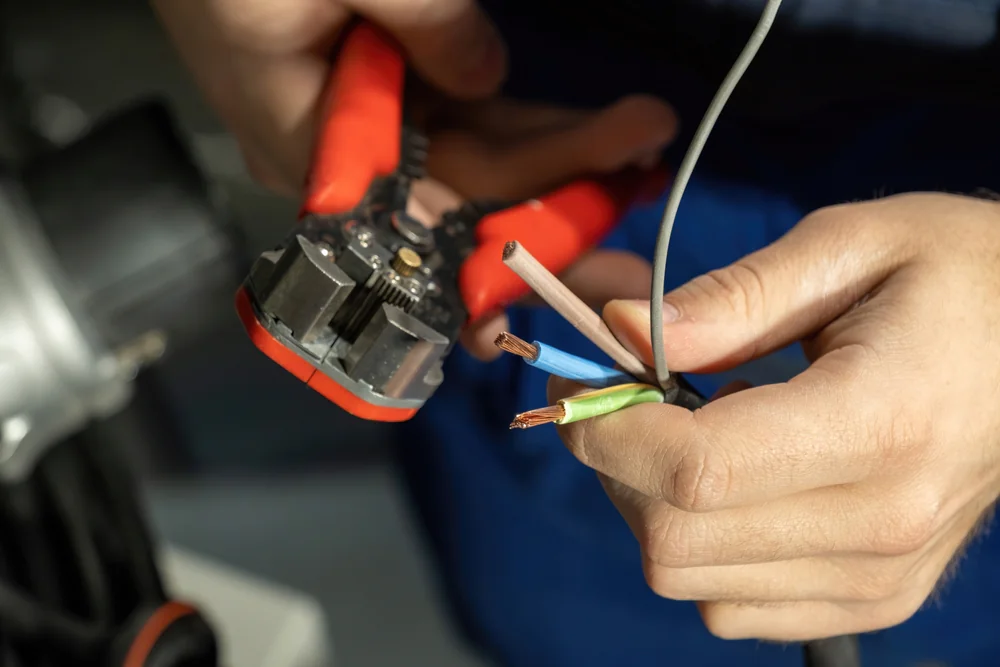
How long does it take to install an EV charger at my Bennett home?
Most installations take four to eight hours, depending on your setup. If your electrical panel is in the garage and you’re parking right next to it, we’re on the shorter end. If we need to run wiring across your house or upgrade your panel first, it takes longer.
Panel upgrades add time but they’re not optional if your system can’t handle the load. A lot of homes in Bennett still have 100-amp or 150-amp panels, and adding a 40 or 50-amp circuit for an EV charger pushes that to the limit. Upgrading to 200 amps gives you the capacity you need, and it usually adds another half day to the project.
We’ll give you a clear timeline during the estimate. No surprises, no dragging it out. We show up when we say we will, we finish the job, and we clean up before we leave.
Will I need to upgrade my electrical panel for EV charging?
It depends on your current panel and how much capacity you’re already using. If you have a 200-amp panel with room for another breaker, you’re probably fine. If you’re running a 100 or 150-amp panel and it’s mostly full, you’ll need an upgrade.
Here’s why: a Level 2 EV charger pulls between 30 and 50 amps, depending on the model. That’s a significant load, and your panel has to support it along with everything else in your home. If you’re already running HVAC, water heater, dryer, and other high-draw appliances, there’s not much left over.
We assess this during the initial visit. We’ll look at your panel, check the existing load, and tell you whether an upgrade is necessary. And if it is, the Duke Energy rebate covers up to $1,117 of that cost for Bennett homeowners, which takes a big chunk out of the expense.
Can I install an EV charger myself to save money?
Technically, yes. Practically, no. And legally, it depends on whether Alamance County requires a licensed electrician for the permit, which they usually do for 240-volt circuits.
Here’s the bigger issue: your homeowner’s insurance won’t cover a fire caused by improper electrical work. If you wire it wrong, overload the circuit, or skip the permit and inspection, you’re on your own when something goes wrong. And EV chargers pull serious amperage. This isn’t the same as swapping out a light fixture.
The upfront cost of professional installation is a lot less than the cost of an electrical fire, a denied insurance claim, or a failed home inspection when you go to sell. We’ve been doing this for 22 years. We know how to do it safely, and we know how to do it right the first time.
What's the difference between Level 1 and Level 2 EV charging?
Level 1 charging uses a standard 120-volt outlet. It’s slow. You’re looking at 12 to 16 hours for a full charge, depending on your vehicle. That’s fine if you barely drive and you can leave it plugged in overnight, but it’s not practical for most people.
Level 2 charging uses a 240-volt circuit, the same kind that powers your dryer or oven. It delivers twice the power or more, which cuts your charging time in half or better. Most EVs fully charge in four to six hours on a Level 2 charger. That means you can come home at 6 p.m., plug in, and be ready to go by morning.
The other advantage is safety. Level 1 charging through a standard outlet puts sustained load on wiring that wasn’t designed for it. Circuits overheat. Outlets degrade. We’ve seen burn marks on outlets in Bennett homes where people were charging their EVs daily on 120 volts. A dedicated Level 2 circuit eliminates that risk.
How much does EV charger installation cost in Bennett?
Installation costs typically run between $800 and $2,500, depending on the complexity. If your panel has capacity and your charger location is close to it, you’re on the lower end. If you need a panel upgrade, longer wire runs, or trenching for a detached garage, the cost goes up.
Panel upgrades add $1,500 to $3,000, but Duke Energy’s rebate covers up to $1,117 of that for eligible Bennett homeowners. That rebate applies to the electrical work, not the charger itself, so it directly offsets the installation cost.
We use flat-rate pricing. You’ll know the cost before we start, and that price doesn’t change unless you change the scope of work. No hourly surprises, no hidden fees. We walk you through what’s included, what’s optional, and what you’re paying for.
Do you install all brands of EV chargers or just certain ones?
We install whatever Level 2 charger you buy. Tesla Wall Connector, ChargePoint, JuiceBox, Grizzl-E, Emporia—doesn’t matter. They all require the same basic electrical setup: a dedicated 240-volt circuit with the right amperage breaker and proper wire gauge.
Some people already have a charger when they call us. Others ask for recommendations. If you want input, we’ll tell you what we’ve seen hold up well and what features actually matter. But we’re not tied to any brand, and we’re not marking up equipment. You buy the charger wherever you want, and we’ll install it to code.
The important part isn’t the brand. It’s the electrical work behind it. That’s where safety, performance, and longevity come from, and that’s what we’ve been doing in Bennett for over two decades.
Other Services we provide in Bennett
About Us

Electrical Service Providers (ESP) has been in business since 2002. ESP started out performing wiring services to new construction, remodeling projects and residential homes. Our company’s president identified a market for electrical services to be performed in homes and businesses independent of new construction. Read More about Electrical Service Providers>>
All Rights Reserved.Organic Marketing LLC
Business Listings


Product Brands Used
Allied, Broan, Cutler Hammer, General Electric, Ideal, Juno, Kohler, Leviton, Lutron, Siemens, Square D
Contact
- Office Address: 3254 S Anthony Ct.
Burlington, NC 27215 - Mailing Address: PO Box 25
Alamance, NC 27201 - Phone: 336-228-3300
- E-mail: [email protected], [email protected]
Service Areas
Chapel Hill, Burlington, Carrboro, Durham, Gibsonville, Hillsborough, Graham, Pittsboro, Morrisville, Cary
About Us
Electrical Service Providers (ESP) has been in business since 2002. ESP started out performing wiring services to new construction, remodeling projects and residential homes. Our company’s president identified a market for electrical services to be performed in homes and businesses independent of new construction. Read More about Electrical Service Providers>>
All Rights Reserved.Organic Marketing LLC