EV Charger Installation in Brightwood, NC
Charge at Home Without the Fire Risk
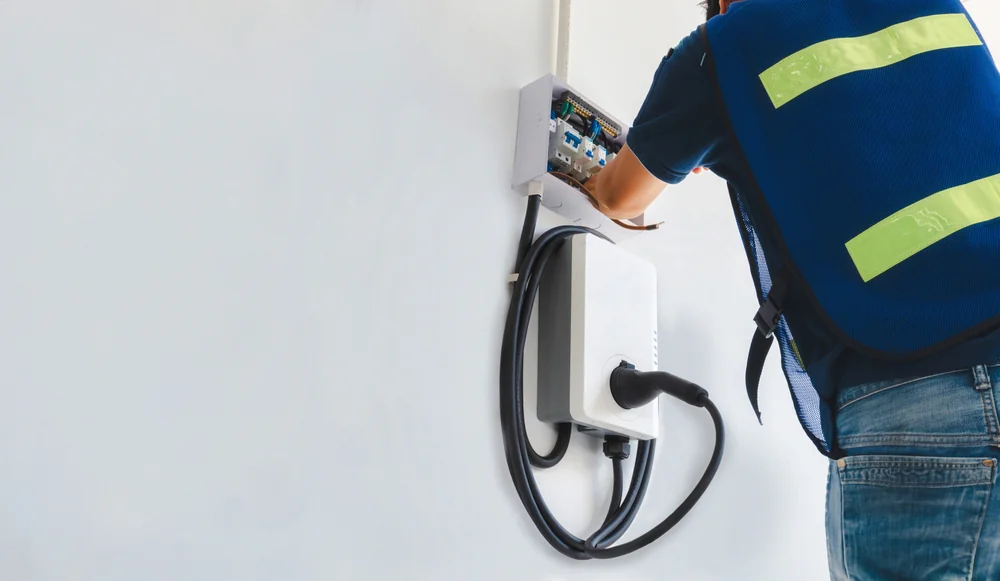
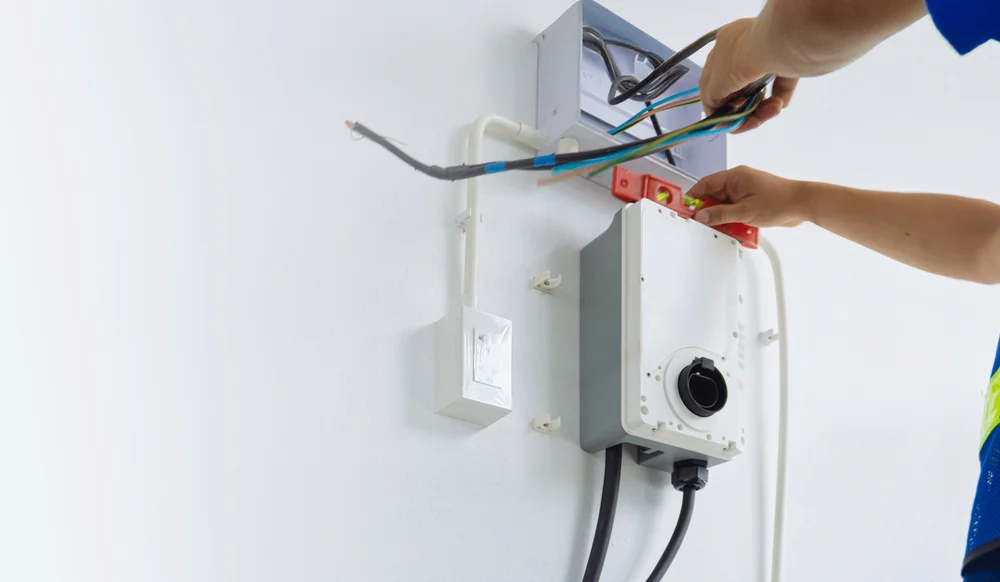
Electric Vehicle Charging Solutions Brightwood
You stop planning your day around charging stations. No more sitting in parking lots for 45 minutes or finding the one working charger already occupied when you need it most.
Your car charges overnight in your garage while you sleep. You unplug in the morning with a full battery, enough range for your commute and errands without a second thought.
The electrical work is done correctly, which means your homeowner’s insurance stays valid and your house doesn’t become a fire hazard. Your EV manufacturer’s warranty remains intact because a licensed electrician handled the installation. You’re not dealing with tripped breakers, melted outlets, or extension cords running across your driveway because someone tried to save money on the install.
Licensed EV Charger Electricians Brightwood
We’ve handled residential electrical work in Brightwood and throughout Alamance County for over two decades. Andy Helton, our master electrician, brings 35+ years of experience to every job.
We’re not a new company jumping on the EV trend. We’ve been upgrading electrical panels, running 240-volt circuits, and pulling permits in this area long before electric vehicles became common in North Carolina driveways.
You’re working with electricians who know local code requirements, understand Duke Energy’s rebate process, and have relationships with inspectors in Brightwood. That means fewer delays, no failed inspections, and installations done right the first time.
EV Charger Setup Process Brightwood
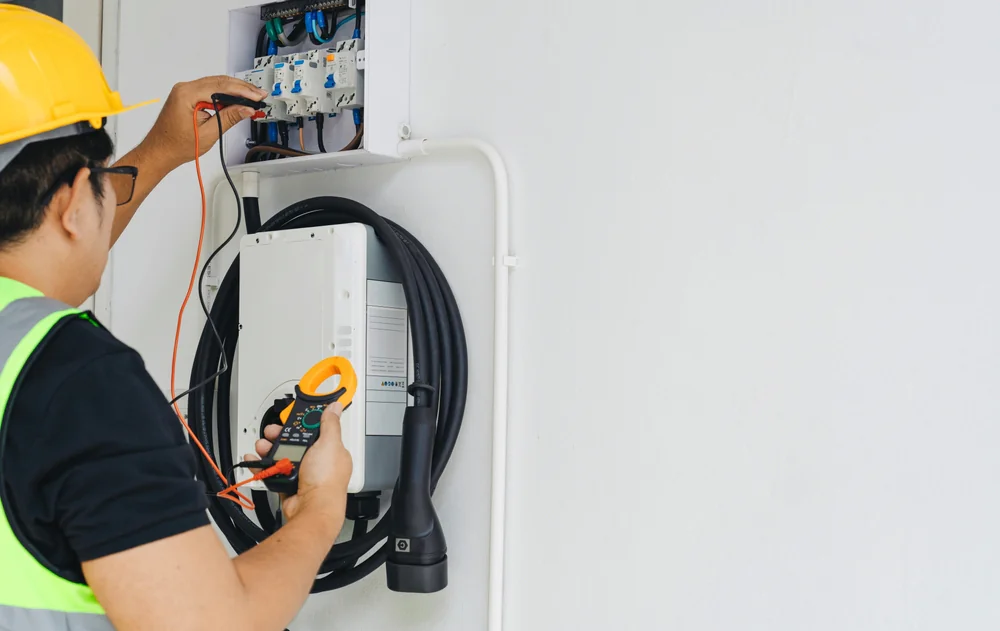
We start with an electrical assessment at your home. This isn’t a sales pitch—it’s a real evaluation of your panel capacity, available circuits, and whether your current system can handle a Level 2 charger without upgrades.
Most homes in Brightwood need some electrical work before the charger goes in. That usually means upgrading your panel, running a dedicated 240-volt circuit to your garage, or both. We give you flat-rate pricing before any work starts, so there’s no surprise invoice at the end.
Once you approve the plan, we handle the permit application with local authorities. We schedule the installation, complete the electrical work, mount your charging station, and coordinate the final inspection. You don’t manage multiple contractors or chase down paperwork.
The inspector signs off, we test the system with your vehicle, and you start charging at home. We also help you apply for Duke Energy’s rebate program, which can put over $1,100 back in your pocket for the electrical work and equipment.
Home EV Charging Station Installation Brightwood
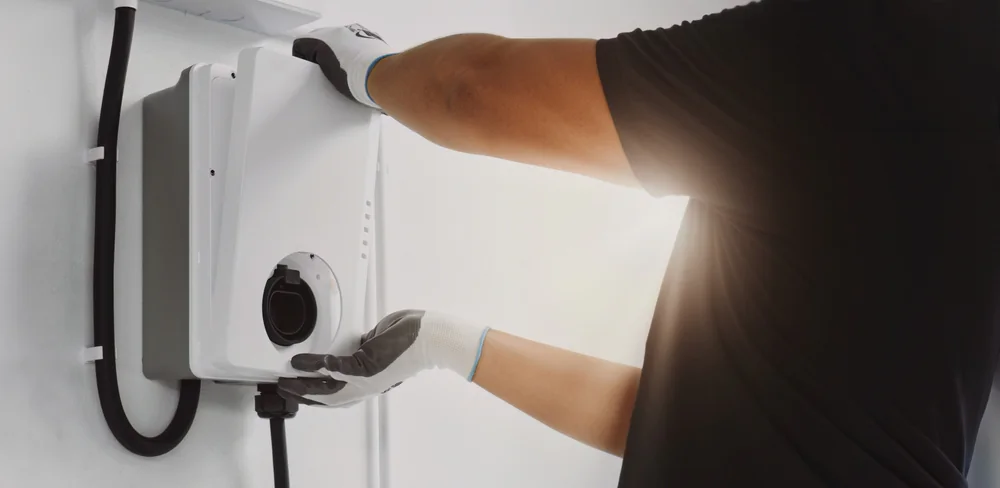
Your installation covers the full electrical infrastructure needed for safe home charging. We assess your existing panel capacity and upgrade it if necessary—most 40-amp Level 2 chargers require this step in older Brightwood homes.
We run a dedicated 240-volt circuit from your panel to the charging location, typically your garage or driveway. This circuit is sized correctly for your specific EV charger model and protected with the appropriate breaker. We mount the charging station at a height that works for your vehicle and keeps the cable from dragging on the ground.
All work includes permit acquisition and scheduling the required inspection. North Carolina has strict application requirements for electrical permits, and we handle that process so you don’t deal with rejected applications or compliance issues.
We also walk you through Duke Energy’s EV Charger Installation Support Program. Eligible customers can receive up to $1,117 for outlet installation, electrical wiring enhancements, and panel upgrades. The application process is particular about documentation, and we help you submit everything correctly the first time.
Do I Need to Upgrade My Electrical Panel for an EV Charger?
Most homes in Brightwood need a panel upgrade for Level 2 EV charger installation. A typical Level 2 charging station requires a dedicated 40-amp circuit, and older panels often don’t have the capacity to support that additional load safely.
Here’s the reality: if your home was built before 2010, you likely have a 100-amp or 150-amp main service. Once you account for your HVAC system, water heater, kitchen appliances, and regular household circuits, there’s usually not enough capacity left for a 40-amp EV charger without overloading the system.
We assess your specific panel during the initial consultation. We look at your current load, count available spaces, and calculate whether your system can handle the new demand. If an upgrade is needed, we provide flat-rate pricing for a new 200-amp panel that gives you capacity for EV charging plus future electrical needs. Duke Energy’s rebate program covers up to $1,117 of this upgrade cost for eligible customers, which significantly reduces your out-of-pocket expense.
How Much Does EV Charger Installation Cost in Brightwood?
Installation costs in Brightwood typically range from $1,200 to $3,500 depending on your home’s electrical situation and how far we need to run the circuit. That includes the electrical work, permits, and inspection—not the charging unit itself.
The biggest cost variable is whether you need a panel upgrade. If your existing panel has capacity and available breaker space, we’re looking at running a new 240-volt circuit to your garage and installing the appropriate outlet or hardwiring your charger. That’s the lower end of the range.
If you need a panel upgrade—which most homes do—the cost increases because we’re replacing your main electrical panel, upgrading the service if necessary, and then running the new circuit. This is more involved work, but it’s also a permanent improvement to your home’s electrical infrastructure that benefits more than just EV charging.
Duke Energy offers rebates up to $1,117 for the electrical work, which can cover a significant portion of your installation cost. We help you apply for this rebate and provide the documentation Duke Energy requires. We use flat-rate pricing, so you know your exact cost before we start any work. No surprises, no hourly billing that spirals beyond the estimate.
Can I Just Use a Regular Outlet to Charge My Electric Vehicle?
You can use a standard 120-volt outlet for occasional charging, but it’s not a practical long-term solution for daily use. Level 1 charging through a regular outlet adds roughly 3-5 miles of range per hour, which means a full charge takes 24-48 hours depending on your battery size.
The bigger issue is safety. Standard household outlets aren’t designed for continuous high-load use over many hours. When you plug in an EV every night and draw maximum current for 12+ hours straight, you’re pushing that circuit and outlet beyond what they were built to handle. This causes overheating, which degrades wiring insulation and creates fire risk over time.
We’ve seen melted outlets, tripped breakers, and scorched wall plates in Brightwood homes where owners tried to make regular outlets work for daily EV charging. Some homeowners run extension cords from outlets to their driveway, which compounds the problem and has caused actual electrical fires in residential neighborhoods.
A proper Level 2 charging station on a dedicated 240-volt circuit gives you 25-30 miles of range per hour and is designed for continuous daily use. The circuit is sized correctly, protected with the right breaker, and installed with wiring that can handle the load safely. That’s the difference between a charging solution that works long-term and one that becomes a liability.
How Long Does EV Charger Installation Take?
Most installations in Brightwood take one to two days of actual work, but the full timeline from assessment to final inspection usually runs two to three weeks. The work itself is straightforward—the timeline depends on permit processing and inspection scheduling with local authorities.
Here’s the typical sequence: we do the initial assessment and provide pricing within a few days of your call. Once you approve the work, we submit the permit application, which takes 5-7 business days for approval in Alamance County. We schedule the installation after permit approval, and the physical work takes one full day for straightforward installs or two days if we’re upgrading your panel.
After installation, we schedule the required electrical inspection. Inspectors in this area typically have availability within 3-5 business days. Once the inspector approves the work, you can start using your charger immediately.
The timeline extends if we encounter issues like outdated wiring that needs remediation or if your utility service requires upgrading before we can install a larger panel. We identify these situations during the assessment so you know the expected timeline upfront. We manage the entire process—permits, inspections, and coordination—so you’re not chasing down paperwork or trying to schedule inspectors yourself.
What's the Difference Between Level 1 and Level 2 Charging?
Level 1 charging uses a standard 120-volt household outlet and adds about 3-5 miles of range per hour. Level 2 charging uses a 240-volt circuit—the same voltage as your electric dryer—and adds 25-30 miles of range per hour. That’s the practical difference that matters for daily use.
If you drive 40 miles round-trip for your commute, Level 1 charging needs 8-12 hours to replace that range. Level 2 charging replaces it in about 90 minutes. For most EV owners in Brightwood, Level 1 works only if you drive very little and can leave the car plugged in for extended periods.
Level 2 is what most people mean when they talk about home EV charging installation. It requires a dedicated 240-volt circuit installed by a licensed electrician, proper permitting, and a charging station designed for that voltage. The upfront cost is higher, but it’s the only practical solution if you actually drive your vehicle regularly.
The other consideration is that many EV manufacturers recommend Level 2 charging for battery longevity. Consistently draining your battery low and then slow-charging it with Level 1 can reduce battery life over time. Level 2 charging allows you to maintain a healthier charge cycle by topping off the battery more quickly and avoiding deep discharge situations.
Will Installing an EV Charger Increase My Home's Value?
A professionally installed Level 2 EV charging station typically adds value to your home in the Brightwood market, especially as EV adoption increases across North Carolina. Real estate data shows that homes with EV charging infrastructure sell faster and often command a premium when buyers are comparing similar properties.
The value isn’t just the charging station itself—it’s the electrical infrastructure upgrade that comes with it. When we install a Level 2 charger, we’re often upgrading your electrical panel to 200 amps, running new dedicated circuits, and bringing your home’s electrical system up to current code standards. Those improvements benefit any future homeowner, regardless of whether they own an EV.
North Carolina is targeting 1.25 million EVs on the road by 2030, and the state is actively funding charging infrastructure to support that goal. As more buyers either own EVs or plan to purchase one, having charging capability already installed removes a barrier and eliminates a $2,000-$3,500 expense they’d otherwise face after buying your home.
The key is professional installation with proper permits and inspections. DIY charging setups or unpermitted work actually hurt your home’s value because they create liability issues and often need to be redone to pass inspection during a sale. We handle the installation correctly from the start, which means clean documentation and no complications when you eventually sell.
Other Services we provide in Brightwood
About Us

Electrical Service Providers (ESP) has been in business since 2002. ESP started out performing wiring services to new construction, remodeling projects and residential homes. Our company’s president identified a market for electrical services to be performed in homes and businesses independent of new construction. Read More about Electrical Service Providers>>
All Rights Reserved.Organic Marketing LLC
Business Listings


Product Brands Used
Allied, Broan, Cutler Hammer, General Electric, Ideal, Juno, Kohler, Leviton, Lutron, Siemens, Square D
Contact
- Office Address: 3254 S Anthony Ct.
Burlington, NC 27215 - Mailing Address: PO Box 25
Alamance, NC 27201 - Phone: 336-228-3300
- E-mail: [email protected], [email protected]
Service Areas
Chapel Hill, Burlington, Carrboro, Durham, Gibsonville, Hillsborough, Graham, Pittsboro, Morrisville, Cary
About Us
Electrical Service Providers (ESP) has been in business since 2002. ESP started out performing wiring services to new construction, remodeling projects and residential homes. Our company’s president identified a market for electrical services to be performed in homes and businesses independent of new construction. Read More about Electrical Service Providers>>
All Rights Reserved.Organic Marketing LLC