EV Charger Installation in Caldwell, NC
Charge at Home Every Night Without the Hassle
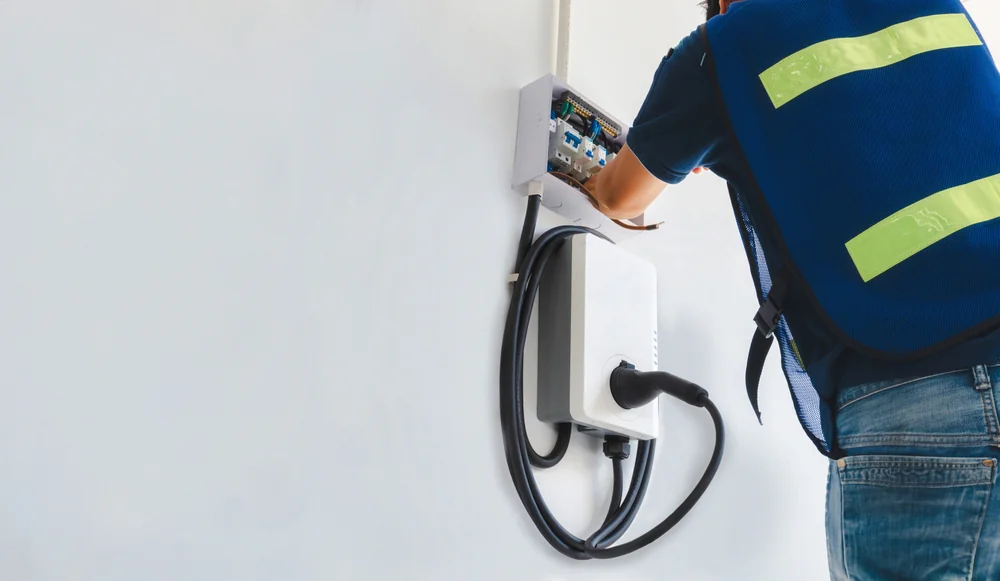
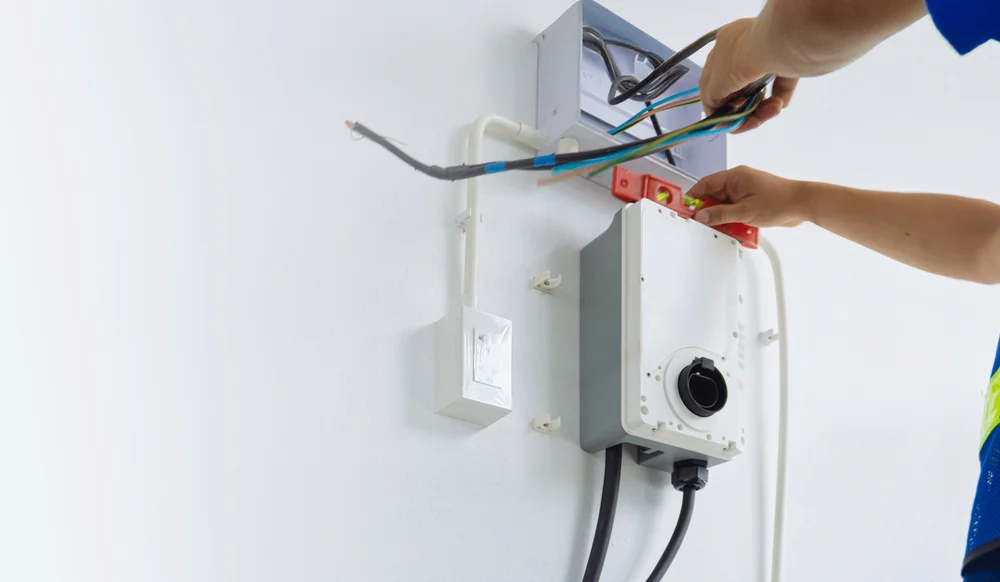
Electric Vehicle Charger Setup in Caldwell
You bought an electric vehicle to simplify your life, not to spend time hunting for available charging stations or waiting in line at public chargers. Home charging means you plug in when you get home and wake up ready to go.
The cost difference adds up faster than most people realize. Public charging stations in Caldwell and the surrounding area can run you anywhere from two to four times what you’d pay charging at home overnight. Over a year, that’s real money back in your pocket.
Your home’s electrical system needs to handle the load safely. That’s where most DIY attempts or cheap installations fall short. You need the right amperage, proper circuit protection, and equipment that won’t fail when temperatures drop or spike. A professional electric vehicle charger installation handles all of that upfront so you’re not dealing with problems later.
Licensed EV Charger Electricians Caldwell, NC
We’ve been handling electrical work in Caldwell and throughout North Carolina since 2002. Our owner, Andy Helton, is a master electrician with over 35 years in the field. That’s not marketing talk—that’s actual time spent running wire, troubleshooting systems, and making sure electrical setups work correctly.
Caldwell’s housing stock includes everything from newer builds to older homes that need panel upgrades before they can support EV charging. We’ve worked on both. We know what your electrical system can handle and what it can’t, and we’ll tell you straight.
You’re not getting a call center or an answering machine when you reach out. You’re talking to someone who actually knows the work and can give you real answers about what your EV charger installation will involve.
How EV Charging Station Installation Works
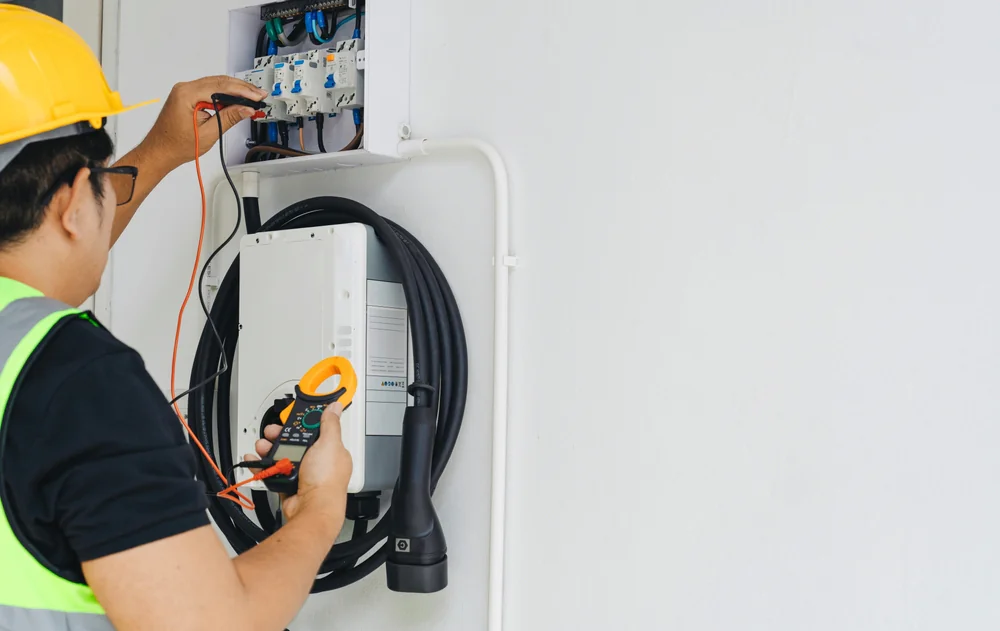
First, we look at your electrical panel to see if it can support the charger you want. Most Level 2 EV chargers pull between 30 and 50 amps. If your panel’s already maxed out or it’s an older setup, we’ll talk through what an upgrade involves before moving forward.
Next, we determine the best location for your charging station. That’s usually in your garage or on an exterior wall close to where you park. We consider the distance from your panel, how the conduit will run, and whether the charger will be exposed to weather. All of that affects what equipment and protection you need.
Then we install the dedicated circuit, mount the charger, and test everything to make sure it’s pulling the right voltage and communicating with your vehicle correctly. We pull permits where required and make sure the work meets current electrical code. You’ll know the final cost before we start—we price the job upfront, not by the hour.
Once it’s live, we walk you through how to use it and what to expect. Most chargers have apps or displays that show charging status, and we’ll make sure you’re comfortable with how yours works before we leave.
EV Charger Repair and Setup Services
You’re getting a complete installation handled by licensed electricians who carry the right equipment and materials. Our trucks are fully stocked, so we’re not making multiple trips or leaving jobs half-finished while we wait on parts.
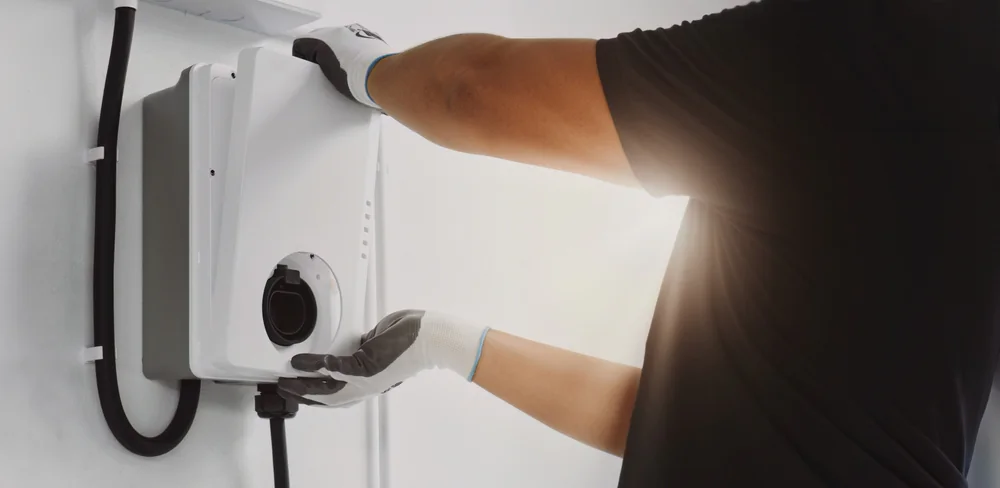
The work includes running a dedicated circuit from your electrical panel to the charger location, installing the appropriate breaker and wiring, mounting the charging unit, and testing the full system. If your panel needs an upgrade to handle the load, we’ll walk you through what that involves and give you a clear price for that work too.
Caldwell’s climate means your charger needs to handle hot summers and cold winters without issues. We install weather-resistant equipment rated for outdoor use when needed, and we make sure all connections are sealed and protected. You won’t have problems with moisture or temperature swings affecting performance.
We also handle EV charger repair if you’ve got an existing setup that’s not working right. Whether it’s a tripped breaker, a faulty unit, or wiring that wasn’t done correctly the first time, we’ll diagnose the problem and fix it. Most EV charging issues come down to improper installation or undersized circuits—both things we make sure to get right from the start.
How long does it take to install an EV charger at my home?
Most EV charger installations take between four and eight hours depending on how far the run is from your electrical panel and whether we’re working with an existing circuit or running a new dedicated line. If your panel has space and adequate capacity, and the charger’s going in a garage close to the panel, you’re looking at the shorter end of that range.
Homes that need a panel upgrade or a longer conduit run to an exterior charging location will take more time. We’ll know after looking at your specific setup and can give you an accurate timeframe before we start.
We don’t rush the work to hit a time target. You’re getting a safe, code-compliant installation that’ll work reliably for years. That matters more than shaving an hour off the install time.
What size electrical panel do I need for an electric vehicle charger?
Most modern EV chargers need a 200-amp electrical panel to safely add the dedicated circuit without overloading your system. If you’ve got a 100-amp or 150-amp panel, you might still have enough capacity depending on what else is running in your home, but it’s tight.
We’ll do a load calculation when we assess your panel. That tells us how much capacity you’re currently using and whether there’s room to add a 40 or 50-amp circuit for your EV charger. If there’s not enough capacity, a panel upgrade is the right move—not just for the charger, but for the safety of your entire electrical system.
A lot of older homes in Caldwell still have 100-amp service. That worked fine before electric vehicles, but it’s not enough for modern electrical loads plus EV charging. Upgrading your panel also increases your home’s value and gives you room to add other high-draw appliances down the road.
Can I install a Tesla charger or does it have to be a specific brand?
You can install any Level 2 EV charger that’s compatible with your vehicle. Tesla vehicles come with an adapter that lets them use standard J1772 chargers, which is what most non-Tesla charging stations use. You’re not locked into buying Tesla’s Wall Connector unless you want the specific features it offers.
Most EV owners in Caldwell go with universal Level 2 chargers because they work with any electric vehicle and they’re usually less expensive than brand-specific options. Brands like ChargePoint, JuiceBox, and Grizzl-E are common choices. They all do the same basic job—deliver 240-volt power to charge your vehicle faster than a standard outlet.
If you do want a Tesla Wall Connector, we install those too. The process is the same: dedicated circuit, proper amperage, correct mounting and wiring. What matters most is that the charger’s installed correctly and safely, not which brand name is on the unit.
How much does EV charger installation cost in Caldwell, NC?
Most straightforward EV charger installations in Caldwell run between $800 and $2,000 depending on the distance from your panel, the amperage of the charger, and whether we’re mounting it indoors or outdoors. That includes the labor, materials, circuit installation, and the charger mounting—but not the charging unit itself, which you typically purchase separately.
If your electrical panel needs an upgrade, that’s additional cost. Panel upgrades usually range from $1,500 to $3,000 depending on the size and complexity. We’ll know after looking at your current setup and can give you an exact price before any work starts.
We price jobs flat-rate, not hourly. You’ll know the total cost upfront with no surprises when the work’s done. That’s how we’ve operated since 2002, and it’s why customers keep calling us back.
Do I need a permit to install an electric vehicle charging station?
Yes, most EV charger installations in Caldwell require an electrical permit because you’re adding a new dedicated circuit to your home’s electrical system. Any time you’re doing work that involves your electrical panel or adding new high-voltage circuits, permits are required to ensure the work meets current electrical code.
We handle the permit process as part of the installation. That includes pulling the permit, scheduling the inspection, and making sure everything passes. You don’t need to deal with the county or figure out what paperwork is required.
Some homeowners try to skip permits to save money or time, but that’s a mistake. Unpermitted electrical work can cause problems when you sell your home, and it can void your homeowner’s insurance if there’s ever an electrical fire or issue. It’s not worth the risk. We do it right, with permits, so you’ve got documentation that the work was done correctly.
Will an EV charger work during a power outage?
No, a standard EV charger won’t work during a power outage because it draws power from your home’s electrical system. If the grid’s down, your charger’s down too. That’s true whether you’ve got a basic Level 2 charger or a high-end smart charger.
If you want backup charging capability during outages, you’d need a home battery system or a generator with enough capacity to run the charger. Most whole-home generators can handle an EV charger, but you need to make sure it’s sized correctly and that the transfer switch is set up to include the charging circuit.
Another option is a portable generator with the right outlet configuration, but that’s less convenient and you’re limited by the generator’s output. Most people in Caldwell don’t set up backup power specifically for EV charging—they just charge their vehicle when power’s restored. Your EV’s battery will hold its charge during an outage, so you’ve still got whatever range was already in the vehicle.
Other Services we provide in Caldwell
About Us

Electrical Service Providers (ESP) has been in business since 2002. ESP started out performing wiring services to new construction, remodeling projects and residential homes. Our company’s president identified a market for electrical services to be performed in homes and businesses independent of new construction. Read More about Electrical Service Providers>>
All Rights Reserved.Organic Marketing LLC
Business Listings


Product Brands Used
Allied, Broan, Cutler Hammer, General Electric, Ideal, Juno, Kohler, Leviton, Lutron, Siemens, Square D
Contact
- Office Address: 3254 S Anthony Ct.
Burlington, NC 27215 - Mailing Address: PO Box 25
Alamance, NC 27201 - Phone: 336-228-3300
- E-mail: [email protected], [email protected]
Service Areas
Chapel Hill, Burlington, Carrboro, Durham, Gibsonville, Hillsborough, Graham, Pittsboro, Morrisville, Cary
About Us
Electrical Service Providers (ESP) has been in business since 2002. ESP started out performing wiring services to new construction, remodeling projects and residential homes. Our company’s president identified a market for electrical services to be performed in homes and businesses independent of new construction. Read More about Electrical Service Providers>>
All Rights Reserved.Organic Marketing LLC