EV Charger Installation in Carrboro, NC
Charge at Home Without the Guesswork
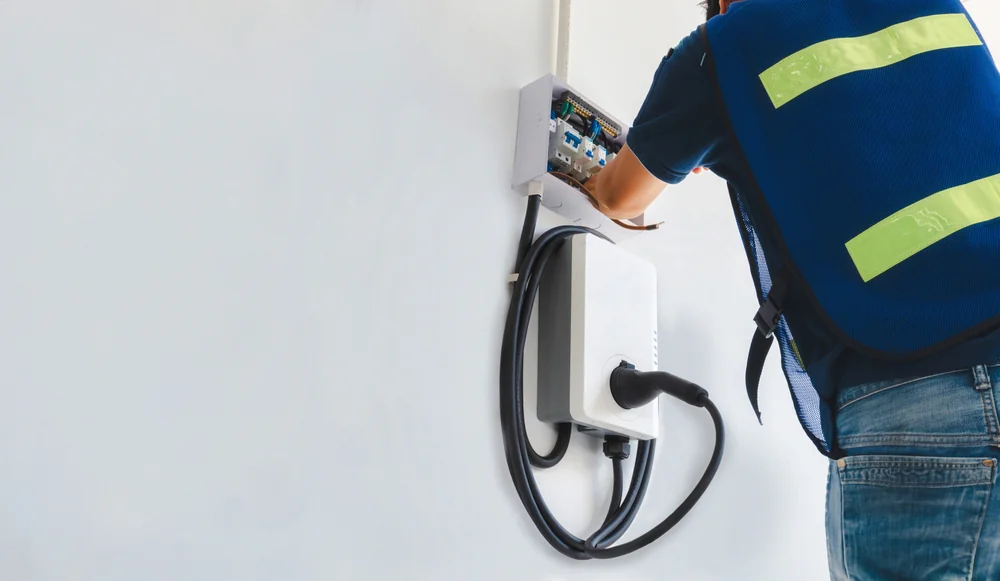
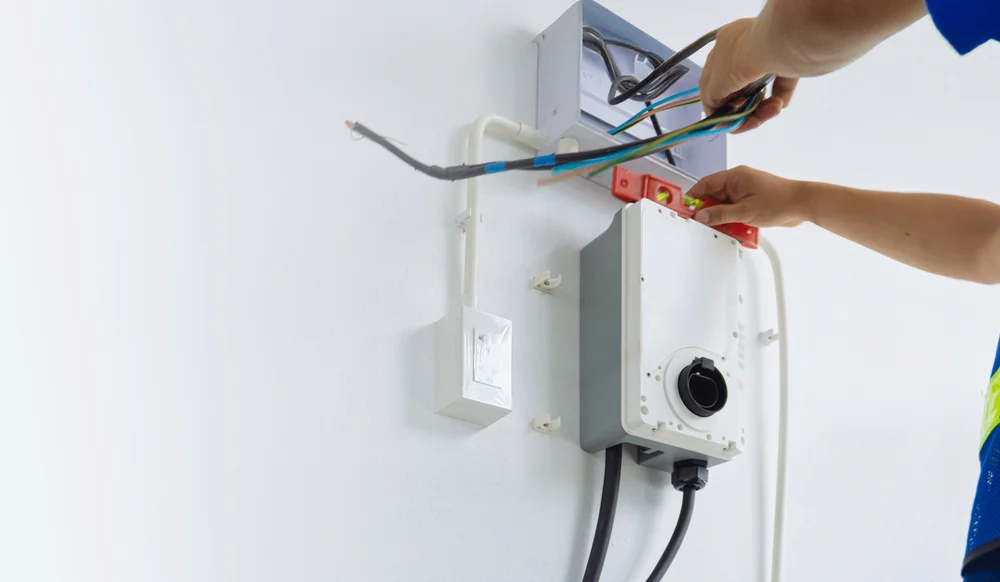
Electric Vehicle Charging Station Setup
You plug in at night and wake up with a full charge. No more planning trips around public charging stations or wondering if you’ll find an open spot. Your car charges while you sleep, and you’re ready to go every morning.
The cost difference is real. Charging at home runs about $3 to $5 per 100 miles. Public DC fast chargers? That’s $10 to $15 for the same distance. Over a year, that adds up fast.
Your home’s electrical system either handles the load safely or it doesn’t. A proper installation means your panel, wiring, and circuit are sized correctly for the charger you’re running. No overheating. No tripped breakers. No fire risk from a DIY setup that looked fine until it wasn’t.
Duke Energy’s rebate program covers up to $1,117 per household for Level 2 charger installation. The federal tax credit adds another 30% of your total costs, up to $1,000. Between the two, you’re looking at serious money back—but only if the installation meets code and gets permitted correctly.
Licensed EV Charger Electrician Carrboro
We’ve been working in Carrboro since 2002. Andy Helton, our master electrician, brings over 35 years of electrical experience to every job. We’ve handled everything from older homes with 100-amp panels to new construction with smart home integration.
Carrboro’s push to electrify its municipal fleet and add charging infrastructure across town means more residents are making the switch to electric vehicles. The Town Commons, Rosemary Street lot, and Dr. Martin Luther King Jr. Park already have ChargePoint stations. Now homeowners want the same convenience at their own property.
We use flat-rate pricing. You know the cost before we start. Our trucks are fully stocked, so we’re not making multiple trips or waiting on parts. When we finish, we clean up and walk you through exactly what we did and how your new charging station works.
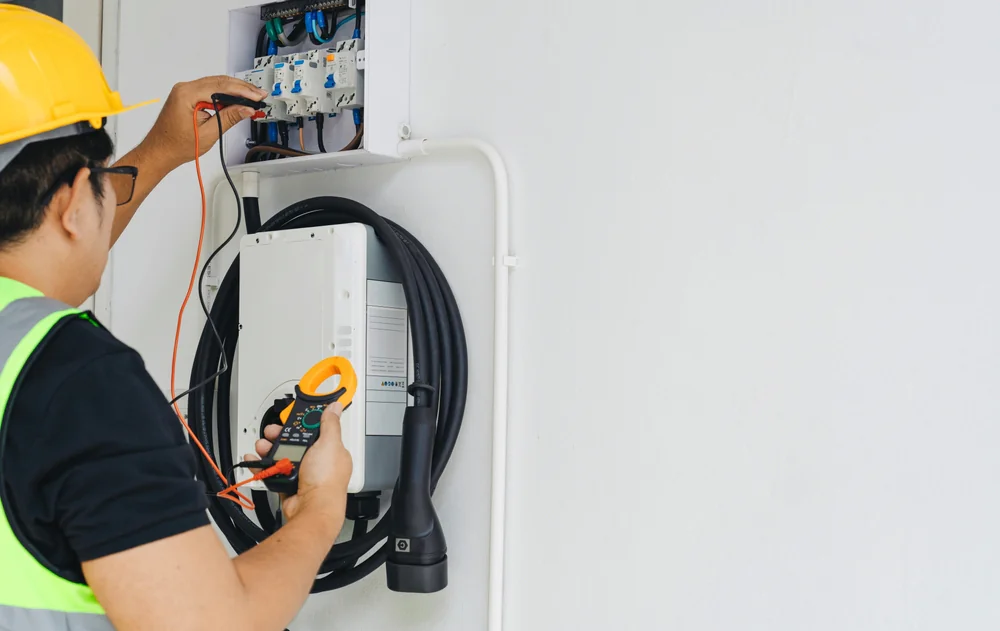
Home EV Charger Installation Process
First, we assess your electrical panel. Most homes built before 2015 need an upgrade to handle a Level 2 charger on top of your HVAC, dryer, and everything else running simultaneously. If your panel can’t support the additional 40 or 50 amps, we’ll tell you upfront and explain what’s required.
Next, we pull permits. Carrboro’s building department requires permits for EV charger installations, and inspections ensure everything meets the 2026 National Electrical Code. This isn’t optional—it’s how you qualify for rebates and protect your home’s resale value.
We install the charger where you want it, typically in your garage or carport. That includes running the correct gauge wire from your panel, mounting the charging unit, and installing a dedicated circuit with the right breaker. We test the system, confirm it’s communicating with your vehicle, and make sure you’re comfortable using it.
After the inspection passes, we help you file for Duke Energy’s rebate and the federal tax credit. The paperwork requires proof of a licensed installation, which is exactly what you’ll have.
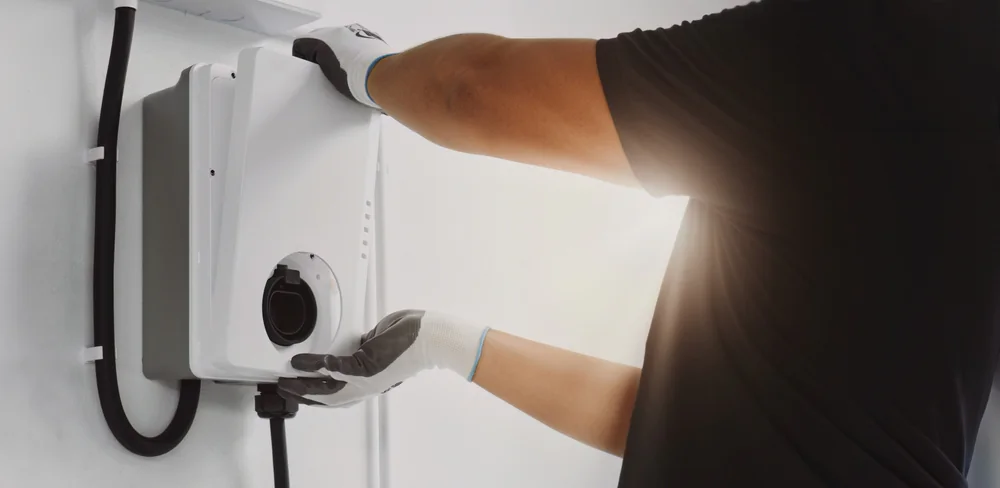
Residential EV Charging Installation Carrboro
Every installation starts with a load calculation. We measure your home’s current electrical demand and determine whether your existing panel can handle a Level 2 EV charger. If it can’t, we provide a detailed estimate for a panel upgrade before moving forward.
Carrboro homeowners typically choose between hardwired chargers and plug-in models with a NEMA 14-50 outlet. Hardwired units are cleaner and more permanent. Plug-in chargers offer flexibility if you want to take the unit with you when you move. We’ll explain the pros and cons based on your situation.
We handle all permitting and inspections with Carrboro’s building department. The town’s updated Land Use Ordinance now requires EV charging infrastructure in new developments, and existing homes need to meet the same safety standards. Our installations pass inspection the first time because we follow code exactly as written.
Duke Energy’s EV Charger Installation Support Program is available to all residential customers in our service area. We’ll walk you through the application, provide the required documentation, and make sure you’re set up for the one-time credit. The federal Alternative Fuel Infrastructure Tax Credit covers 30% of your total installation cost, up to $1,000, and that deadline is June 30, 2026.
How much does it cost to install an EV charger in Carrboro?
Most homeowners in Carrboro pay between $800 and $2,500 for a complete Level 2 EV charger installation. That includes the charger hardware ($400 to $1,200), labor ($400 to $1,500), permits ($50 to $300), and any necessary electrical work.
Panel upgrades add $500 to $2,500 or more, depending on whether you’re going from 100 amps to 200 amps and how much rewiring is involved. Older homes often need this upgrade because they weren’t built to handle the load from an EV charger plus modern appliances.
Duke Energy’s rebate covers up to $1,117, and the federal tax credit adds another 30% back (up to $1,000). Between the two, you’re offsetting a significant portion of your upfront cost. We provide a flat-rate quote before starting so there are no surprises.
Do I need a permit to install an EV charger in Carrboro?
Yes. Carrboro requires permits for EV charger installations, and the work must be inspected to ensure it meets the National Electrical Code. This isn’t just a formality—it’s how you protect your home, qualify for rebates, and avoid issues when you sell.
The 2026 NEC introduced a “qualified person” requirement for permanently installed EV charging equipment. That means licensed electricians are now the standard for this type of work. DIY installations or unlicensed work won’t pass inspection and won’t qualify you for Duke Energy’s rebate or the federal tax credit.
We pull the permit, schedule the inspection, and handle all the paperwork. The process typically adds a few days to the timeline, but it’s built into our flat-rate pricing. You don’t pay extra for permits or inspection coordination.
Can my electrical panel handle an EV charger?
It depends on your panel’s capacity and how much load you’re already running. A Level 2 EV charger typically draws 40 to 50 amps. If your home has a 100-amp panel and you’re running central air, an electric dryer, a water heater, and other high-demand appliances, you’re likely maxed out.
We start every job with a load calculation. That tells us exactly how much capacity you have available and whether an upgrade is necessary. Most homes built before 2015 need a panel upgrade to safely add an EV charger without overloading the system.
A panel upgrade isn’t a bad thing. It increases your home’s electrical capacity, supports future additions, and is often required to meet current code. We’ll give you a clear answer after the assessment and explain what’s involved if an upgrade is needed.
How long does EV charger installation take?
If your panel has capacity and no upgrades are needed, most installations take four to six hours. That includes mounting the charger, running the wiring, installing the breaker, and testing the system.
Panel upgrades add time. Depending on the scope, you’re looking at an additional day or two for the upgrade itself, plus time for permits and inspections. Carrboro’s building department is generally efficient, but inspection scheduling can vary based on their workload.
We coordinate everything—permits, inspections, and the installation itself—so you’re not chasing down approvals or waiting on callbacks. Once the inspection passes, your charger is live and ready to use. We’ll walk you through the system before we leave so you’re comfortable with how it operates.
What rebates are available for EV charger installation in Carrboro?
Duke Energy offers a one-time credit of up to $1,117 per household through their EV Charger Installation Support Program. This applies to residential Level 2 charger installations and requires proof of a licensed, permitted installation.
The federal Alternative Fuel Infrastructure Tax Credit covers 30% of your total installation costs, up to $1,000. This credit is available through June 30, 2026, so there’s a deadline. You’ll need documentation showing the charger was installed by a licensed electrician and meets code.
We help you file for both. The paperwork requires specific details about the installation, and we provide everything you need to submit your claims. Between Duke Energy’s rebate and the federal credit, you’re looking at $1,500 to $2,000 back, depending on your total installation cost.
Should I install a hardwired charger or a plug-in model?
Hardwired chargers are permanently connected to your electrical system. They’re cleaner, more streamlined, and typically the choice if you’re planning to stay in your home long-term. There’s no outlet to deal with, and the installation is slightly simpler.
Plug-in chargers use a NEMA 14-50 outlet, the same type used for electric dryers and RVs. The advantage is portability—you can unplug the charger and take it with you if you move. The downside is the outlet itself, which some homeowners find less visually appealing.
Both options work equally well for charging your vehicle. The decision comes down to whether you value permanence or flexibility. We install both types regularly in Carrboro, and we’ll walk you through the pros and cons based on your home, your vehicle, and how long you plan to stay.
Other Services we provide in Carrboro
About Us

Electrical Service Providers (ESP) has been in business since 2002. ESP started out performing wiring services to new construction, remodeling projects and residential homes. Our company’s president identified a market for electrical services to be performed in homes and businesses independent of new construction. Read More about Electrical Service Providers>>
All Rights Reserved.Organic Marketing LLC
Business Listings


Product Brands Used
Allied, Broan, Cutler Hammer, General Electric, Ideal, Juno, Kohler, Leviton, Lutron, Siemens, Square D
Contact
- Office Address: 3254 S Anthony Ct.
Burlington, NC 27215 - Mailing Address: PO Box 25
Alamance, NC 27201 - Phone: 336-228-3300
- E-mail: [email protected], [email protected]
Service Areas
Chapel Hill, Burlington, Carrboro, Durham, Gibsonville, Hillsborough, Graham, Pittsboro, Morrisville, Cary
About Us
Electrical Service Providers (ESP) has been in business since 2002. ESP started out performing wiring services to new construction, remodeling projects and residential homes. Our company’s president identified a market for electrical services to be performed in homes and businesses independent of new construction. Read More about Electrical Service Providers>>
All Rights Reserved.Organic Marketing LLC