EV Charger Installation in Corinth, NC
Charge at Home Without the Guesswork or Risk
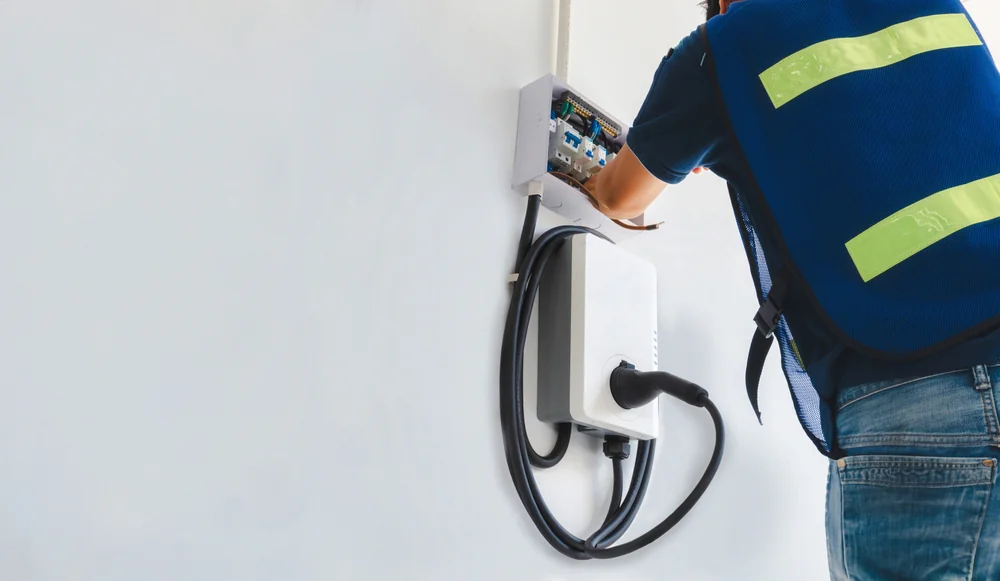
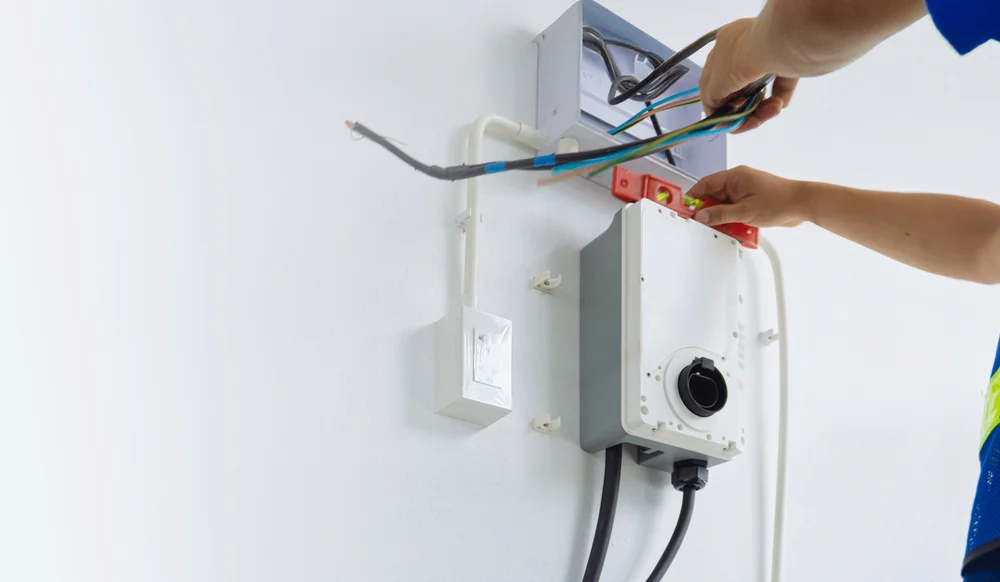
Professional Electric Vehicle Charger Setup
You wake up every morning with a fully charged vehicle. No hunting for public charging stations on your lunch break or wondering if you’ll make it home on 12% battery.
Your electrical panel isn’t overloaded. Your home isn’t at risk of electrical fire from a DIY setup that looked fine on YouTube but ignored load calculations. The charger works exactly how it should because someone who’s done this hundreds of times made sure your system could handle it before anything got plugged in.
You’re not scrambling to figure out permits or rebate paperwork. The Duke Energy rebate that could cover up to $1,133 of your installation cost gets handled by someone who knows exactly what forms to file and when. Your inspection passes the first time because the work was done right.
This is what happens when a licensed electrician installs your Level 2 EV charging station instead of someone guessing their way through it.
Licensed EV Charger Electricians Near Corinth
ESP Electrical Service Providers has been serving Corinth and Durham County for over two decades. Our operations manager has been a licensed electrical contractor since 1989, which means we were running wire before most people knew what an electric vehicle was.
We’re not new to this. We’re not figuring it out as we go. When North Carolina announced its goal to put 1.25 million EVs on the road by 2030, we were already trained and ready because we saw where things were headed.
You’re working with a locally owned company run by Andy Helton, a Master Electrician with 35+ years of experience. When you call, you’re talking to people who live here, work here, and have installed charging stations for your neighbors. We know the local codes, the inspection process, and exactly what Duke Energy requires for rebate approval in this area.
How EV Charging Station Installation Works
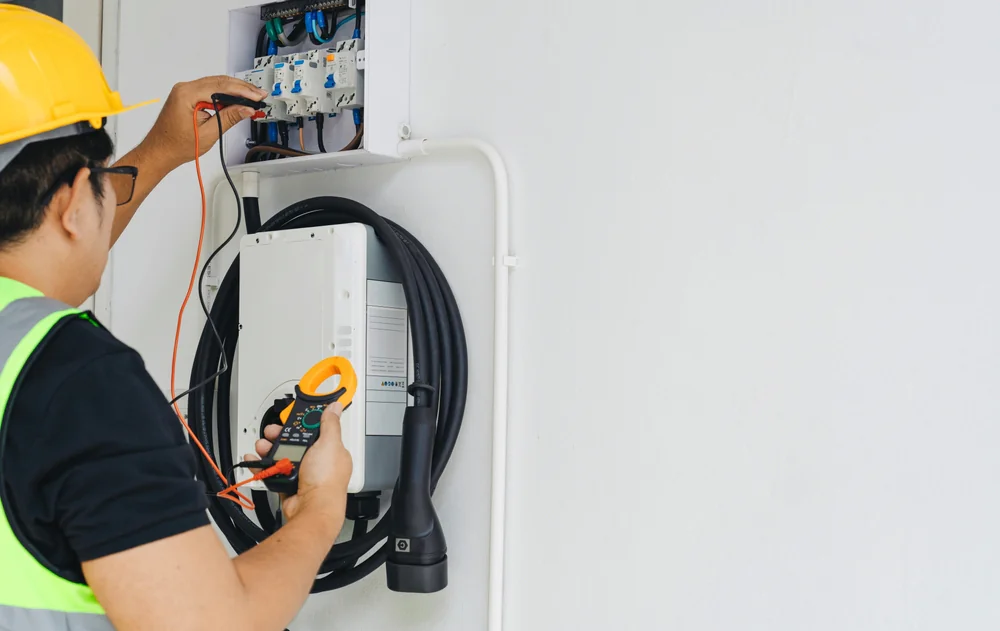
First, we assess your electrical system. Not just a quick glance at your panel, but a full load calculation that accounts for your HVAC, major appliances, and everything else pulling power. This tells us whether your current setup can handle a Level 2 charger or if you need a panel upgrade to 200-amp service.
If an upgrade is needed, we’ll tell you upfront. A 200-amp panel doesn’t just support your EV charger—it prepares your home for solar panels, a second electric vehicle, or any other high-demand addition down the road. It’s often worth doing it right the first time instead of paying twice later.
Next, we handle permits and coordinate with Duke Energy. This isn’t optional—it’s required. We file the paperwork, schedule the inspection, and make sure you’re set up to claim that rebate credit. Our trucks show up fully stocked, so we’re not making multiple trips or discovering halfway through that we need a part.
We install the charging station according to 2026 NEC code requirements, which now mandate GFCI protection and qualified person installation. We test everything, walk you through how it works, and don’t consider the job done until you’re comfortable with the setup. Then we leave your property cleaner than we found it.
What's Included in EV Charger Installation
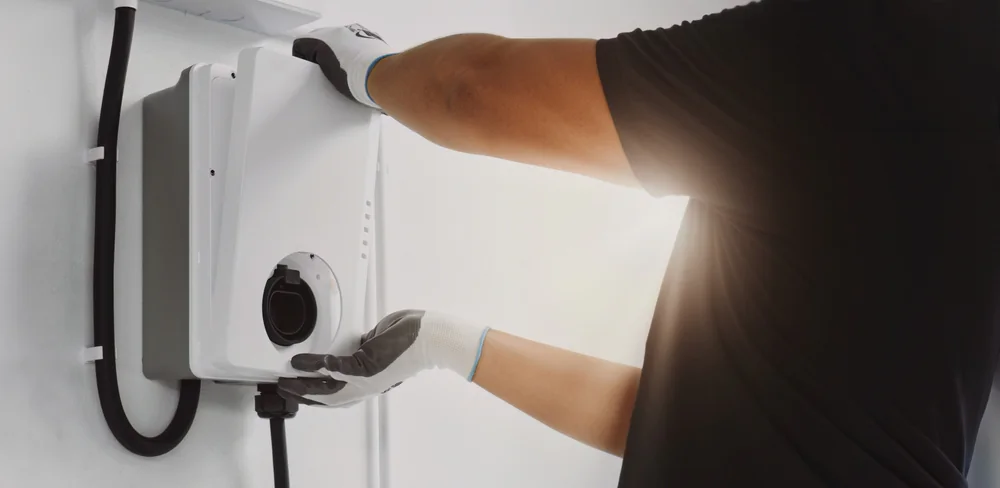
You’re getting a complete electrical evaluation to determine if your home can support the charger safely. That includes load calculations, panel inspection, and a clear explanation of what work is actually required—not what we wish we could upsell you on.
If you need a panel upgrade, we handle that too. Most homes in Corinth built before 2000 have 100-amp or 150-amp service, which can struggle once you add a 40-amp or 50-amp EV charger to the mix. Upgrading to 200-amp service gives you room to grow and eliminates the risk of tripping breakers or overheating wires.
We also manage the entire permit and rebate process. North Carolina homeowners qualify for Duke Energy’s EV charger rebate program, which offers up to $1,133 toward installation costs. We know exactly how to document the work so you get that credit without the back-and-forth or rejected applications.
And because we’re Tesla Certified installers with experience across all EV brands—Nissan, Chevrolet, Ford, Rivian—you’re working with electricians who’ve seen every type of setup and know how to troubleshoot issues before they become problems. With over 140,000 EVs already on North Carolina roads and that number climbing fast, this isn’t experimental work anymore. It’s standard electrical service done by people who’ve done it hundreds of times.
How much does it cost to install an EV charger at home in Corinth?
Installation costs vary based on your current electrical setup, but most homeowners in Corinth pay between $800 and $2,500 for a complete Level 2 EV charger installation. That range accounts for the charger itself, labor, permits, and any minor electrical work needed to connect it safely.
If your home needs a panel upgrade from 100-amp or 150-amp service to 200-amp, that adds to the cost—but it’s also an investment that prepares your home for future electrical demands like solar panels or a second EV. The good news is Duke Energy offers rebates up to $1,133 that can offset a significant portion of your installation expense. We handle the rebate paperwork as part of the job, so you’re not left figuring that out on your own.
The real cost isn’t just the upfront number. It’s what happens if the installation is done wrong. Overloaded circuits, fire hazards, failed inspections, and having to pay someone else to fix it all cost more in the long run. We give you flat-rate pricing before we start, so there are no surprises halfway through the job.
Can I install an EV charger myself, or do I need a licensed electrician?
You legally can attempt it in some cases, but the 2026 National Electrical Code now requires EV charger installations to be done by a “qualified person,” which effectively means a licensed electrician with specific training. Even before that code change, DIY EV charger installations were risky.
EV chargers pull 40 to 50 amps continuously, which is more than any other appliance in your home. If your electrical panel can’t handle that load, or if the wiring isn’t sized correctly, you’re looking at overheating, tripped breakers, or in the worst case, an electrical fire. Most homeowners don’t have the tools or training to perform accurate load calculations or install GFCI protection correctly.
There’s also the permit and inspection process. Corinth and Durham County require permits for this type of electrical work, and inspectors will catch code violations that could force you to rip everything out and start over. If you’re planning to claim the Duke Energy rebate, the installation has to be documented and done to their specifications, which requires a licensed contractor. Hiring a qualified electrician from the start saves you time, risk, and the cost of fixing mistakes later.
How long does EV charger installation take from start to finish?
If your electrical panel can handle the load and no upgrades are needed, most installations take four to six hours. That includes mounting the charger, running the wiring, connecting it to your panel, and testing everything to make sure it works correctly.
If you need a panel upgrade to support the charger, add another day or two to the timeline. Panel upgrades require coordination with Duke Energy to disconnect and reconnect service, plus additional inspection requirements. We schedule that work to minimize any disruption, and we keep you in the loop at every step.
Permit approval and inspection scheduling can add a few days to a week depending on how busy the local building department is, but we handle all of that coordination. From the day you call us to the day you’re charging your vehicle at home, most customers are up and running within one to two weeks. If there’s any delay, it’s usually on the permitting side, not the installation itself—and we manage that process so you don’t have to chase down inspectors or paperwork.
What's the difference between a Level 1 and Level 2 EV charger?
A Level 1 charger plugs into a standard 120-volt outlet and adds about three to five miles of range per hour of charging. It’s the slowest option and really only works if you drive less than 40 miles a day and can leave your car plugged in overnight. Most EV owners find Level 1 charging too slow to be practical.
A Level 2 charger runs on 240 volts—the same power your dryer or oven uses—and adds 25 to 30 miles of range per hour. That means you can fully charge most EVs overnight in six to eight hours, even if you drove 200 miles that day. It’s the standard for home charging and what most people mean when they say they want an EV charger installed.
Level 2 chargers require professional installation because they need a dedicated 240-volt circuit, proper wire sizing, GFCI protection, and a connection to your electrical panel that can handle the load. You can’t just plug them into an existing outlet. If you’re serious about owning an EV and want the convenience of home charging, Level 2 is the only real option. We install Level 2 chargers that work with all EV brands, including Tesla, and make sure your system is set up to handle it safely.
Will installing an EV charger increase my electric bill significantly?
Yes, your electric bill will go up, but charging at home is still cheaper than paying for gas or using public charging stations. How much it increases depends on how much you drive, your vehicle’s efficiency, and your electricity rate.
On average, it costs about $0.04 to $0.15 per kilowatt-hour to charge at home, depending on your utility rate and time of day. Duke Energy Progress offers time-of-use rates as low as $0.04 per kWh during off-peak hours, which makes overnight charging very affordable. If you drive 1,000 miles a month in an EV that gets 3.5 miles per kWh, you’re looking at roughly 285 kWh of electricity, which costs around $30 to $40 per month at average rates.
Compare that to spending $150+ per month on gas for the same mileage, and the savings add up fast. Public DC fast chargers are convenient for road trips, but they’re expensive—often $0.40 to $0.60 per kWh. Charging at home with a Level 2 charger lets you take advantage of lower residential rates and off-peak pricing. We can also install smart chargers that let you schedule charging during the cheapest rate periods, so you’re maximizing savings every time you plug in.
Do I qualify for rebates or tax credits for EV charger installation in North Carolina?
Yes. North Carolina homeowners can access Duke Energy’s rebate program, which offers up to $1,133 in credits toward the cost of installing a Level 2 EV charging station. This rebate is designed to cover a large portion of your installation costs, and we handle the application process to make sure you actually receive it.
There’s also a federal tax credit available under the Alternative Fuel Vehicle Refueling Property Credit, which is worth up to $1,000 for residential installations. If you’re a business owner, the 30C tax credit offers up to $100,000 per charging port installed, though that program is set to expire in mid-2026, so timing matters.
The key to claiming these incentives is proper documentation and working with a licensed contractor who knows what’s required. Rebate applications get rejected when the paperwork is incomplete or the installation doesn’t meet program specifications. We’ve done this enough times to know exactly what Duke Energy and the IRS need to see, and we make sure everything is documented correctly from the start. You shouldn’t have to leave money on the table because of a paperwork mistake.
Other Services we provide in Corinth
About Us

Electrical Service Providers (ESP) has been in business since 2002. ESP started out performing wiring services to new construction, remodeling projects and residential homes. Our company’s president identified a market for electrical services to be performed in homes and businesses independent of new construction. Read More about Electrical Service Providers>>
All Rights Reserved.Organic Marketing LLC
Business Listings


Product Brands Used
Allied, Broan, Cutler Hammer, General Electric, Ideal, Juno, Kohler, Leviton, Lutron, Siemens, Square D
Contact
- Office Address: 3254 S Anthony Ct.
Burlington, NC 27215 - Mailing Address: PO Box 25
Alamance, NC 27201 - Phone: 336-228-3300
- E-mail: [email protected], [email protected]
Service Areas
Chapel Hill, Burlington, Carrboro, Durham, Gibsonville, Hillsborough, Graham, Pittsboro, Morrisville, Cary
About Us
Electrical Service Providers (ESP) has been in business since 2002. ESP started out performing wiring services to new construction, remodeling projects and residential homes. Our company’s president identified a market for electrical services to be performed in homes and businesses independent of new construction. Read More about Electrical Service Providers>>
All Rights Reserved.Organic Marketing LLC