EV Charger Installation in Forest Oaks, NC
Charge at Home Without the Guesswork
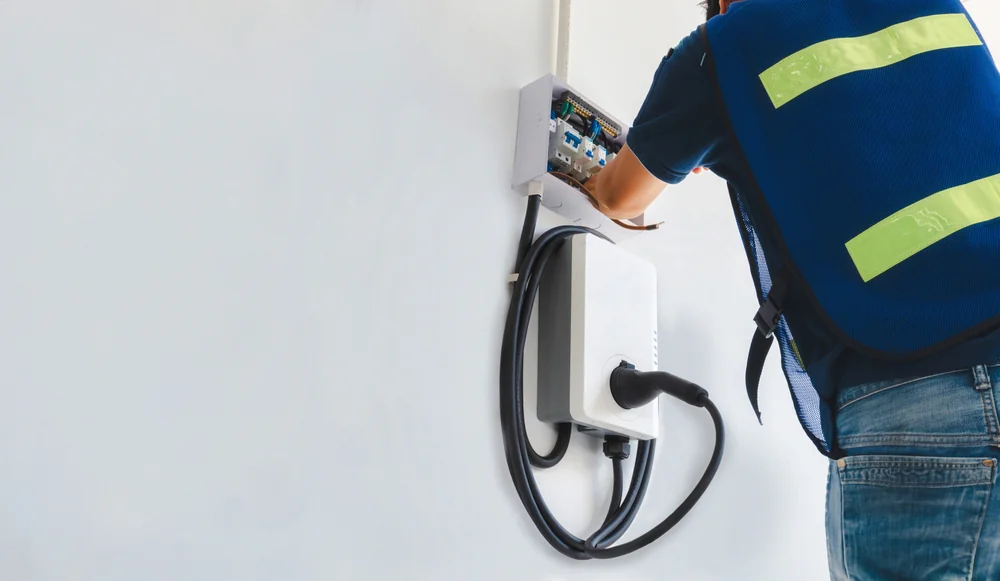
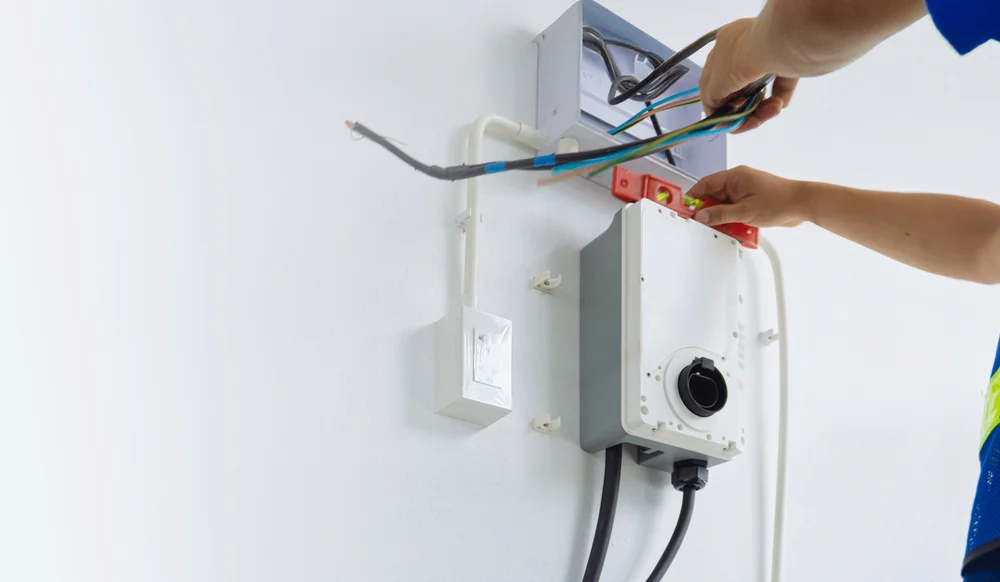
Electric Vehicle Charger Setup Forest Oaks
You plug in when you get home. Your car charges overnight while you sleep. By morning, you’re at 100% and ready to go. No more planning trips around charging stations or waiting in line at public chargers during your lunch break.
Home charging costs less than public stations. Duke Energy customers in Forest Oaks pay lower rates during off-peak hours, which means charging overnight saves you money every single time. Over a year, that adds up to hundreds of dollars compared to relying on commercial charging networks.
Your home’s value goes up too. Buyers in the Triangle area actively search for homes with EV charging already installed. It’s becoming as expected as a two-car garage, especially in neighborhoods like Forest Oaks where the median household income sits above $108,000 and EV adoption is growing fast.
Licensed Electricians Serving Forest Oaks, NC
ESP Electrical Service Providers is locally owned and operated by Andy Helton, a Master Electrician with over 35 years of experience. We’ve been serving Forest Oaks, Burlington, Greensboro, and the surrounding Alamance County area for more than two decades.
Our Operations Manager has been a licensed electrical contractor since 1989. That’s not just experience—it’s the kind of knowledge that catches problems before they become expensive mistakes. We know the local codes, the permit process, and exactly what Duke Energy requires for their rebate programs.
When you call, you’re talking to people who live and work in this area. We’re not a franchise or a national chain. We show up in uniform, in fully stocked trucks, and we clean up before we leave. The work isn’t done until you’re satisfied.
How EV Charging Station Installation Works
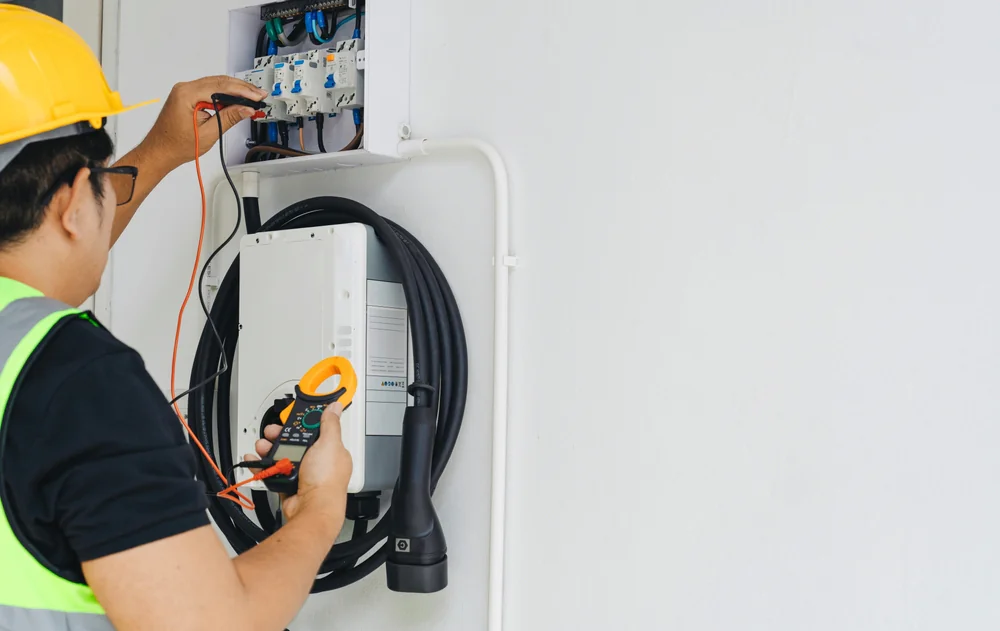
First, we assess your electrical panel and the location where you want the charger installed. Most Level 2 EV chargers require a 240-volt circuit, similar to what powers your dryer or oven. If your panel has available capacity, installation is straightforward. If not, we’ll discuss a panel upgrade or load management solutions.
Next, we pull the necessary permits and schedule the installation. Our technicians run the wiring from your panel to the charger location, mount the charging unit, and connect everything according to manufacturer specs and local electrical code. We test the system to make sure it’s working correctly and safely.
After installation, we help you apply for Duke Energy’s rebate program. Duke Energy Carolinas offers up to $1,133 toward Level 2 EV charging station installation, and Duke Energy Progress offers $1,117. We provide the documentation you need to claim those credits. You also may qualify for federal tax credits up to $1,000 depending on your situation.
The entire process typically takes a few hours for standard installations. More complex jobs involving panel upgrades or longer wire runs take longer, but we give you a flat-rate price upfront so there are no surprises.
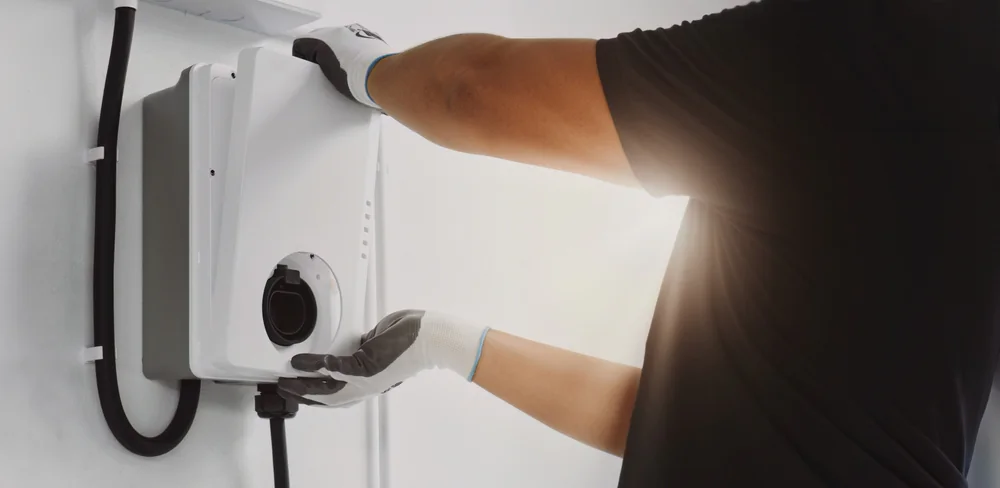
Level 2 Charger Installation Forest Oaks
We handle the complete electrical setup for your EV charging station. That includes running dedicated 240-volt wiring from your electrical panel to the charger location, installing the appropriate circuit breaker, mounting the charging unit, and making all final connections. Every installation meets National Electrical Code requirements and local Forest Oaks building codes.
If your electrical panel needs an upgrade to support the new charger, we do that too. Many homes in the Forest Oaks area were built before electric vehicles became common, and older panels don’t always have the capacity for an additional 40 or 50-amp circuit. We’ll assess your current system and recommend the right solution.
North Carolina added 50,000 EVs in just 23 months, and Forest Oaks is part of that growth. With the state targeting 1.25 million EVs by 2030, home charging infrastructure is becoming essential. We’re seeing more Tesla owners, Rivian drivers, and families with multiple electric vehicles who need reliable charging at home.
We also handle EV charger repair and maintenance if you’re having issues with an existing setup. Whether it’s a tripped breaker, a faulty charging unit, or wiring problems, we diagnose and fix it. Our trucks are fully stocked, so we usually have what we need to complete repairs on the first visit.
How much does it cost to install an EV charger at home in Forest Oaks?
Most standard Level 2 EV charger installations in Forest Oaks run between $800 and $2,000 for labor and materials. That doesn’t include the cost of the charging unit itself, which typically ranges from $500 to $800 depending on the brand and features you choose.
The final price depends on how far the charger is from your electrical panel, whether your panel has available capacity, and if any upgrades are needed. A straightforward installation in a garage with a panel nearby costs less than running wiring across your house or upgrading a full electrical panel.
Duke Energy rebates cover a significant portion of the cost. If you’re a Duke Energy Carolinas customer, you can get up to $1,133 back. Duke Energy Progress customers qualify for up to $1,117. Those rebates cover outlets, wiring, panel upgrades, and other necessary electrical work. We provide flat-rate pricing before we start, so you know exactly what you’re paying.
Do I need a permit to install an EV charger in Forest Oaks, NC?
Yes, you need a permit for EV charger installation in Forest Oaks. Any work that involves adding a new 240-volt circuit to your electrical panel requires a permit and inspection to ensure it meets local building codes and safety standards.
We handle the permit process for you. That includes submitting the application, coordinating with the local building department, and scheduling the inspection. The inspector verifies that the wiring, circuit breaker, and charger installation meet code requirements before signing off on the work.
Skipping the permit might seem like a shortcut, but it creates problems down the road. If you ever sell your home, unpermitted electrical work can delay or kill the sale. Insurance companies may also deny claims related to unpermitted installations. It’s not worth the risk, and we make the permit process easy so you don’t have to think about it.
How long does it take to charge an electric vehicle at home?
With a Level 2 charger, most electric vehicles fully charge overnight in 4 to 8 hours. That’s plenty of time if you plug in when you get home from work and unplug in the morning. The exact time depends on your vehicle’s battery size and how depleted it is when you start charging.
Level 1 charging using a standard 120-volt outlet takes much longer—anywhere from 8 to over 16 hours for a full charge. That’s why most EV owners in Forest Oaks upgrade to Level 2. It’s faster, more convenient, and ensures your car is ready when you need it.
If you have a larger battery, like the ones in trucks or long-range SUVs, Level 2 charging becomes even more important. A 120-volt outlet simply can’t keep up with daily driving needs for bigger vehicles. Level 2 chargers deliver 25 to 30 miles of range per hour of charging, which works for almost every daily driving scenario.
Can my electrical panel handle an EV charger installation?
It depends on your current panel capacity and how much power your home is already using. Most Level 2 EV chargers require a dedicated 40 or 50-amp circuit. If your panel has available slots and enough capacity, installation is straightforward. If not, you’ll need an upgrade.
We assess your panel during the initial consultation. We look at the total amperage, how many circuits are currently in use, and whether there’s room for an additional breaker. Many homes in Forest Oaks were built with 200-amp panels, which usually have enough capacity. Older homes with 100-amp panels often need upgrades.
Panel upgrades aren’t as disruptive as they sound. We replace the old panel with a larger one, update the wiring as needed, and bring everything up to current code. The work typically takes a day, and Duke Energy’s rebate program covers part of the cost. Once the upgrade is complete, you’ll have capacity for your EV charger and any future electrical needs.
What rebates are available for EV charger installation in North Carolina?
Duke Energy offers the most significant rebates for residential EV charger installation in Forest Oaks. Duke Energy Carolinas customers can receive up to $1,133, and Duke Energy Progress customers qualify for up to $1,117. These rebates cover the cost of outlets, wiring, panel upgrades, and other necessary electrical improvements.
You may also qualify for the federal Alternative Fuel Vehicle Refueling Property Credit, which is worth up to $1,000. This tax credit applies to the cost of purchasing and installing EV charging equipment at your primary residence. The credit is subject to income limits and other IRS requirements, so check with your tax advisor to see if you’re eligible.
We help you navigate the rebate application process. Duke Energy requires specific documentation, including proof of installation and receipts for materials and labor. We provide everything you need to submit your claim. Between Duke Energy rebates and federal tax credits, you can offset a significant portion of your total installation cost.
What's the difference between Level 1 and Level 2 EV charging?
Level 1 charging uses a standard 120-volt household outlet. It’s the slowest option, adding about 3 to 5 miles of range per hour of charging. That works if you drive very little or have all night to charge, but it’s not practical for most people.
Level 2 charging uses a 240-volt circuit, the same voltage that powers your dryer or electric range. It charges much faster—typically 25 to 30 miles of range per hour. That means a full charge overnight for most vehicles. Level 2 is what we install for homeowners in Forest Oaks because it matches real-world driving needs.
There’s also DC fast charging, but that’s what you find at commercial charging stations along highways. It’s not designed for home use. Level 2 strikes the right balance between speed, cost, and convenience for residential EV charging. You get a full charge overnight without the expense or complexity of commercial-grade equipment.
Other Services we provide in Forest Oaks
About Us

Electrical Service Providers (ESP) has been in business since 2002. ESP started out performing wiring services to new construction, remodeling projects and residential homes. Our company’s president identified a market for electrical services to be performed in homes and businesses independent of new construction. Read More about Electrical Service Providers>>
All Rights Reserved.Organic Marketing LLC
Business Listings


Product Brands Used
Allied, Broan, Cutler Hammer, General Electric, Ideal, Juno, Kohler, Leviton, Lutron, Siemens, Square D
Contact
- Office Address: 3254 S Anthony Ct.
Burlington, NC 27215 - Mailing Address: PO Box 25
Alamance, NC 27201 - Phone: 336-228-3300
- E-mail: [email protected], [email protected]
Service Areas
Chapel Hill, Burlington, Carrboro, Durham, Gibsonville, Hillsborough, Graham, Pittsboro, Morrisville, Cary
About Us
Electrical Service Providers (ESP) has been in business since 2002. ESP started out performing wiring services to new construction, remodeling projects and residential homes. Our company’s president identified a market for electrical services to be performed in homes and businesses independent of new construction. Read More about Electrical Service Providers>>
All Rights Reserved.Organic Marketing LLC